What the numbers say about the race to replace Greene

Today’s newsletter highlights:
- Test your knowledge with our news quiz.
- Nathan Wade is scheduled to appear before a Republican-led Senate committee today.
- Vice President JD Vance is set to visit the University of Georgia next month.
Runoff stakes rise

Even though he was the leading vote-getter in a sprawling field, Democrat Shawn Harris faces a steep political climb in next month’s runoff for Georgia’s 14th Congressional District.
No Democrat has ever captured the deep-red northwest Georgia district since it was created after the 2010 Census. And President Donald Trump carried it by nearly two-thirds of the vote in 2024.
The emergence of former prosecutor Clay Fuller as Harris’ opponent makes his path even tougher.
A more controversial contender like former Republican state Sen. Colton Moore might have alienated mainstream conservatives and energized swing voters. Instead, Republicans now have a more conventional, low-drama, Trump-backed nominee.
Still, an analysis by The Atlanta Journal-Constitution shows Harris enters the runoff with some momentum. He captured 37% of the vote, topping his previous high-water mark in the district. All told, Democrats carried about 40% of the vote.
The analysis by AJC data whiz Charles Minshew shows that nearly every precinct in the 10-county district tilted more Democratic compared with 2024. But the biggest shifts came in parts of Whitfield County and deep-blue Cobb County.
The review also shows most of the electorate was already engaged. Roughly 112,000 of the 115,000 voters who participated in the special election also voted in the 2024 general election.
Flipping the seat would likely require a swing of roughly 10 percentage points in the runoff. Harris said he’s already preparing for the next phase.
“The campaign really doesn’t change. We’re right back out knocking on doors again. We’re doing town halls,” he said.
“I want to make sure that all of those individuals that voted for somebody else come to my town halls and ask me any question they want to. We are talking to everybody.”
Friday news quiz
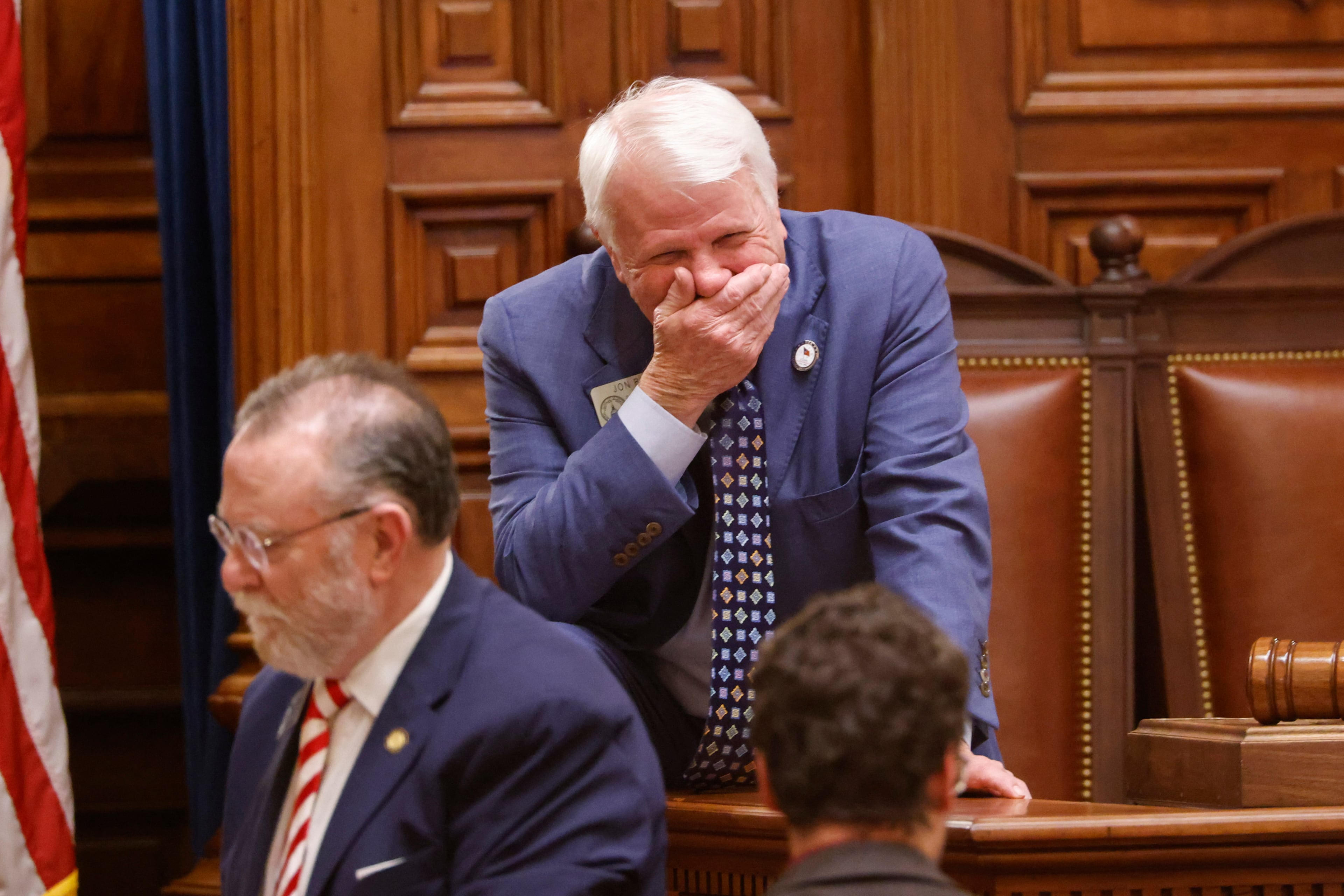
Good morning! We made it through the first big election of 2026 this week. But there’s still plenty more to come. Now it’s time to test your knowledge of political news from Georgia and beyond. You’ll find the answers at the end of the newsletter.
Lawmakers passed a bunch of bills last week on Crossover Day, the deadline for legislation to cross over to the other chamber. What proposal did not pass?
- A) Repealing a sales tax exemption for data centers.
- B) Replacing Georgia’s touchscreen voting system with hand-marked paper ballots.
- C) Limiting property tax increases to 3% or the rate of inflation, whichever is higher.
- D) Establishing new grounds for disciplining or removing district attorneys or solicitors general.
The FBI seized Fulton County’s 2020 ballots earlier this year. What other state had its election documents subpoenaed?
- A) Pennsylvania
- B) Ohio
- C) Nevada
- D) Arizona
Republican Clay Fuller and Democrat Shawn Harris were the top two vote-getters in Tuesday’s special election to replace Marjorie Taylor Greene in Congress. Who finished third?
- A) Former Georgia Republican Party chair Jim Tully
- B) Former Republican state Sen. Colton Moore
- C) Businessman Brian Stover
- D) Pastor Tom Gray
Democrat Dexter Sharper resigned from the state Legislature this week and pleaded guilty to federal unemployment fraud charges. How many Georgia House Democrats have been charged with similar crimes?
- A) Two
- B) Four
- C) Three
- D) Seven
Showtime

Georgia politics are never calm. But today promises to be especially rocky.
Lawyers for health care business owner Rick Jackson and Lt. Gov. Burt Jones, two Republican candidates for governor, will duke it out in court today over a state law that give Jones a fundraising advantage.
A few hours later, former Fulton County special prosecutor Nathan Wade is scheduled to appear before a Republican-led Senate committee to answer questions about his romantic relationship with Fani Willis, the district attorney who hired him to prosecute an election interference case against Trump and his allies.
That case has been dismissed. But the political fallout is still going. Wade’s testimony comes a few months after Willis herself battled with state Sen. Greg Dolezal during a heated hearing. Dolezal, who is running for lieutenant governor, is now set to question Wade.
Bat money

Adam West’s version of Batman in a 1960s TV series and movie was famous for having a bat phone, bat thermal underwear and even bat spray to repel sharks. But did he ever have a bat budget?
State lawmakers may have one-upped him. The amended 2026 budget, signed into law last week, includes $500,000 to remove a bat infestation from St. Marys Elementary School in Camden County.
The school was forced to close for a few weeks earlier in January after hundreds of bats moved in. Getting rid of them required school officials to remove more than 24,000 ceiling tiles, according to WTLV-TV.
Getting the money wasn’t easy. State Rep. Steven Sainz, R-St. Marys, noted the budget process is “extraordinarily competitive.”
“That makes the inclusion of this appropriation all the more meaningful — not only because it relieves our community from bearing the full cost, but because it underscores how effective collaboration between local leaders and the state can deliver real results,” he said.
Fish fee

Georgia anglers had just two days to fish for red snapper last year. They’ve been clamoring for a longer season, even telling lawmakers they’re willing to pay for it. They might soon get their wish.
The House passed Senate Bill 420 on Thursday, which creates a new $10 fee for Georgia residents who want to fish in the Atlantic Ocean. The money will pay for state officials to conduct surveys to find out how many red snapper are in the ocean off Georgia’s coast.
The state has been relying on federal data to decide the length of the fishing season, data anglers have long complained is flawed.
“The goal here today is for Georgia to take control of its own fishery,” said state Rep. Jesse Petrea, R-Savannah.
Meanwhile, Georgia has submitted an exempted fishing permit to the federal government. It’s being reviewed by the National Oceanic and Atmospheric Administration. If approved, Georgia’s red snapper fishing season could last 61 days this year, according to Russell Kent, the Georgia government relations advisory chair for the Coastal Conservation Association.
Kent said Georgia’s red snapper season hasn’t been that long since the late 2000s.
House bill advances

The U.S. Senate overwhelmingly approved its affordable housing legislation by a vote of 89-10. The ROAD to Housing Act includes a provision drafted by U.S. Sen. Raphael Warnock and backed by U.S. Sen. Jon Ossoff that would ban large companies from buying up more rental properties.
The U.S. Conference of Mayors, a nonpartisan organization of leaders in large cities, applauded the bill’s passage.
“In our cities, mayors are doing everything we can to increase supply and support affordability,” conference president David Holt, mayor of Oklahoma City, said in a statement. “But we cannot solve this challenge alone. We need a federal partner.”
The Senate bill also has the support of Trump, although he has made it clear his priority for Congress is passage of federal elections standards known as the SAVE America Act. There also remains opposition in the House, especially among members of the conservative House Freedom Caucus who want changes to the Senate’s version of the bill.
“We’ll deal with housing in some way — it’s not going to be the way the Senate is going to send it over to the House,” U.S. Rep. Andy Harris, a Maryland Republican who chairs the Freedom Caucus, told Politico.
Listen up
There is no “Politically Georgia” podcast today. We’ll be back on Monday.
You can listen and subscribe to “Politically Georgia” for free on Apple Podcasts, Spotify or wherever you get your podcasts.
Have a question or comment for the show? Email us at politicallygeorgia@ajc.com or give us a call at 770-810-5297 and you could be featured on a future episode.
Disaster relief

Gov. Brian Kemp has asked the Federal Emergency Management Agency to declare a disaster in Georgia following a snowstorm in late January.
The storm dropped snow and ice across the state, particularly in northeast Georgia. Homes and businesses were affected and, according to one member of Congress, federal resources are now needed to assist with rebuilding.
U.S. Rep. Andrew Clyde, R-Athens, wrote a letter to Kemp this week requesting the disaster declaration by Thursday’s deadline. Kemp’s office responded that the state was already in the process of submitting its application to the federal government.
A Kemp spokesperson told Now Georgia that the Georgia Emergency Management Agency “has been working on a major disaster declaration application, predating the congressman’s letter.”
Today in Washington
- The president will celebrate national rodeo winners at the White House before departing to Mar-a-Lago for the weekend.
- The House and Senate are done for the week.
- Defense Secretary Pete Hegseth will hold a media briefing on the war in Iran.
Vance visit

Vice President JD Vance is set to visit the University of Georgia next month to speak with college students. The April 14 speaking engagement is part of a Turning Point USA Tour, featuring prominent GOP figures and Erika Kirk, Charlie Kirk’s widow.
Shoutouts
Correction:
- We misspelled former U.S. Ambassador Michele Taylor’s name in yesterday’s newsletter.
Want a birthday shoutout in the Politically Georgia newsletter? There’s a form for that. It’s not just birthdays. We’re also interested in new jobs, engagements, birth announcements, etc.
Before you go

Answers to this week’s news quiz:
- B) Replacing Georgia’s touchscreen voting system. The Legislature now has less than a month to figure out how to comply with a state law to stop using QR codes to count ballots.
- D) Arizona. The Republican leader of Arizona’s state Senate said he handed over records in response to a federal subpoena.
- B) Colton Moore. The former state Senator says he will run again for the seat in May for a full two-year term.
- C) Three. The other two Democrats are former state Rep. Karen Bennett and suspended state Rep. Sharon Henderson.
That’ll do it for us today. As always, you can send your best scoops, gossip and insider information to greg.bluestein@ajc.com, tia.mitchell@ajc.com, patricia.murphy@ajc.com and adam.beam@ajc.com.
About the Authors

Greg Bluestein is the Atlanta Journal Constitution's chief political reporter. He is also an author, TV analyst and co-host of the Politically Georgia podcast.

Tia Mitchell is the AJC’s Washington Bureau Chief and a co-host of the "Politically Georgia" podcast. She writes about Georgia’s congressional delegation, campaigns, elections and the impact that decisions made in D.C. have on residents of the Peach State.

Patricia Murphy is the AJC's senior political columnist. She was previously a nationally syndicated columnist for CQ Roll Call, national political reporter for the Daily Beast and Politics Daily, and wrote for The Washington Post and Garden & Gun. She graduated from Vanderbilt and holds a master’s degree in journalism from Columbia University.

More Stories
The Latest


