Jimmy Carter helped avert nuclear disaster as young naval officer
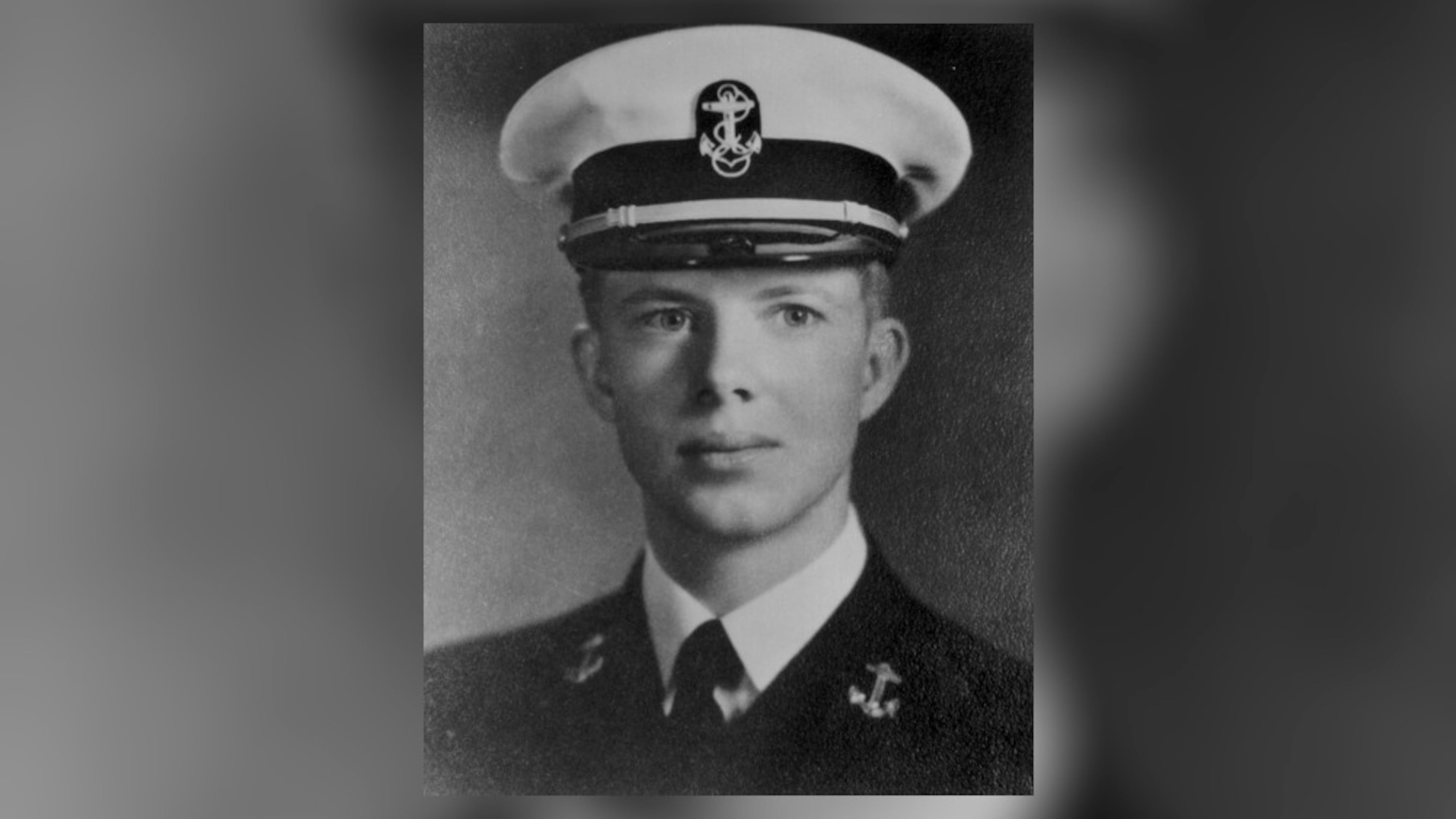
Jimmy Carter played a key role in repairing one of North America’s early nuclear reactor disasters.
He was a young Navy officer in the nation’s nascent nuclear-powered submarine program in 1952 when a Canadian experimental reactor near Ottawa overheated, resulting in a partial melting of fuel rods, followed by explosions which damaged the reactor.
Carter, who earned a Bachelor’s of Science from the Naval Academy in 1946, had taken graduate work in nuclear physics and reactor technology at Union College in Schenectady, New York, as part of his naval training, according to the Carter Center.
“There were few people at the time who were as knowledgeable as we were about this new technology,” Carter wrote in his 2016 book “A Full Life: Reflections at 90.”
Then-director of the Naval Reactors Branch Hyman Rickover assigned Carter and his crew to assist the Canadians with the disassembly and repair of the Chalk River facility.
Jimmy Carter: The life and legacy of the 39th president
Read: The life story of the man from Plains
Where it all started: Plains, Georgia. The South Georgia hometown of Jimmy Carter and his wife Rosalynn, located in Sumter County along US 280, became a world fascination when Jimmy Carter became the first and only Georgian ever elected to the White House.
Carter’s legacy: Jimmy Carter’s greatest accomplishment wasn’t being president of the United States. It was what he did afterward. A curious late-night dream sparked the idea of the Carter Center, where he and his team, continued his mission toward world peace and global health.
Read this list of some of Carter’s biggest accomplishments and reflections from a former aide.
Rosalynn and Jimmy Carter: Rosalynn Carter said she thinks she fell in love first with a photograph. Rosalynn and Jimmy Carter went on to be the longest married couple in presidential history — married for more than 77 years until her death in November 2023.
Condolences: Read and sign the online guestbook at the Carter Center
The disaster left an extremely high amount of radioactivity in the reactor facility. A person could spend only 90 seconds working on it before being overexposed. A detailed mockup of the device was put together on a nearby tennis court so Carter and his crew could practice removing and replacing parts as quickly and efficiently as possible.
His crew and their Canadian counterparts all took their turns, getting high doses of radiation, but helping avert further disaster.
“We returned to Schenectady after all of us had exhausted our permissible time in the radioactive site,” Carter wrote. “There were a lot of jokes about the effects of radioactivity, mostly about the prospect of being sterilized, and we had to monitor our urine until all our bodies returned to the normal range.”
Carter told the Canadian writer Arthur Milnes that he had measurable radioactivity in his urine for about six months.
The reactor was repaired and continued to operate for years afterward.
About the Author

Christopher Quinn is a writer and editor who has worked for The Atlanta Journal-Constitution since 1999. He writes stories on Veterans Affairs, business including high-tech growth in metro Atlanta, Georgia's $72 billion farm economy, and he oversees assigning and editing news obituaries.
More Stories
The Latest