‘Soldiers of Christ’ murder case in limbo after judge cuts claims

The case against a family of Korean nationals alleged to be members of a religious group, “Soldiers of Christ,” is on the ropes after a Gwinnett County judge dismissed the most serious charges, finding the claims in the indictment weren’t sufficient.
Last week, Superior Court Judge Tamela Adkins tossed four counts — racketeering, felony murder, concealing death of another and tampering with evidence — against JoonHyun Lee, JoonHo Lee, JunYeong Lee, MiHee Lee, GaWon Lee and HyunJi Lee.
Eric Hyun, a family friend, was originally indicted along with the Lees but he was severed from the case back in October 2024. His case will be prosecuted following the Lee prosecution.
The judge found, for example, that prosecutors’ claims under the state’s Racketeer Influenced and Corrupt Organizations Act didn’t allege any actual crimes, and that the state’s explanation of its murder charge didn’t include enough details for the family members to prepare their defense.
A false imprisonment charge remains against all defendants.

The case revolves around the Lee family of Lawrenceville, including three brothers, their mother, the fiance of one of the brothers and a family friend. Each of them is accused of persuading a 33-year-old South Korean woman, SeeHee Cho, to travel to Gwinnett County to join their small religious organization.
Prosecutors allege that upon Cho’s arrival to the U.S., the family took her cellphone, wallet and clothes and then kept her in a basement at a residence on Stable Gate in Lawrenceville, where she died as a result of beatings and starvation, according to the indictment.
Cho’s 70-pound body was found on September 12, 2023, wrapped in a blanket in the trunk of Hyun’s car outside Jeju Sauna, a popular Duluth-area bathhouse and spa.
According to the indictment, JoonHo Lee formed and led the “Soldiers of Christ,” a small religious organization, in November 2022 and all the other defendants joined him shortly thereafter.
Prosecutors allege that JoonHo Lee believed that he was “exceptionally blessed by God” and in order to further his mission and spread his message, he sought to have twelve disciples, including Cho, to assist him in carrying it out.
A local Korean pastor told The Atlanta Journal-Constitution that neither he nor his colleagues were familiar with the Soldiers of Christ religious group.
Defense attorneys argued the indictment failed to allege that the family members had participated in a pattern of racketeering activity that centered on a criminal enterprise, and that there wasn’t enough information in the charges to allow the family to prepare a meaningful defense.
Atkins agreed with the defendants, finding that none of the 17 overt acts listed under the RICO charge showed “violations of any statute nor do they contain elements of any of the offenses alleged to be the pattern of racketeering activity.”
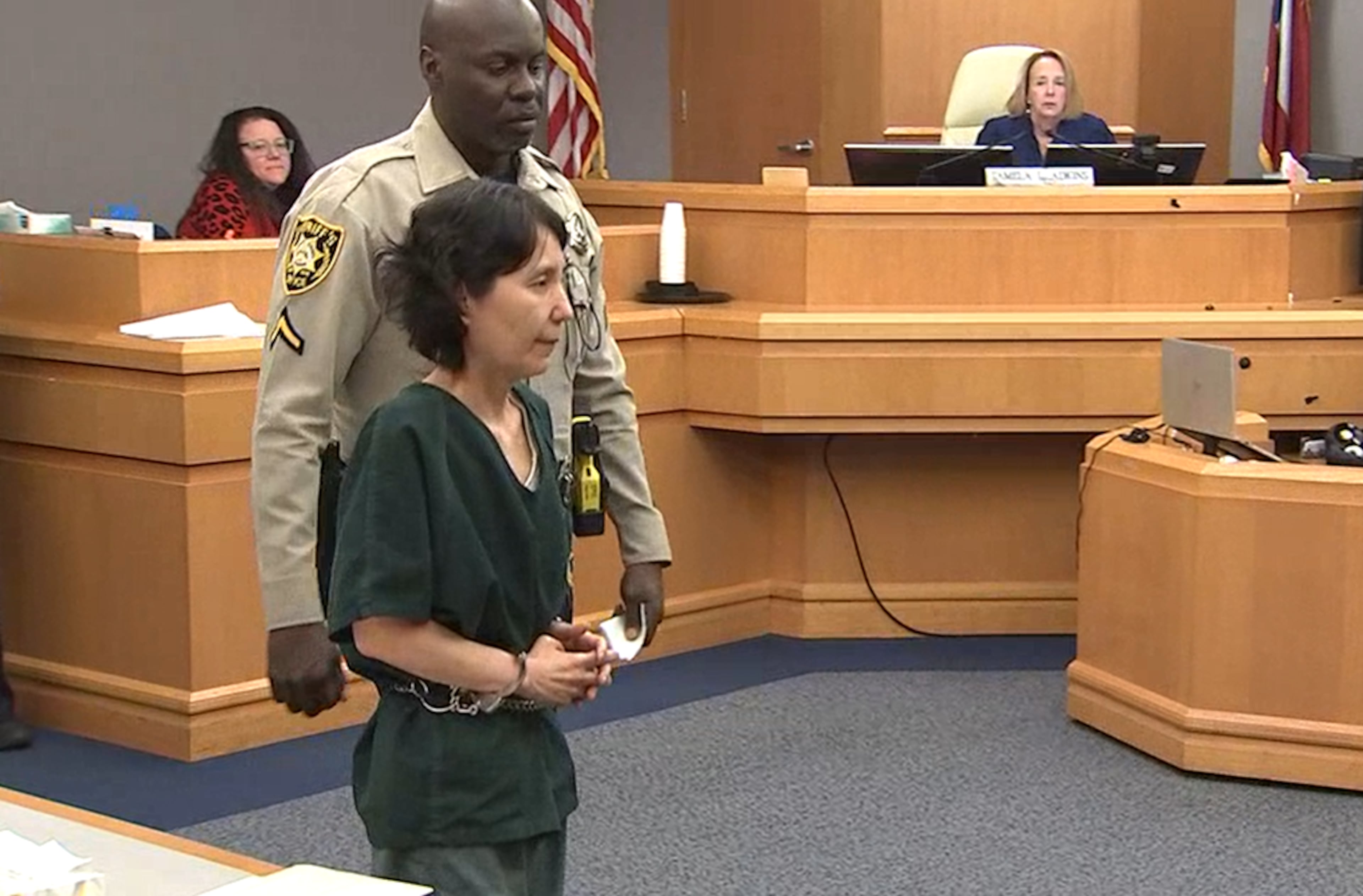
On the murder charge, Atkins ruled that the wording used in the indictment does not sufficiently tell defendants what exactly they need to be prepared to defend against, finding that it simply states that the defendants caused the death “by causing complications of exogenously induced physiologic stress” while detaining the victim without legal authority.
Defense attorneys argue that the indictment does not specify what “complications” the victim allegedly suffered or what “exogenously induced physiologic stress” means in context.
For the other two charges, Adkins also ruled that the terms used to described the alleged offenses were too broad and vague for defendants to mount an effective defense.
The Gwinnett County District Attorney’s Office has already filed a notice to appeal Adkins’ order.
“We look forward to arguing our case before the Supreme Court of Georgia and vigorously seeking justice in this matter,” Gwinnett District Attorney Patsy Austin-Gatson said in a statement.
Defense attorneys representing the Lees declined to comment due to the pending appeal.
Defense attorneys not involved in the case told the AJC that Adkins’ order shows potential problems in prosecutors’ ability to connect the death to the purported religious organization.
“As the defense pointed out, some of those things, they’re not even charges,” Tiffany Adams, a defense attorney who isn’t involved in this case, told the AJC. “They’re not even crimes, so how can they then be the pattern of racketeering activity if it’s not illegal things?”
And as a defense attorney, you must be able to know what you are defending against, Adams said.
“They have to put it in the charging document because that is what’s going to be given to the jury. That’s what the judge is instructing the jury to compare the evidence against so that’s what matters,” she said.

Attorney Suri Chadha Jimenez, who is not involved in the case but defended RICO claims in the YSL and Training Center RICO cases, said he has seen a pattern of prosecutors trying to do too much when bringing RICO charges against individuals.
He said prosecutors get too caught up on their writing skills when simplicity and straight-to-the-point wording and facts are all that’s needed to support an indictment through the earlier stages of a case, in which defendants can file what’s called a demurrer. In Georgia, demurrers function as a request for a judge to throw out prosecutors’ claims as legally deficient before a jury is asked to make decisions about the facts of the case.
“If you just keep it simple, you survive a demurrer. It is very embarrassing to have a demurrer granted against you. It just truly is. It means that you don’t know how to write,” Chadha Jimenez, who also served as a former prosecutor, said.
Both attorneys noted that the prosecution now has a chance to re-indict and correct their mistakes.
“A good thing for the defense, a reason they might have done it, is that it already puts the state in the defensive, and now they might reevaluate their case and realize, ‘You know what, we don’t have enough for RICO. Let’s just go forward on the charges that we do have,’” Chadha Jimenez said.
However, if prosecutors re-indict the case under the same charges and they ended up getting tossed out again on the new indictment, the charges can’t be brought a third time, per Georgia law.
The killing — which was covered widely by Korean news outlets in the U.S. — unsettled much of the Korean population in Georgia, specially those living in Gwinnett County.
“It really kind of alerted people that we should not be so comfortable,” Sarah Park, president of the Atlanta chapter of the Korean American Coalition, told The Associated Press about the killing.
The Lee family lived in the area often called “The Seoul of The South” due to its vast number of Korean restaurants, shops and establishments. Park told the AP it was unsettling how close the slaying was to their cultural hub.
About the Author