Could increased visitation ruin Cumberland Island? Plan stokes controversy.

Cumberland Island is known for its primitive opulence, an unspoiled paradise where humans leave only their footprints — and very few of those.
It’s remained that way with a 300-person cap on the ferry that connects it to civilization and strict rules regarding bicycles, motorized vehicles and camping.
Soon, the Georgia barrier island’s longtime caretaker, the National Park Service, could relax those controls.
A public comment period is open through Feb. 6 on a Visitor Use Management Plan and Environmental Assessment. The proposal would more than double the number of ferry seats, add a third ferry docking location, increase campsite capacity by 25% and open 3 additional miles of beach to bicyclists.
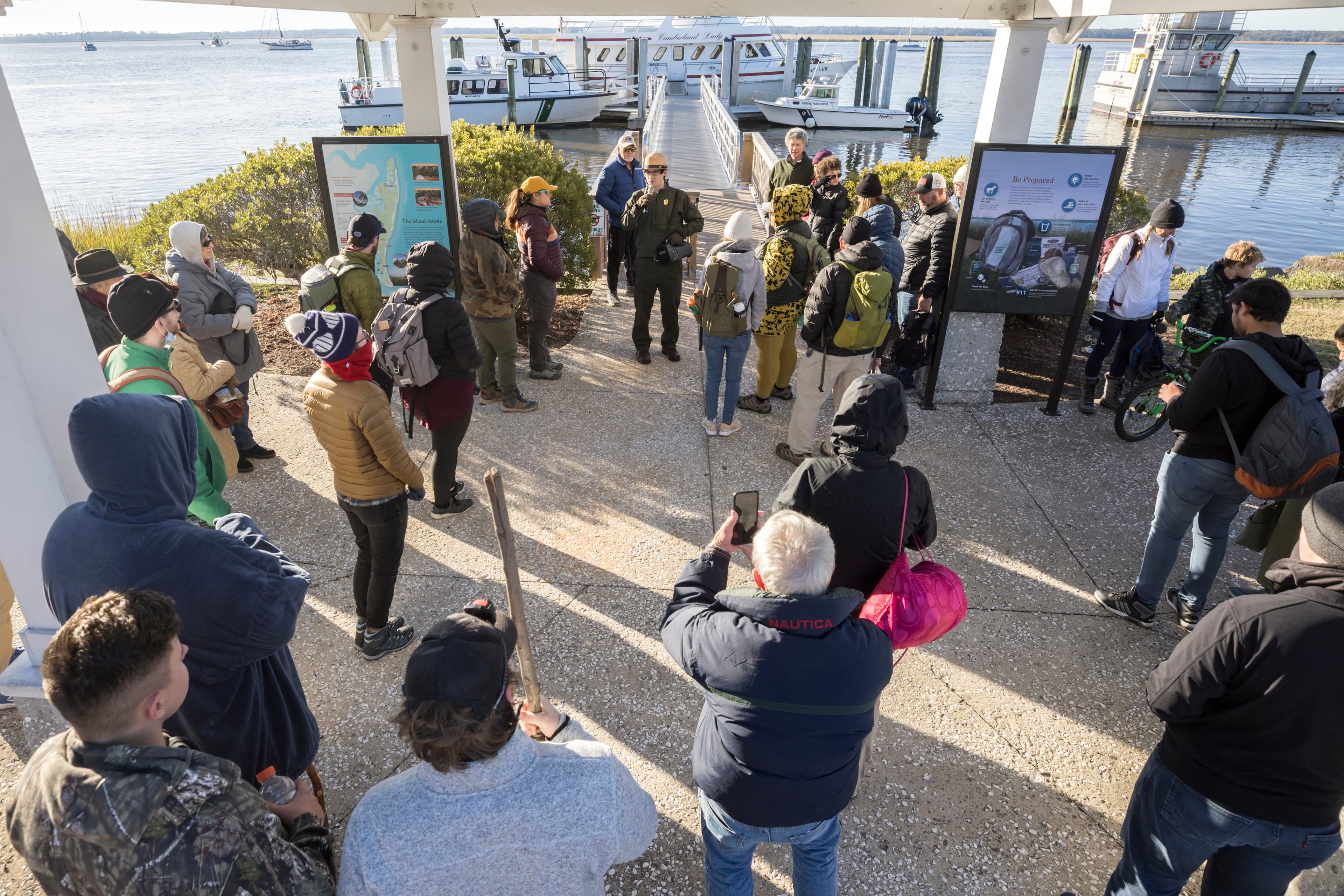
The plan is meant to “increase visitor access and reflect updated management practices” for the 36,000-acre island at coastal Georgia’s southern tip, said Cumberland Island National Seashore Superintendent Melissa Trenchik.
But conversationists oppose the proposal and say it wouldn’t preserve the island as the U.S. Congress dictated — “in its primitive state” — in establishing the national seashore in 1972.
The plan’s unveiling renews an on-again, off-again debate about visitation that started more than a decade ago.
The National Park Service deemed an updated visitation plan a priority in 2014 and a proposal was published five years later.
The initial draft drew more than 2,000 responses during public comment and was revised and published again in 2022. That version also met criticism, particularly from conservation and environmental groups, and was shelved in 2023 with no explanation.
The latest plan reflects several changes called for in the earlier reviews. Eliminated from the draft was a boat landing at Cumberland’s southern tip, an expanded bicycle area near the Carnegie family’s Plum Orchard mansion and closure of a wilderness campsite.

But critics say the updated plan fails to address its core weakness — expanding ferry capacity from 300 passengers to 700 a day.
The Park Service’s “job is to accommodate public demand, not promote it,” said David Kyler, director of the Brunswick-based Center for a Sustainable Coast.
The visitation plan cites a study of the island’s popular sites, such as the beaches and the Dungeness mansion ruins, that determined how many “people per viewshed” would be appropriate without diminishing the primitive experience.
The report does not include data on visitor demand, such as the daily average of ferry and campsite bookings or the number of days annually that the 300-person ferry maximum is reached. The park service had not responded to a request for that information as of publication time.

Increased visitation spawns several other concerns from critics. More visitors mean more bikes — including increasingly popular motor-driven e-bikes, as well as construction of new infrastructure. The plan calls for building a trail spur, a small campground and a bathhouse at Nightingale Beach not far from the two current ferry docking locations.
And expanding the ferry service to an existing dock near the Plum Orchard mansion and opening up a campground currently used only during special events, such as managed hunts, would result in more foot traffic in Cumberland’s largely undisturbed wilderness area near the historic home, critics argue.
Jessica Howell-Edwards with Wild Cumberland, a preservation group, called the plan “detrimental” to the island’s wildlife, ecosystem and the visitor experience. Her organization is hosting a virtual town hall about the visitation plan at 7 p.m. Wednesday, Jan. 21.
“What they are proposing can be found on just about every developed island from North Carolina to Florida. What you can’t replicate is what 50 years of protections have provided here at Cumberland Island,” she said. “Count me among those who believe it is important to improve access to public lands. But I don’t see that with this plan.”
About the Author

Adam Van Brimmer is a journalist who covers politics and Coastal Georgia news for The Atlanta Journal-Constitution.