Abortion law challenge tops Georgia court cases to watch
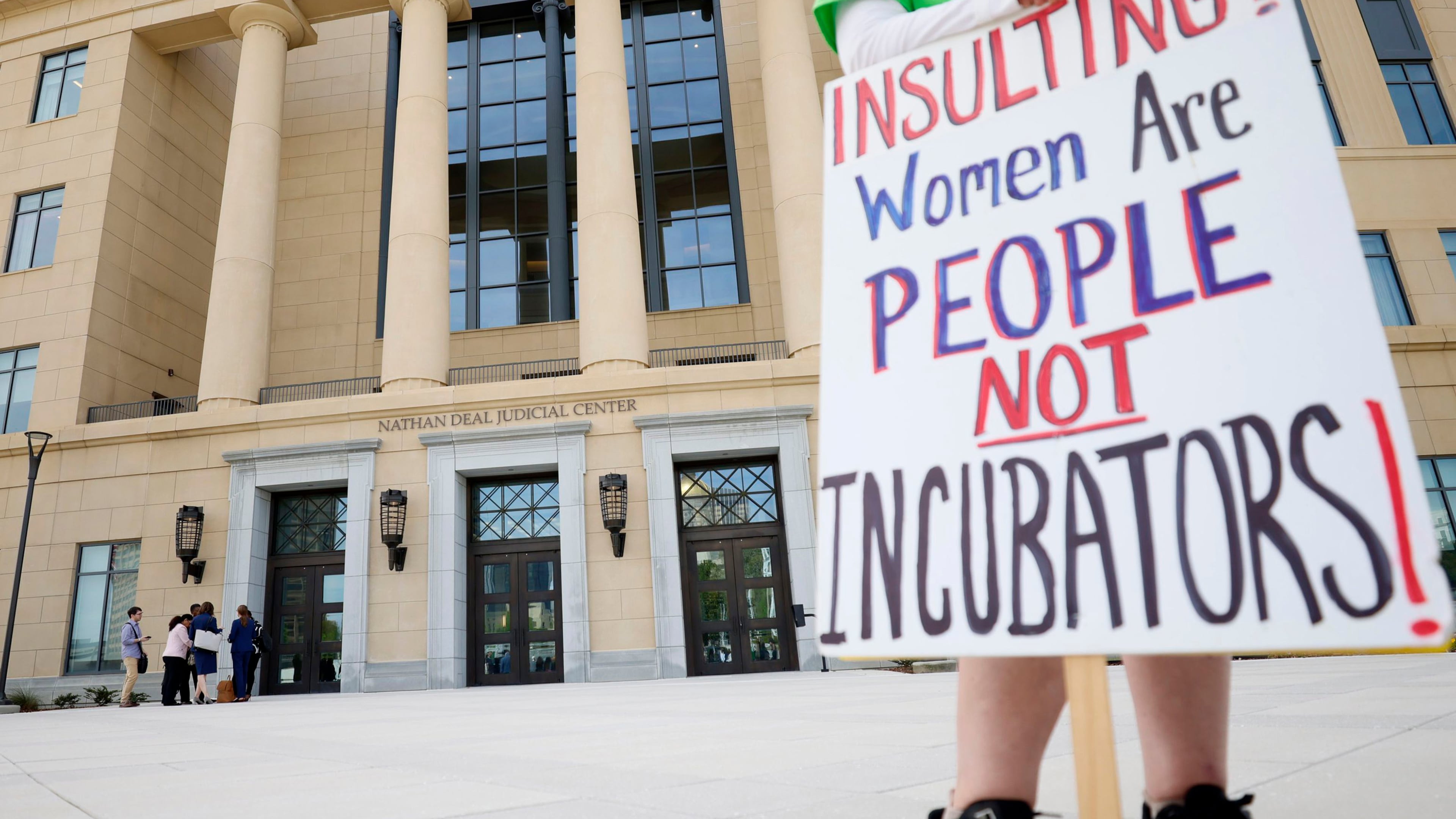
The yearslong legal challenge to Georgia’s anti-abortion law may unravel under new precedent and jurors could punish social media giant Snapchat for a teenager’s reckless driving in what promises to be an explosive year in the state’s courts.
A landmark transgender rights case poised to influence how employers provide health care insurance to staff is heading back to a federal judge in Macon after three years in the 11th U.S. Circuit Court of Appeals.
That court is set to reconsider whether the federal government can be liable for traumatizing an Atlanta family in a mistaken predawn raid on their home, after the family’s lawsuit was revived by the U.S. Supreme Court.
And for the second time in the country’s history, the parent of a mass school shooting suspect is due to be tried in connection with the crime.
These are among the Georgia court cases to watch in 2026.
New precedent might sink yearslong abortion law fight
Since 2019, a group of abortion rights advocates have been trying to end Georgia’s law that bans most abortions after about six weeks, once medical professionals can detect fetal cardiac activity and before many women know they are pregnant.
The case, claiming the law is unconstitutional, was first filed in Atlanta’s federal trial court, where it died in 2022 in line with the Supreme Court’s overturning of federal abortion rights under Roe v. Wade.
Plaintiffs in the Georgia case, including several health care providers, then sued the state in the Fulton County Superior Court and for a moment they were winning.

Judge Robert McBurney ruled in September 2024 that Georgia’s Living Infants Fairness and Equality — or LIFE — Act violates the state’s constitution. But his order banning enforcement of the 2019 statute was short-lived.
In October 2024, the Georgia Supreme Court put McBurney’s order on ice while reviewing it. The court then decided, without upholding or reversing McBurney’s order, to return the case to him in February.
McBurney must now decide, based on the state Supreme Court’s latest precedent, whether the abortion rights advocates are in a position to sue.
The court has recently chipped away in other cases at the legal concept of standing, which determines eligibility to bring a civil claim.
John Amabile, an Atlanta litigator, said the court is taking a conservative “textualist” approach in which it relies on the way laws were first written, and not the legislative intent behind those words. He said that approach may doom the abortion law fight and other lawsuits like it.
“The Georgia Supreme Court has really restricted the ability to challenge whether a statute is unconstitutional by looking at who had the right to make those challenges in the 18th century,” Amabile told The Atlanta Journal-Constitution.

Snapchat could be liable for Georgia couple’s injuries
Jurors in Spalding County will be asked to decide whether the social media platform Snapchat is responsible for an almost-fatal crash caused by a teenage user while she was driving at high speed.
In 2015, 19-year-old Christal McGee was reportedly recording her car’s speed on her cellphone through Snapchat’s “speed filter” function when she rear-ended Karen and Wentworth Maynard on Tara Boulevard in Clayton County.
The Maynards allege Snapchat’s now-discontinued speed filter encouraged users to drive recklessly with catastrophic consequences, including Wentworth Maynard’s permanent brain damage. The social media platform denies liability, arguing in part that its phone app had nothing to do with the crash.
The highly anticipated trial in the case is scheduled to begin in November.
McGee, who pleaded no contest in an associated criminal case, recently changed her name to Christal Leatherwood, court records show. She told her three passengers right before the crash that she was trying to go at 100 mph, to post it on Snapchat, the Maynards allege.
One of the passengers told reporters in 2016 that she had asked Leatherwood to slow down after seeing through Leatherwood’s phone that they were traveling as fast as 113 mph.
The driver’s cellphone at the center of the case is missing. In October, Spalding County State Court Judge Josh Thacker fined her $100,000 for failing to hand it over.
Snapchat disabled its speed filter in 2021, though it contends that it warned against driving while using the function, which captured how fast someone was moving and allowed them to share that information.
The Maynards cited more than a dozen other vehicle crashes, some fatal, involving Snapchat or its speed filter.
Landmark transgender rights case proceeds after lengthy appeal
Houston County sheriff’s deputy Sgt. Anna Lange can continue her landmark transgender rights case against her employers after it caused a rift among 11th Circuit judges.
Lange sued the county and its sheriff in 2019 after they denied her insurance coverage through their employee health plan for some of her gender-transition treatment. She claimed she was discriminated against unfairly because of her sex, in violation of federal law.
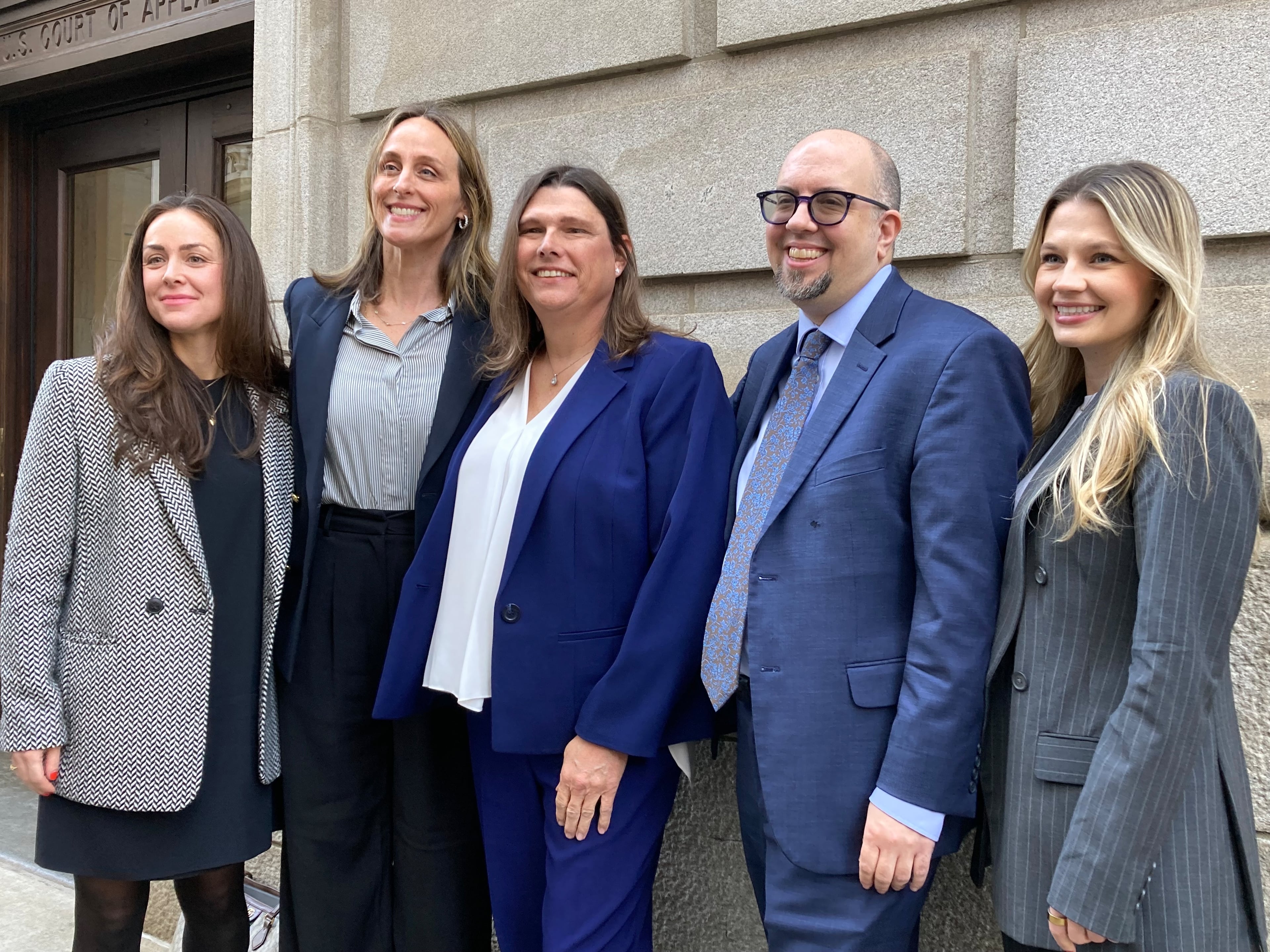
In 2022, a federal judge in Macon agreed that the part of the health care plan which excluded coverage for “sex change” surgery violated Title VII of the Civil Rights Act, and he barred its enforcement. A jury awarded $60,000 in associated damages to Lange, an employee of the sheriff’s office since 2006.
A jury trial on Lange’s separate claim under the Equal Protection Clause of the U.S. Constitution was put on hold while the county and sheriff appealed the judge’s ruling.
In 2024, a panel of three 11th Circuit judges upheld the decision. It was the first time a federal appellate court concluded that it is unlawful for an employer to discriminate against transgender people in an employee health plan, according to the Transgender Legal Defense and Education Fund, which helped Lange in the case.
But a subsequent ruling by the full 11th Circuit in September greenlit the health care plan and its exclusion for gender-transition surgery. The deeply divided court returned the case to U.S. District Judge Marc Treadwell in Macon.
Lange can still argue that the way the county and sheriff administered the plan in her case was unlawful, her attorneys say. They have criticized the defendants for allegedly spending more than $2 million fighting the case, pointing out Lange’s surgery cost much less.
Atlanta family gets another chance at no-knock raid damages
If armed federal agents mistakenly bust down your door in the middle of the night in a terrifying no-knock raid, can you sue them for the associated trauma? That is the question under reconsideration by the 11th Circuit in an Atlanta family’s case that made it all the way to the U.S. Supreme Court.

Trina Martin, her son, Gabe Watson, and her former partner, Toi Cliatt, sued the federal government and the FBI agents who conducted a predawn raid on their Atlanta home in 2017, claiming they were held at gunpoint by the six-member SWAT team that had the wrong address. Watson was 7 at the time.
In 2024, the 11th Circuit upheld a decision by a federal judge in Atlanta dismissing the case at the defendants’ request. It found the family’s various claims failed for several reasons, including that the agents were immune from liability in association with their work duties.
But the Supreme Court wiped out the 11th Circuit’s ruling in June, pointing out flaws in the lower court’s reasoning and instructing a do-over.
The 11th Circuit must now apply the Supreme Court’s guidance in determining whether any of the family’s claims can proceed to trial. A decision in the case could have wide implications for any allegations of wrongful actions by federal employees and law enforcement officers in particular.
Oral arguments are tentatively scheduled for March.
Unprecedented school shooting case in jurors’ hands
The first Georgia parent criminally charged in association with a mass school shooting that their child is accused of committing is due to face jurors in February.

Colin Gray pleaded not guilty to multiple counts of second-degree murder, involuntary manslaughter and child cruelty in connection with the 2024 shooting at Apalachee High School that left two students and two teachers dead and nine others injured.
Prosecutors say Gray’s son, Colt Gray, was the shooter and that the father allowed his then-14-year-old son access to guns while ignoring warning signs the teenager could be capable of violence.
In the only other case like it in the U.S., the parents of a Michigan school shooter were convicted of involuntary manslaughter and sentenced to at least 10 years in prison.
Colin Gray’s trial is scheduled to begin Feb. 9 in Barrow County, with jurors from neighboring Hall County.
The criminal case against Colt Gray, who pleaded not guilty to dozens of murder and associated charges, remains pending.
Related lawsuits are forthcoming, alleging negligence by school and law enforcement staff who were reportedly warned about Colt Gray but failed to act.
About the Author

Journalist Rosie Manins is a legal affairs reporter for The Atlanta Journal-Constitution.


