Grateful for a second chance
I stood by the open window of my third floor apartment, enjoying the gentle breeze and the beautiful spring green that seems to consume an afternoon this time of year. Below, gathered in what has become their fun place - an area of grass, pine needles shaded by three oaks - were the children of my neighborhood.
As I warmly and secretly received their words, it was then that I knew the purpose of this column. Suddenly, I realized that there was a reason for enduring the pain of the last 18 months. There has been so much.
"I am four and four quarters old, " a girl said. A boy reflected for a brief second and replied, "I'm four and 10 quarters old."
"There's no such thing, " replied little blue eyes.
"Is so, " said the boy.
"Is not."
"How do you know you're four and 10 quarters?" asked another little girl. There were six little girls in all. He was outnumbered, up against amazing almost unbelievable odds. Then came a mother's voice: "Michael, who told you you were four and 10 quarters?" Then sensing his entrapment, she quickly said to the whole gang, "Hey, who wants to ride the skateboard first?" They raced off, trailing laughter of kids at play, four and 10 quarters now a memory.
It was 6 p.m. now. The next sounds were not so pleasant. A local news anchor was pumping up the evening news: "Jan Kemp, will she sue or settle? . . . Today, a landmark decision about a husband raping his wife. . . . In Savannah, a man accused of raping two young girls goes to trial. . . . But this is our top story: Nuclear fire in the Ukraine. . . . "
I was still thinking about the children and the pain, how something terrible and perhaps out of control can happen to a person between the ages of four and 10 quarters and 40 if a mother, or someone who cares, isn't there to love them and put out the fire.
"The 4 o'clock count is now in progress, " drawled the prison guard over the intercom. "All movement will cease and all inmates will be in their cubicle. All right, let's move it. Let's go."
You stand there, in an 8-by-10 foot cubicle, with your two cube mates. The white cement wall around you is 6 feet high. All you can see are the heads of fellow inmates. How humiliating. I hadn't felt that way since my father caught me fighting, took off his belt and gave me a whipping I'll never forget - in front of my friends. I was 10 years old.
There are 75 men in each of four dorms. We were there to be punished in a place we came to call, "The Little House on the Prairie." It was 150 yards and light years away from The Big House, the Federal Penitentiary housing 1,800 Cubans and assorted others. We called it, "The Alamo." There is so much to tell.
The first night, I stared at the ceiling, listening to the fan and the snoring of 75 men. It keeps you up, makes you think. I thought a lot. I made a mistake and I paid for it. But, if I could remember prominent athletes, politicians and media types who might have ever used drugs, officials implied, then nothing would have happened to me. That's called immunity from prosecution.
But there was nothing to remember.
Maybe one day I'll be able to tell what really happened. But, I wanted to look forward, not back. For now, all I could do was look around and reflect.
There were no designer jeans or Guccis in this federal prison camp, despite what I'd heard about golf courses, tennis courts and the good life of confinement. You wear khakis and steel-toed shoes and head en masse to the chow hall on time.
I earned 11 cents an hour cooking, cleaning and serving food. I diced onions, peppers and celery for stews, soups, meatloaf. In a funny way, the kitchen came to be my fun place, my "four and 10 quarters" grove, the only place in prison where I laughed with men who came to be close friends. I worked with two doctors. One was there for perjury, the other for Medicare fraud. I was there for cocaine possession, a misdemeanor. There were also rich and powerful men, bankers, politicians and presidents of large corporations. Someone joked, "There's enough brains and power here to run the country."
"Hell, " laughed one inmate, "they did."
Guards brought the mail. "Well, Harmon, you won again, " they would say, handing over between 12 to 15 letters a day. Most were from strangers. At first, I thought it strange: They were asking for help from someone in jail? There were letters from fathers saying, "Please help my son." Mothers wrote, "Please help my daughter." Sons and daughters wrote, "Please help my father." Everyone sent their prayers, and everyone wrote, "Bless your mother."
Yes, bless her. Now 75, she was there when others weren't. I'll never appreciate Mother's Day like I will next Sunday. My well-wishers were everyday people who cared. They understood the power of such love, and I will always be grateful for their words. They wrote, "We know you've been through hell, but this could be the best thing that has happened to all of us. You could be that person our children just might listen to."
It's over now, or almost. I'm driving to Dalton one hour and 15 minutes north of Atlanta on Interstate 75, on the way to see if children will listen. The Elks Clubs of America have invited me to join them in educating young people about drugs and where they can lead.
I'm grateful. Not everyone gets a second chance.
There was a press conference. "It sure is nice to be in front of the camera again, " I joked. "Soon I hope to be the one asking the questions."
"What do you want to do here in Dalton?" asked one. "Why Dalton."
It's the kickoff town for the Elks' national drug awareness campaign, and next Thursday, I'll be back to talk to 1,600 young people, ages 9-18. I'm going to tell them what can happen when you play with fire. I'm going to tell any kid who will listen, wherever the Elks ask me to go.
We have a very serious problem in our country. Drugs. They are everywhere. I knew about the problem, but not like I do now.
It's the least I can do. As I drive about Atlanta, I can hardly believe it. I've been to jail and here people are sporting bumper stickers that say, "Harmon's Still Charmin'." What's going on? I'm overwhelmed by the warmth, the compassion, the redemptive spirit of fellow Southerners.
On opening night of the Braves game last month, parents brought their children up to meet me. "This is Harmon Wages, son, " said a father. I signed more autographs that night than I ever signed in my media or football careers.
What's going on? Maybe they realize that I paid for my mistake, that I'm sorry. Maybe it says something about goodness and human kindness, about forgiveness and the power of the redemptive spirit.
It's good to be back. As a celebrity, the authorities had every reason to make an example of me. It worked. Now it's time to set an example.
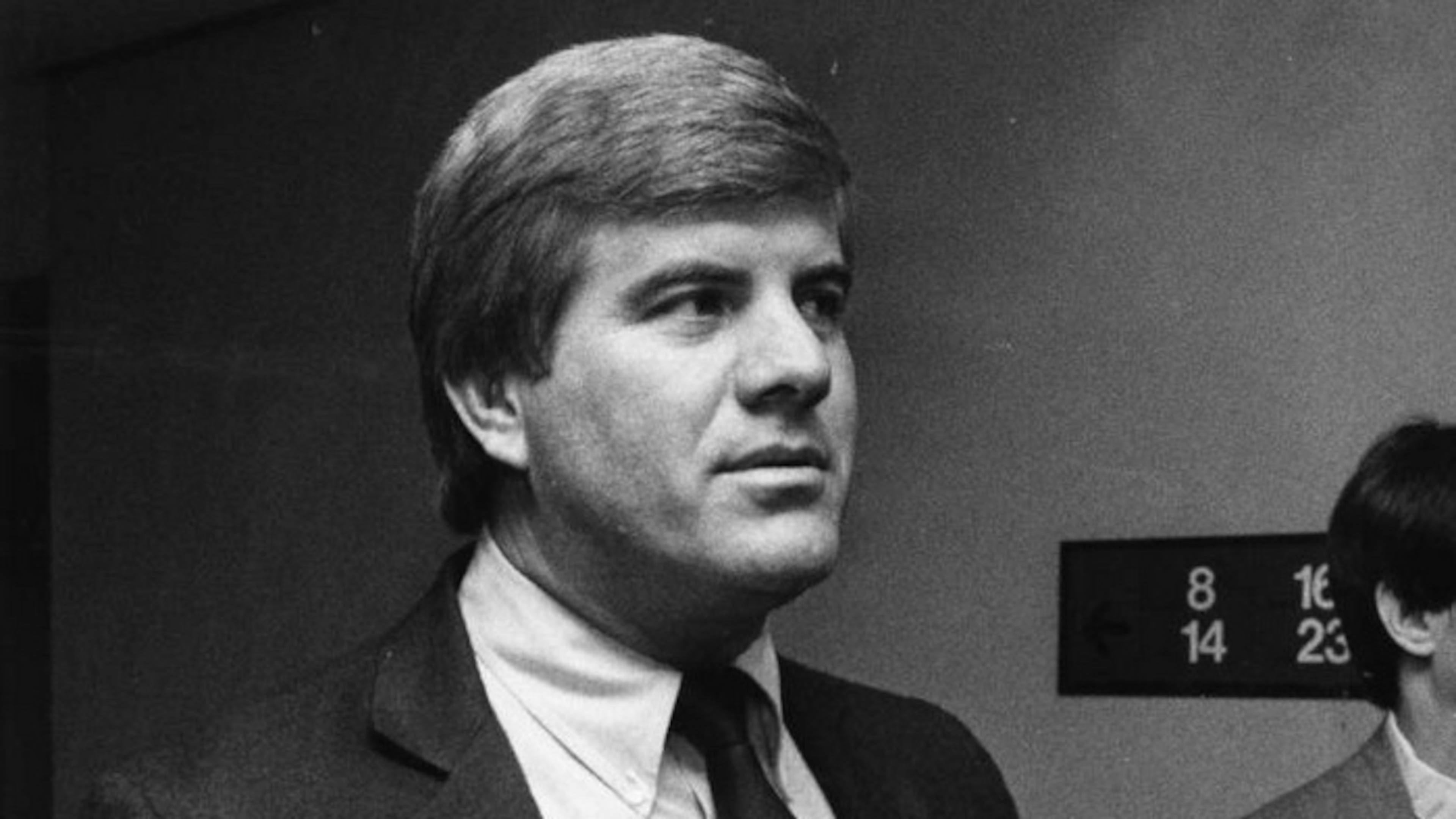
Harmon Wages, once an Atlanta Falcons running back and for 10 years a local TV sportscaster, was convicted in federal court last November on four misdemeanor counts of cocaine possession. Sentenced to three months at the minimum security camp next to the Atlanta Penitentiary, he was released nine days early on April 3 for good behavior. Wages, who will be 40 this month, must serve a five-year probation during which he has been ordered to perform eight hours a week of community service.