RECIPES: How to make freshly baked loaves in less than an hour

Archaeologists recently found remnants of an unbaked loaf of yeast bread from 6600 B.C. Thousands of years later, home cooks still bake bread using the techniques of our ancestors. But, thanks to the discovery and invention of chemical leaveners such as baking soda and baking powder in the 1800s, we also have the option to whip up a delicious loaf in mere minutes. These chemicals revolutionized baking then and can shake up your baking at home now.
Baking soda is 100% sodium bicarbonate, an alkaline salt compound that creates carbon dioxide gas when mixed with an acid, which is why many recipes that use baking soda call for yogurt or buttermilk. Baking powder is a mixture that includes baking soda and cream of tartar. It requires moisture and heat to activate. There were precursors to the 19th-century discoveries, but they were not reliable, often involving partial purification of potash from wood ashes. And, while both leaveners are similar, it is important to note that they are not interchangeable.
Unlike yeast breads, which rely on yeast, a living organism, to rise, chemically induced breads do not require extensive kneading and rising time. Instead, the chemicals react, producing carbon dioxide gas, which fills the dough with thousands of balloon-like bubbles, causing the bread to rise. Because the process occurs faster than in a yeast-based recipe, we call them “quick breads.”
Quick breads are great for busy modern life. If you don’t have the time or inclination to make yeast breads, you can still have fresh, homemade bread on the table in less than an hour.
RECIPES
This trio of recipes shows a range of applications for quick breads, from easy to complex. Starting with the most simple application, Beer Bread is a batter bread and has a crumb similar to a sandwich-style loaf. The Savory Yogurt Loaf is an example of a quick bread utilizing an acid to instigate carbon dioxide production. The Quick Bread Focaccia, which is given a brief knead, is no less addictive than its more authentic, yeast-risen older brother. Undoubtedly, yeast breads will always have a place in the baker’s kitchen, but adding quick breads to your repertoire is revolutionary.
To increase the nutritional density, these recipes call for white wheat flour. If you are unable to find white wheat, regular all-purpose flour can be substituted.
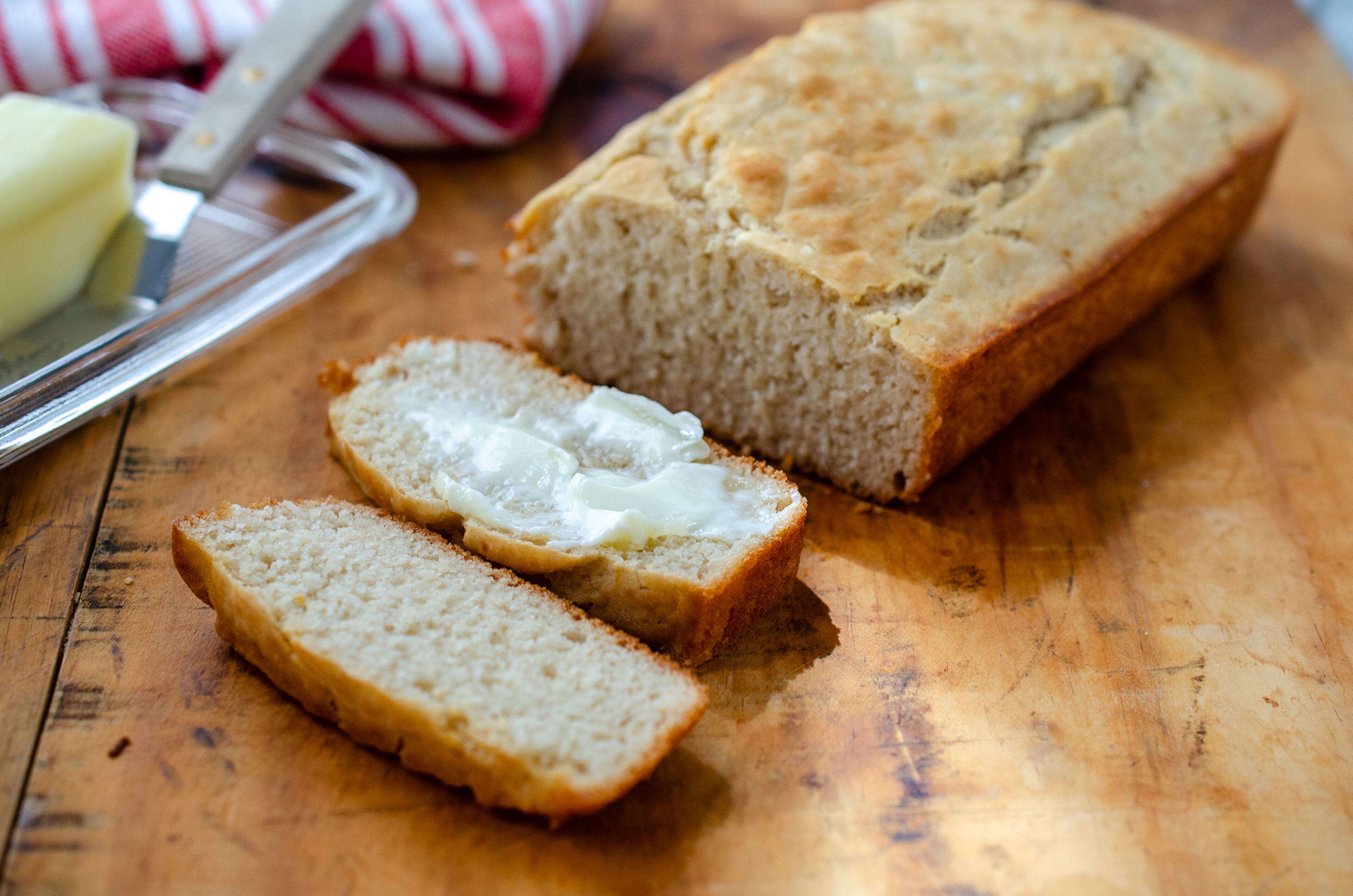
Beer Bread
This bread is baked in a regular-size loaf pan, but it’s short in stature, resulting in a demi-loaf or half-size. A “small bake” is helpful as many quick breads typically are best eaten on the day they are baked and for preventing food waste.
The lager gives the beer a mild yeasty flavor and aroma. You can intensify the taste with a hoppy beer such as an India pale ale or stout, especially welcome in the fall and winter to accompany more hearty meals.
- 1 1/2 cups white wheat flour
- 1 tablespoon baking powder
- 1 tablespoon honey
- 1 teaspoon fine sea salt
- 1 (12-ounce) bottle lager beer, room temperature
- 2 tablespoons unsalted butter, melted
- Heat the oven to 375 degrees. Spray a 9-inch loaf pan with nonstick baking spray.
- In a bowl, combine the flour, baking powder, honey and salt. Add the beer and melted butter. Stir to combine with a wooden spoon or rubber spatula. (The batter can have some small lumps; do not overmix.)
- Pour the batter into the prepared loaf pan. Bake the loaf until a tester inserted into the center comes out clean, about 35 minutes. Transfer the pan to a rack to cool slightly, then turn the loaf out directly onto the cooling rack. Flip it right side up to allow it to cool enough to slice. Use a serrated knife to cut the loaf into slices about 1/2-inch thick. Keeps for up to 2 days wrapped in plastic or in an airtight container at room temperature.
Nutritional information
Per serving: Per serving: 138 calories (percent of calories from fat, 22), 3 grams protein, 22 grams carbohydrates, trace total sugars, 1 gram fiber, 3 grams total fat (2 grams saturated), 8 milligrams cholesterol, 428 milligrams sodium.
Savory Yogurt Loaf
Far lesser known than the baguette, this modern French quick bread is known as “un cake salé,” meaning “salty cake.” You may wonder about the name because the bread is neither salty nor cake. However, this is effectively a recipe for yellow cake, without the sugar. Cakes are quick breads, too!
The French are famous for their aperitifs before dinner, and this is a popular homemade cocktail nibble.
- 1 3/4 cups white wheat flour
- 1 tablespoon baking powder
- 1/2 teaspoon fine sea salt
- 1/2 teaspoon freshly ground black pepper
- 4 large eggs, at room temperature
- 1/2 cup 0% skyr or Greek yogurt
- 1/3 cup extra-virgin olive oil
- 4 ounces Gruyere, shredded
- 1/2 cup chopped green onions
- Center a rack in the oven and heat it to 350 degrees. Spray a 9-inch loaf pan with nonstick baking spray.
- In a bowl, combine the flour, baking powder, salt, black pepper, eggs, skyr, oil, Gruyere and onions. Stir to combine with a wooden spoon or rubber spatula.
- Transfer the dough to the prepared loaf pan. Bake the loaf until a tester inserted into the center comes out clean, about 35 minutes. Transfer the pan to a rack to cool slightly, then turn the loaf out directly onto the cooling rack. Flip it right side up to allow it to cool enough to slice. Use a serrated knife to cut the loaf into slices about 1/2-inch thick. Keeps for up to 2 days wrapped in plastic or in an airtight container at room temperature.
Nutritional information
Per serving: Per serving: 283 calories (percent of calories from fat, 52), 10 grams protein, 23 grams carbohydrates, 2 grams total sugars, 1 gram fiber, 16 grams total fat (5 grams saturated), 107 milligrams cholesterol, 422 milligrams sodium.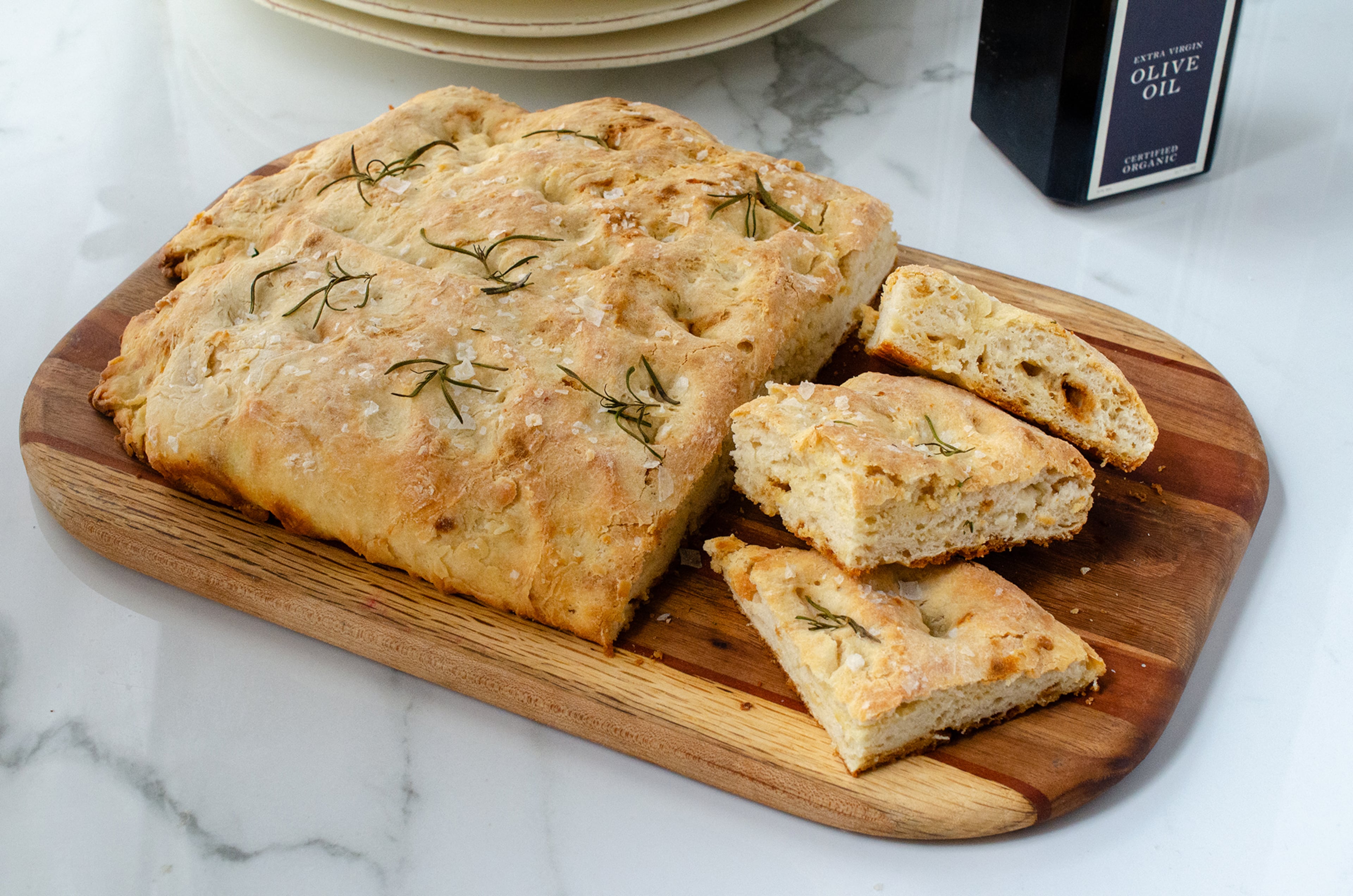
Quick Bread Focaccia
This bread tastes like the marriage of a big crispy biscuit and the famed Italian flatbread. Using best-quality extra-virgin olive oil is key to achieving the flavor of the more authentic yeasted version. When picking the rosemary, pinch off 3 to 4 connected leaves to form a snippet.
- 3 cups white wheat flour, plus more for kneading
- 1 teaspoon fine sea salt
- 1 teaspoon baking soda
- 14 ounces reduced-fat buttermilk
- 3 tablespoons extra-virgin olive oil, plus more if using to grease the pan
- 10-12 snippets rosemary leaves
- Flaked sea salt, to taste
- Center a rack in the oven and heat it to 400 degrees. Spray a 9-by-13-inch rimmed baking sheet or glass baking dish with nonstick spray. Alternatively, drizzle with additional olive oil. Set aside.
- In a bowl, combine the flour, fine sea salt and baking soda. Stir to combine with a wooden spoon or rubber spatula. Add the buttermilk and stir to combine. Stir until the liquid is just absorbed. It will not yet be a cohesive dough.
- Turn it out, even the dry bits, onto a lightly floured surface and pull together. Knead lightly, using the heel of your hand to compress and push dough away from you, then fold it back over itself. Give the dough a quarter turn and repeat two or three times.
- Transfer the dough to the prepared baking sheet. Drizzle it with 3 tablespoons olive oil. Flatten into a rectangle, with the dough nearly reaching the edges of the pan. Press your fingertips into the dough from top to bottom to give the bread its signature dimples. Top with rosemary and flaked sea salt.
- Bake until dark golden brown and crisp on the edges, about 20 minutes. Remove the bread from the pan and place directly on a cutting board. Let cool slightly. Use a serrated knife to cut the loaf into 2- or 3-inch squares. Serve warm.
Nutritional information
Per serving: Per serving: 235 calories (percent of calories from fat, 23), 6 grams protein, 38 grams carbohydrates, 3 grams total sugars, 1 gram fiber, 6 grams total fat (1 gram saturated), 2 milligrams cholesterol, 539 milligrams sodium.Sign up for the AJC Food and Dining Newsletter
Read more stories like this by liking Atlanta Restaurant Scene on Facebook, following @ATLDiningNews on Twitter and @ajcdining on Instagram.