Gin got weird — and we like it
Gin has a long and complicated history. There were predecessors like genever and old tom gin, but here in America we primarily embraced the juniper berry-forward London dry style for about 200 years, from the mid-1700s to the mid-1900s.
Once vodka entered the scene in the latter half of the 20th century, sales of gin declined in favor of its less-flavorful cousin.
In the early 2000s, some spirit companies (and their marketing departments) pushed for less juniper, more citrus-forward gin. At the same time, there was a cocktail renaissance happening with history-obsessed bartenders who embraced the more assertive London dry style.
Now, a quarter of a century later, gin is getting weird again, but this time with complex and offbeat flavors that stay true to its assertive profile.
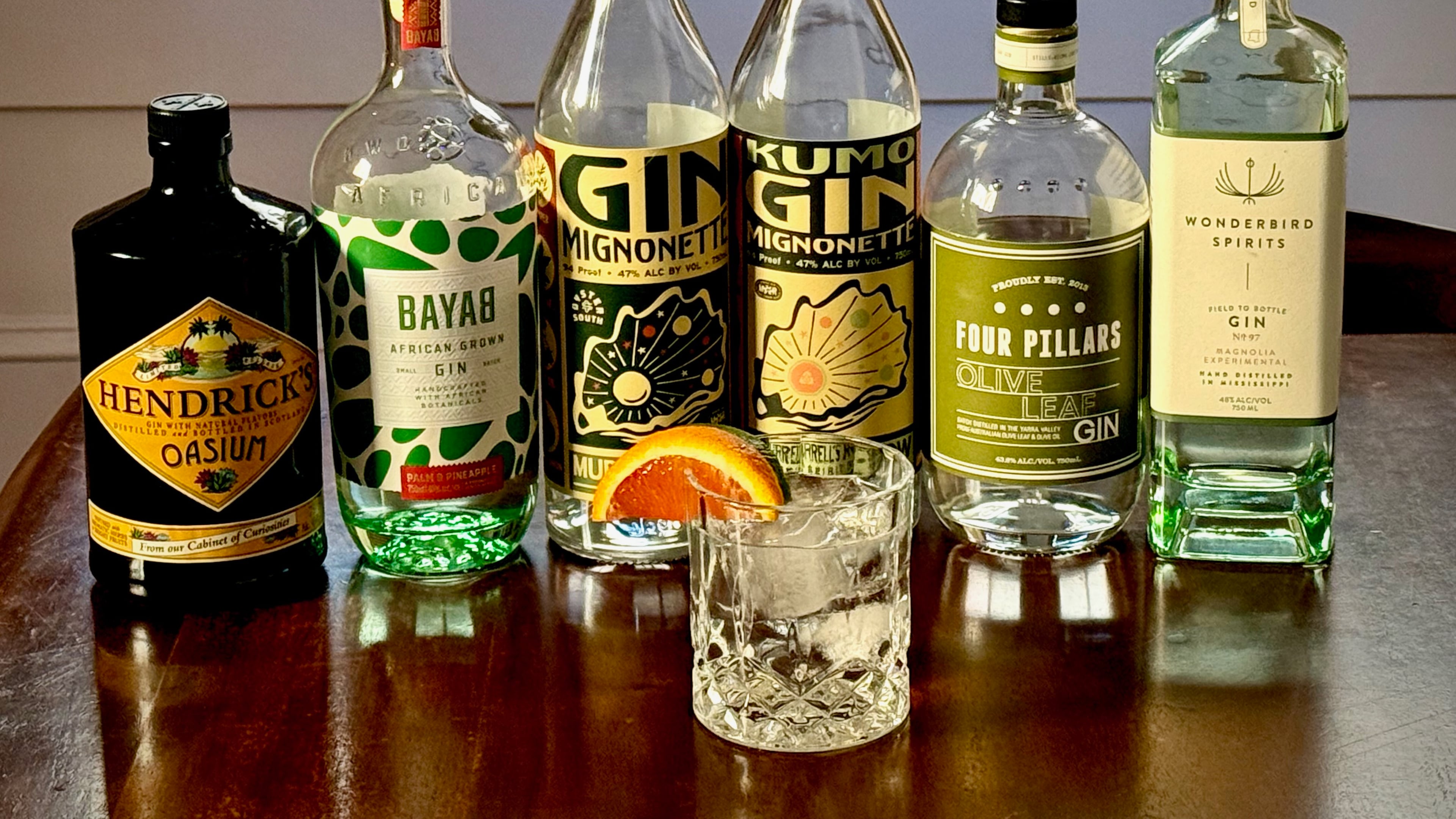
We have written about Decatur’s own Murrell’s Row Spirits before, but their Gin Mignonette line is a prime example of gin’s trend toward weird territory.
The first in their series of oyster-inspired gins added bay leaf, olive oil and Vidalia onions to the spirit for a savory, sweet and saline experience.
Then came Kumo Gin Mignonette, inspired by the Kumamoto oyster. The distillers added hundreds of pounds of sugarcane cantaloupes, sourced from the good folks at Love is Love Farms in Mansfield, and sea salt to the proofing water, creating a taste reminiscent of the Kumamoto’s delicate cucumber, melon and brine profile. Both of these deliver a great martini to accompany your seafood tower.
Speaking of martinis, the next two gins exciting us right now use the leaves of olive trees and magnolia flowers to make enchanting and delicate gins whose subtlety is well suited to that stirred and crisp cocktail.
Wonderbird Spirits out of Taylor, Mississippi, uses Delta rice as the base grain for their line of gins, and that’s not even the weird part. Their Magnolia Experimental bottling infuses their flagship gin with Southeastern Magnolia flower petals. If there is such a thing as sipping gin, this might be it.
In Australia, the Four Pillars distillery infuses its gin with three varieties of olive tree leaf and oil to create a savory flavor bomb that could make you skip the “dirty” additives and maybe reach for a Gibson cocktail instead.
If the impetus for gin to taste like oysters, olives or magnolia flowers wasn’t weird enough, wait till it starts tasting like tropical fruit. Two gins, from the far flung regions of Scotland and South Africa, are here to turn gin on its head without losing the anchor of its herbal character.
Hendrick’s gin, from Scotland, has always been a bit of an outlier with its infusion of cucumber and roses, but its latest Cabinet of Curiosities offering, called Oasium, pushes the definition of gin even further. Neither the bottle nor the company website lists exact ingredients, but we tasted guava and passionfruit, in addition to traditional herbs like juniper.
From the opposite hemisphere, Bayab Gin is producing spirits in South Africa using ingredients sourced from the African continent. The distillers make a classic dry, but we found their Palm & Pineapple the most intriguing. With sweet pineapple on the nose and a dry finish on the palate, this gin lends itself to the classic mixture with tonic, but we really want to infuse a bottle of Campari with strawberries and make a Miami Vice Negroni.
About the Author

Distilled and Fermented focuses on spirits and wine, with recommendations and all the information you need to imbibe well.