Explore more of your palate this year with a riesling resolution
As we near the end of what for many is a dry January, we’re excited to delve back into the exploration of the multitudinous types and styles of wine. First up this year is riesling, a grape with a massive stylistic range that is so often misunderstood and maligned, namely, for sweetness.
Sweetness is not an inherent quality of riesling; there are many great styles of dry riesling around the world, several of which we’ve previously covered in this column. But we wanted to present the case for a little kiss of sweetness in the wine.
The disdain for sweetness in wine is a puzzling circumstance and one of the hardest to convince people to overcome. People accept, even embrace, the sweetness of a margarita as the perfect foil for the spicy heat in a Mexican dish, but many still see a wine with sweetness as a sign of lower quality. Natural sweetness balanced by a brilliant acidity can be lovely and a key component to dazzling food pairings.
Germany is the most prolific producer of great riesling, particularly in the off-dry or lightly sweet profile. Like many major wine-producing nations, Germany has strict rules related to wine terminology, and the official designation for slightly sweet wines is halbtrocken (half-dry). Those wines can have no more than 12 grams of residual sugar per liter, the same as brut Champagne.
But there is a term in German wine that isn’t as official or specific as their otherwise rigid wine laws: feinherb. The spectrum for feinherb is wider, nine to 45 grams and more of a vibe check than an exact amount.
With that in mind, we note that residual sugar is not the best gauge for perception. The balancing act of great wine involves many factors; acid levels, as well as alcohol levels, can have as much impact on perceived sweetness. Below, we present two wines that are great introductions to this style. Both have a delicate sweetness tamed by mouthwatering acid. Each sits at about 11% alcohol, a great level to enjoy after a month of abstaining.
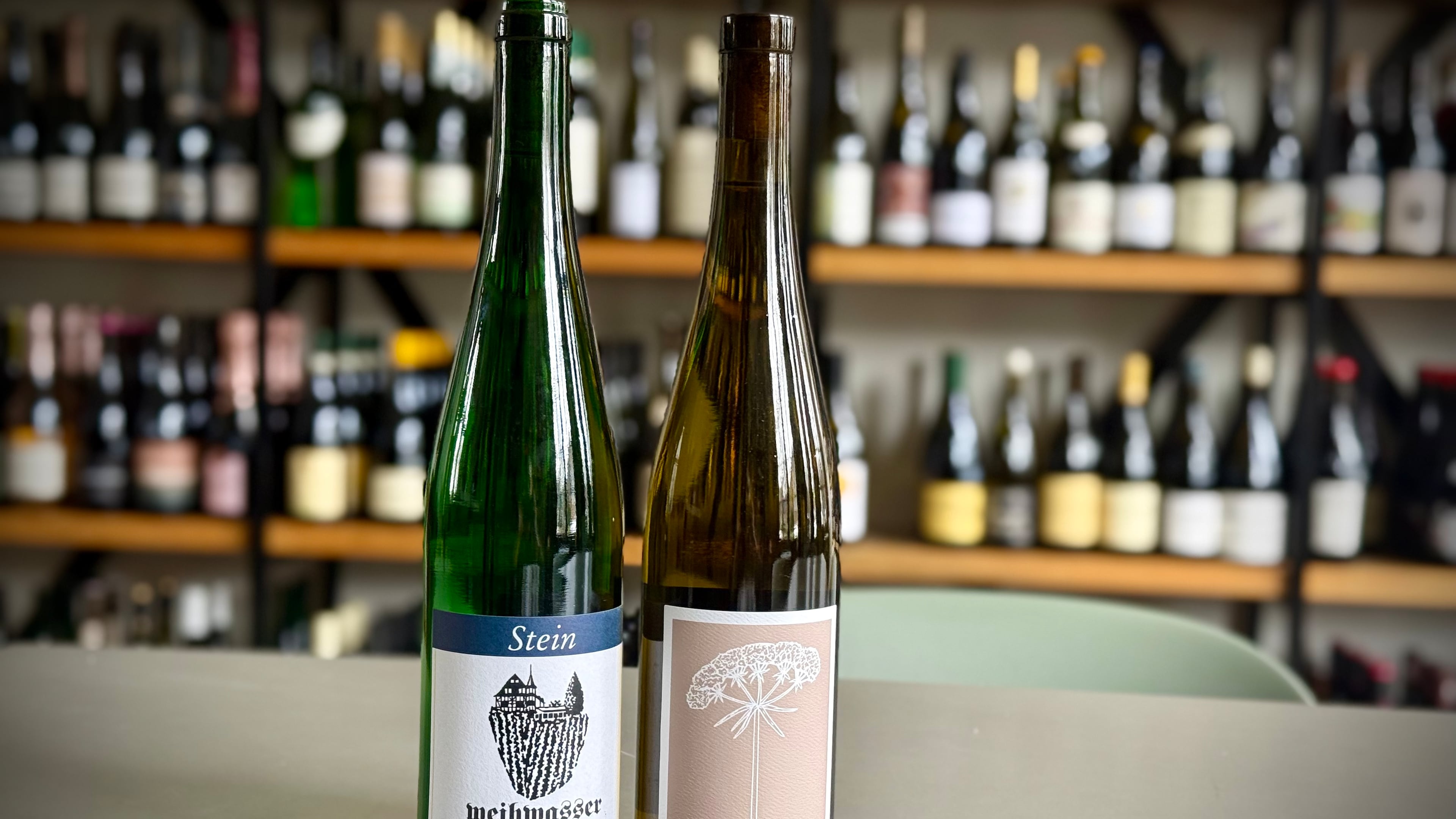
Stein Weihwasser Riesling Feinherb 2024
Stein is a master of riesling in the Mosel, a region that produces exceptional riesling, both dry and lightly sweet. “Weihwasser” translates to Holy Water, as these steep terraced vines are not far from an old church in the town of Alf. This is a classic German example of a feinherb riesling, a tiny tinge of sweetness balanced with a clean minerality as well as bright acid. Pair with a delicate fish preparation, or use it to counter the richness and salty, briny combination of sausages and sauerkraut.
Hermann J. Wiemer Flower Day Riesling 2024
New York state is a younger region building a reputation for exceptional riesling, with climate and soil composition not unlike the Mosel in Germany. That is what inspired Hermann J. Wiemer’s exploration of growing riesling in the region back in the late 1970s. Today, the winery carries on his legacy of combining German winemaking with New York terroir. Flower Day is a relatively new wine from the estate, a celebration of their Demeter certification in biodynamics, and an homage to the feinherb style of wine. Apricots in technicolor, aromatic white blossoms and a candied lemon peel finish make this a delicious pairing for aromatic curries, spicy fried chicken or simply happy hour on the porch.
About the Author

Distilled and Fermented focuses on spirits and wine, with recommendations and all the information you need to imbibe well.