Education
How Biden’s new plans to address student loan debt would work
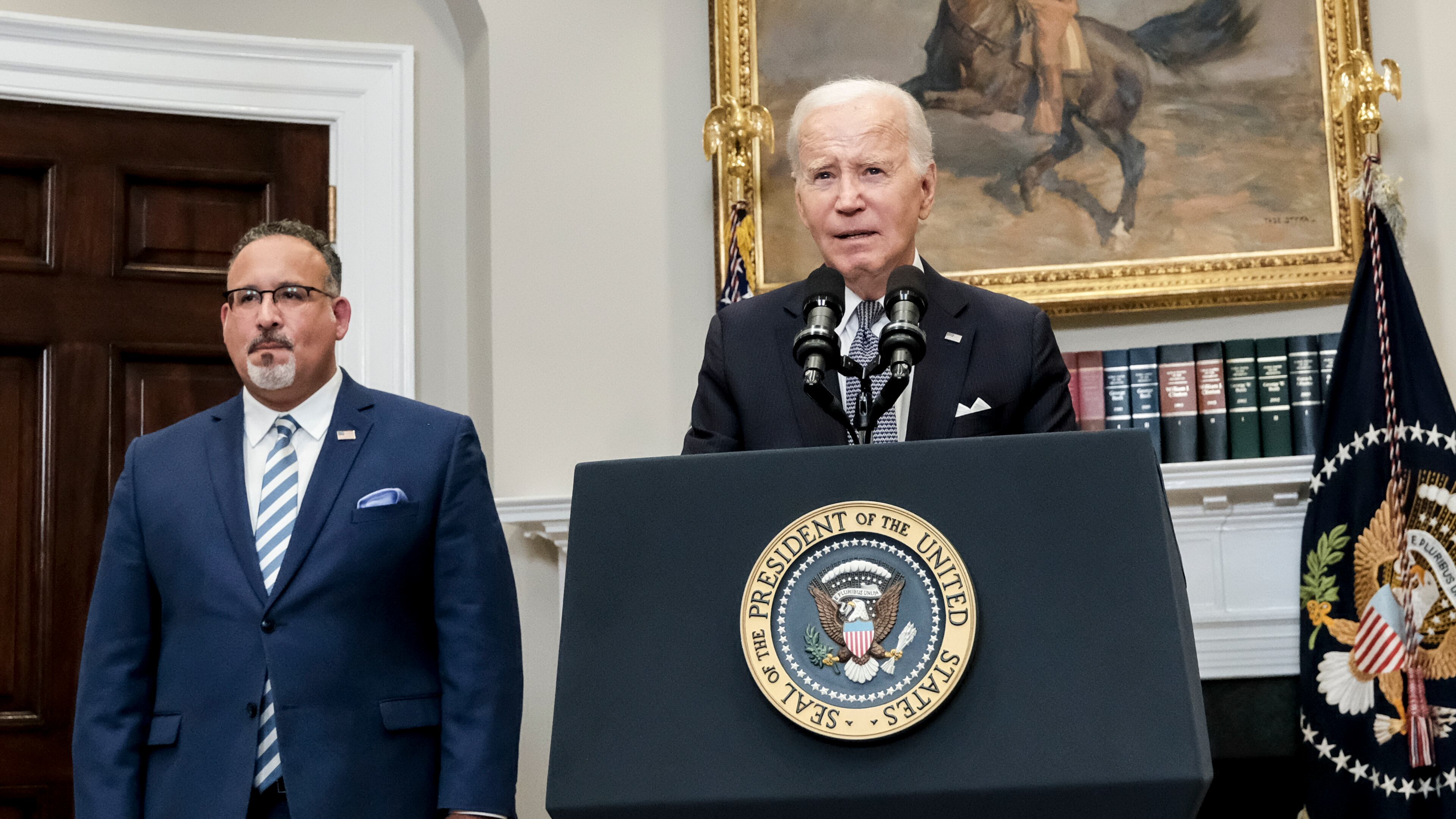
President Joe Biden delivers remarks alongside Education Secretary Miguel Cardona after the Supreme Court rejected his student loan forgiveness program in the Roosevelt Room of the White House in Washington, June 30, 2023. Biden said using the Higher Education Act would take longer than his original plan, but he called it “legally sound” and said, “In my view, it’s the best path that remains to providing as many borrowers as possible with debt relief.” (Michael A. McCoy/The New York Times)
July 3, 2023
The federal government has unveiled a Plan B for student loan borrowers after Friday’s U.S. Supreme Court decision overturning President Joe Biden’s effort to reduce debt for millions of borrowers.
Here’s how the new proposals would work:
- Under the Saving on a Valuable Education (SAVE) plan, payments on undergraduate loans will be cut in half — from 10% to 5% — of incomes above 225% of the federal poverty level.
- The U.S. Department of Education is instituting a 12-month “on-ramp” to repayment, starting on Oct. 1, in which borrowers who miss monthly payments during this period are not considered delinquent, reported to credit bureaus, placed in default, or referred to debt collection agencies.
- Forgive loan balances after 10 years of payments, instead of 20 years, for borrowers with original loan balances of $12,000 or less. The department estimates that this reform will allow nearly all community college borrowers to be debt-free within 10 years.
- Not charge borrowers with unpaid monthly interest.
Borrowers who sign up or are already signed up for the current Revised Pay as You Earn (REPAYE) plan will be automatically enrolled in SAVE once the new plan is implemented. All student borrowers in repayment will be eligible to enroll in the SAVE plan. Federal officials said borrowers will be able to apply for the SAVE plan later this summer.


