French school funding riots are a harbinger for Georgia
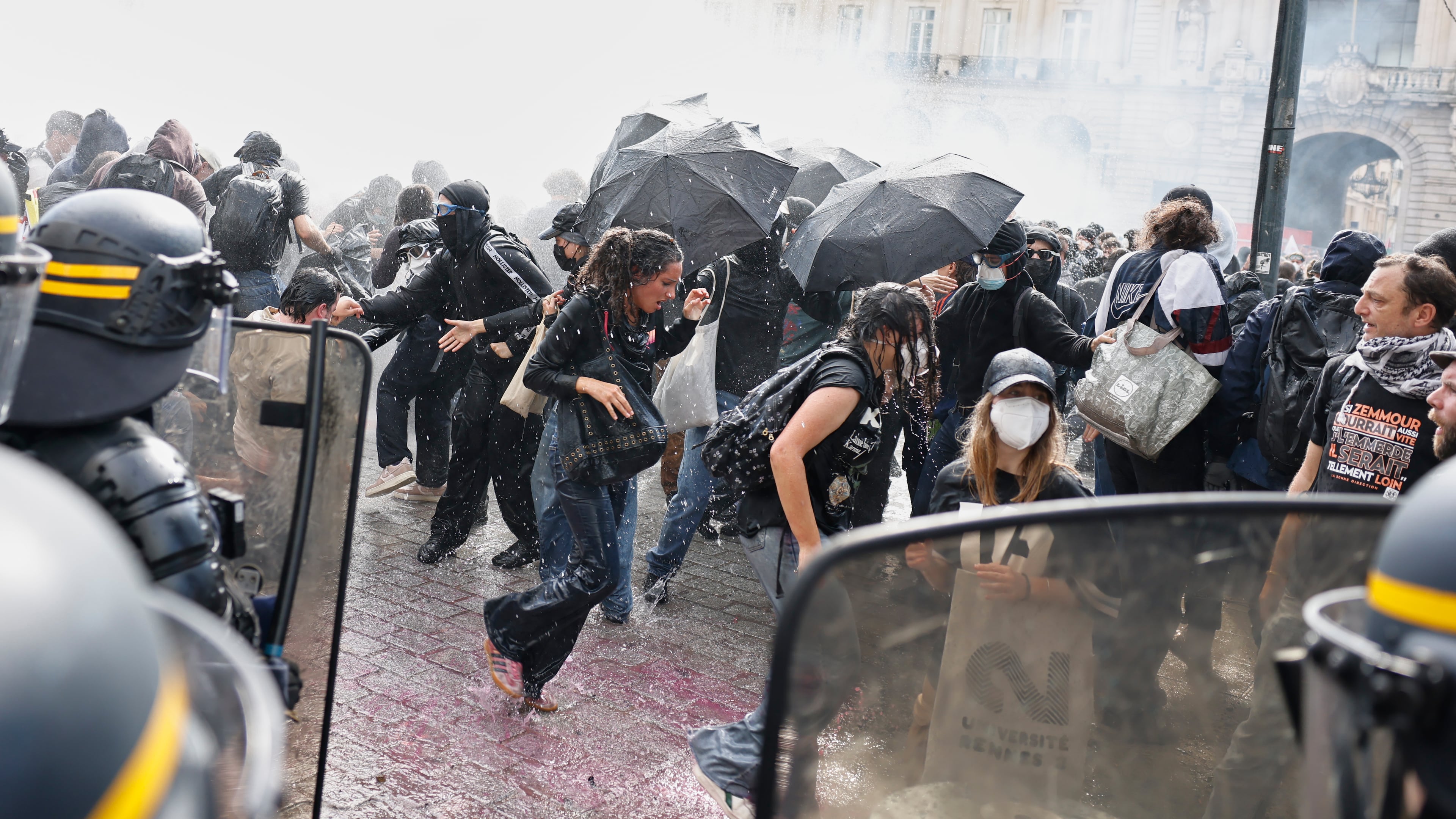
Does investing in public schools really matter? Ask the French government.
Since just a few weeks ago, beginning with high schoolers outside Paris, an estimated 500,000 to 800,000 students and citizens have participated in nationwide protests for more school funding, unleashing chaos and gaining the attention of their nation’s leaders, along with the rest of the globe. Absent teachers who aren’t replaced, inadequate ventilation, leaking roofs and bathrooms in disrepair are among the list of complaints that French students began protesting in hopes to gain resolution and attention for underresourced schools. Sound familiar?
Along with inadequate school funding, reading and math scores have fallen nationwide, and university admissions have grown more and more difficult for middle- to lower-income students. Sound familiar?
These issues and many more mimic what many Georgia students are currently facing.

Underfunded schools, teacher shortages and literacy rates are also the main points in Richard Woods and Lydia Powell’s appearance at the Atlanta Press Club’s State Superintendent Election debate last Tuesday. The state school superintendent election is Nov. 3, and the outcome could take Georgia more toward or away from the fate of the French dilemma than we’d like to think.
The incumbent, Georgia State School Superintendent Richard Woods, has been at the job for more than 11 years and touts the steady improvements the state has made over the course of his tenure. Lydia Powell contrasts his position as saying that he has been lackadaisical in his approach to funding schools, student learning lags and addressing educator shortages.
A lot is at stake in this election, so here are a few Georgia education statistics to take into consideration when making a decision about your vote.
According to the last three years of Georgia’s performance on the National Assessment of Educational Progress, the ‘report card’ for U.S. schools, and the Georgia Milestones Assessment:
- Georgia high school senior reading and math NAEP scores last year reached a 20-year low.
- 69% of Georgia eighth graders scored below proficient in reading in 2022 NAEP scores and 76% of Georgia eighth graders were below proficient in math, according to the 2024 NAEP results.
- 62% of Georgia third graders read below proficiency according to the 2024 state milestones assessment.
These aren’t glimmering statistics. However, many of the deficits are seen across the U.S. because of similar national trends and learning setbacks in recent years. School closures because of COVID-19, chronic absenteeism and declining attention span because of increased screen time have all been blamed for nationwide performance lows. Woods says policies under his leadership are making incremental steps toward improvement; however, Powell claims they are merely treading water in a public educational situation that needs urgent change.
No matter the proposed solutions, state leadership of public schools is incredibly important at this juncture in education. The national involvement in state public schools has been questioned, with the U.S. Department of Education funding slashed. More pressure has been applied to each state’s ability to manage its own budget, perform assessments and calculate metrics. Georgia lawmakers have addressed issues in education with their own broad measures.
This year, Georgia lawmakers passed House Bill 1193, also known as the Georgia Early Literacy Act of 2026, which will dole out funding to the tune of $70 million for purposes including, but not limited to, hiring literacy coaches in every K-3 school, hiring regional literacy coaches, developing quality instructional materials aiding in teaching the “science of reading”, creating benchmark K-3 literacy assessments and offering more professional learning for educators.
In response to Georgia’s lowest-performing public schools, Georgia lawmakers have also fallen in line with many other states in placing funding into school voucher programs for families in these failing school zones. Senate Bill 233, the Georgia Promise Scholarship, was passed to offer parents living in the worst 25% performing school zones options by directing up to $6,500 a year to each family meeting the eligibility requirements.
The state superintendent will be part of the team to ensure tens of millions of dollars in public funds are spent appropriately and programs implemented effectively across the state’s public school districts.
With 180 school districts in Georgia, 2,238 schools and 1,702,086 students, the state has a lot riding on the public school system. The buck stops with the state superintendent of schools, and there is no less than the future of a generation on the line.
There will be a youth reckoning if we fail.
Although the French high school protests going on right now are likely about much more than underresourced schools, it would be wise to see it as a harbinger. The value a society puts on educating its students, helping them rise from lower socioeconomic strata through high-quality public education, reveals much more than mere education policy.
Let’s prioritize our public schools before tear gas, fire hoses and police batons seem like the answer.
Beth Collums is an Atlanta-based writer with a professional background in child and family therapy. She often writes about mental health, parenting and education.
If you have any thoughts about this item, please go to our AJC Get Schooled Facebook page. If you’re interested in writing an op-ed for the AJC’s education page, drop us a note at education@ajc.com.