Are you ready? Annual leaf color spectacle underway in Georgia’s mountains.
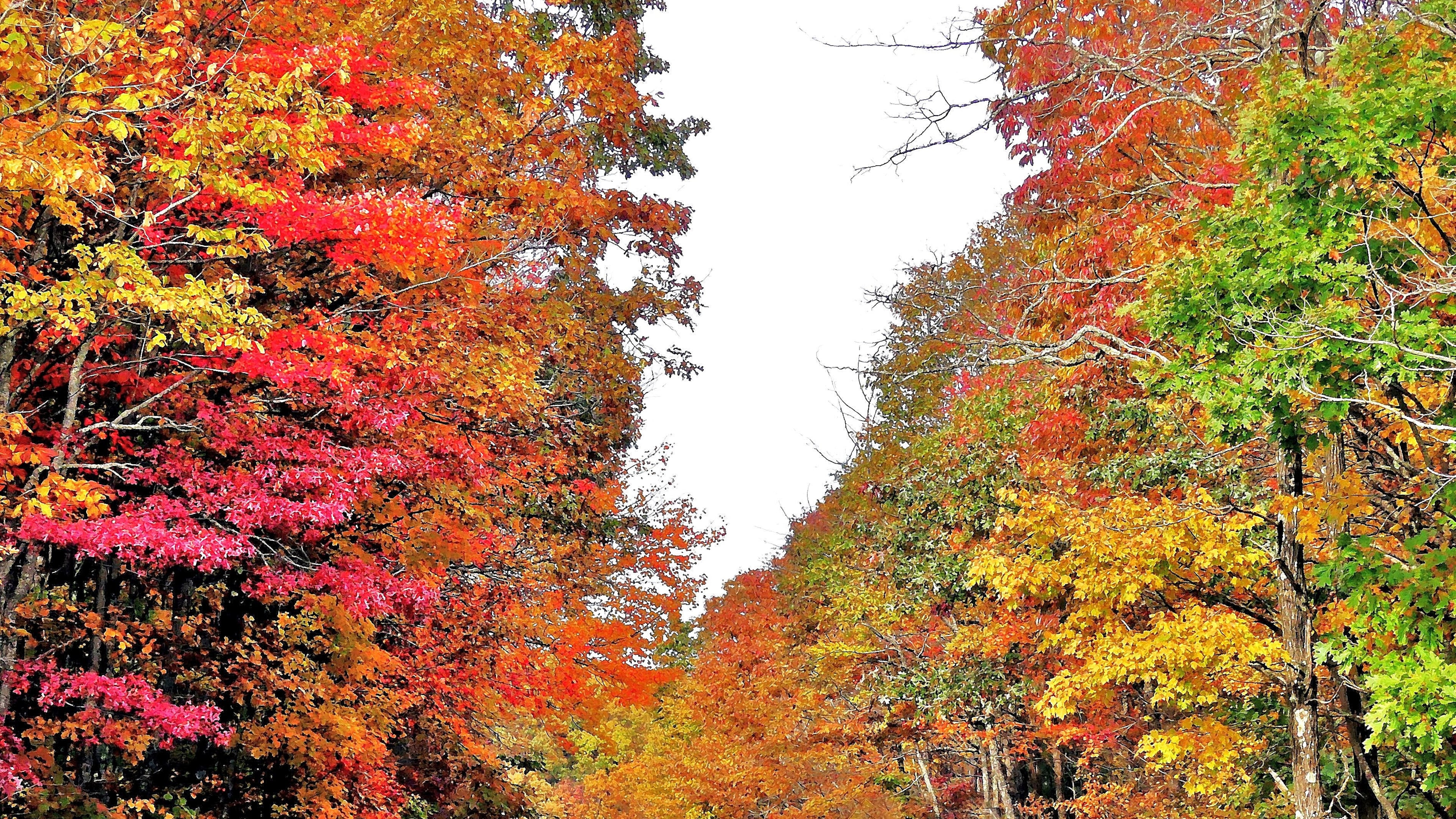
In North Georgia’s mountains, autumn already is transforming ridges, forests and streambanks into dazzling palettes of reds, yellows, maroons and deep oranges — all part of nature’s annual leaf color spectacle.
The Georgia Forestry Commission predicts “a great fall color season” this year. The group’s website provides a week-by-week status of fall color. An ideal combination of crisp October nights and sunny days is the reason for the outlook.
Earlier this week, leaf change stood at about 12-18% above 3,000 feet and at about 10% in the lower elevations. Most of the color right now is coming from early-changing tree species such as dogwood, sourwood, red maple, black gum, tulip poplar and birch.
But within the next two weeks, leaf color is expected to burst into full glory in the higher mountain elevations. In the lower areas, the peak is forecast to occur during the first two weeks of November. At those times, nearly all of the deciduous hardwoods — including oaks, hickories and maples — will be sporting their brightest, most breathtaking hues.
Celebrated by artists and poets
Leaf-watchers by the thousands will hit mountain highways, trails and overlooks to drink in the spectacular beauty. Autumn’s incredible canvas of color brings a unique energy that has inspired artists, poets and thinkers for generations.
“As long as autumn lasts, I shall not have hands, canvas and colors enough to paint the beautiful things I see,” said artist Vincent van Gogh.
The amazing color process has to do with a few key chemicals and pigments present in leaves. First and foremost is chlorophyll, which is responsible for making leaves green. During summer, chlorophyll is dominant, converting sunlight into food for the tree through photosynthesis.
How Georgia’s fall colors emerge
So dominant is chlorophyll that it hides any other colors present in a leaf. The vivid yellows and oranges — carotenoids — are there all summer, too, but hidden. It’s believed that those pigments assist chlorophyll with photosynthesis by absorbing light wavelengths and helping capture solar energy.
But come fall, cooler temperatures, shorter daylight hours and other factors signal that chlorophyll’s work is done for the year and that the tree is preparing to shed its leaves and go into winter dormancy.
The chlorophyll breaks up. The yellow or orange carotenoids then get their glory for a few weeks before the leaves fall off.
Red, however, is another matter. It’s made on purpose. As chlorophyll diminishes, a red pigment, anthocyanin, which was not previously present, is produced by a special process in the leaves of certain trees, such as maples, oaks and dogwoods.
Scientists don’t fully understand why some trees produce anthocyanin in fall. One hypothesis is that the colors attract birds and mammals that eat the tree’s fruit and then disperse its seeds to grow new generations of trees.
In general, the most brilliant reds will be in scarlet oaks, red maples, blackgums, sweetgums, flowering dogwoods, sourwoods and some other trees. Many of them also may display various shades of orange and yellow along with red. Birches, tulip poplars, hickories and redbuds, however, are nearly always yellow in fall, never red.
Where to see fall leaf color in Georgia
The best places to see this great show between now and mid-November are mountain peaks, including Brasstown Bald and Rabun Bald, and state parks. For a list of state park viewing sites, visit gastateparks.org/leafwatch
Good driving routes to see the fall color include Ga. 52 between Dahlonega and Ellijay and the Richard B. Russell Scenic Highway that begins near Helen. For me, a favorite fall color viewing spot near my home is Atlanta’s Piedmont Park.
And while North Georgia gets most of the attention, brilliant fall color also can be found in South Georgia, including George L. Smith State Park near Metter and the Okefenokee Swamp in southeast Georgia.
By late November, though, regardless of their color or location, the leaves mostly will be gone, fallen off the trees. Layers of dead leaves on the ground will serve as crucial winter habitat for an array of creatures and will undergo nutrient recycling to enrich the soil
IN THE SKY: From David Dundee, retired Tellus Science Museum astronomer: The Orionid meteor shower peaks in the east at about 20 meteors per hour after dark Wednesday and until dawn Thursday. The moon will be first-quarter Sunday and full (the hunter’s moon) on Oct. 26. Over the next two weeks, Mercury at first will be very low in the west just after dark and then will become too close to the sun for easy observation. Three planets rise in the east: Mars around midnight; Jupiter, a few hours after midnight; and Saturn, just after dark.
Charles Seabrook can be reached at charles.seabrook@yahoo.com.