Millions of birds prepare to head south as peak fall migration kicks in
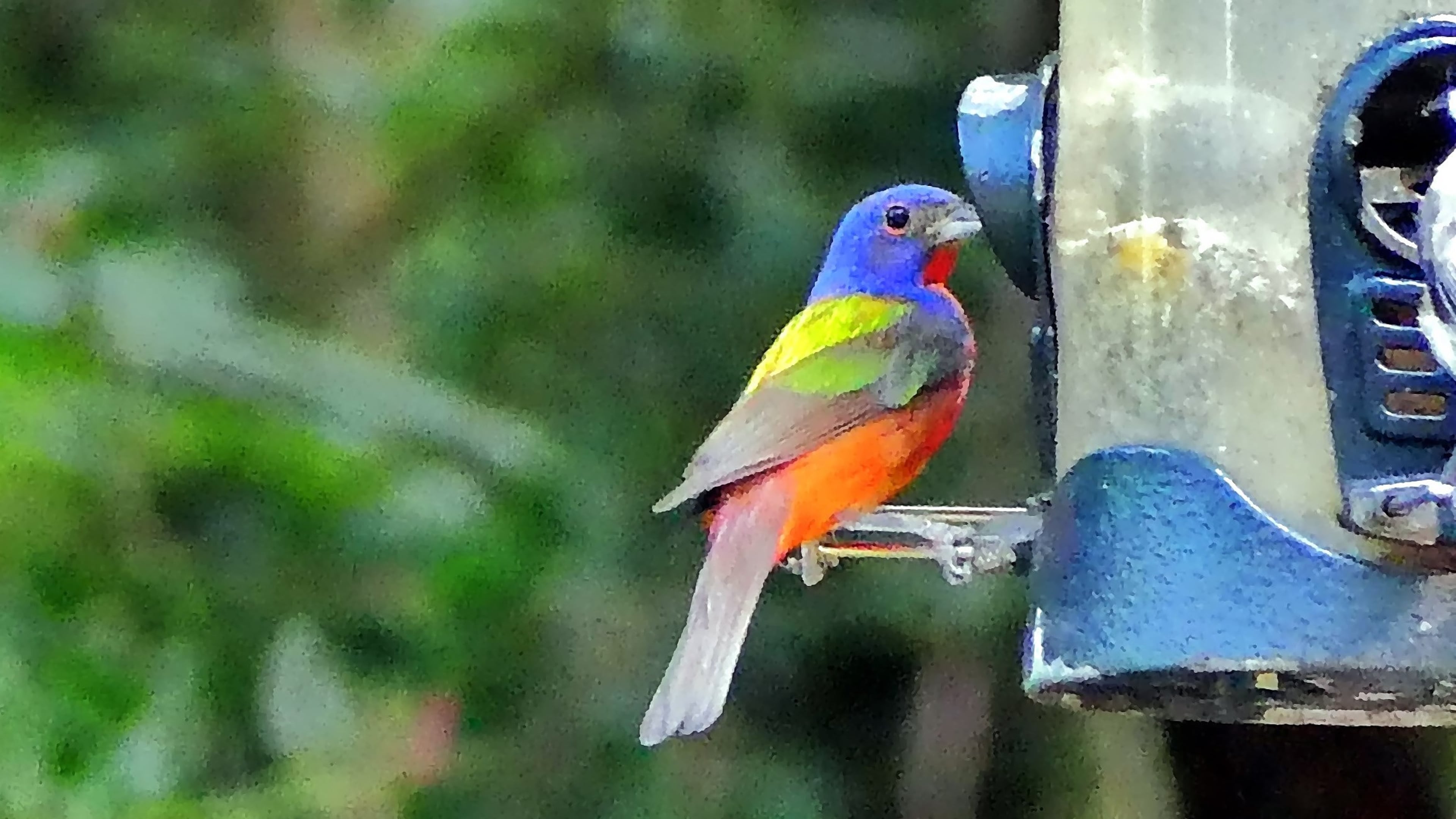
Some birds that nested in Georgia during spring and early summer got a jump on fall migration by heading south as early as mid-July. They included purple martins, orchard orioles and male ruby-throated hummingbirds, which are well on their way to winter grounds in the tropics of Latin America.
But for the vast majority of migratory birds in Georgia and elsewhere in North America, peak fall migration begins in mid-September and continues through October. While the birds that left early numbered in the thousands, the number of migrants in late September becomes millions. (Fall begins at 8:05 p.m. on Tuesday.)
By the end of this month, an astounding 15 million to 20 million birds — including those from northern climes — may be migrating over Georgia during a single night. They will be flying 15 to 20 miles per hour at altitudes between 3,000 and 5,000 feet.
They fly at night because the air is cooler and risk of predators is low. Some exceptions to night-flying include swifts and swallows, which migrate by day to snatch flying bugs. Migrating hawks and other large gliding birds also need the sun’s heat to create rising air currents necessary for flight.
Some fall migration basics
Georgia’s 54 species of neotropical birds — such as warblers, buntings, tanagers, flycatchers, vireos, thrushes and broad-winged hawks — are those that nest here during spring and summer and fly south in fall to spend winter in Mexico, Central America, South America and the Caribbean. Many of them fly thousands of miles to reach their destinations. Some, such as chimney swifts and purple martins, fly as far south as Brazil’s Amazon basin.
Some other migratory species — kinglets, yellow-rumped warblers and some sparrow species — nest up north but migrate no farther than Georgia to spend the winter. Permanent residents like bluebirds and cardinals do not migrate.
Come spring, the migrants will make the return trip from the tropics to breeding grounds in North America.
Why do birds migrate in fall?
Over long spans of time, neotropical species became genetically wired to head south in fall primarily for reliable food sources. Wild foods such as fruits, berries and insects are scarce during North American winters, but the tropics offer ample supplies of nourishment.
It’s not fully understood, however, why some birds migrate and others don’t. Birds that stay in Georgia during winter have adapted strategies to withstand cold and obtain food. Blue jays and tufted titmice, for instance, store nuts, seeds and other foods in tree bark to eat later in winter.
Preparing for migration
Dwindling daylight, cooler temperatures and shifting hormone levels signal warblers, vireos, tanagers, flycatchers and other neotropicals to prepare for their grueling journeys south. At this time of year, they experience hyperphagia — an intense urge to eat constantly to double body weight and build up fat levels to fuel their long flights. In that regard, fat-rich native berries and fruits right now are vital components of the birds’ diets.
Most migratory songbirds also molt by September, replacing old feathers with new ones, which provide strong, fresh plumage to fly south.
Some differences between spring and fall migrations
During spring migration, birds move in a fast, narrow window as they rush north to establish territories, choose mates and breed. In the fall, migration is more spread out, slower and relaxed as southbound birds linger along the way to forage and refuel. (An important avian refueling stop is Kennesaw Mountain in Cobb County.)
Fall migration is also much larger. In spring, an estimated 2 billion birds migrate north from Latin America to North America. But in fall, the number of southbound migrants may be as high as 5 billion because juvenile birds hatched in spring join their parents to travel to winter grounds. Many of those young birds, however, won’t return next spring because they’re not old enough to breed yet.
How they get there
Spring migrants follow the Atlantic Flyway toward the Appalachians, while fall migrants travel diagonally from the Blue Ridge Mountains southwest toward the Gulf Coast or move straight down the Georgia coast. To reach Mexico and beyond, millions of migrating birds leaving North America fly 500-600 miles and more than 18 hours nonstop to cross the open Gulf of Mexico. Millions of others choose a land route around the Gulf.
Bird navigation is poorly understood, but birds likely use cues from the sun, the stars, Earth’s magnetic field and landmarks such as mountains and rivers to set their course. Birds Georgia urges homeowners and businesses to turn off unnecessary lights to prevent disorientation among birds migrating at night.
IN THE SKY: From David Dundee, retired Tellus Science Museum astronomer: The moon, now in first quarter, will be full on Sept. 26 — the famed Harvest Moon. Over the next two weeks, Mercury is very low in the west just after dark. Venus is very low in the west just after sunset. Mars rises in the east about an hour after midnight. Jupiter rises in the east a few hours before dawn. Saturn rises in the east just after sunset.
Charles Seabrook can be reached at Charles.seabrook@yahoo.com.