October is a great time to visit Georgia’s national wildlife refuges
One of my most favorite places for watching a variety of wildlife year-round is about an hour’s drive south of Atlanta, the 36,000-acre Piedmont National Wildlife Refuge in central Georgia.
Its meadows of native grasses and wildflowers lure a variety of butterflies spring through fall. Its pine and hardwood forests harbor 50 mammal species and more than 200 bird species, including a sizable population of endangered red-cockaded woodpeckers. In winter, several migratory duck species spend the season on its clear-flowing creeks and ponds, including beaver ponds.
As the nation prepares to celebrate National Wildlife Refuge Week Oct. 10-17, this is a good opportunity to talk about Piedmont and the nation’s entire system of refuges that protects 150 million acres from Maine to Alaska. It is the world‘s largest network of land and water set aside specifically to conserve and restore fish, wildlife, plants and their natural habitats.
Plants and animals have top priority
In short, more than 570 refuges, managed by the U.S. Fish and Wildlife Service, put the needs of plants and animals first — unlike national parks, which often focus heavily on scenic tourism; or national forests, which are managed for a variety of purposes.
Last year, more than 70 million visitors came to the refuges to see, photograph and otherwise commune with a rich diversity of wildlife. Most refuges offer hiking, birding and boating trails. Many of them also allow fishing and have auto-tour routes and visitor centers.
10 national refuges in Georgia
With October being one of the best times of year to be outdoors in Georgia you might want to consider visiting a refuge in the state. Ten national wildlife refuges lie wholly or partly in Georgia.
The state’s best-known wildlife haven, of course, is the vast, 402,000-acre Okefenokee National Wildlife Refuge, world-famous and a newly designated UNESCO World Heritage site. The largest blackwater wetland in North America, it harbors thousands of species of wildlife, including several endangered creatures like the red-cockaded woodpecker and the Eastern indigo snake.
But Georgia’s other national wildlife refuges are equally important for wildlife protection and conservation. In addition to Piedmont and the Okefenokee, the state’s other national wildlife refuges include:
— Savannah NWR (31,550 acres) straddling Savannah River in coastal Georgia, half in Chatham and Effingham counties in Georgia and half in South Carolina. This vital breeding sanctuary for native wildlife is also an important feeding and resting area for migrating waterfowl and songbirds traveling the Atlantic Flyway. Freshwater marshes are winter homes for several migratory duck species and home to alligators.
— Harris Neck NWR (2,820 acres), coastal McIntosh County. Provides vital habitats — maritime forest, freshwater ponds, grasslands, salt marsh — for hundreds of bird species. Supports Georgia’s largest nesting colony of wood storks. A key link in the Atlantic Flyway.
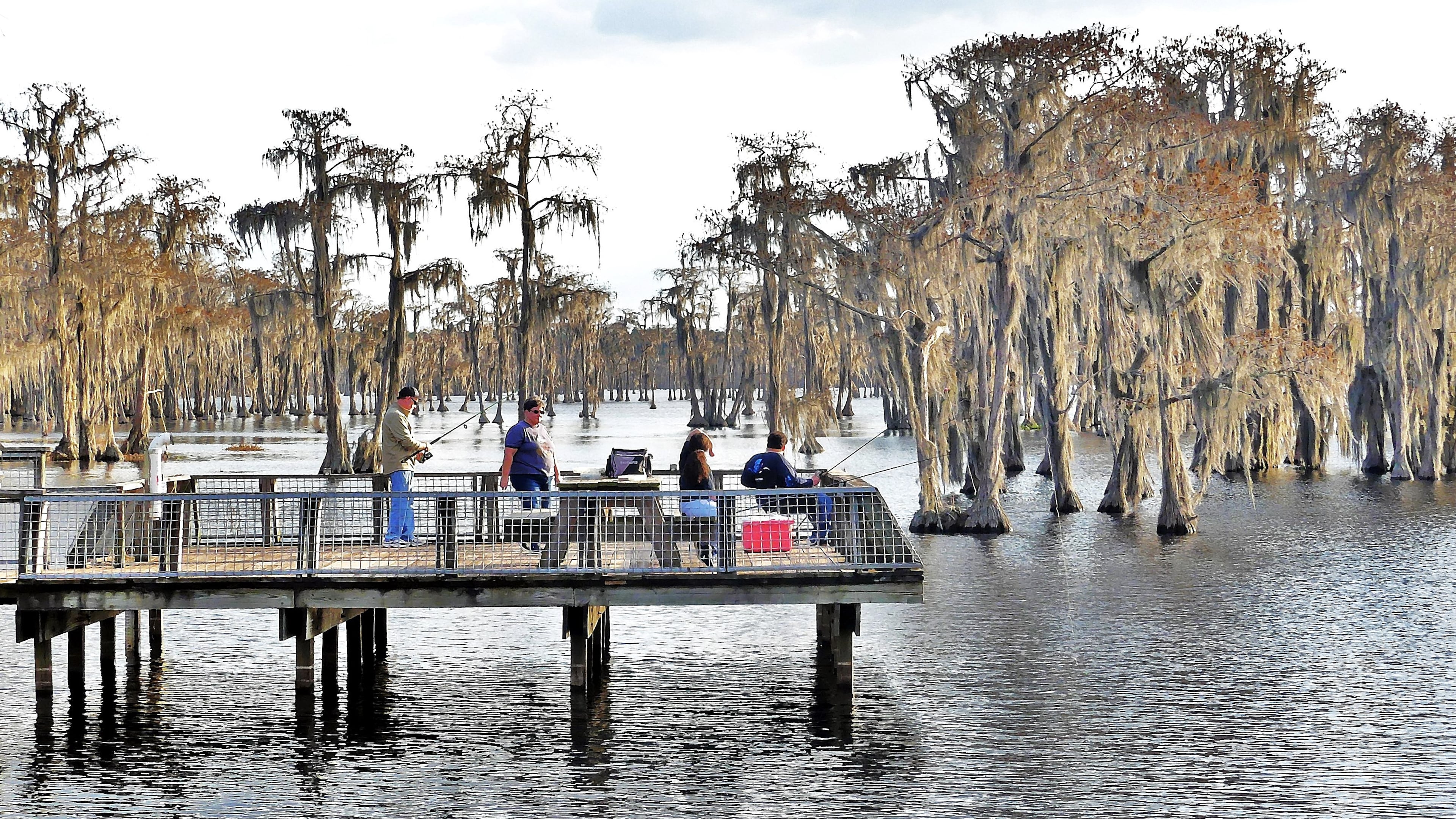
— Banks Lake NWR (4,050 acres), Lanier County in south-central Georgia. Preserves natural “pocosin” (a swamp-on-a-hill) and part of the second-largest freshwater wetland system in the state. It also supports a rich assortment of native plants and animals.
— Blackbeard Island NWR (5,820 acres), coastal McIntosh County. Maintains and enhances habitat for migratory birds, nesting sea turtles and other wildlife.
— Wassaw Island NWR (10,040 acres) near Savannah. The only barrier island on the Georgia coast with undisturbed an maritime forest. The beach is vital to sea turtle nesting.
Havens for sea turtles, migratory birds, endangered species
— Wolf Island NWR (5,125 acres) in Altamaha River delta near Darien. Mostly salt marsh and mudflats, but critically important as a feeding and rest stop for migratory shorebirds, including the endangered piping plover. The beach is used by nesting sea turtles and is not open to the public.
— Bond Swamp NWR (6,500 acres), along Ocmulgee River near Macon. Bottomland hardwoods, swamp forests, oxbow lakes and mixed hardwood-pine ridges provide safe havens for American alligators, wood storks, black bears and nesting bald eagles. Intact forests provide nesting grounds for waterfowl and neotropical songbirds like the prothonotary warbler and Swainson’s warbler.
— Eufaula NWR (11,185 acres), straddling lower Chattahoochee River. One third lies in Quitman and Stewart counties in west-central Georgia, the rest in Alabama. It’s strategically situated on the eastern edge of the Mississippi Flyway, one of North America’s primary bird migration corridors. Serves as a key feeding and rest hotspot for thousands of birds migrating between North and South America.
IN THE SKY: From David Dundee, retired Tellus Science Museum astronomer: The moon is last quarter today and will be new on Oct. 10. Over the next two weeks, Mercury is very low in the west just after dark. Mars rises in the east about midnight. Jupiter rises in the eastern sky about a few hours after midnight. Saturn is in the east just after dark.
Charles Seabrook can be reached at charles.seabrook@yahoo.com.