Fourth of July marks the turning point of the natural year
Happy Fourth! As we celebrate our nation’s 250th birthday, it will be a jubilant red, white and blue day of fireworks, barbecues, parades and a big road race.
For nature lovers, Fourth of July also has another special significance: It’s used as a rule-of-thumb date to mark the turning point — the high noon — of the natural year.
Since summer’s first day on June 21, the days have been growing shorter as the Northern Hemisphere slowly starts tilting toward autumn. Sky observers say the Fourth of July is when the shortening of days becomes noticeably more rapid.
We still have a lot more of summer left, though. Notably, the “dog days of summer“ are upon us — said to be the hottest, muggiest part of the year. The dog days are the 40-day period spanning from July 3 to Aug. 11, placing the Fourth of July right at the start of this notorious stretch of summer.
While some folks believe dog days refers to dogs panting in the heat, the term’s true origins trace back to ancient Greeks and Romans, who linked dog days to the shiny Dog Star Sirius. Around July 3 every year, Sirius begins its daily rising and setting with the sun. The ancients believed that the bright star and the sun moving in concert across the daytime generated the sweltering heat, drought, sudden thunderstorms, lethargy and mad dogs during July and August.
There’s no scientific proof of that. Southerners, however, have their own dog day beliefs. Many folks believe, for instance, that snakes — even nonvenomous ones — are more aggressive in the dog day heat and will aggressively attack humans. There’s no truth to that, either — although the dog days period is prime egg-laying time for several Georgia snake species, including corn, rat, Eastern hognose and rainbow snakes.
With the commencement of dog days, the iconic sounds of summer are starting — the ceaseless droning and buzzing of dog day cicadas by day and katydids by night. Unlike periodical cicadas, dog day cicadas appear every year around this time. Males are famous for their loud, high-pitched, buzzing calls in the treetops to attract mates.
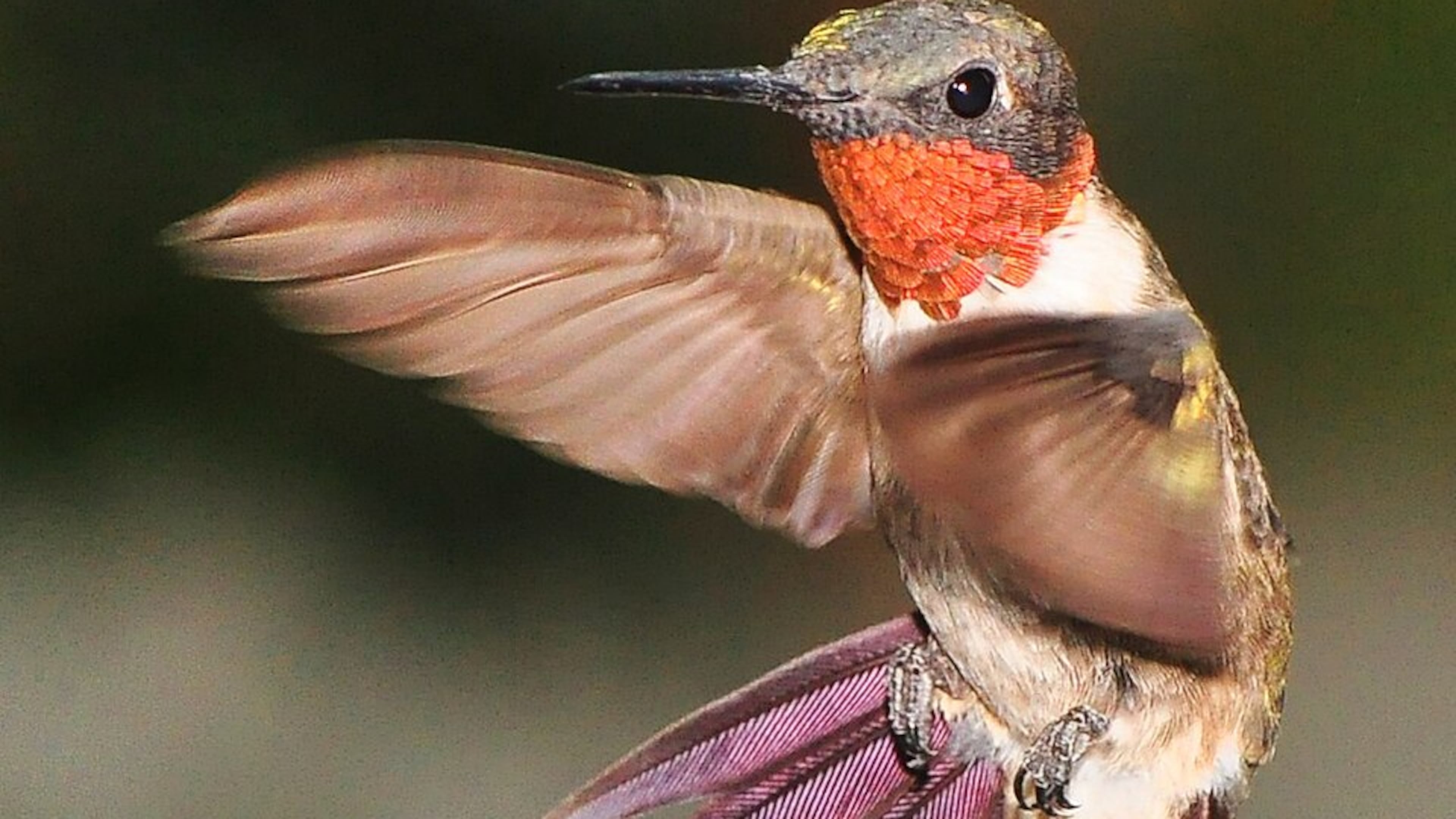
For us bird lovers, July 4th holds another cue — a rule-of-thumb date for when higher numbers of ruby-throated hummingbirds start returning to feeders. After a heavy showing in early spring at backyard feeders, the tiny birds seemed to disappear as they began nesting and developing a strong appetite for tiny insects and natural nectar instead of the sweet liquid from feeders. Now, they are coming back to feeders as the decreasing daylight triggers their powerful instinct to rapidly fatten up and gain energy for their arduous migration to winter grounds in Mexico and Central America.
At first, nearly all of the hummers coming back to your feeders will be males and juveniles. Many females are still tending babies in the nest — their second brood of the year. When those second-crop youngsters fledge later this month, they and their mothers also will start coming to feeders to store up energy for the long journey south.
Heading out with the early-departing ruby-throats will be some songbirds, including Louisiana waterthrushes, orchard orioles and purple martins. By late July, most of these early-exiting birds already will be well on their way south. Starting to form flocks now for their southbound journey are swallow-tailed and Mississippi kites and bank, barn and tree swallows. For most migratory songbirds, peak migration will be in late September and early October.
Finally, on this Fourth of July, be on the lookout for the reds, whites and blues in the bird world. Red: male Northern cardinal; scarlet tanager. White: great egret. Blue: Eastern bluebird; indigo bunting; blue jay; blue grosbeak.
IN THE SKY: From David Dundee, retired Tellus Science Museum astronomer: Earth will reach aphelion (farthest from the sun) at 1 p.m. on Monday at a distance of just over 95 million miles. The moon is last quarter on Tuesday and new on July 14. Over the next two weeks, Mercury can’t be easily seen. Venus is high in the west at sunset. Mars is low in the east just before sunrise. Jupiter is low in the west at dark but can’t be easily seen during the third week of July. Saturn rises in the east around midnight.
Charles Seabrook can be reached at Charles.seabrook@yahoo.com.