Atlanta writer Tom Junod gets the last word on father’s duplicitous life
In the 2019 movie “A Beautiful Day in the Neighborhood,” Tom Hanks plays Fred Rogers, who develops a friendship with a journalist profiling him for a magazine article. Their bond is forged when the children’s TV show host helps the jaded journalist navigate a difficult relationship with his problematic father.
Inspired by true events, the story is based on Atlanta writer Tom Junod’s 2017 article on Rogers for Esquire. While the movie ends on a warm and fuzzy note of father-and-son reconciliation, the real-life story isn’t as rosy and it’s far more complex.
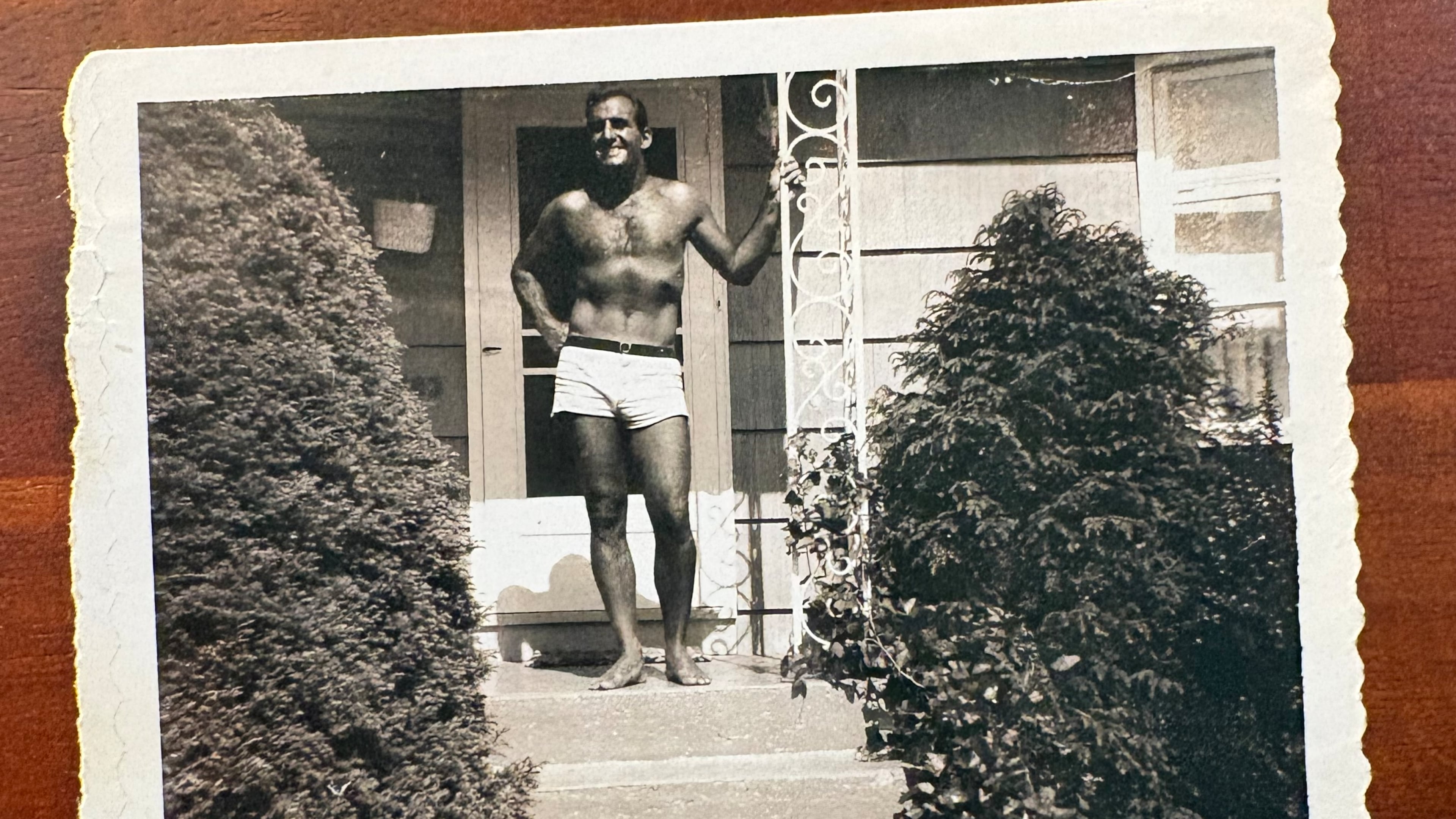
In his new memoir, “In the Days of My Youth I Was Told What It Means to Be a Man” (Doubleday, $32), Junod dissects his upbringing in Long Island, New York, under the thumb of his bigger-than-life father, Lou Junod. As a child, the author adored his flashy, handsome, attention-seeking father, a traveling handbag wholesaler who lived large, cavorting with celebrities, some of whom he bedded.

Committed to protecting his long-suffering mother from the truth, Tom is forced to keep his father’s secrets as he learns more about Lou’s philandering ways. But as an adult, the journalist emerges. Deploying the research skills he learned as a two-time National Magazine Award winner and staff writer for Esquire, GQ and now ESPN, Tom exposes disturbing family secrets that stretch back generations and discovers family members he never knew existed.
Junod recently spoke to The Atlanta Journal-Constitution about his new book. Here’s an excerpt, edited for length and clarity.
Can you describe your father in a nutshell?
The words that I keep on coming back to with my dad is he was an overwhelming presence. You couldn’t not look at him. You couldn’t not hear him. You couldn’t not smell him. He was a man who considered himself a man’s man and was known for pulling insolent cabbies through the windows of their cabs and who showered himself with Jean Naté women’s afterbath lotion. That was his secret weapon of aromatic excess.
If you went to a restaurant and my father was in it, either your eyes were going to be on him or he would be upset if your eyes weren’t on him. He was that person. He needed to be in the center of the universe and for a long time he was. That was the thing about my dad. A lot of people thought that he must be (lying) when he talked about his affairs with various stars such as Zsa Zsa Gabor — he wasn’t. My father had an affair with Zsa Zsa Gabor. He was, as he would be the first to tell you, endlessly attractive.

After your mother’s death, you learn that her greatest fear was that you would turn out to be like your father. In what ways are you like him and in what ways are you dissimilar?
The book is about my dad, but it is unquestionably written for my mom and the other women in my life, from my wife, Janet, for my aunt Ceil, for my aunt Ellie, for (Lou’s lovers) Peggy Monahan and Valerie Schocket, for all these women who showed me the way. My feeling about the book is my father really absolutely believed that he knew what it means to be a man.
I definitely idolized my dad and tried to be that way, especially when I was experiencing my first success as a magazine writer. … I tried to be a bigshot and that caused me and people around me pain, and it wasn’t me. I think that was the main thing that I learned and where I’ve tried to be different from my dad. I don’t want to be the person who gets upset if I walk into a room and everybody in the room isn’t looking at me. As a father, I don’t want to be the person who turns my daughter into an audience for the main attraction, who is me. I don’t want to be that and I try not to be.
Ultimately, I don’t think I learned what it means to be a man from my dad, I think I learned what it means to be a man from mom and the women who have really taken pains to show me the way.
In addition to your father’s bad behavior, you talk about occasions of your own bad behavior ― bullying a kid in the fifth grade and a brief affair in 1996. Why include that?
Both of these instances are very much about me trying to emulate my dad without the tools to do so, and without the sort of malign powers that my father could summon. My father was a powerful, powerful human being and I wasn’t. I was trying to be someone I wasn’t and because of that caused suffering and suffered myself.
The thing that I found out about my dad much, much later is that his whole argument that he was the personification of manhood is undercut by the fact that that personification required him to live in secret and for others to keep his secrets as well. I think lies and secrets and untruths, they cut into anybody’s argument that they represent the epitome of the masculine ideal. The book is my attempt to come closer to what I think is the masculine ideal by telling the truth.
Why was it important for you to expose your family’s secrets?
I don’t know if the truth sets you free — I don’t know if anything sets you free. But I do believe that in truth there is strength and power and it’s not cheap, it’s not fake, it’s real. I think the truth-telling function of the book is to me its most important thing. It’s because of that I found out I have a sister I didn’t know I had. I have three first cousins that I didn’t know I had. Those people are important to me, really important to me and will, I hope, be important to me for the rest of my life.
To me the validation of the book, the proof that the risks I took in the book were worth taking, lay there. I would not have found (sister) Lizzie without the book, and my relationship with her is, to me, proof that my heart was in the right place.
A Cappella Books presents Junod in conversation with Melissa Fay Greene on Tuesday, March 10, at the Jimmy Carter Presidential Library. For details go to acappellabooks.com.
Suzanne Van Atten is a columnist for The Atlanta Journal-Constitution. She may be reached at Suzanne.VanAtten@ajc.com.
About the Author

Suzanne Van Atten is a book critic and contributing editor for The Atlanta Journal-Constitution.