15 reviews find Atlanta Jewish Film Festival traveling a world of emotions

This story was originally published by ArtsATL.
Over its 26 years, the Atlanta Jewish Film Festival has naturally weathered global events, notably the COVID-19 shutdown. The most recent seismic event, reflected in multiple titles in this year’s programming, is the Oct. 7 attacks by Hamas in 2023 and the ongoing Israel-Hamas war ever since.
“That’s a titanic event in Jewish history,” says executive director Kenny Blank. “The echoes will continue for generations to come — what it represents for the Jewish people and the aftermath in terms of what we see with antisemitism, how Israel is perceived in the world and conflicts within the Jewish community about Israel’s actions in the aftermath of Oct. 7th.

“Hopefully, we’ve done our job in offering a variety of perspectives in our lineup. There’s a powerful arc of films that go from the events of Oct. 7th on the ground, dealing with the hostages in a very tactile way, moving forward to how the war has been conducted.”
Some of those titles include the fact-based dramas “Stay Forte” and “Coexistence, My Ass!,” an Oscar short-listed documentary. These are the kinds of movies Atlanta Jewish Film Festival is good at — the sort that make you want to watch with a bunch of other people and talk (or argue) about at length afterward.
If this sounds like very serious viewing, don’t worry. Screening in theaters from Feb. 18 through March 3, this year’s 25 narrative features, 24 documentaries and 16 short films embrace many more moods than solemn.

“The lineup is marbled with joy and humor and a larger emotional range,” Blank says. “It’s important, alongside the challenging work, to have films that are warm and funny. Opening night through the closing night film, the audience can find these moments of escape and laughter and humanity.”
Atlanta’s largest film festival, Atlanta Jewish Film Festival is also one of the largest of its kind in the world. “There’s ‘Jewish’ in the title, but the programming is accessible to all people of all backgrounds and faiths,” Blank says. “They’re able to walk through the festival doors and not know what they’re walking into. These are just great international films with great universal storytelling.”
In the wake of COVID shutdowns and in a world dominated by streaming media, it remains a challenge to get some people to come out for in-person screenings. “Overall, though, I feel heartened at what I’m seeing,” Blank says. “Every time I’ve gone out to a theater, I’ve seen full houses and enthusiastic audiences. This next generation of moviegoers is being reminded what that common moviegoing experience is all about. We provide more than a night out. These are movies you probably can’t see anywhere else, films you want to engage with on a deeper level with an audience.”
Most screenings feature appearances and Q&As with filmmakers and community and film experts.
For those who prefer the home-viewing experience or can’t make it out to the Atlanta Jewish Film Festival’s venues (Sandy Springs Performing Arts Center, Plaza Theatre, Tara Theatre and The Springs Cinema & Taphouse), the virtual cinema option is available after the main run of the Festival, March 6-15.
Below are quick takes on 15 of the films I had the chance to preview. One recurring theme I found this year is the importance of community — and the many ways community takes form, sometimes positively, sometimes not. In other words, the films’ themes reflect a fundamental strength of the Festival itself.

‘Coexistence, My Ass!’
When Harvard approached stand-up comedian Noam Shuster-Eliassi about creating a peace-building project, it made sense. She grew up in a village where Jews and Arabs lived together in harmony. Who better to examine Palestinian-Israeli tensions through comedy? For a while, her biggest obstacle was COVID, which suspended her project. Then came Oct. 7. Director Amber Fares’ years-spanning documentary mixes clips from Eliassi’s one-woman show with her many appearances as a would-be voice of reason in Israeli news programs. She’s alternately celebrated and vilified, called an enemy of the state by other Israelis even while she’s trying to unify people through her comedy. A prize winner at last year’s Sundance Film Festival, the doc can drive you crazy and give you hope, all at the same time.
‘Dead Language’
When a traveling business owner named Esben (Ulrich Thomsen) mistakes Aya (Sarah Adler) for the person sent to meet him at the Jerusalem airport, she plays along with the mistake for an uncomfortably long time. It’s the meet-cute setup for a romantic comedy, but Aya is married to an affable academic (Yehezkel Lazarov). What looks like an almost-romance turns into something stranger and more delicate. In a dangerous/poetic form of cosplay, Aya returns to Esben’s hotel room, now occupied by unknown men (including the great German actor Lars Eidinger). Sex doesn’t happen, but larger questions of identity emerge. A meditation on Aya’s inchoate longing and dislocation midlife, Oded Binnun and Mihal Brezis’ drama has the mystery and staying power of a good short story.
‘Fantasy Life’
Writer-director Matthew Shear, in an accomplished feature debut, plays Sam, a neurotic New Yorker who finds unlikely work through his shrink (Judd Hirsch, such a great, relaxed actor). He takes a job as a manny for the doctor’s musician son David (Alessandro Nivola), and his famous actor wife Dianne (Amanda Peet, in a lovely performance), anxious because roles have dried up. Sam fits in with the household until, oops, he starts crushing on Dianne. The movie doesn’t follow obvious rom-com plot points, and you’ll dig a fabulous cast that includes Bob Balaban, Andrea Martin, Zosia Mamet and Holland Taylor. The movie has a wise, funny, generous heart.
‘Franz’
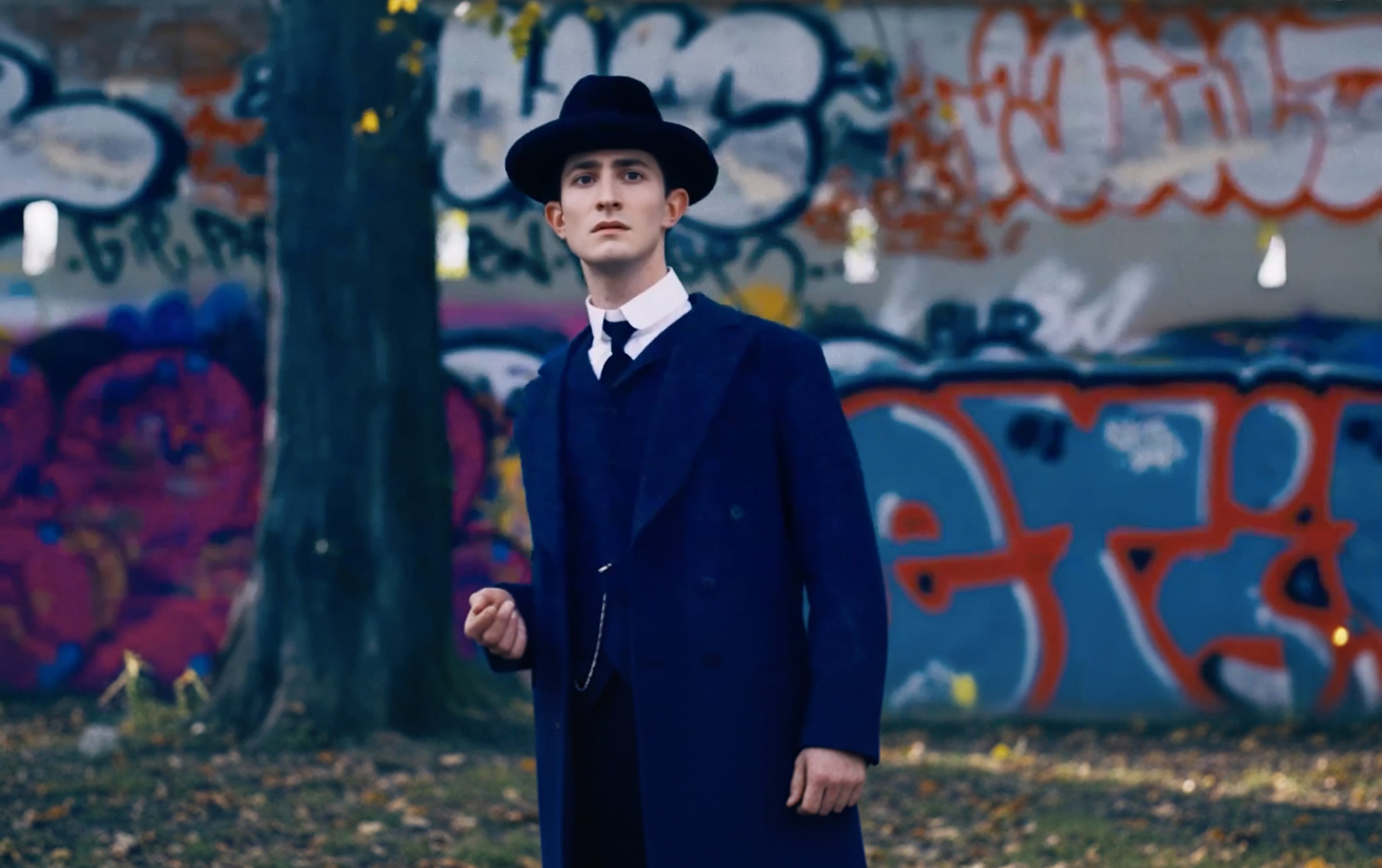
The right amounts of the surreal and absurd color this impressionistic biography of Franz Kafka, beautifully directed by Agnieska Holland (1990 classic “Europa Europa” and 2023’s refugee drama “Green Border”). Idan Weiss plays the eccentric Prague genius, working in an insurance office while struggling to write his disorienting masterpieces at the home he shares with his parents and sisters. Occasionally, colleagues and family friends address the camera, offering their personal interpretations of his life. The film’s time shifts bring bittersweet payoffs. The crowded, modern Kafka Museum in Prague keeps breaking into Franz’s bewildered consciousness. And in one scene, we see his supportive sister Ottla, years after her brother’s death, packing a suitcase, her coat stitched with the yellow star. We know where she’s going; she doesn’t.
‘Holding Liat’
The agony of waiting for a missing loved one gets personalized in Brandon Kramer’s strong documentary. When American Liat Beinin Atzili and her husband Aviv are kidnapped by Hamas on Oct. 7, Liat’s family members have to navigate personal and public challenges in trying to get her home safely. Her father Yehuda tries to stick with a message of “reconciliation and peace” when talking about his daughter to the media. But we follow along with sympathy as he criticizes Benjamin Netanyahu’s use of war for his own personal interests: “Israeli politics is one of the reasons we’re in this mess to begin with!” Like “Coexistence, My Ass!,” the film captures the furious purity tests and passionate arguments that pepper the chaos of the days, weeks, months and years since that awful first day.
‘Lucky Star’
Director Pascal Elbé’s film tries to pull off a famously difficult trick, making a comedy out of Nazi occupation. For me, it didn’t work, but others will appreciate bumping into a family-friendly movie at the festival. It’s the story of French peasant and schemer Jean who, hearing rumors that a baroness is sheltering Jews at her chateau, decides he and his wife and son should pose as Jews to get in on this free-rent-and-meals deal. (He’s played by Benoît Poelvoorde, star of 1992’s “Man Bites Dog,” a prophetic take on reality programming whose bitter tone was the opposite of this movie’s.) Star charts Jean’s slow-dawning understanding of the war and the way he unwittingly bumbles his way into heroism, a time-honored trope for fables about holy innocents. It aims to be a successor to “Life Is Beautiful,” for better and worse.
‘My Friend Sam’
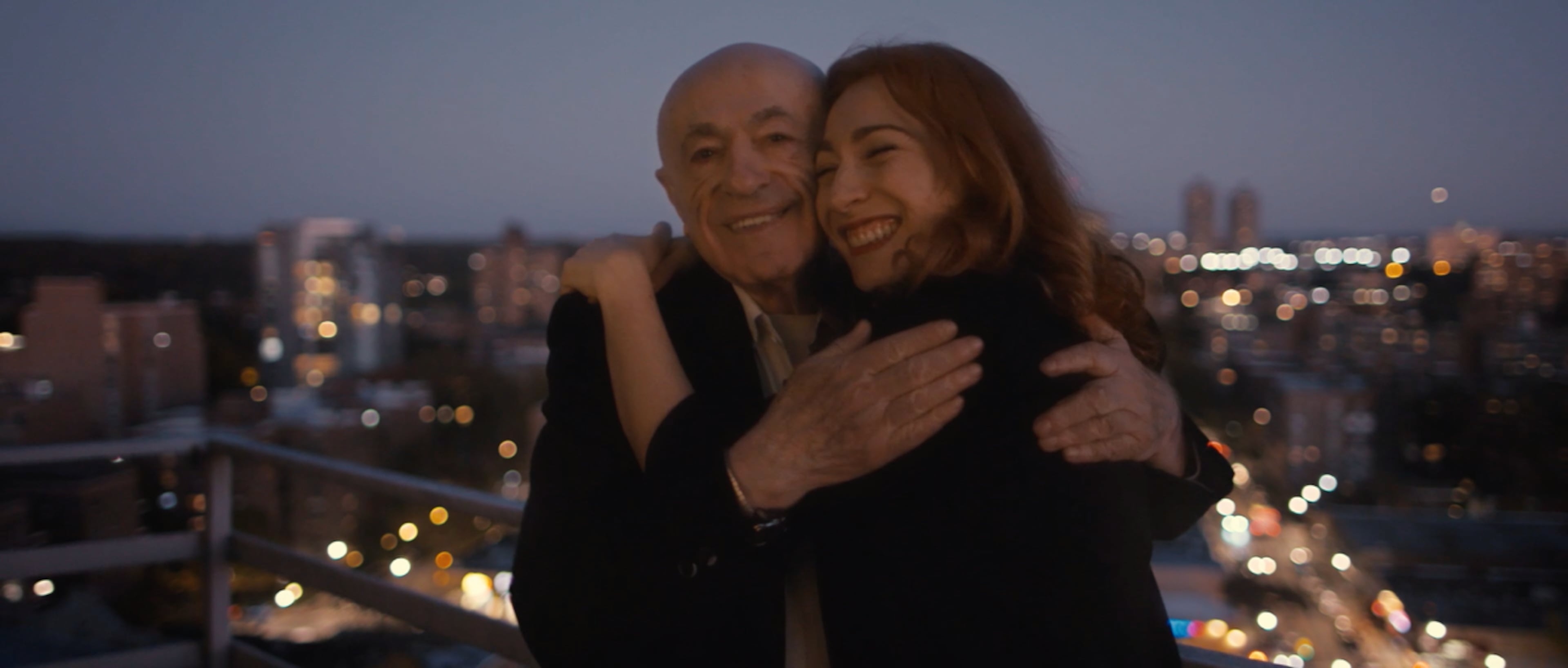
A sweet, short tribute to the unlikely bond between Moscow-born singer-songwriter Regina Spektor and the old fellow who became her mentor after she moved to New York as a kid, Samuel Marder. The Romanian-born Jewish violinist tells some harrowing, memorable wartime memories. He survives brutal conditions in a Romanian camp, then finds a violin teacher who, unknown to the young Sam, was a Nazi sympathizer. And when he comes to the U.S., he discovers the very American dream that now seems imperiled for today’s immigrants. It’s the festival’s school field trip film, aimed at educators, students and general audiences.
‘Once Upon My Mother’
Like “Lucky Star,” this opening-night dramedy, based on Roland Perez’s memoir, probably deserves a place in the festival just because it can make you laugh. Leïla Bekhti stars as Esther Perez, Moroccan-Jewish mom to little Roland, who’s born with a clubfoot. While doctors and her husband prescribe a brace and bed rest, Esther prays and seeks a cure through the music of French icon Sylvie Vartan. (Vartan appears as herself, one of the film’s stranger-than-fiction elements.) At times, I wondered if Esther was a wonderful, wacky character or if she was struggling with an undiagnosed mental disease. Still, driven by Bekhti’s go-for-broke performance and the film’s touches of magic realism, the movie can wear you down into a state of smiling submission.

‘Proud Jewish Boy’
Herschel Grynszpan was a 17-year-old boy from Poland who was kicking around Paris when, one day in 1938, he shot a diplomat at the German embassy. Was it a personal act, a gay lovers’ spat or an act of political terrorism? Whatever, it served as a pretense for Kristallnacht, and the murderous years that followed. In director Isri Halpern’s documentary, the facts are fascinating. But the mysteries are equally compelling — ranging from speculation over Grynszpan’s motivations to where, how and if the man lived when the war ended. No one seems to really know. But like the sudden murder of Archduke Franz Ferdinand 24 years earlier, his gunshot may have triggered a World War with the same kind of randomness.
‘Rosenthal’
Florian Lukas plays the real-life Hans Rosenthal, host of a popular 1970s game show in Germany. If people know he’s Jewish, they consider him, you know, a credit to his community. But if Rosenthal himself thinks assimilation is his superpower, that gets tested when he’s invited to Cologne to commemorate the 40th anniversary of Kristallnacht on the same night he’s contracted to appear live on his weekly show. Where do his obligations truly lie? Working with the facts, director Oliver Haffner’s well-made but conventional drama sometimes suffers from the same constraints the man did as he struggled with his identity: entertainer for all Germans or representative of his people.

‘The Sea’
A rare Israeli-Palestinian co-production, Shai Carmeli-Pollak’s drama follows dual narratives. First is that of 12-year-old Palestinian boy Khaled (Muhammad Gazawi), who sneaks across the Israeli border to see what he missed on a school trip: the Mediterranean. When his father Ribhi (Khalifa Natour) hears the news, he risks losing his job to track down his son. The film accomplishes its goals simply, creating a portrait of community on both sides of the checkpoints. We sense a huge amount of crushed hope and determination banked behind the boy’s stoic-seeming stare. When Khaled finally sees the sea, the circumstances are sadly ironic. The film earned 13 Ophir Awards (Israeli Academy Awards) nominations and was the country’s official submission to the Oscars. At its best, it honors the tradition of neorealist filmmakers such as Italy’s Vittorio De Sica or Belgium’s Dardenne brothers.
‘The Soundman’
In the days before Germany’s 1940 invasion of Belgium, a brilliant, dreamy sound technician named Berre (Jef Hellemans) joins the main Brussels radio station as a sound-effects artist for its live radio dramas. The newest leading lady is Elza (Femke Vanhove), hungry to build a career, though she and her Jewish family live in dread. Writer-director Frank Van Passel’s blend of tremendous sound design, romance and fantasy (there’s a dance sequence and the cityscapes are painted backdrops) is audacious. Whether it works or not, in service of a tale that is, ultimately, about the Holocaust … well, viewers may have a wide range of responses. The intentions feel earnest.
‘Stay Forte’
Powerful in its final moments, Doron Eran’s fact-based tragedy suffers from an underlying question. It’s the story of three Oct. 7 hostages, imprisoned in Gaza tunnels and struggling to survive. The film’s tone, verging on exploitation with a horror-movie soundtrack and some choppy editing, made me uncomfortable. Given the real-life fate of the men, much of the movie’s script is pure conjecture, and I question the ethics of making drama out of lives so recently lost. The film can be appreciated for trying to turn harsh facts into art that can, hopefully, make the world a better place. It also features a second appearance in the Festival lineup by the great Judd Hirsch.
‘Surviving Malka Leifer’
Raised ultra-Orthodox in Australia, the three sisters at the heart of Adam Kamien’s documentary are so sheltered, with such an unloving home life and repressive community, they don’t have the words to describe the sexual abuse each of them experiences. As adults, they speak up and unite to bring Malka Leifer, their abusive school principal now living in Israel, to justice. As a viewing experience, the film’s weakness comes from a lack of access to the courtroom proceedings. In its last half, we’re stuck with the sisters as they wait for a verdict. Their frustration, in a way that feels unintended, becomes ours.
‘They Fight With Cameras’
Nothing quite matches the you-are-there thrill of seeing firsthand footage of history. Nina Rosenblum, daughter of the film’s central subject, and husband Daniel Allentuck’s hourlong film delivers the goods. The focus is on the late Howard Rosenblum, one of the most decorated members of the U.S. Army Signal Corps, who aimed his camera at the invasion of Omaha Beach and inside the liberation of a place outside Munich whose name meant nothing to him: Dachau. (Some of the footage is harrowing.) Narrated by Liev Schreiber, it’s built around letters to home Rosenblum sent from the front and a 1997 interview he gave to the Shoah Foundation. Moving, inspiring stuff here.
IF YOU GO
Atlanta Jewish Film Festival
Wednesday Feb. 18 through March 3. Prices vary. Screenings at Sandy Springs Performing Arts Center, Plaza Theatre, Tara Theatre and The Springs Cinema & Taphouse. Virtual cinema option available March 6-15. AJFF.org.
::
Steve Murray is an award-winning journalist and playwright who has covered the arts as a reporter and critic for many years.

MEET OUR PARTNER
ArtsATL (artsatl.org) is a nonprofit organization that plays a critical role in educating and informing audiences about metro Atlanta’s arts and culture. ArtsATL, founded in 2009, helps build a sustainable arts community contributing to the economic and cultural health of the city.