Dolly Parton’s new Nashville hotel and museum offer a journey through her life

As a travel journalist, I had the chance to interview Dolly Parton at Dollywood many years ago, where I expected to talk about the theme park’s newest rides. Instead, our conversation turned to weight management. For a moment, we were just two curvy gals sharing our struggle.
That’s how easy it was to talk to her.
Beneath the carefully curated glamour and rhinestones was a woman who made you feel as if you were talking to a friend, not a global superstar.
I carried that memory with me when I recently traveled to Nashville, Tennessee, to explore Dolly’s SongTeller Hotel and its new Life of Many Colors Museum, an immersive journey through the life, music and memories of the country music legend, on the hotel’s third floor.
From rags to rhinestones
The museum begins in a replica of the Smoky Mountains cabin where Dolly was raised. Inside, you can hear her mother, Avie Lee Parton, tell the story behind “Coat of Many Colors,” the title track of Dolly’s 1971 album that helped establish her signature songwriting style.
In a gentle Appalachian drawl, she describes how the family, which eventually included 12 children, couldn’t afford a new coat for Dolly. Instead, Avie Lee sewed one from colorful rags. She told her daughter the biblical story of Joseph and his coat of many colors given to him by his father as a sign of deep affection.
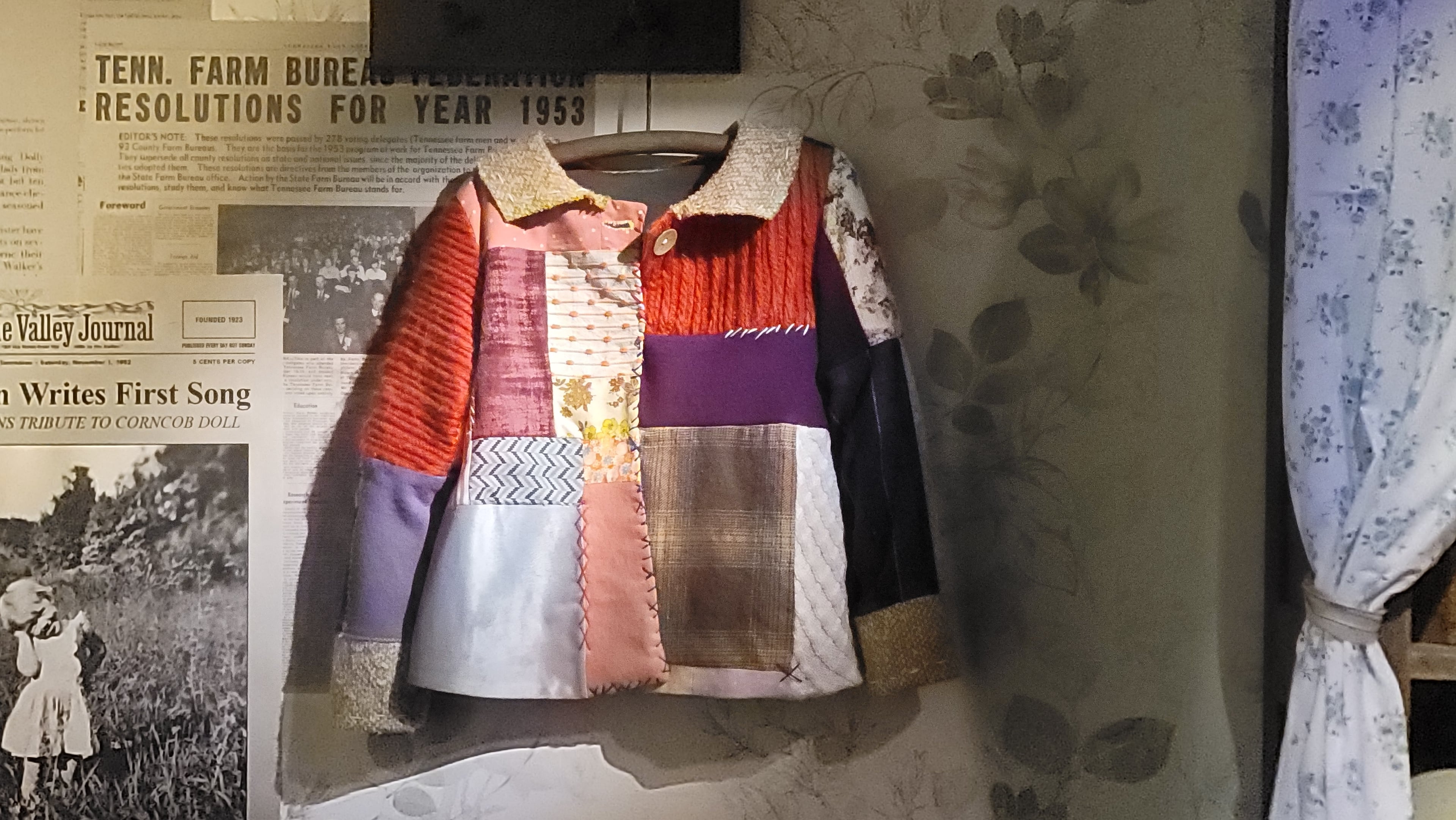
Young Dolly felt special wearing her handmade coat, but classmates made fun of her. Even so, she wore the coat for years. It was a life lesson she never forgot: True riches are not measured by material possessions but by family bonds and self-worth. A reproduction of the coat hangs on the cabin wall.
From there, the 20,000-square-foot museum takes visitors on a journey through Dolly’s life, using interactive exhibits, personal artifacts and multimedia displays. With the help of modern technology, Dolly herself guides fans through the people, places and experiences that inspired her songs and shaped her career.
One exhibit re-creates the laundromat where Dolly met her husband, Carl Dean, who remained by her side for nearly 60 years until his death in 2025. Dolly was known for her blinged-to-the-max style, but her knee-length wedding dress is surprisingly simple.
Nearby is an office modeled after the one her uncle and early manager, Bill Owens, worked from in the 1960s. Episodes of “The Porter Wagoner Show,” which helped launch Dolly’s career, play on a vintage television. Wagoner sparkles like a rhinestone cowboy in his bespoke suit as his “girl singer” with the big beehive hairdo croons “Dumb Blonde,” her breakthrough country hit.
But Dolly was anything but dumb. Her sharp business acumen helped her build an entertainment empire worth around $450 million at the time of her death in August at age 80.
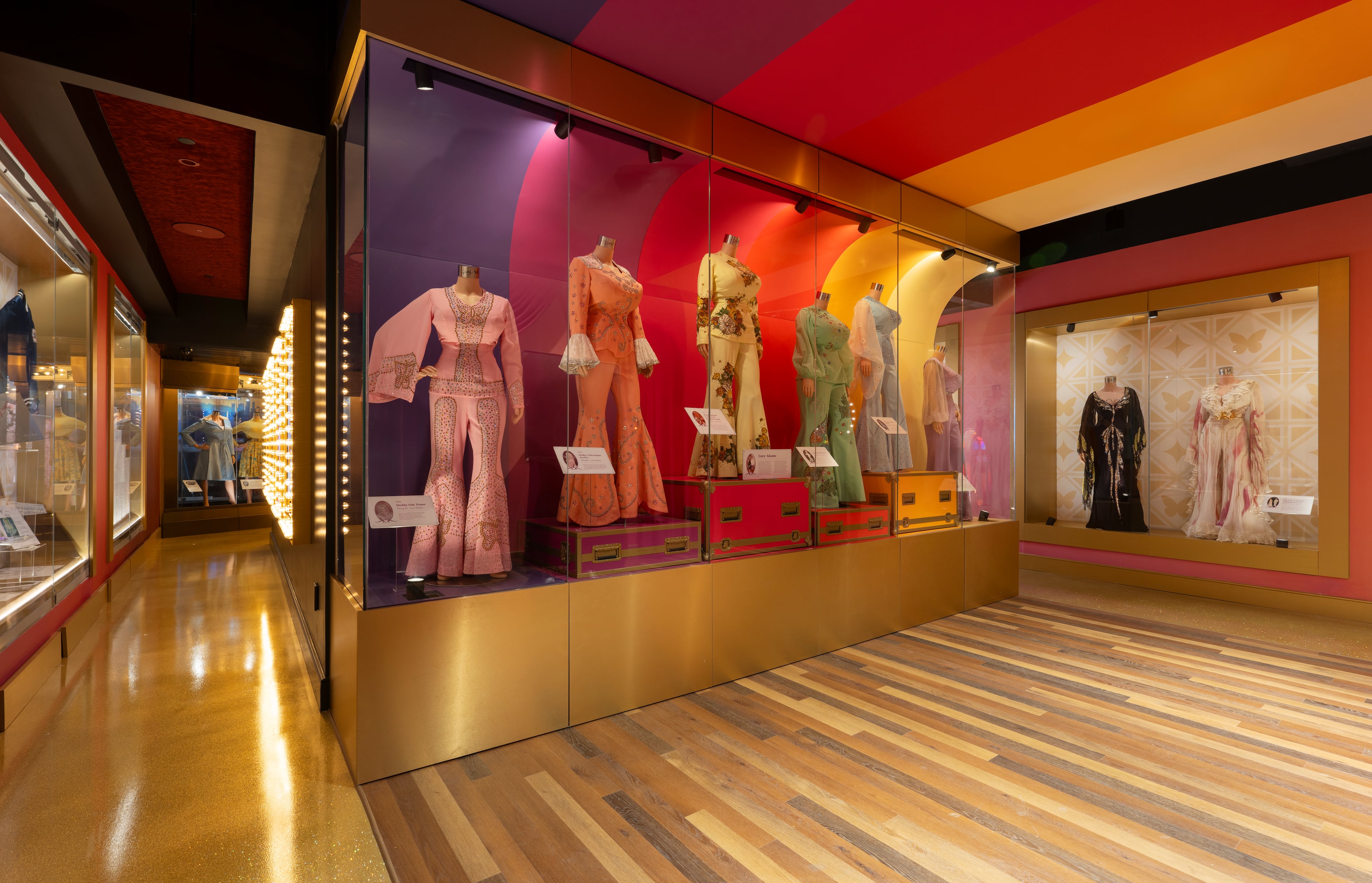
The museum includes an outfit she wore as Doralee Rhodes in “9 to 5,” her film debut, along with handwritten lyrics to her chart-topping hit “Jolene.”
I was most captivated by the collection of pastel bell-bottom jumpsuits designed by Lucy Adams in the 1970s. In an era when many country music stars glittered in over-the-top “Nudie suits” designed by Nudie Cohn, Dolly found her own style with “Lucy suits.”
Her philanthropic work gets its own spotlight, too. An interactive exhibit celebrates the Imagination Library, Dolly’s program that delivers free books to children. Visitors can watch the superstar read aloud, bringing her love of storytelling to life.
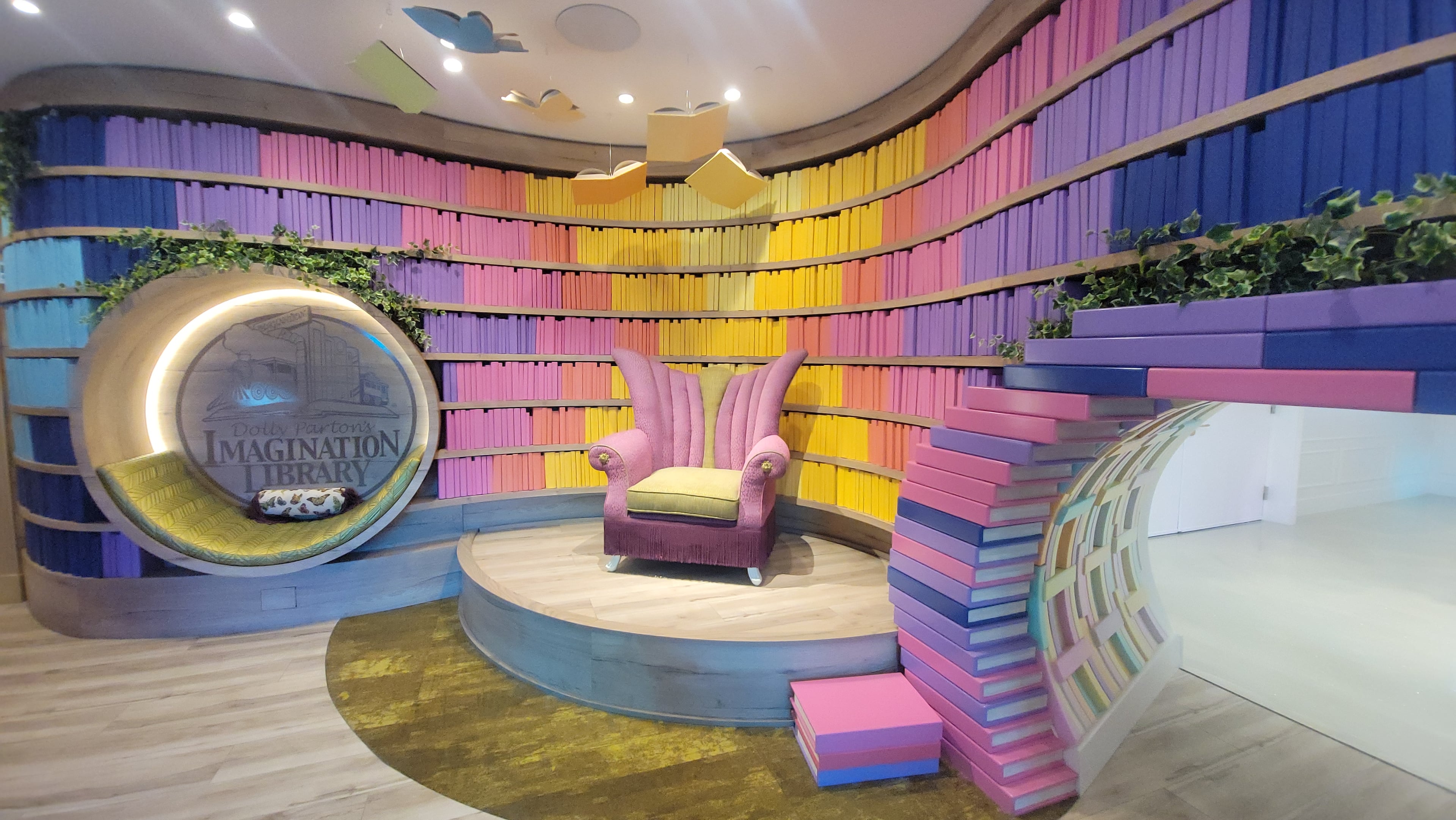
That exhibit struck a chord with Bennie Gilliam, a retired teacher who traveled from Fort Worth, Texas, to stay at the hotel. The museum wasn’t open during her visit, but she said she has great respect for the children’s literacy program. It’s one of many reasons she’s a Dolly fangirl.
“I love her attitude. I love her singing. She’s so fun,” Gilliam said. “Her spirit is there with you (in the hotel).”
A hotel with Dolly’s signature style
The entertainer’s influence extends beyond the museum into the hotel itself, a 12-story property designed to celebrate her music, personality and connection to Nashville with more than 240 Dolly-themed rooms and suites.
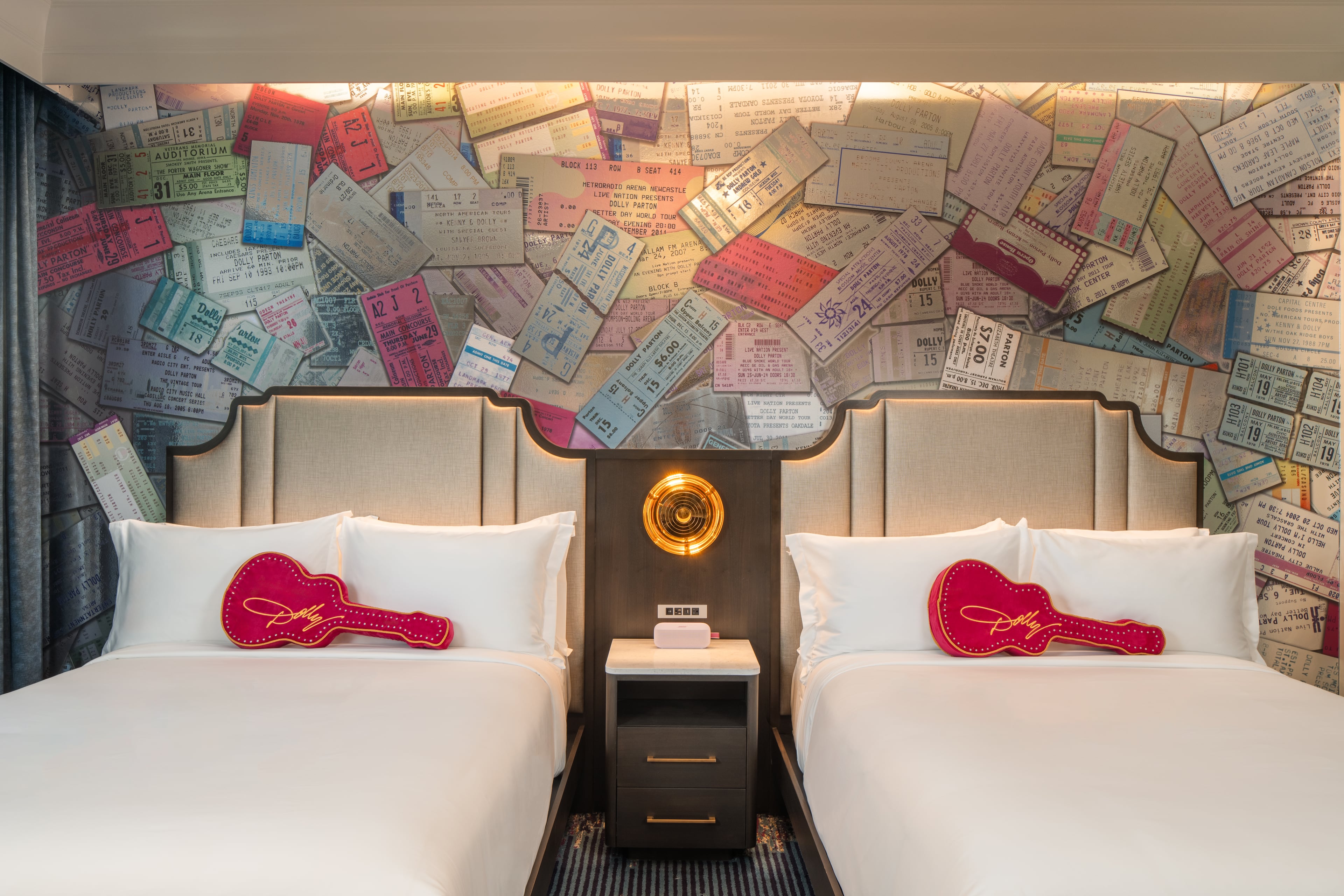
Fun touches include wallpaper printed with concert ticket stubs and guitar-shaped throw pillows. The decor nods to her career without losing sight of the hotel’s purpose as a place to unwind after a day exploring Music City.
But SongTeller is more than a place to sleep between honky-tonks. It has two live entertainment venues, Parton’s Live and Jolene’s, where guests can enjoy music without leaving the property.
The hotel’s downtown location also makes it a convenient base. Lower Broadway’s live music scene is nearby, as are the Ryman Auditorium and Country Music Hall of Fame and Museum.
Following Dolly to her hometown
After a day of music and museums, I headed east on I-40 for the 3½-hour drive to Sevierville, Tennessee, Dolly’s hometown in the foothills of the Great Smoky Mountains.
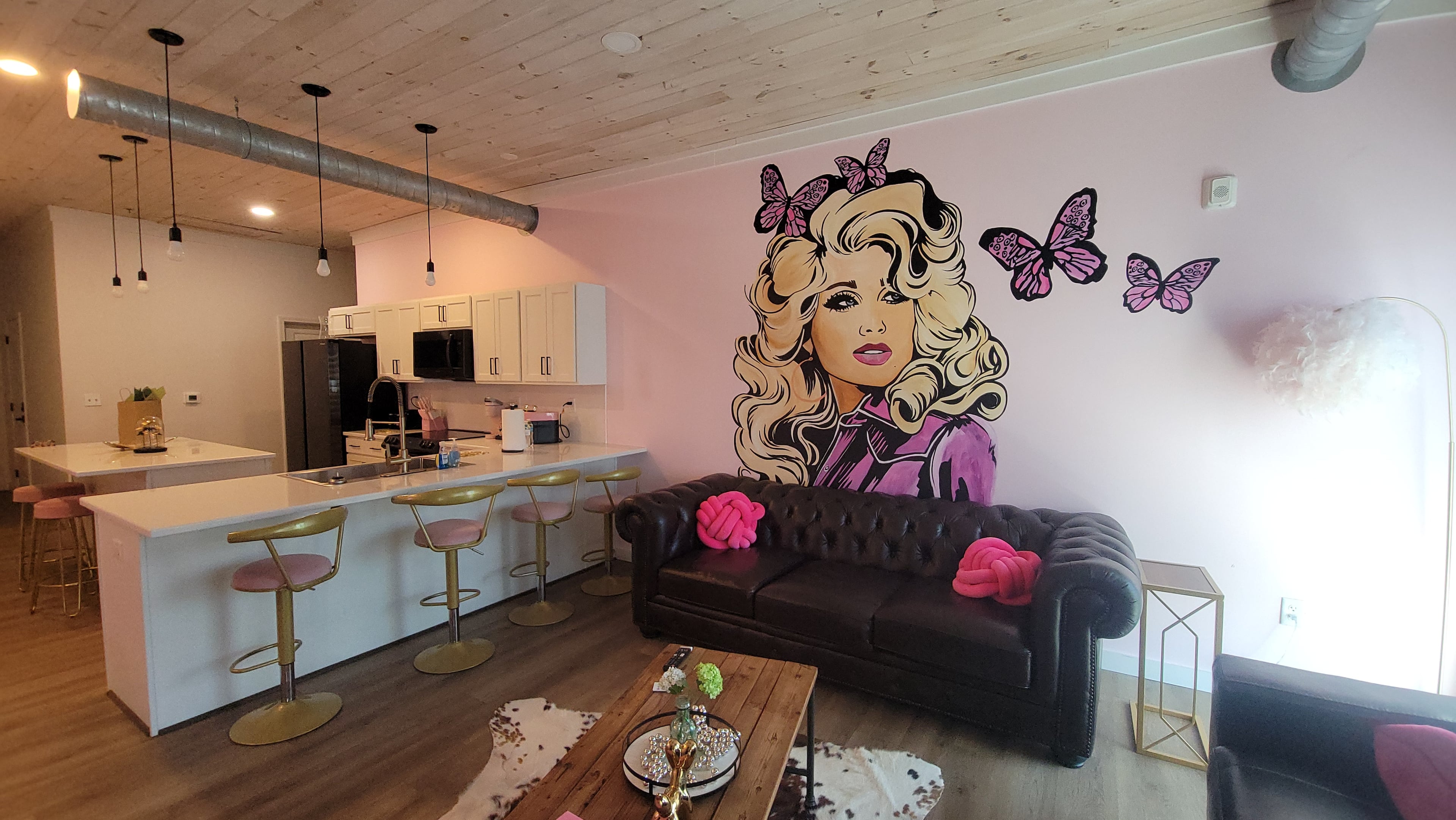
I checked into Dolly’s Loft, a two-bedroom Airbnb decorated with a massive mural of the singer-songwriter above the sofa. Everything from the kitchen appliances to the furniture was pink, the singer’s signature color.
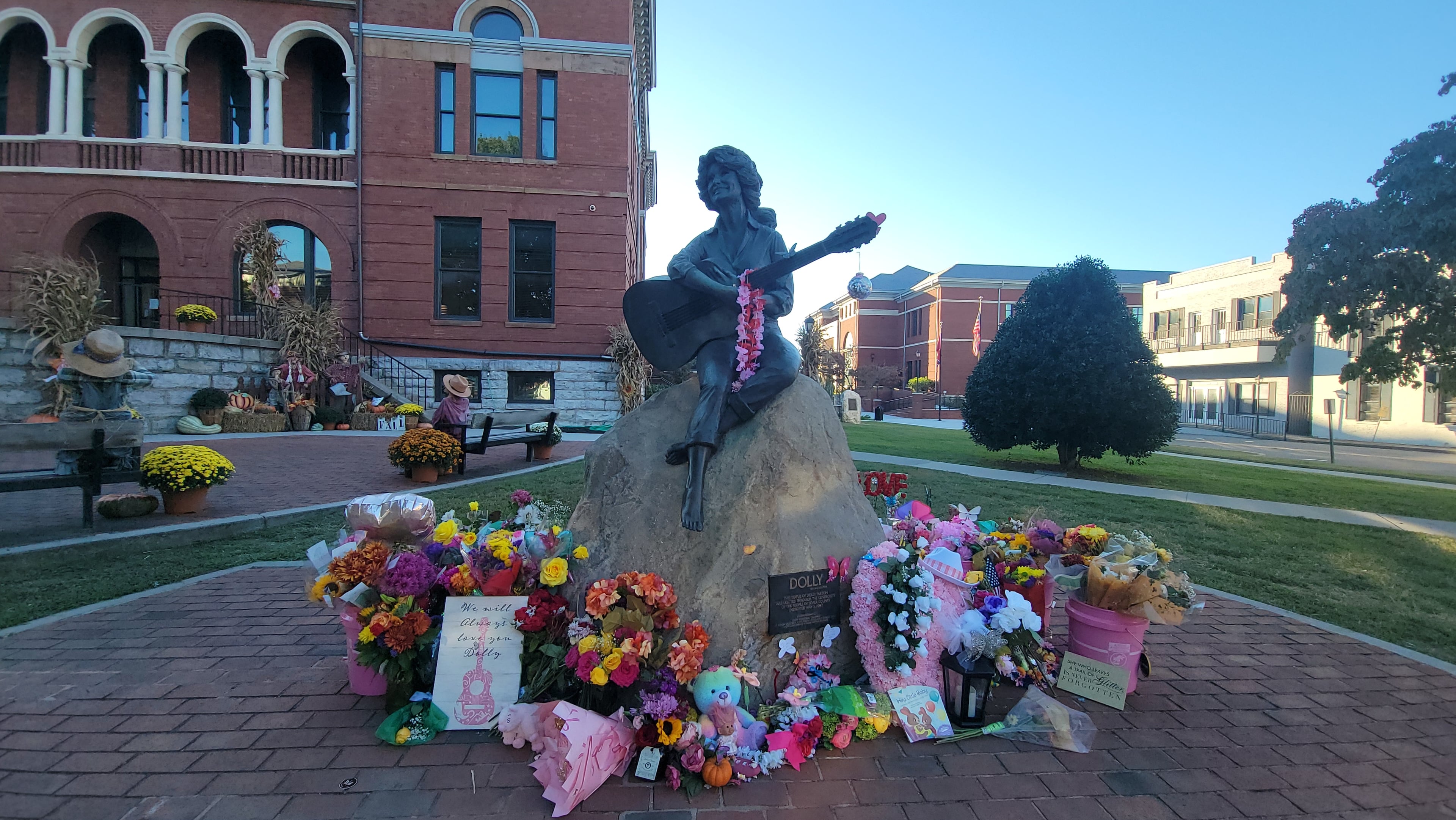
The next morning, I poured myself a cup of ambition from the pink coffee maker and walked across the street to the bronze Dolly statue in front of the courthouse. It was surrounded by flowers and other tributes left by fans.
Murals honoring the town’s famous native daughter appeared in shop windows along the way to breakfast. It’s impossible to overstate how much Dolly is loved here.
Over a plate of chicken and waffles at Buffalo Breakfast Co., I chatted with restaurant manager Heather Castillo. Dolly had made a lasting impression on her family more than 20 years earlier when she agreed to meet Castillo’s grandfather at Dollywood. It was his dying wish.
“She welcomed him into one of the restaurants and took time to talk to him and my grandmother and answer questions,” Castillo said. “The love she had not just for Sevier County, but for all her fans, was unbelievable.”
It’s often said that Dolly’s heart is as big as her hair. Stories like Castillo’s help explain why her influence reaches far beyond the stage.
A final stop at Dollywood
My pilgrimage concluded at Dollywood, the theme park she founded 40 years ago to celebrate Appalachian culture and music.
Dolly famously joked that she didn’t ride the rides she promoted because she might lose her wig and her heels. But thrill-seekers can’t get enough of NightFlight Expedition, a $50 million indoor attraction that opened in August and combines roller-coaster thrills with a dark ride to simulate soaring over the Smokies at night.
After sundown, I enjoyed the glow of Great Pumpkin LumiNights, part of the annual Harvest Festival that runs through Halloween.
An illuminated butterfly may seem incongruous among the blazing jack-o’-lanterns, but the delicate creature has been part of Dolly’s branding since the release of her 1974 song “Love is Like a Butterfly.”
Like a butterfly, Dolly was beautiful and gentle, but her savvy instincts ensured she would survive, adapt and take flight.