‘We need to get an edge’: Falcons hope street ball mentality elevates offense
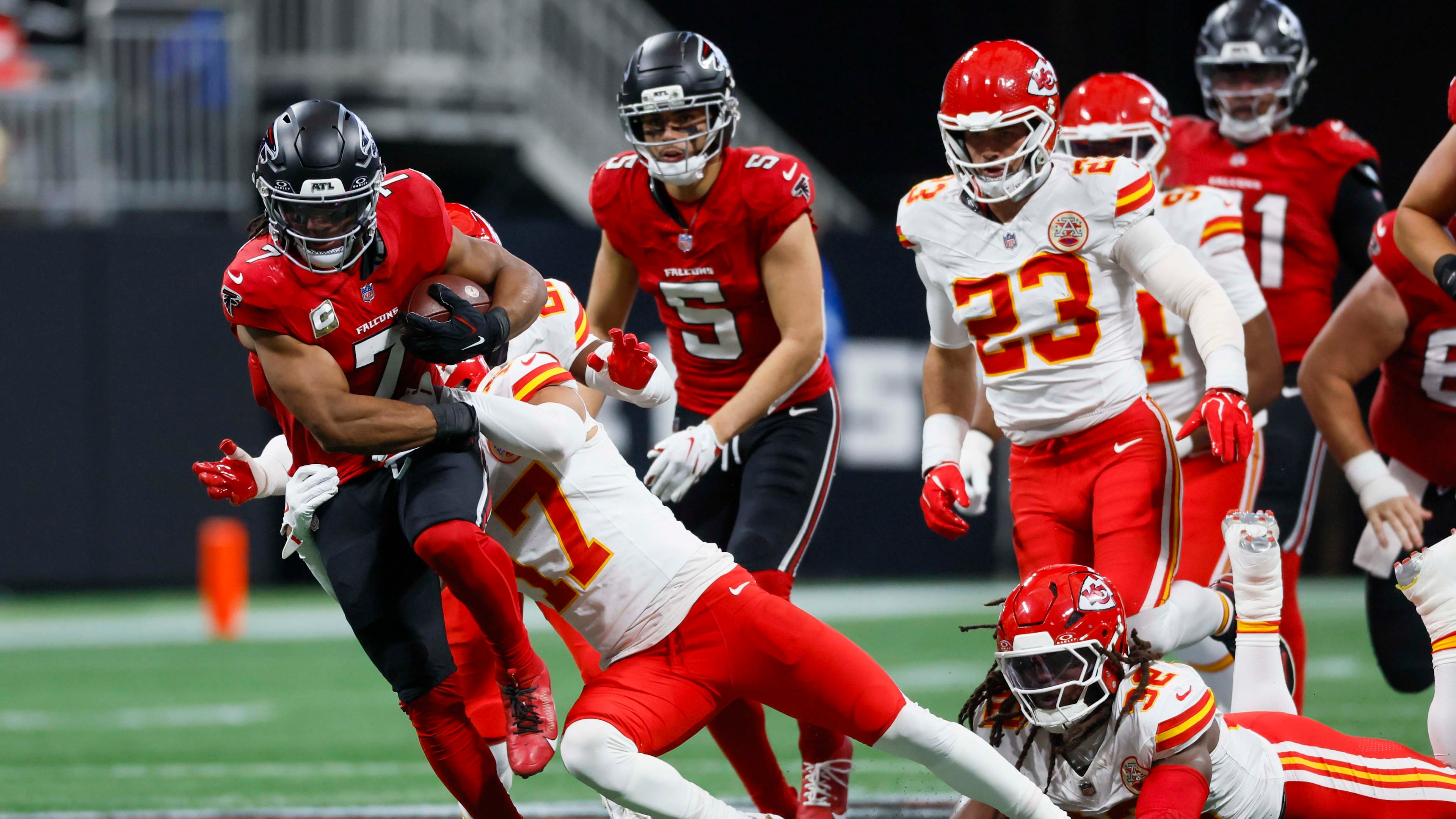

FLOWERY BRANCH — On a challenging Sunday afternoon during which his offense stumbled again, his role dissipated from usual standards, and his team lost for the fifth time in six games, Falcons running back Bijan Robinson had an idea for his teammates.
“It’s like street ball out there,” Robinson said after Atlanta’s 35-13 loss to the Kansas City Chiefs on Nov. 15. “Like, you’re just free flowing. You know your assignment. Just make it happen.”
At the core of street ball, receiver Jahan Dotson says, is a different mentality.
“You’re trying to dominate whoever’s in front of you,” Dotson said.
The Falcons (3-7) haven’t done it enough this year.
A mindset change, they feel, can lead to brighter days. Embracing the street ball mentality — tough, hard-nosed and will-imposing — is a good start.
“I don’t want to say we have a bunch of nice guys on offense,” Dotson said, “but all of us are very much alike in a sense. So, we need to get an edge as an offense and come out with a demeanor, like, we can’t be stopped and get things going.”
But the Falcons are more than a shift in demeanor away from being a good offense.
They showed the recipe in Weeks 3 and 4, when they beat the Green Bay Packers and New Orleans Saints while rushing for more than 200 yards in both games, eclipsing 900 total yards of offense and scoring a combined 80 points.
Such a balance between run and pass hasn’t existed since. Neither has any form of consistent offensive production.
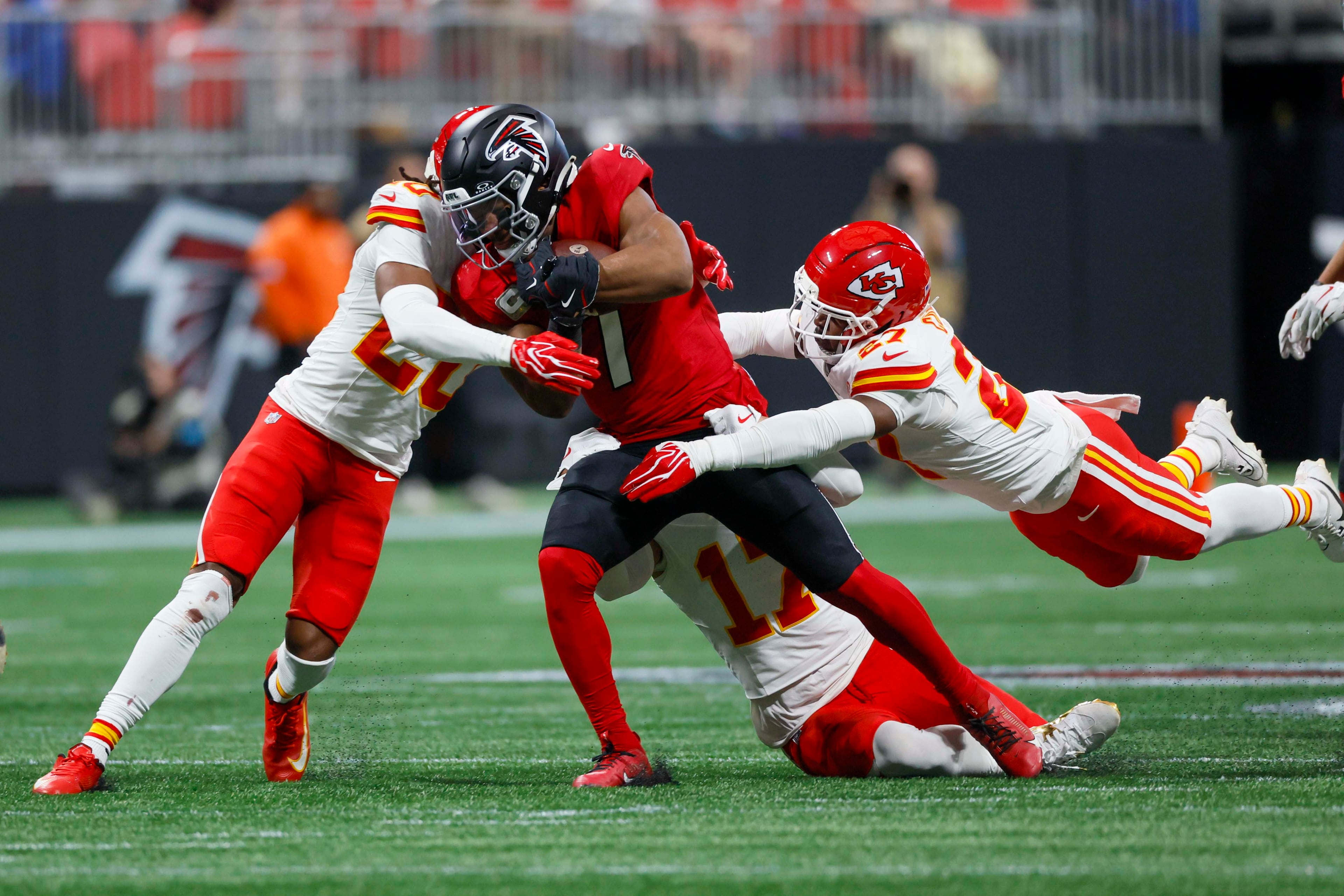
The Falcons entered Week 5 averaging 181 rushing yards per game. In six games since, they’ve averaged only 101.8 rushing yards per game. A hamstring injury to backup running back Brian Robinson Jr. — and an ensuing setback on the brink of his return — has put the burden on Bijan Robinson.
Defenses have keyed in on Robinson and played with heavier boxes. They’ve forced quarterback Michael Penix Jr. to beat them with his arm, and aside from a performance against the San Francisco 49ers on Oct. 25 that earned him NFC Offensive Player of the Week, it has been a successful formula.
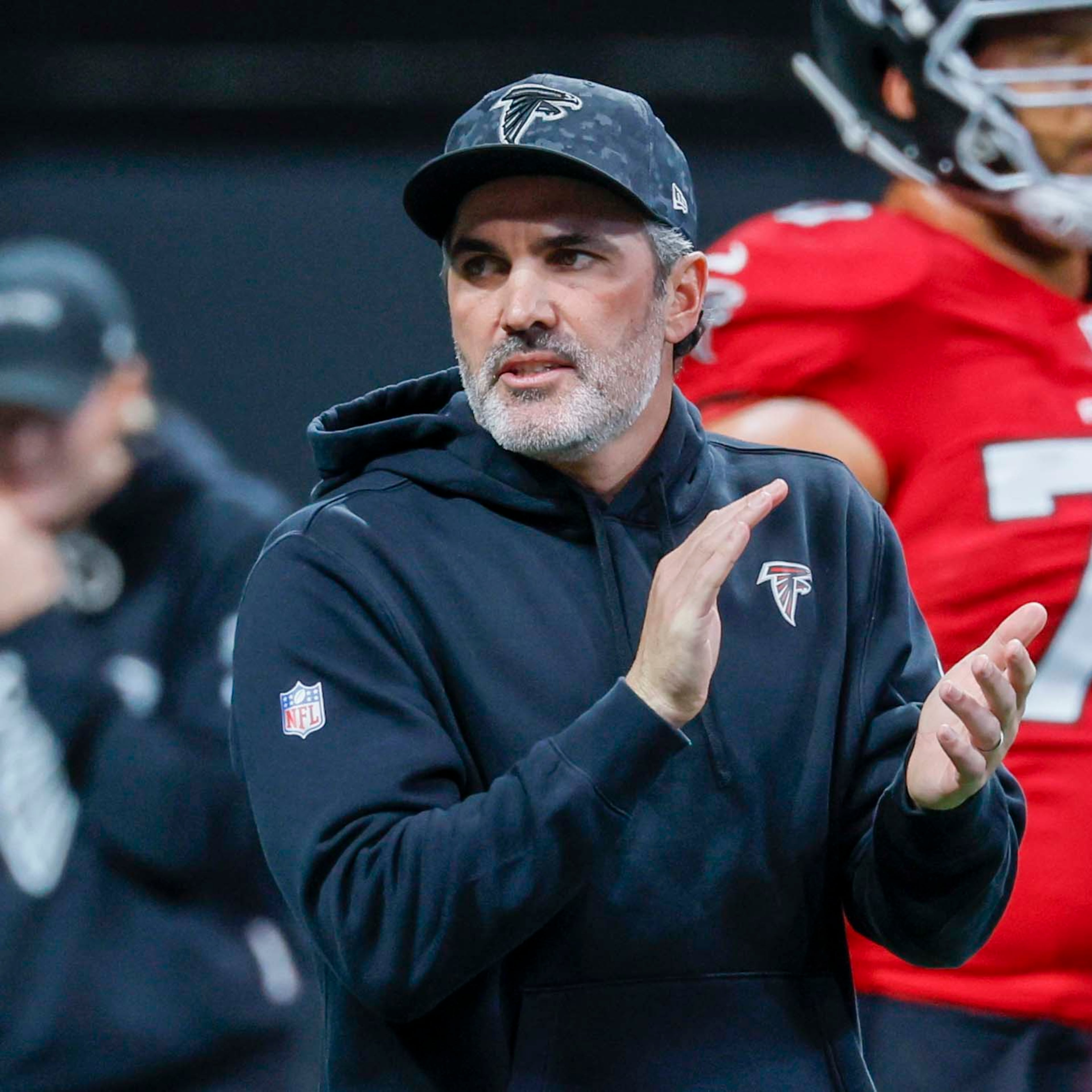
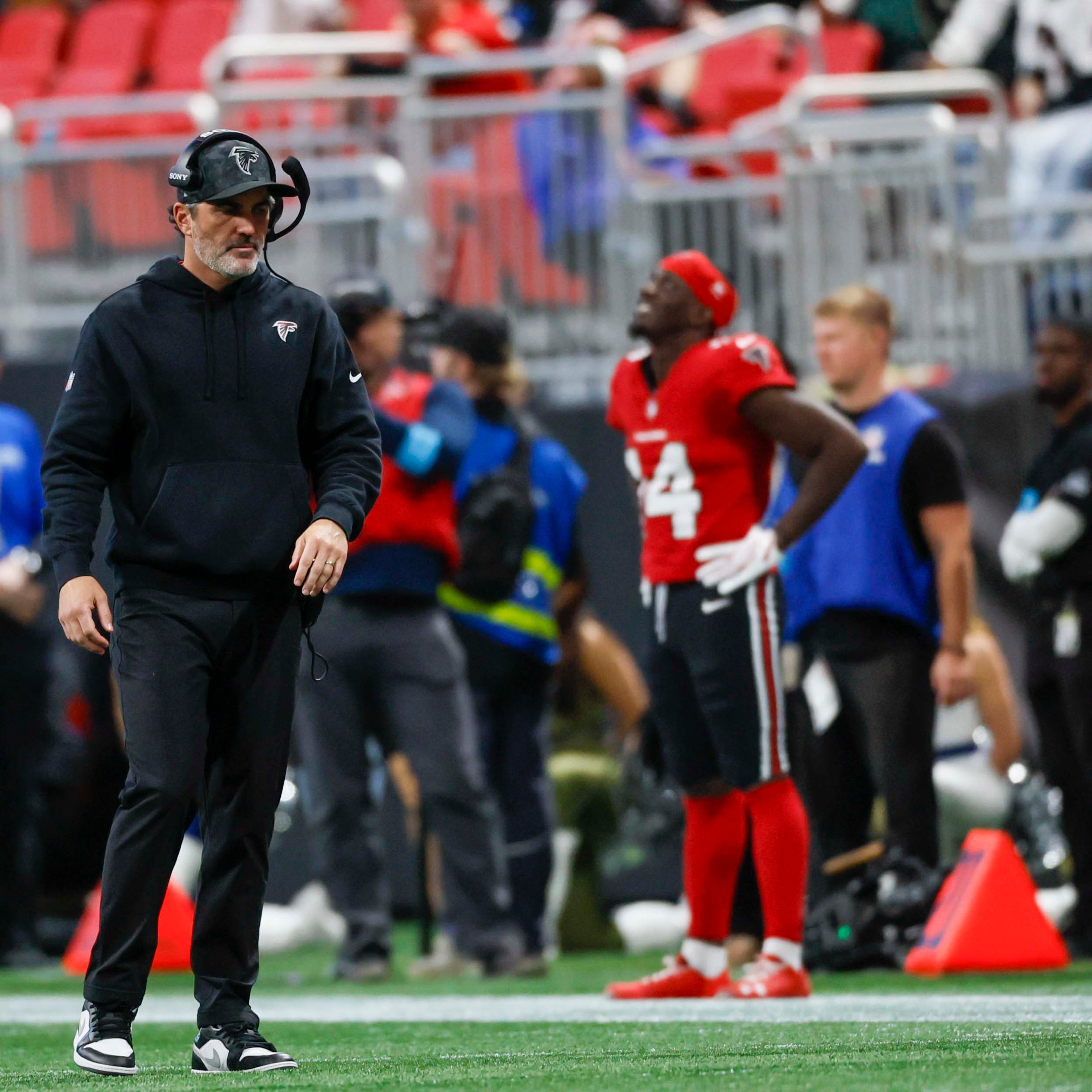
Everything is connected, Falcons coach Kevin Stefanski said. Consider defense, where a team’s rush plans dictate its coverage, and vice versa. The same applies to offense, where a strong run game helps its pass game, and vice versa.
“Want to be better in all areas,” Stefanski said. “If you want to run it better, you certainly have to have an efficient and explosive pass game as well.”
The Falcons’ identity, Stefanski has long preached, is rooted in running the ball and stopping the run. Their success in those areas dictates who they are.
They’ve been outrushed in five of their past six games, the lone exception being a Nov. 8 loss to the Cincinnati Bengals where Penix’s career-high 50 rushing yards proved the difference over the NFL’s third-worst ground game.
Is this a case of an identity crisis, or a team whose identity merely isn’t very good? Stefanski didn’t answer whether he’s still trying to learn who the Falcons are as a team, but he acknowledged they try to incorporate up-front dominance — on both sides of the ball — into every game plan.
“I think all 32 teams want to rush the ball well, want to stop the run,” Stefanski said. “But bottom line is it definitely will always be an area of emphasis for us. But that doesn’t automatically mean that you have success. You’ve got to go work at it. We’ve got to give the guys a plan and then we’ve got to go execute it.”
The Falcons also haven’t had much success with their screen game, which is particularly problematic given the pressure rates they’re facing. Opponents have blitzed the Falcons on 37.4% of their drop backs, sixth-highest in the NFL, according to Next Gen Stats. Their offensive line has done a good job mitigating pressure, allowing the second-lowest rate leaguewide at 29.2%, but blitzes have caused issues at times.
Falcons offensive coordinator Tommy Rees recently called screen passes a “good way to attack pressure,” because they spread out defenses and create space on the perimeter. It’s visible across the league, Rees said.
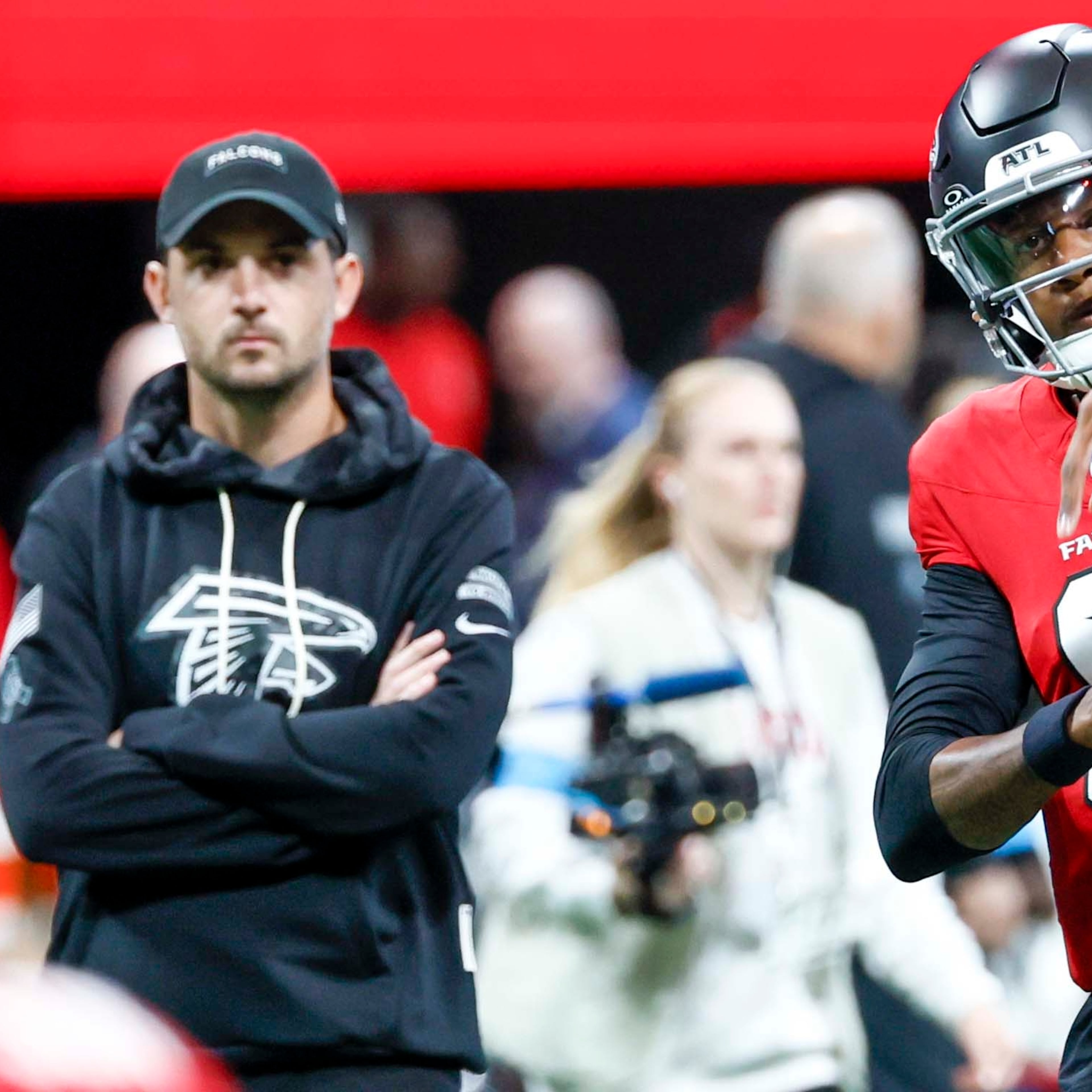
The Falcons’ issue hasn’t been calling screens — they run them at a 12.2% clip, the third-highest rate in the league, according to Stat Rankings. Their Achilles’ heel has been executing them.
“First of all, we want to be better in that area without a doubt,” Stefanski said. “I thought there were some — had some good moments earlier, a few weeks back, and not so much of recent. So that’s something (I) definitely want to take a look at this week and find ways to be better.
“Because that is an area that I think you see good offenses are good in that area.”
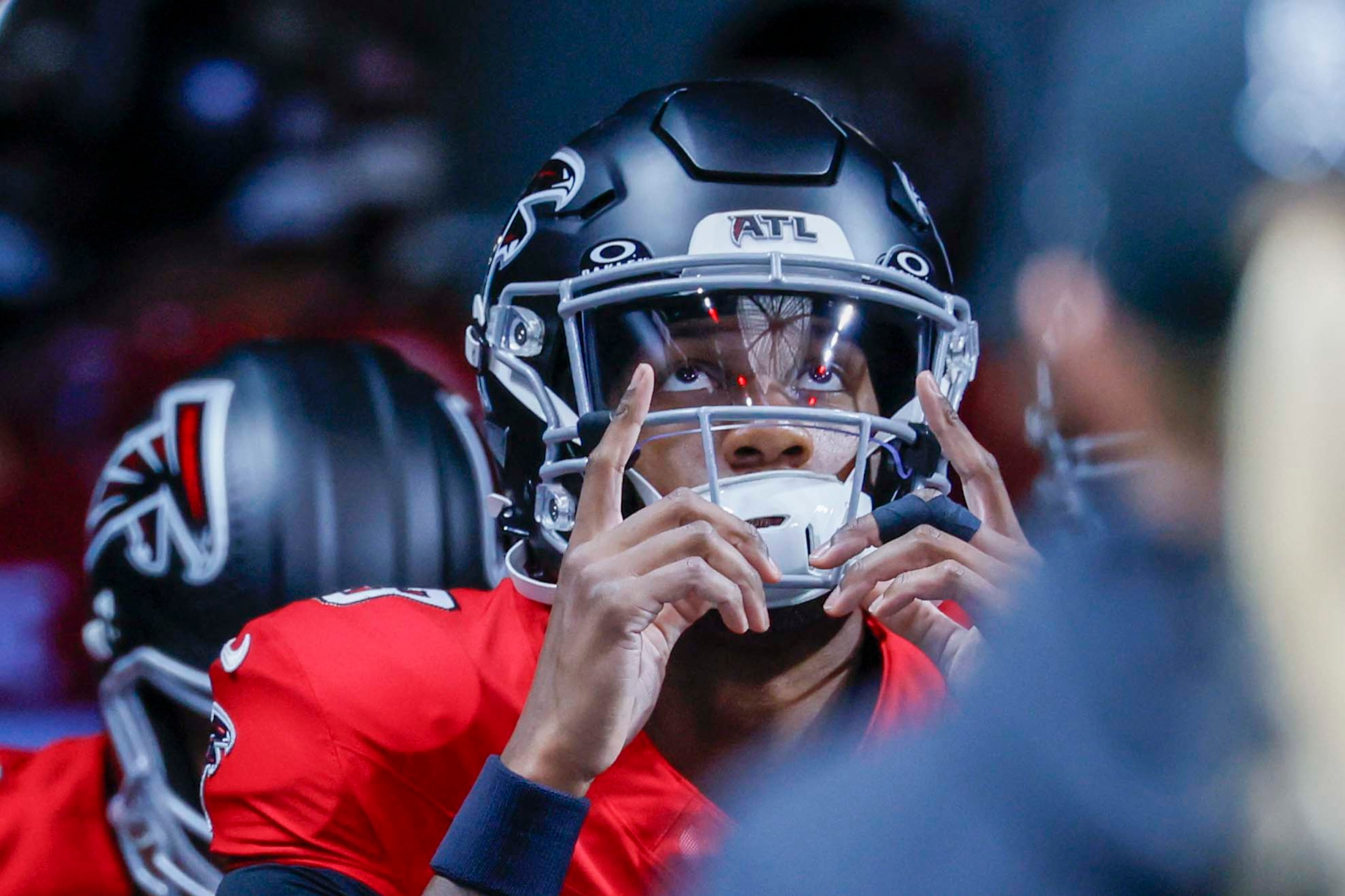
But for all the schematic fixes the Falcons may devise, the biggest key to their bye week may be as simple as their players rediscovering the mental edge Dotson referenced. It’s about mindset, certainly, but also habits.
Those changes don’t merely happen on game days, Dotson said. It’s a daily commitment.
“If you’re gonna say you want to be that,” Dotson said, “you gotta be about it every day. You gotta create those habits.”
The seven-game sprint to the end of the regular season will tell plenty about the Falcons’ habits and the effectiveness of Robinson’s street-ball suggestion. But if it all marries together, the Falcons believe they have enough pieces to flip the script on their offensive struggles.
“We have a lot of talent on this offense,” Dotson said. “We have enough talent to make things happen. As long as everyone does their job, we’ll be just fine.”