Ted Turner’s passion, vision for Braves helped turn them into ‘America’s Team’
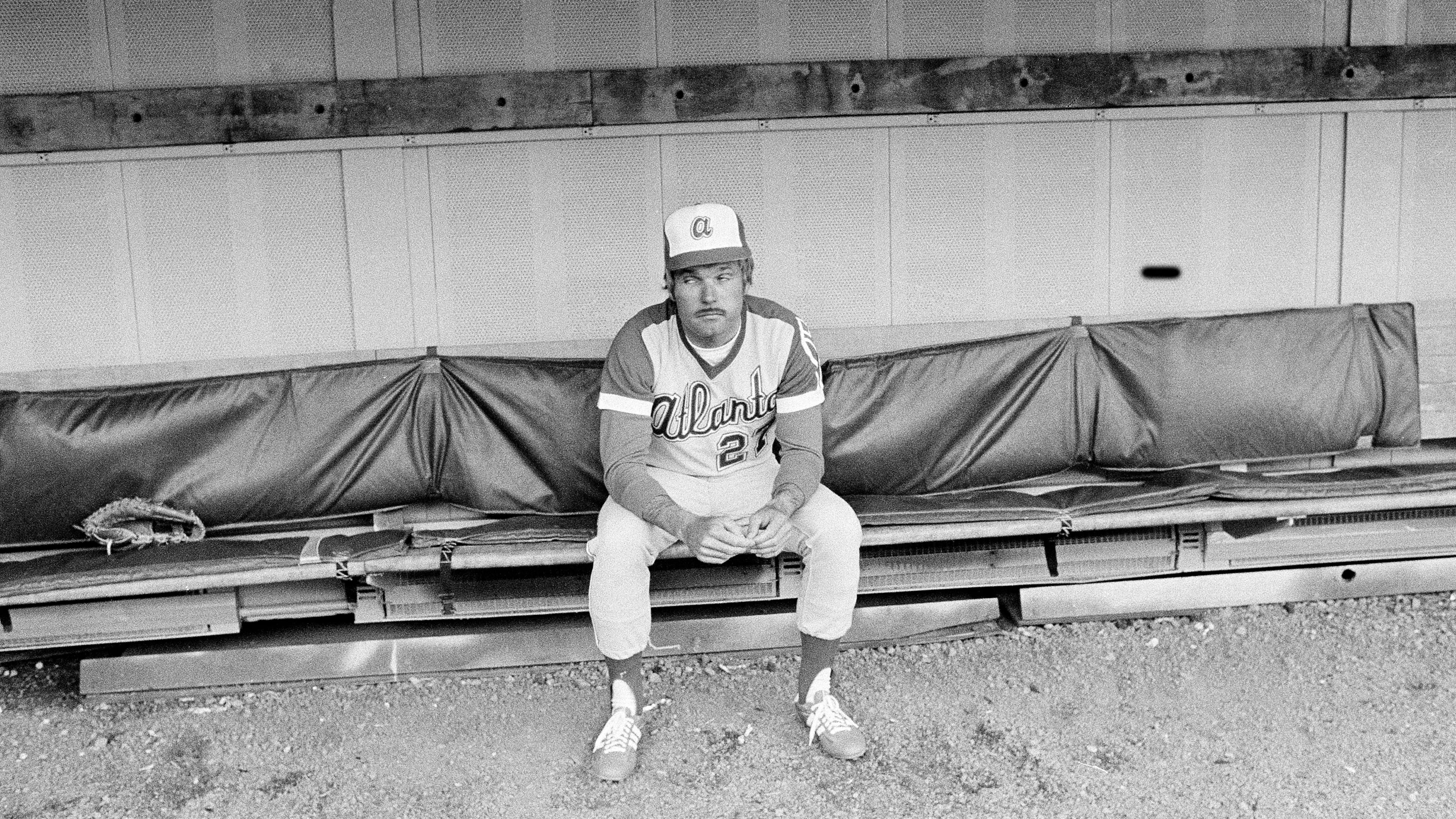
The Braves were on a 16-game losing streak when team owner Ted Turner decided he had to do something about it.
So, on May 11, 1977, in Pittsburgh’s Three Rivers Stadium, Turner donned uniform No. 27, put a wad of chewing tobacco in his mouth and made himself the Braves’ manager.
“I decided to shake things up,” Turner recounted in his autobiography. “I thought about firing our manager, Dave Bristol, but instead I decided to just give him some time off.”
Turner’s stint as field manager didn’t last long. After one game — a loss — National League president Chub Feeney and Baseball commissioner Bowie Kuhn ordered him out of the dugout and back into the owner’s box. But Turner’s one day as manager typified the passion, the unpredictability and, yes, the outrageousness that endeared his ownership style to many Braves fans.
Turner died Wednesday at age 87.
He was 37 years old when he bought the Braves for $10 million in January 1976 from the group, led by Bill Bartholomay, that had moved the team to Atlanta. Turner didn’t have the cash, so he agreed to pay off the purchase price with interest over nine years. In 1977, he bought the Hawks for a reported $4 million.
His initial interest in the teams was as TV programming, but he became passionate about their games, cheering from seats beside the dugout and the court.
“There are very few people in this world, certainly very few successful business people, who spent as many hours being involved in sports as I did,” Turner said in a 2004 interview with The Atlanta Journal-Constitution.
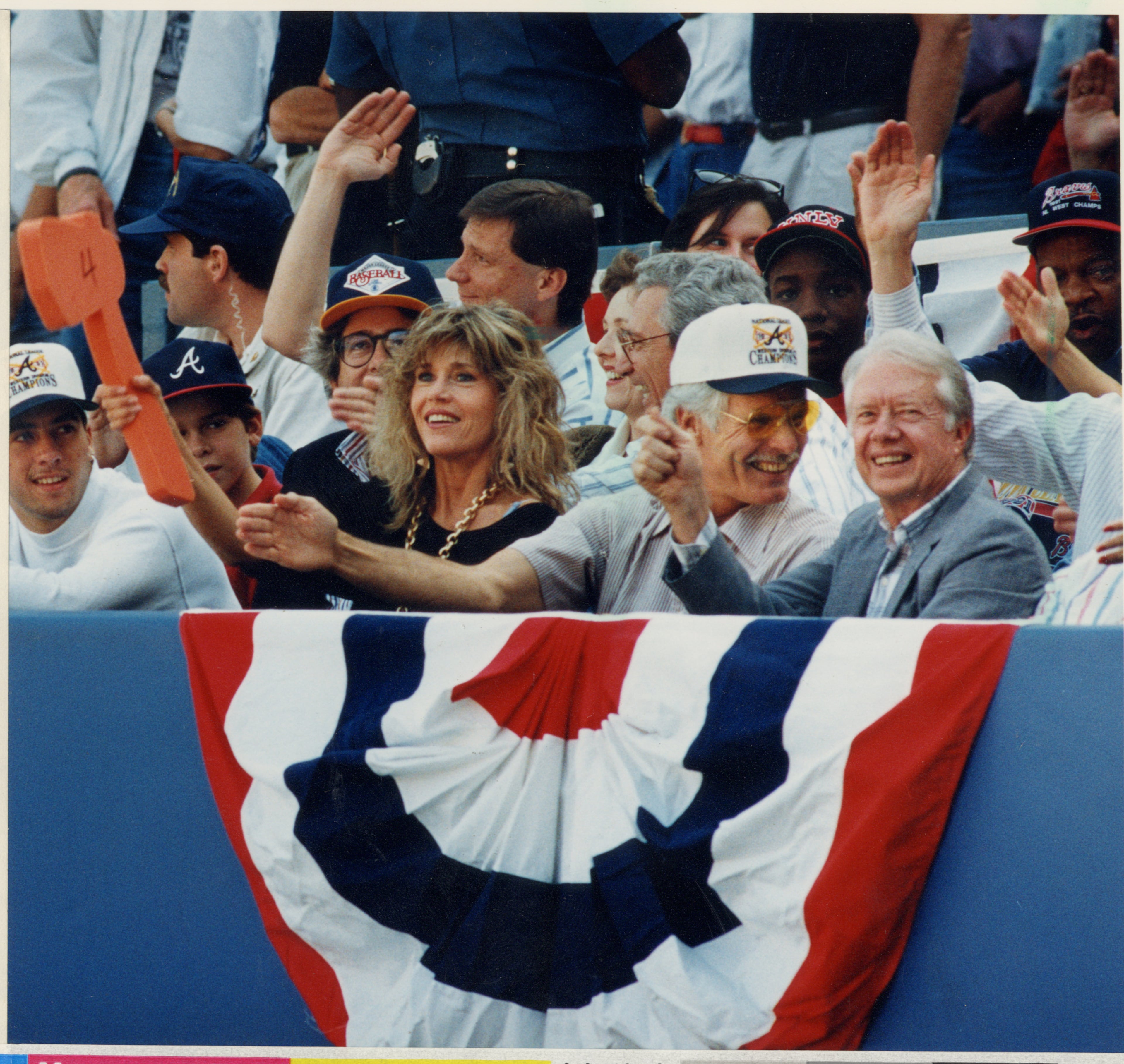
Sports-media mogul
Turner — through his company, Turner Broadcasting System — owned the Braves and Hawks until 1996, when Time Warner acquired the teams along with the rest of TBS. Turner continued to oversee and protect the Braves and Hawks as Time Warner vice chairman until shortly after Time Warner’s ill-fated merger with AOL in 2001.
In his first decade as the teams’ owner, Turner personally hired and fired managers and coaches, negotiated with free agents and weighed in on trades. Beginning in the mid-to-late 1980s, he became less involved in the teams on a day-to-day basis, having concluded that others were more qualified to run them as he devoted time to his media empire and other interests. But he remained a forceful presence around the teams.
In fact, one important reason for the Braves’ sustained success in the 1990s, including the 1995 World Series championship, was that Turner made sure they had the resources needed to maintain one of MLB’s highest player payrolls and most productive farm systems.
Former Braves GM John Schuerholz quickly heard from Turner after being quoted in a newspaper article during spring training in 1995 as saying the Braves might not be able to re-sign shortstop Jeff Blauser because they had to operate sensibly within a budget.
As Schuerholz tells it in his book “Built to Win,” Turner called him and said: “John, what’s this (bleep) I read about a budget? You wanna sign Jeff Blauser, sign him!”
“That’s just classic Ted,” Schuerholz wrote. “A great owner and boss — shooting from the hip.”
“I’d like to have won more World Series. My whole life is about winning, or at least trying to win,” Turner said in the 2004 interview with the AJC. “But from where we started with the Braves, with those four straight last-place finishes in my first four years as owner (1976-79), we did great.
“You know the dumbest thing I ever did? Well, not really dumb, but interesting. I’m the only person who fired Bobby Cox and Joe Torre. I had two of the best managers ever, and I fired them both. I had the good sense to hire one of them back, Coxie.”
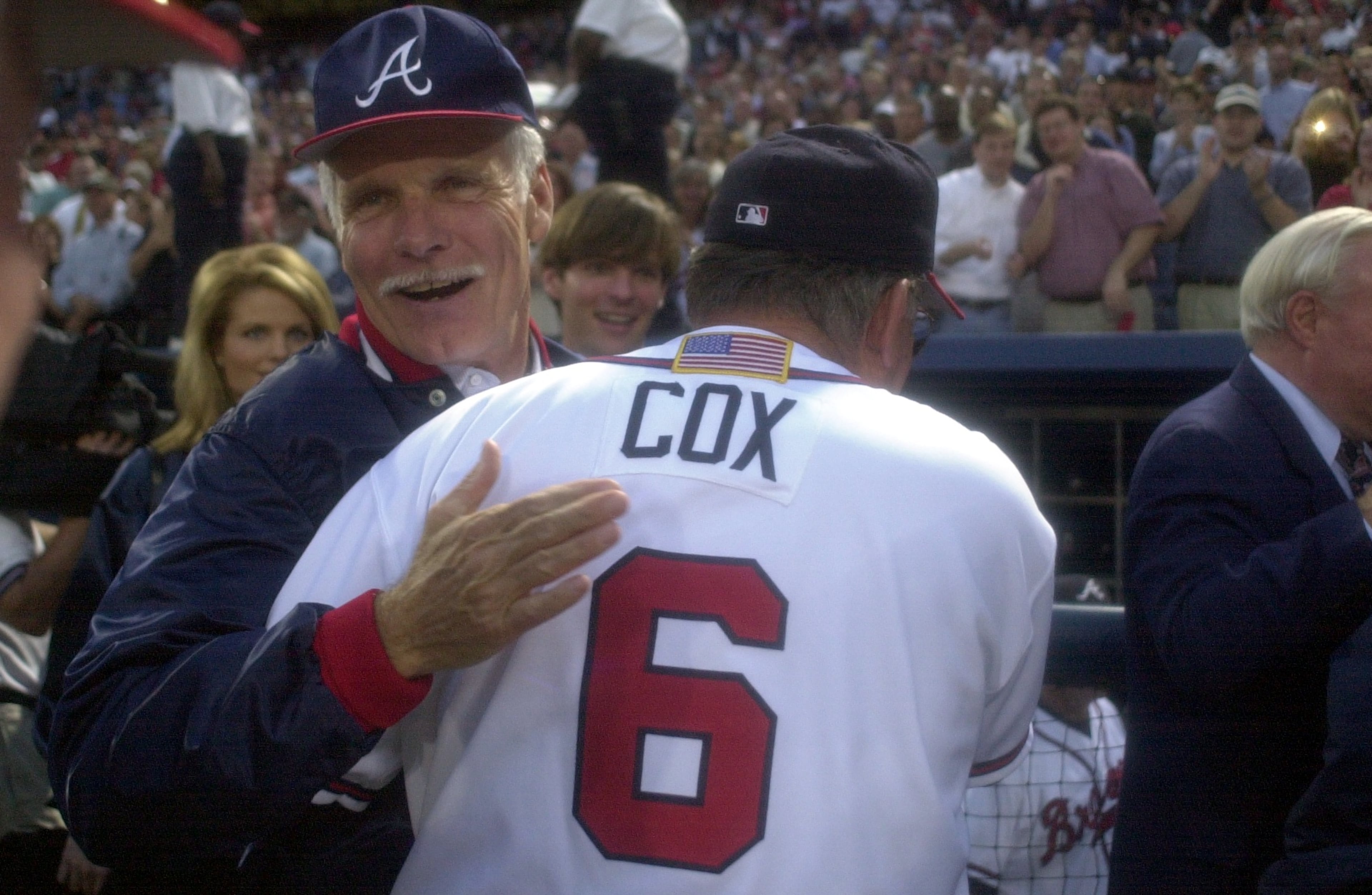
Turner first hired Cox as manager after the 1977 season and fired him after the 1981 season, famously saying at the time that Cox would be a leading candidate for the job if he hadn’t just been let go. Turner rehired Cox as general manager after the 1985 season and approved his return to the dugout as manager in 1990. He hired Torre as manager after the 1981 season and fired him three years later.
One of Turner’s first major personnel moves as Braves owner was to promote the team’s highly regarded farm director, Bill Lucas, to the role of general manager. “When I promoted him, I didn’t realize he would be baseball’s first-ever Black general manager — I was simply putting the best guy I knew in the position,” Turner wrote in his autobiography “Call Me Ted.” Lucas died at age 43 in May 1979.
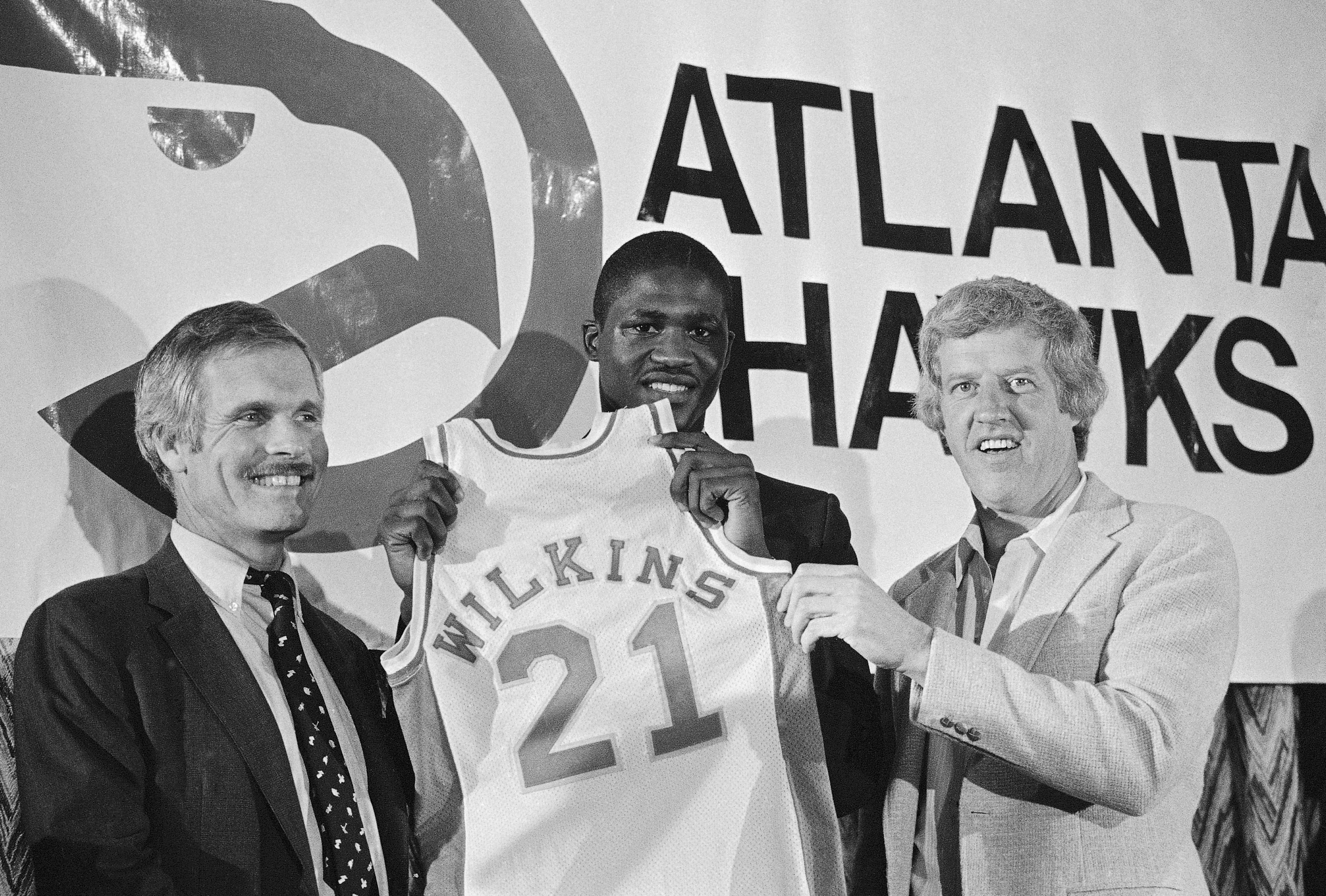
Although Turner was generally less involved with the Hawks than with the Braves, the 1982 acquisition of Dominique Wilkins from the Utah Jazz for John Drew, Freeman Williams and $1 million might not have happened without him. Turner’s chief financial officer had told him the company didn’t have the cash to make the deal. “And without missing a beat Ted turns to me and says, ‘Stan, just do it,’” Stan Kasten, the Hawks’ general manager at the time, recalled decades later. “That’s how it was back then.”
Turner was responsible for the Hawks’ decision in the 1990s to keep their arena downtown. He rejected advice from some of his executives that Philips Arena (now State Farm Arena) should be built in the suburbs.
Turner also played a key role in securing Atlanta’s second short-lived NHL franchise, the Thrashers, in the late 1990s. Turner named the team, owned initially by Time Warner/Turner Broadcasting, for Georgia’s state bird, the brown thrasher.
‘America’s Team’
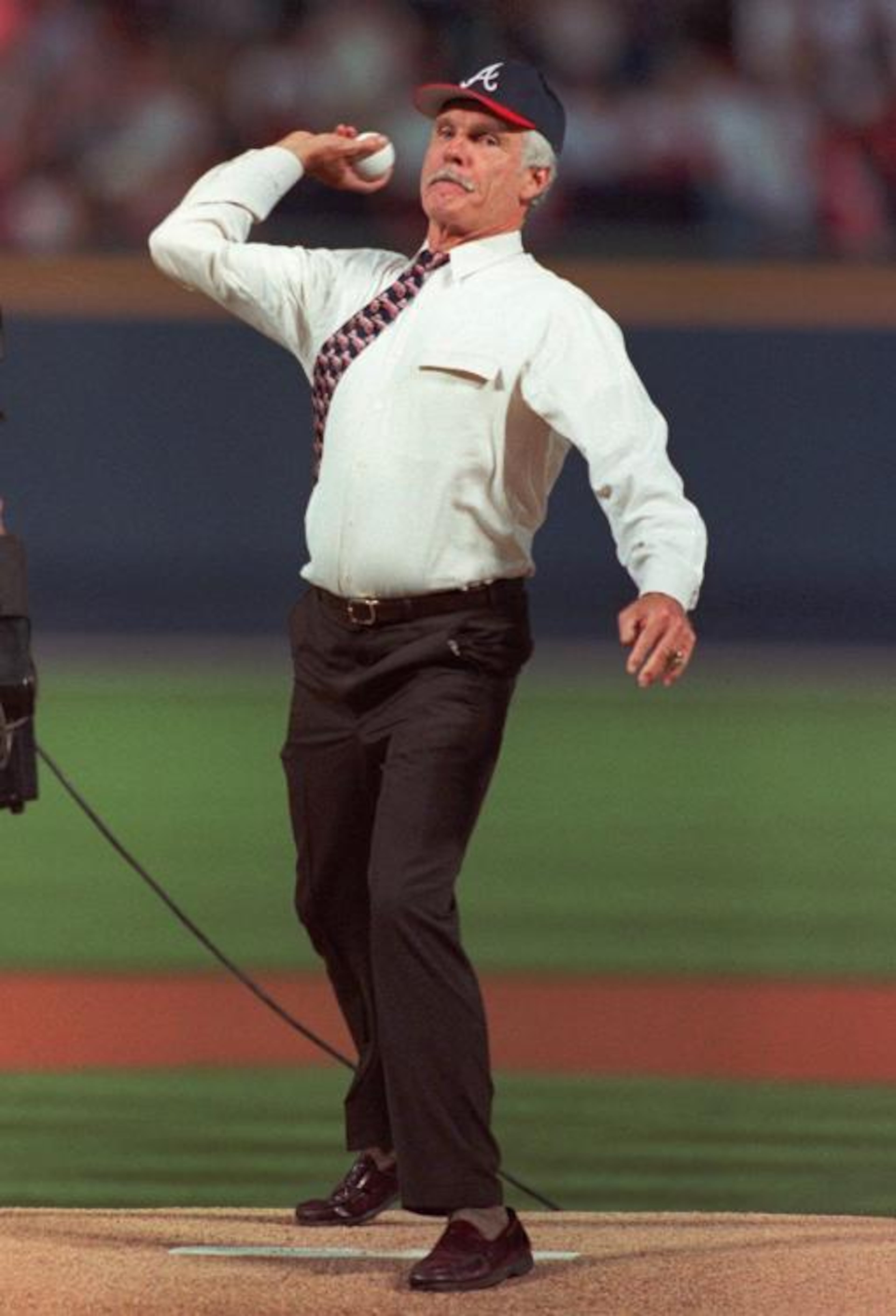
But it was with the Braves that Turner was most influential as a sports owner. He began televising their games nationally on TBS in the 1970s, earning the Braves the moniker of “America’s Team” and revolutionizing baseball’s relationship with TV.
Through his early years as Braves owner, Turner relentlessly promoted the team to try to stir interest.
He went on to the field and led the crowd in singing “Take Me Out to the Ballgame” before his first home game as owner in 1976. When outfielder Ken Henderson hit a home run in the second inning that night, Turner jumped over the wall in front of the owner’s box and ran onto the field, meeting Henderson at home plate to shake his hand.
During one particularly ugly loss, Turner announced on the public address system that all fans in Atlanta-Fulton County Stadium could come back the next night free of charge as his guests.
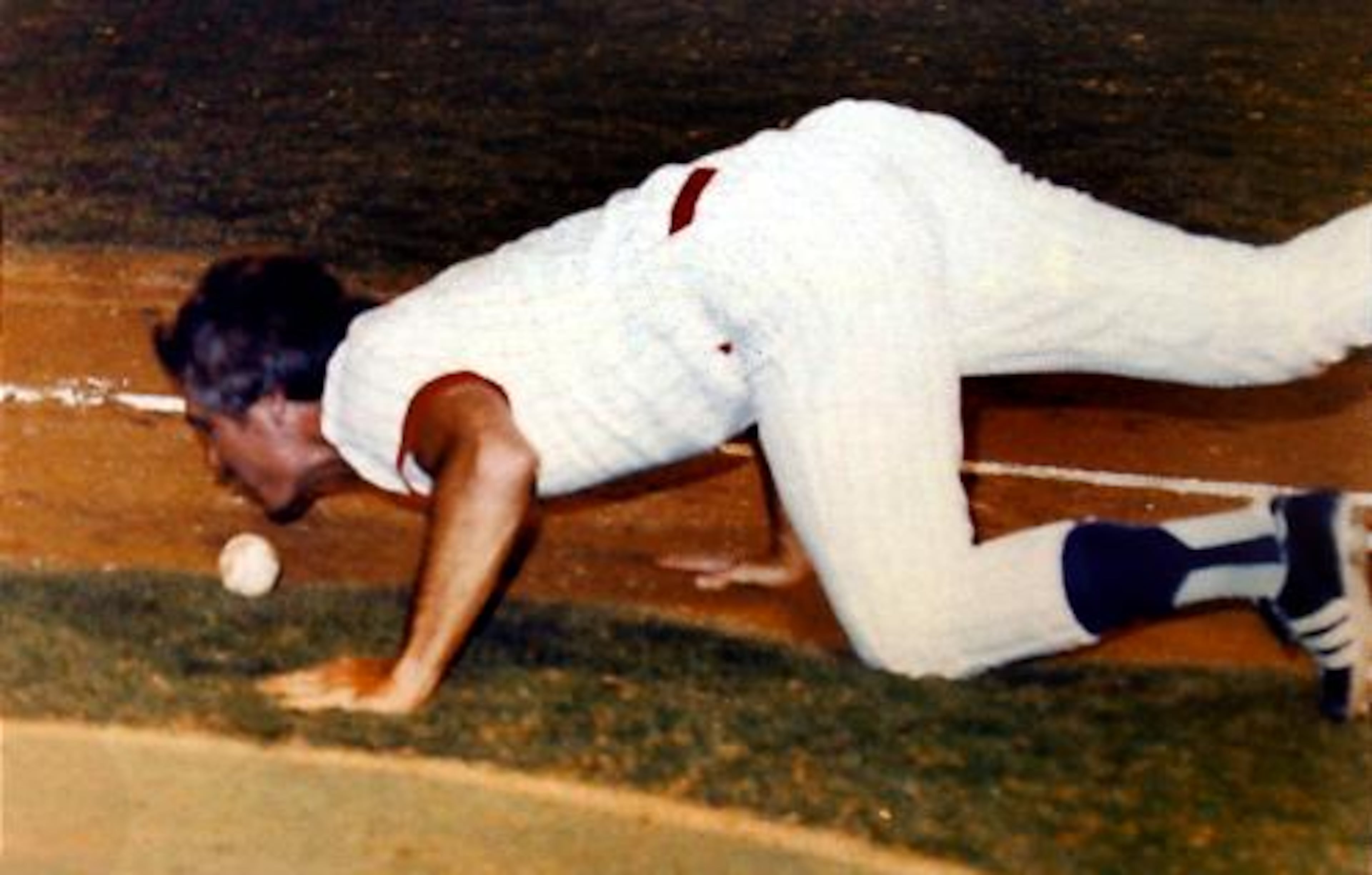
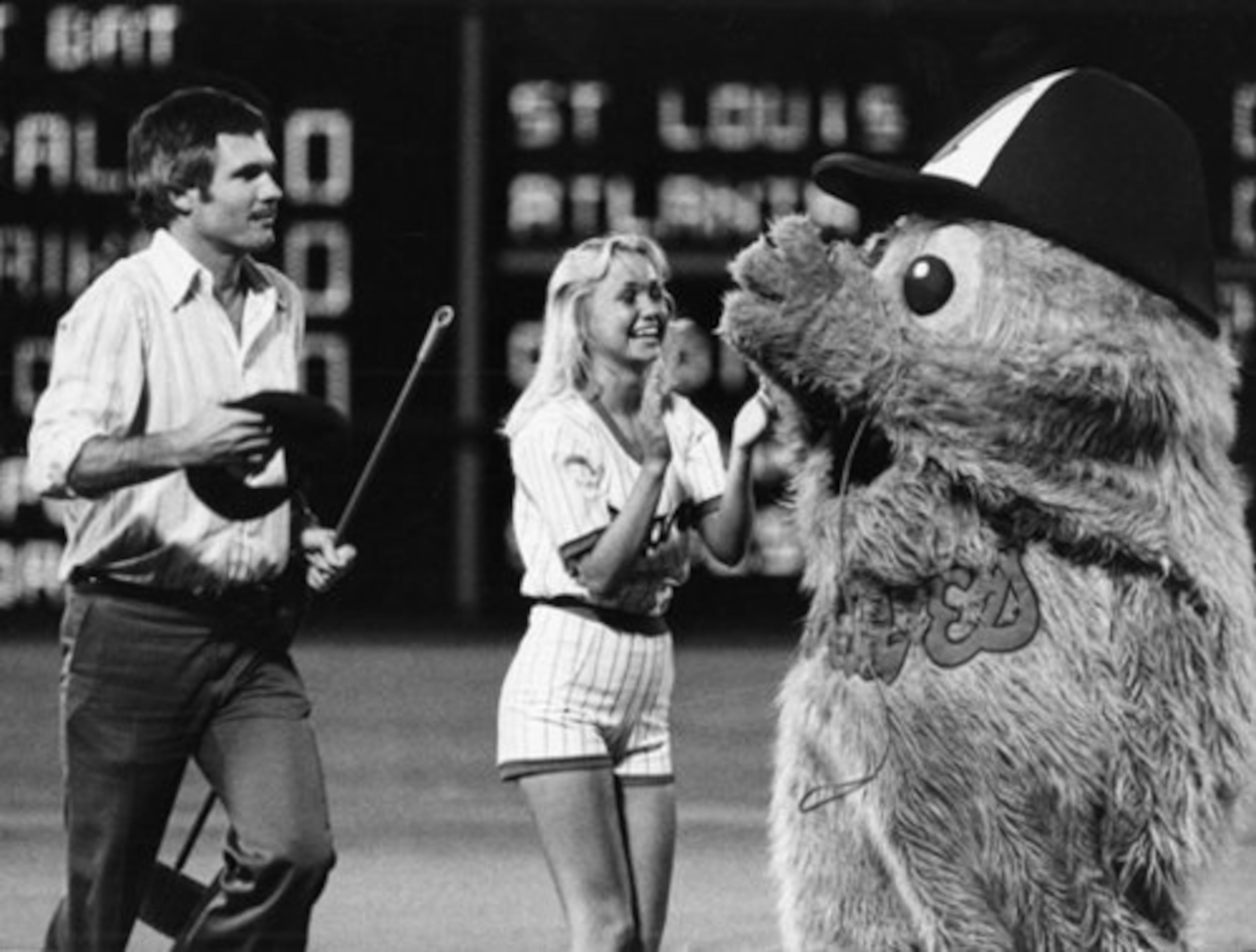
Turner was an unconventional owner in many ways. Before one game, he participated in an ostrich race against media members; he and the other contestants were seated in ostrich-pulled carts. Before another game, he competed against Philadelphia Phillies pitcher Tug McGraw in a baseball nose-pushing contest.
He was friendly with the players, but he also personally engaged in a bitter contract dispute with one of his best players, third baseman Bob Horner.
Reflecting on his 25 years working for Turner, Kasten once said: “Every day was, ‘Who knows what’s coming around the next bend?’ but with Ted always smiling, knowing what he’s doing, having fun.”
Turner often sought star power for the Braves. He was an aggressive pursuer of free-agent players, although most of the ones he signed — such as Andy Messersmith in April 1976, Al Hrabosky in November 1979 and Bruce Sutter in December 1984 — didn’t turn out well on the field for the Braves. The signing of Messersmith, a starting pitcher, was particularly notable.
In a landmark December 1975 ruling that ushered free agency into baseball, an arbitrator declared Messersmith and retiring pitcher Dave McNally free agents, striking down baseball’s “reserve clause,” which previously bound players to their teams in perpetuity unless traded, sold or released. Although Messersmith had gone 53-30 with a 2.51 ERA over the previous three seasons with the Los Angeles Dodgers, only a few teams seriously pursued him as a free agent. When negotiations with San Diego broke down, Padres owner Ray Kroc said, “He can work in a car wash.”
In April 1976, just his fourth month as the Braves’ owner, Turner stepped up with a three-year, $1 million offer, a shocking amount for a baseball player in those days. Turner quipped: “We just felt Andy Messersmith was too good to work in a car wash.”
Turner tried to recoup part of the investment by placing the word “Channel,” rather than the player’s last name, above the No. 17 on the back of Messersmith’s jersey. That made the pitcher a billboard for Turner’s TV station, Channel 17 — until MLB put a stop to it as impermissible advertising.
Turner also attempted to sign star players Pete Rose, Reggie Jackson and Dave Winfield as free agents, but all of them went elsewhere. Although Turner wasn’t always able to match other bidders’ offers, his pursuits were aggressive and highly publicized. He even invited an AJC reporter to meet him in California as he wooed Jackson. It was a different era, to say the least.
Turner created a stir, and got himself suspended from baseball, with his pursuit of free-agent outfielder Gary Matthews, who signed with the Braves in November 1976.
At a World Series cocktail party, within earshot of media members, Turner told the San Francisco Giants’ owner that he would top any offer the Giants made to retain Matthews. Kuhn, the baseball commissioner, deemed that to be a violation of MLB’s anti-tampering rules and suspended Turner for a year. The suspension was delayed by a Turner lawsuit, but he eventually began serving it in May 1977, shortly after his one game as manager.
The timing worked out conveniently for Turner. He spent most of his suspension, which was eventually shortened, at the America’s Cup sailing competition in Newport, Rhode Island, “without people wondering why I wasn’t at the Braves games,” he wrote in his autobiography. Turner skippered his yacht “Courageous” to the 1977 cup victory.
Unlike other owners, Turner sometimes would get into the minutiae of the Braves’ baseball operations. He once arrived at spring training with a proposed lineup scribbled on a piece of paper for his manager (Cox). In the TBS documentary “It’s a Long Way to October” about the Braves’ 1982 National League West championship season, the cameras were rolling when Turner chewed out his manager (Torre) and general manager for promoting a pitcher from the minor leagues who wasn’t ready for action.
On the day the Braves clinched the division in 1982, Turner enthusiastically proclaimed it the start of a “dynasty, dynasty, dynasty.” To the contrary, the Braves had six consecutive losing seasons from 1985 through 1990. The team’s on-field fortunes changed dramatically starting in 1991, by which point Turner had delegated baseball decision-making to Kasten, Schuerholz and Cox while continuing to back them financially and emotionally.
The enduring image of Turner as the team owner, though, remained his night in 1977 as the tobacco-chewing manager of the then-bumbling Braves.
“In the dugout, I really didn’t do a whole lot other than crack some jokes and yell encouragement,” Turner wrote in “Call Me Ted,” published in 2008. “I didn’t know the signs, so I had to sit next to one of the other coaches, and when I thought we should steal or bunt, I’d have to tell him so he could relay the signal.
“Phil Niekro pitched a complete game that night, so I never even got a chance to walk out to the mound. Despite his strong performance, we lost 2-1, but we broke a lot of tension on the club.”
“People say to me all the time, ‘Well, you could never get away with that kind of stuff in today’s world,’” Bob Hope, the Braves’ public relations director for some of the years Turner owned the team, told the AJC in 2020. “Well, you could if you had Ted Turner as an owner.”