Here’s why Ted Turner should be in the Baseball Hall of Fame
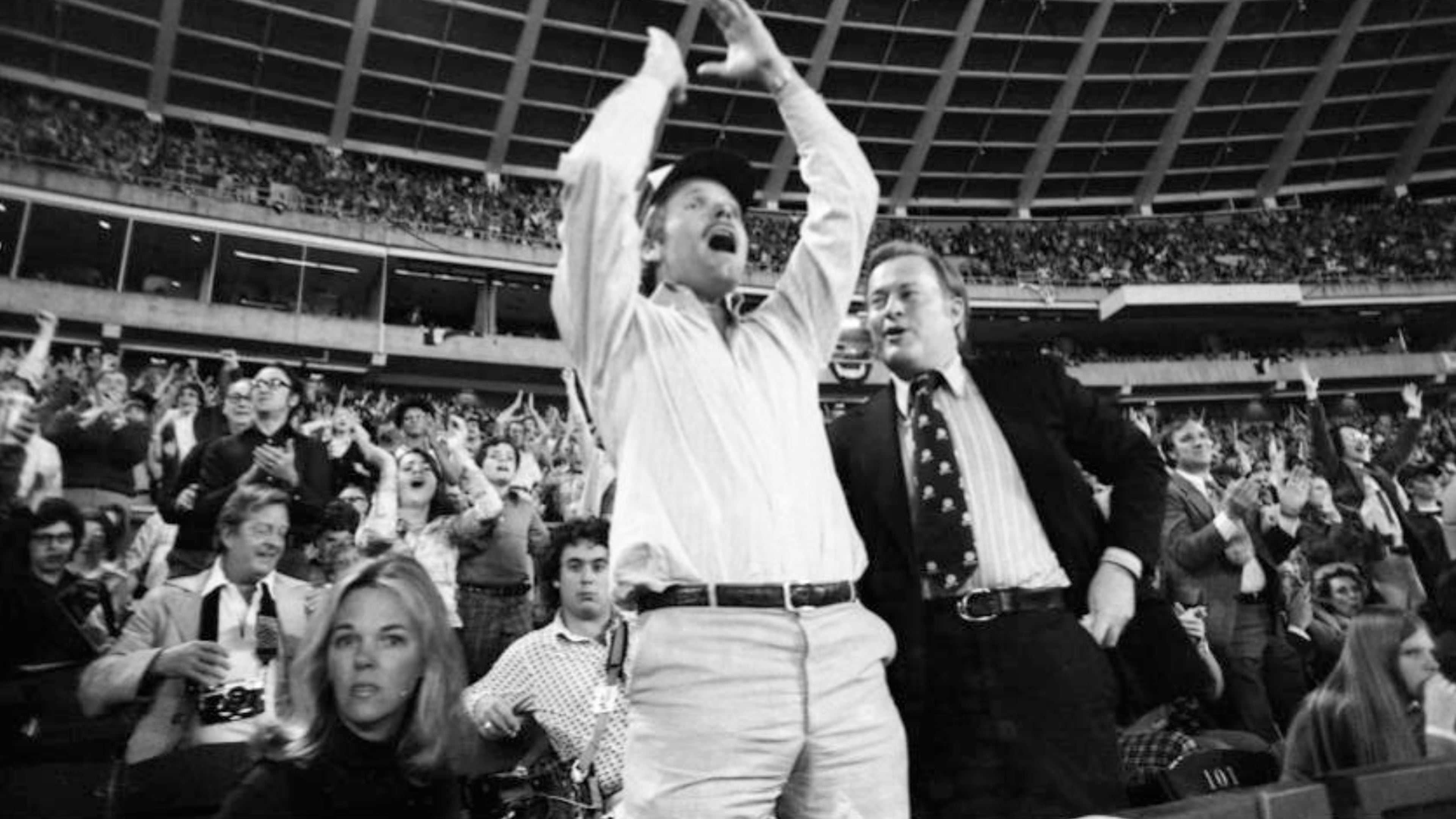
Even decades after retiring, Dale Murphy experiences Ted Turner’s impact on the Braves, television and sports everywhere he goes.
“When I go to Idaho Falls, Idaho, and speak, I run into Braves fans that are asking me about, ‘When’s the last time you talked to Bob Horner?’” Murphy told The Atlanta Journal-Constitution on Wednesday. “‘Glenn Hubbard? Bruce Benedict? What are they up to? What about Rafael Ramírez — have you seen him?’”
Braves fans of a certain age know precisely the point the legendary and beloved Murphy was making. Turner, the former Braves owner and television mogul who died Wednesday at 87, broadcast his team via satellite across the country when his peers found it practically heretical.
But it made Braves fans (and baseball fans) out of untold millions.
“And grew a generation of fans that have passed it onto the next generation,” Murphy said.
In the process, Turner changed sports television.
“Nobody has grown the game like Ted Turner, before that or since,” Murphy said. “It changed the way we viewed sports.”
Although it’s too late for him to enjoy the honor, it’s why Turner should be in the Baseball Hall of Fame. MLB commissioner Rob Manfred’s statement on Turner’s death could practically be the inscription on his Cooperstown plaque.
“Ted Turner was a visionary whose impact on the media landscape transformed how fans experience sports,” Manfred’s statement read. “Through his leadership, the Atlanta Braves reached millions of households nationwide on TBS, helping build a legacy of sustained excellence that included the franchise’s first championship in Atlanta with the 1995 Braves.”
Among accomplishments too numerous to name, Turner is a singular figure in baseball and sports history.
In an age where fans benefit from every game being televised in an enriching partnership for teams and broadcast (and streaming) companies, it might be difficult to imagine where Turner was starting from.
Here’s a look.
Turner began televising Braves road games in 1973 as programming for his Atlanta TV station, WTCG-TV (later to become TBS). The previous season, WSB-TV had aired about 20 games. Turner increased the number to 50, according to an Atlanta Journal article from the time. He augmented the broadcasts with slow-motion instant replay and additional camera angles.
After purchasing the team in 1976, he made the daring decision to add home games to the broadcast schedule, challenging the prevailing wisdom that televising home games negatively impacted ticket sales.
A 1978 Atlanta Journal headline of a story reporting that 24 Braves home games would be televised that season: “Turner Violates Another Ancient Baseball Rule.”
It should be noted that in 1977, the Braves were near the bottom in attendance and had the worst record in the National League. This was not a move to capture growing demand; it was a risky play.
A quintessential Turner quote from the story: “I think this shows we have a certain amount of confidence in the season if we’re going to put this many games on television. After all, if the games were only on radio, no one would know how bad we are.”
Through TBS, that vision expanded to broadcasting nearly every Braves game across the country via satellite. The team’s national fanbase, to say nothing of the billions that baseball teams have made through television deals, traces back to Turner.
“You can pick a city in any state, and I will find Braves fans,” Murphy said. “I don’t know — I just said that. I’d like to try it. It might take a little time.”
(Note to BravesVision execs: Sounds like a great series.)
Turner’s sizable influence on the business of baseball might be enough for him to deserve inclusion in Cooperstown. But, as Braves owner, he also put in place the structure that helped win a record 14 consecutive division titles and the 1995 World Series championship.
“I think it took him awhile to feel, ‘OK, I own this team, but I’m going to listen to Bobby (Cox) and John Schuerholz and let them make decisions,’” Murphy said. “I’m going to support that and then the rest is history.”
His success as an owner stemmed from unabashed competitiveness. Murphy’s first memory of Turner is how, after the final game of what was probably the 1977 season, he asked Braves players to watch a short movie about his famed victory in the America’s Cup yacht race.
“What he wanted, he was trying to motivate us, and I think also send a message to us that ‘I get competition,’” Murphy said. “’I’m not a guy that’s inherited a bunch of money that just wanted to buy a ball team for a hobby. I want to win.’”
And, hardly least, he hired baseball’s first Black general manager, Bill Lucas. According to Turner’s autobiography, Turner was unaware of the barrier he was helping break and was “simply putting the best guy I knew in the position.”
Not that his extraordinary life needs more honors, but there’s more than enough reason for Turner to be inducted.
It’s just too bad it would happen too late for him to be a part of it.
You can now get my column sent straight to your inbox. Sign up for my newsletter here.