Gainesville’s challenge succeeds, but was it the right thing to do?

After nearly 40 players were suspended from a coming playoff game for their role in a fight in their previous game, Gainesville High’s ultimately successful motivation to push the GHSA to rescind the penalties was understandable.
Who doesn’t want to give young people every opportunity, particularly if we feel they’ve been unfairly denied?
But consider another perspective. One, it’s debatable that the Gainesville players were victims of injustice. Two, the tactics that Gainesville officials used — flawed logic and searches for loopholes — weren’t what you’d hope for from leaders of young people.
It would be easy to observe Gainesville’s strategy and come away with this lesson: You don’t have to face the consequences of rules you don’t like if you can find a way around them.
Let’s start with what happened in the third quarter of the Red Elephants’ Class 5A second-round playoff game against Brunswick High on Nov. 21.
A Brunswick player ripped off two Gainesville players’ helmets and punched one of them, and another Brunswick player charged into the altercation and knocked to the ground one of the two Gainesville players who had his helmet removed.
It inarguably was a bad scene created by Brunswick players, whose team trailed 42-0. It led to players on both sides spilling onto the field, which threatened to escalate the situation even more until officials and coaches got it under control.
Brunswick accepted the GHSA’s suspensions of 41 team members and a postseason ban for 2026. The GHSA also handed out 39 suspensions of Gainesville players (later lowered to 38). Four were rescinded after the GHSA’s board of appeals determined via video evidence that they did not contribute to the fight.
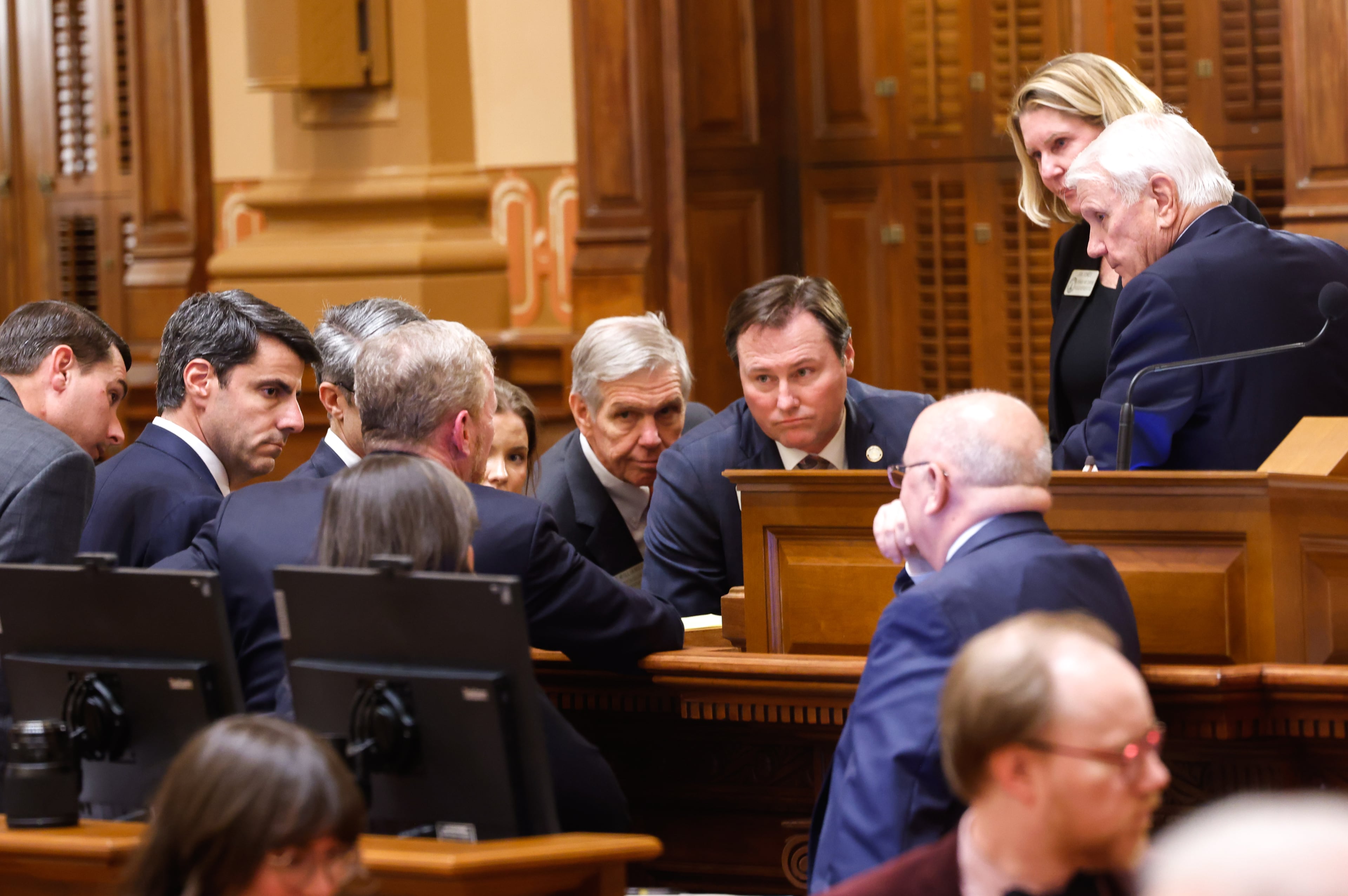
In a videoconference with the GHSA board, Gainesville athletic director Adam Lindsey, football coach Josh Niblett and school system superintendent Jeremy Williams defended team members who ran onto the field in an effort to have the suspensions revoked.
That’s where the rule-bending attempts began in earnest.
Niblett posed a question to the board. If they had a loved one who was attacked like the Gainesville players were, “you’re just going to stand on the sideline? No, you’re going to do what’s natural. You’re going to protect your brothers.”
This would seem an argument formed to fit Gainesville’s needs. If a Gainesville player punched a teammate at one of Niblett’s practices and then the whole team rushed in, would he also approve of that response from his players?
It seems highly unlikely. He might rather tell them that they have to be more disciplined, keep their cool and let the coaches calm the situation.
And with good reason.
Fights are not defused when more people join in, regardless of their intention. That’s why GHSA bylaws state that anyone who leaves a bench area to join a fight is subject to suspension.
The circumstances of this altercation may have been different from most. And while it’s understandable why Gainesville players left their sideline, it’s disingenuous to suggest that they were in the right to run onto the field or were somehow powerless to stop themselves.
They knew the rules. Surely, Niblett and his staff have told them repeatedly. But just because the situation was heightened or because it’s the playoffs doesn’t mean they suddenly don’t apply.
Niblett’s own players proved it themselves. Many of them stayed on the sideline, presumably aware of the consequences for going on the field, and thus weren’t suspended. Further, two of Gainesville’s star players who were on the field at the time the fight broke out also chose not to join the melee, leading to the GHSA reinstating them on appeal.
If they could exhibit that restraint, there’s no reason their teammates couldn’t have also.
Another Gainesville argument parsed the GHSA bylaws, which states that players who leave the bench area and are ejected are subject to the sit-out rule. A Gainesville attorney contended that since the players weren’t actually ejected, then they weren’t subject to the rule.
Yes, let’s pin this on the refs. There’s never enough of that in high school sports.
Instead of trying to keep peace and prevent a potential brawl from erupting, the officials apparently should have been busy writing down the jersey numbers of all the players who ran onto the field.
And, besides, the officials wisely declared the game over at that point, as it was well in hand for Gainesville. They were supposed to eject players from a game that was over already?
It was 100% arguing a procedural technicality and had nothing to do with the spirit of the rule.
Is this the example that educators want to be setting?
“Yes, you copy and pasted your entire assignment from Wikipedia, but you’re right, I didn’t specifically say that plagiarism was not permitted. So you get an A-plus.”
Another Gainesville argument tried to find fault with the GHSA, citing laws stating that public entities are prohibited from enacting any rules or regulations that fail to recognize self-defense. (The GHSA asserted that it is not a government entity.) If Gainesville school officials truly believe that, the can of worms they’re opening is more like a barrel.
“Why is my child being suspended from school? When he rushed into the brawl in the cafeteria, he was merely exercising his right to defend his friends, just like the school argued that the football players were entitled to do. And once he was there, what was he supposed to do when someone took a swing at him?”
The penalty is severe, and the timing could scarcely be worse for Gainesville. But the rule is in place for good reason and, as a GHSA member, Gainesville has agreed to abide by it.
Gainesville did land on a sound argument that compelled the GHSA to rescind nearly all of the suspensions. Earlier this season, a fight broke out at a game between two Macon teams in which players left the sidelines. In that case, though, not all of them were suspended.
Faced with this inconsistent application of its rules, the GHSA decided to allow nearly all of the originally suspended players to compete in the quarterfinal, Friday against Hughes High.
It would have been one thing if this line of reasoning was the original basis of Gainesville’s protest. But it wasn’t. It was more like the argument that finally stuck.
I get it. They’re educators who care about their students and are trying to do the right thing. Maybe most of us would do the same.
Hopefully, Gainesville players all now know how to respond if a fight breaks out in one of their games. One wonders if they’ve learned other lessons in the process.
About the Author

Ken Sugiura is a sports columnist at the Atlanta Journal-Constitution. Formerly the Georgia Tech beat reporter, Sugiura started at the AJC in 1998 and has covered a variety of beats, mostly within sports.