Kemp chops food stamps, funds for foster children and veterans for tax cuts
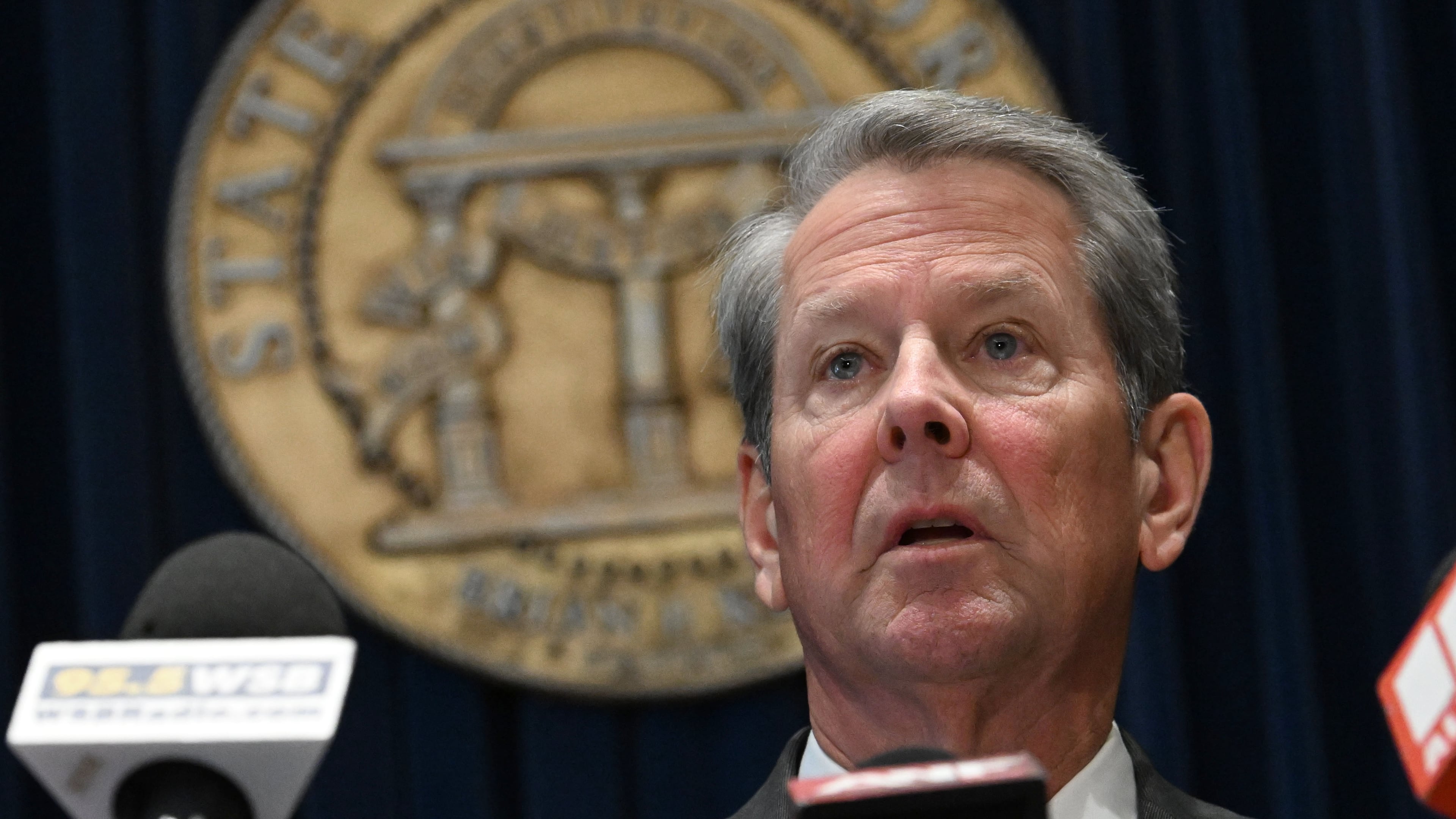

Gov. Brian Kemp’s most famous phrase in office during his two terms as governor has been “Keep choppin.’” He even wears a tie with tiny axes on it to the Capitol that adds to the effect.
It’s usually meant to be motivational, as in “keep working hard.” But he did a different kind of chopping as he signed the state budget Tuesday, taking the proverbial budget ax to about $300 million in newly passed spending projects to pay for steep new tax cuts passed by the General Assembly this year. If the budget forecast for the state takes a downturn later this year, Kemp warned, he’ll keep chopping.
“As long as I’m governor, Georgia will not follow in the steps of Washington, D.C., where too many politicians refuse to make tough decisions necessary to keep spending in check,” he told reporters during a press conference in his second-floor office at the Capitol.
The budget is a place where priorities are made clear, and the decisions Kemp made this week were tough indeed. They are the kind of tax-cuts-over-social-spending choices that Democrats routinely demonize Republicans for.
Among the new spending cast to the side was $2 million for “SUN Bucks,” a summer food stamps program for kids who usually get free lunch at school; $2.7 million for paid leave for pre-K teachers; and $600,000 for clothes and supplies for foster children.
There were more cuts to new spending for homeless veterans, state prisons, natural resources and school transportation.
Safe from Kemp’s cuts were the state’s ambitious new literacy program, new retirement funds for law enforcement officers and, as the governor said, tax cuts.
“(Lawmakers) know they put us in a tough position to either veto the tax cut to pay for all this stuff or sign the tax cut and not be able to pay for it all,” the governor said.
Democrats said Kemp should have vetoed the tax cuts instead.
“After 22 years of one-party Republican control, Georgians are increasingly ready for change and for leadership focused on strengthening working families instead of weakening the foundation of state and local government,” said state Rep. David Wilkerson, D-Powder Springs.
Kemp had been warning lawmakers on the budget all year. In both his State of the State address at the beginning of the legislative session and in remarks to the House and Senate on Sine Die, he advised them to approach spending and tax cuts with caution and to leave the state’s budget surplus alone.
“It’s not a question of if hard times will hit our state again,” he said in January. “It is simply a question of when.”
But the advice was easily ignored in an election year when House leaders wanted to drastically lower property taxes, Lt. Gov. Burt Jones wanted to eliminate the state income tax, appropriators wanted to fund specific new programs and the final, last-minute agreement seemed to be to get as close as possible to doing it all. Additional tax cuts were added in for tips, overtime and retirement pay, along with an increase in the standard deduction, too.
The end result was a $1.3 billion budget deficit that Kemp said he couldn’t ignore.
“(Lawmakers) might not be happy, but they also realize we’ve got a hole in the budget that we got to fix,” he said.

It wasn’t exactly the victory lap Kemp has taken in previous years, when a booming economy made budget signings feel like a crowded party and dozens of lawmakers flanked the governor as he made the budget official.
Although the state economy is still strong, the headwinds are blowing. Kemp’s event Tuesday felt more like a root canal, with only the first lady and Commissioner Rick Dunn, the head of the Governor’s Office of Planning and Budget, on hand as Kemp put his name on one last budget.
Kemp was quick to add he saw plenty of good news in the day.
Along with tax cuts, the budget also funds expansive infrastructure and road projects, low-income student scholarships and new medical residency slots.
He never did expand Medicaid, as he promised he would not, and he leaves a rainy day fund of more than $15 billion. On Tuesday, Kemp advised the next governor to leave that for emergencies only.
“I’ve been very focused on making sure that we leave this state and its fiscal position as strong as we found it or stronger,” he said. “And I believe that we’ll be doing that.”