How Georgia’s unlimited money machine is powering the governor’s race

A few days before Lt. Gov. Burt Jones unveiled the specifics of his income tax overhaul, an anti-tax group delivered the Republican candidate for governor the biggest donation his campaign’s leadership committee has ever received.
Fighting for Georgians sent him the $526,000 contribution on Jan. 29, during the first few weeks of the legislative session, making it one of the largest contributions to a leadership committee since they were authorized by a 2021 law.
Jones’ campaign says he is following the letter of a law he opposed as a state senator in 2021. But the disclosures underscore how leadership committees have transformed fundraising in Georgia — and deepened resentment among rivals shut out of the system.
All three of his top GOP opponents have filed legal challenges, arguing the law gives the lieutenant governor and a select group of officials an illegal edge by letting them raise unlimited campaign cash while barring others from doing the same.
These “leadership committees” were the brainchild of Gov. Brian Kemp as he geared up for a tough reelection battle against Democrat Stacey Abrams and sought to circumvent a Georgia GOP he viewed as unfriendly to his bid for a second term.
They helped him raise more than $57 million since 2021, much of it spent on his winning 2022 campaign. But the committees also became tools to support legislative allies and advance his agenda, including last year’s sweeping overhaul of Georgia’s litigation system.
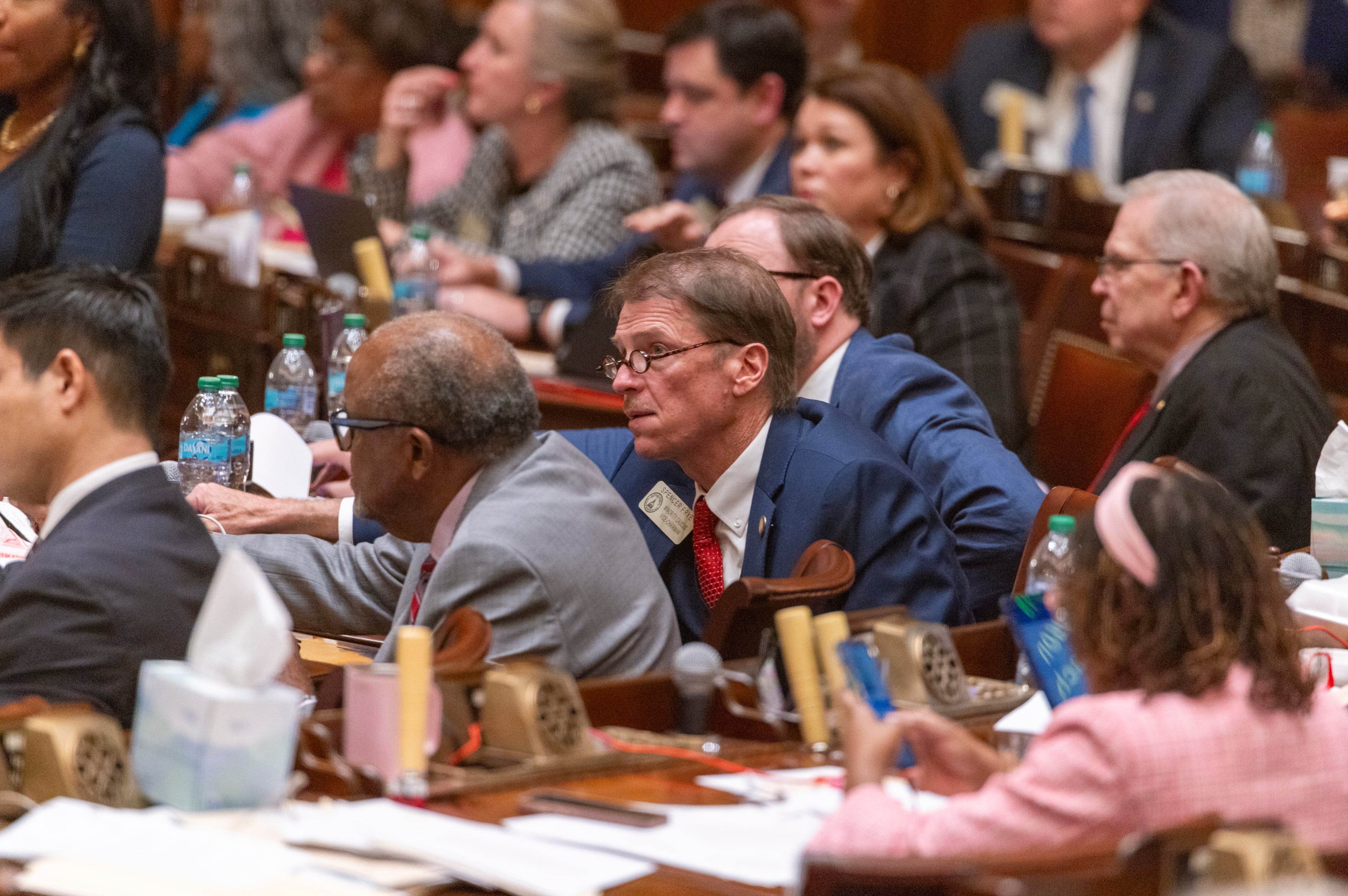
And they have reshaped Georgia politics — embraced by beneficiaries in both parties and condemned by those excluded from the law, which allows only the governor, lieutenant governor, nominees for those offices and legislative leaders of both parties to create them.
The committees can accept unlimited contributions, coordinate directly with campaigns and raise money during the 40-day legislative session, when statewide officials are otherwise barred from collecting campaign funds.
An Atlanta Journal-Constitution analysis found leadership committees raised more than $2.3 million during the 2025 legislative session. The reports released this week cover activity from July 2025 through Jan. 31, but they suggest another banner year for big-money fundraising through the committees.
Jones has raised roughly $2.7 million during that span, including more than $875,000 through his leadership committee since the session began Jan. 12. His balance stands at $15.9 million, including a $10 million personal loan. He has about $3 million more in separate campaign accounts.

He is not alone. Georgia Power sent Kemp’s leadership committee $500,000 on Jan. 19 — the largest single contribution he reported during the seven-month period. Even though he’s not on the 2026 ballot, Kemp’s committee holds more than $2.3 million.
The committee representing Georgia Senate Republicans has $2.8 million in its account, while two groups for Georgia House Republicans reported about $75,000. Democrats are stockpiling their committees, too, though they can’t raise at the same pace while out of power.
The Georgia Democratic Senatorial Committee reported more than $20,000 raised after the session began, including contributions from AT&T and Walmart. It has more than $300,000 in the bank, while accounts for House Democrats hold roughly $185,000.
‘Coming to an end?’
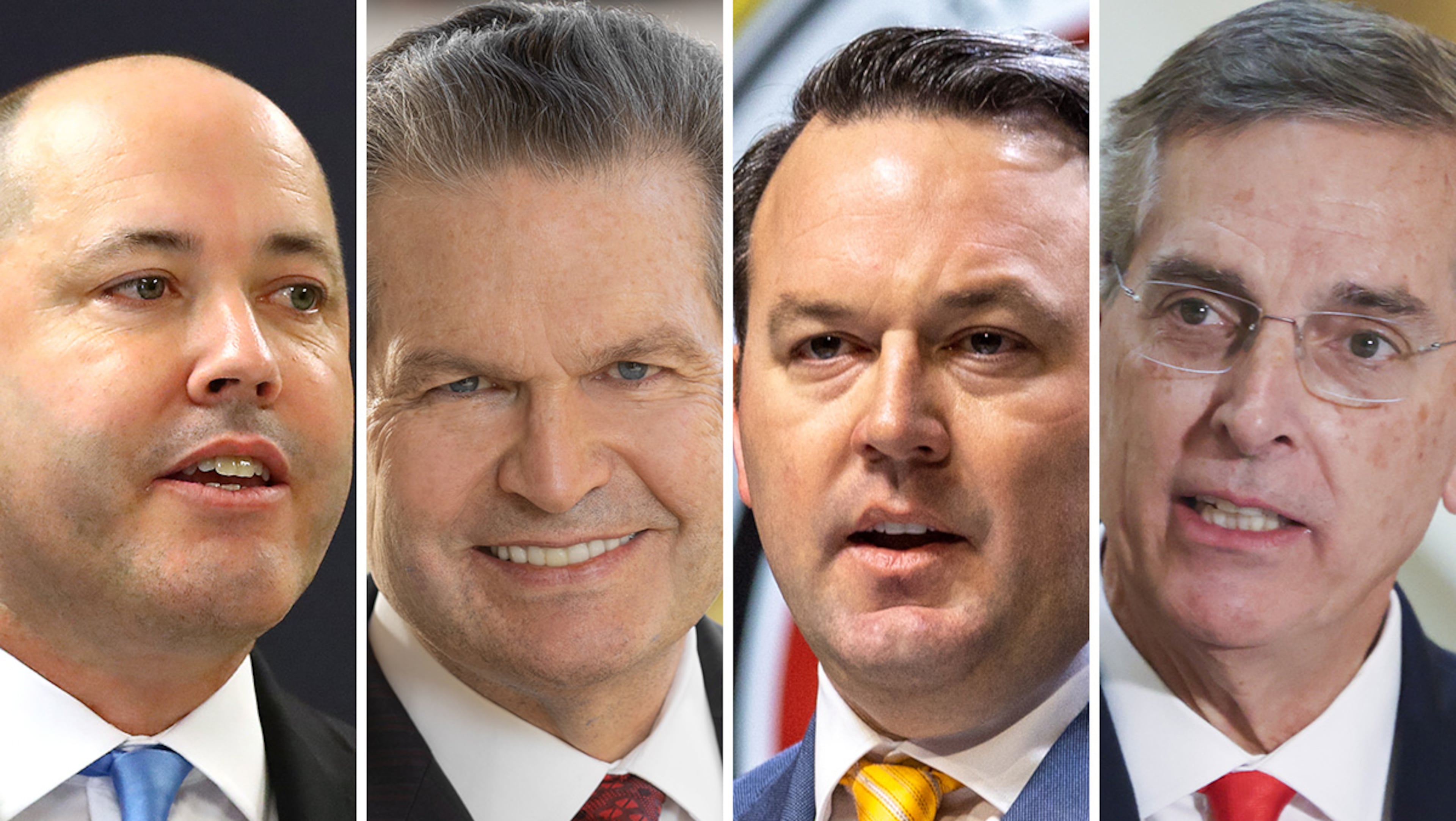
The funds have become a defining feature of Georgia politics, where self-funding campaigns are reshaping the four-way race for the GOP nomination between Jones, Attorney General Chris Carr, health care entrepreneur Rick Jackson and Secretary of State Brad Raffensperger.
Jones, whose family controls a sprawling oil, insurance and retail empire, turned heads when he entered the race last year with a $10 million personal loan. Raffensperger recently reported lending himself $5 million.
And Jackson triggered a seismic shift in the GOP field with his pledge to spend at least $50 million on his upstart bid for the nomination.
The financial escalation has put other candidates at a disadvantage. Carr, who lacks the personal wealth to bankroll his campaign, is limited to collecting $8,400 per donor for the primary and another $4,800 for a runoff. Unlike Jones, he cannot raise money during the legislative session.
Carr and Raffensperger have both challenged the law over the last year, but federal judges rejected both their complaints. Jackson’s lawsuit takes a different tack, asking a judge to stop Jones’ committee from financing his campaign until a nominee is decided.
He’s borrowing from the same arguments that Abrams and former U.S. Sen. David Perdue used in 2022 to persuade a judge to temporarily stop Kemp from using his leadership committee to support his reelection bid before securing the GOP nomination.
“The days of Burt Jones playing by his own set of rules to benefit himself are coming to an end,” Jackson campaign spokesperson Dave Abrams said.
Jones aide Kayla Lott shot back that it was a “silly lawsuit” doomed to fail. She said it was not “remotely surprising that the grifter crew surrounding Rick Jackson convinced him to waste more of his money.”
In the meantime, the latest report shows how Jones continues to benefit from the committee.
He received six-figure checks from nine groups since 2025, including the Sports Betting Alliance, an advocacy group backs legalizing the industry; RAI Services Company, the cigarette maker formerly known as R.J. Reynolds; Newnan-based construction firm Brent Scarbrough & Co.; and Associa, a real estate management firm.
His expenditures include payments to his family’s businesses. Roughly $73,000 went to Jones Petroleum Transport Company for sign delivery and plane and pilot services for about a dozen trips. About $30,000 covered office rent paid to JP Capital & Insurance, another family firm.
But the most eye-catching entry was the contribution from Fighting for Georgians, a group formed in December 2024 that describes itself online as driven “by the belief that less taxation and smaller government unlock opportunity and growth for everyone.” It was the only contribution from the group this cycle.
It comes as Jones and his allies in the Georgia Senate are pushing to eliminate the income tax by 2032. Two bills to scale back the tax passed the Senate Thursday on mostly party-line votes.
Fighting for Georgians’ stated goals of repealing the income tax and lowering property taxes closely align with Jones’ campaign platform.
The group lists as its address a house in northwest Atlanta with a sign outside reading “PhysicalAddress.com.” Records identify attorney Shane Hudson as its chief executive. He did not respond to requests for comment. An email to the organization also went unanswered, and a woman who answered the door at the residence declined to comment.

About the Author

Greg Bluestein is the Atlanta Journal Constitution's chief political reporter. He is also an author, TV analyst and co-host of the Politically Georgia podcast.