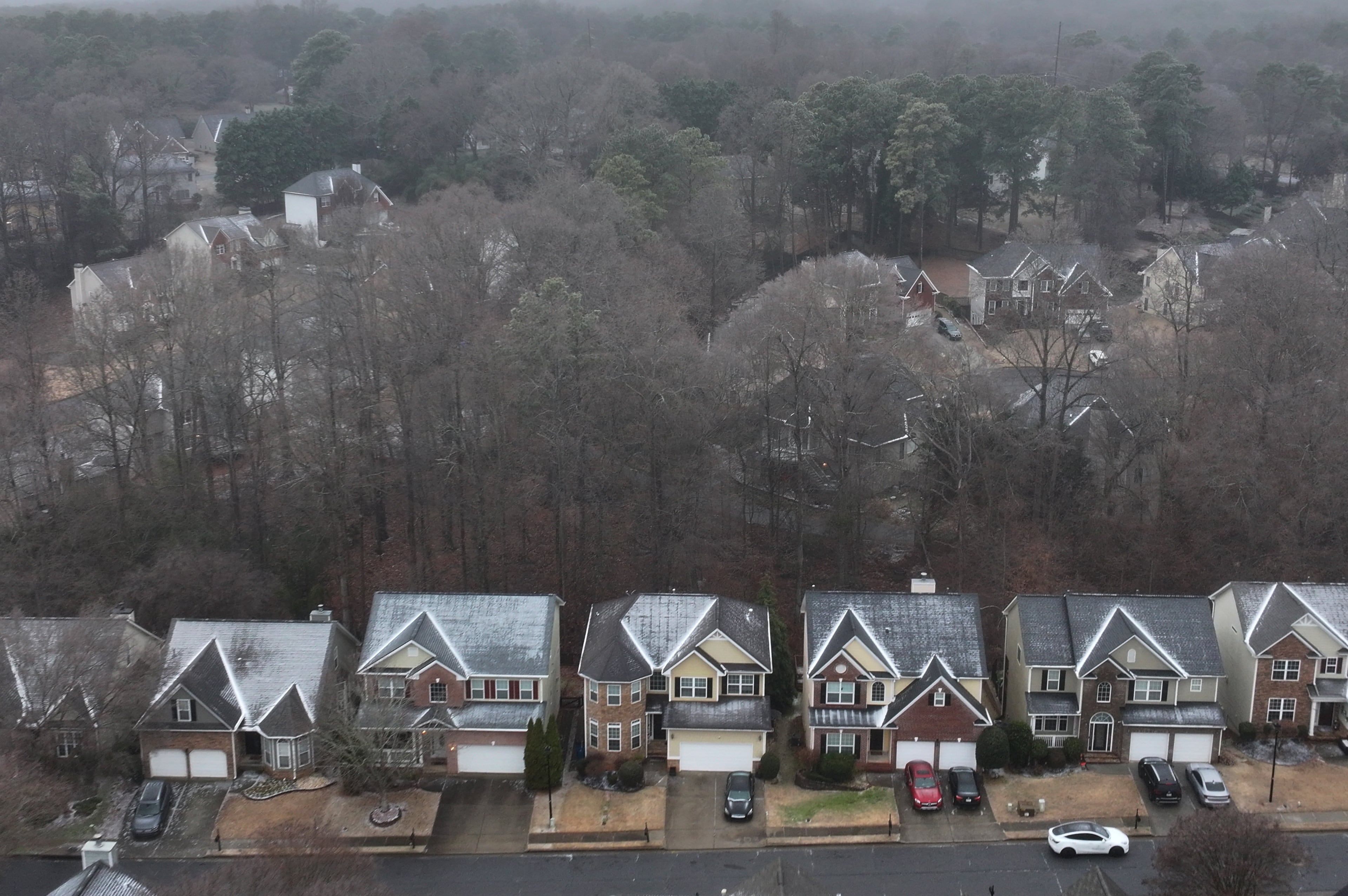
Burns unveils plan to eliminate property taxes on Georgia homes

House Speaker Jon Burns on Wednesday unveiled his plan to eliminate property taxes on primary single-family residences — a move that would fundamentally change the way most Georgians pay for schools and local government services.
Burns’ plan would phase out taxes on “homestead” properties by 2032. That would eliminate more than $5 billion in annual revenue for schools and local governments across the state, according to an analysis by the Association County Commissioners of Georgia.
In place of the property tax, Burns’ plan would allow schools, counties and cities to repurpose existing sales taxes or charge “assessments” — charges not based on the value of the homes — to pay for services such ranging from fire protection to classroom instruction.
ACCG released a statement saying it is “reviewing the language to assess the potential impact on counties.”
Burns said the existing method of funding local schools and governments primarily through ever-rising property taxes is unsustainable.
“Georgia House Republicans believe no one should ever face the loss of their home because they can’t afford to pay rent to the government,” the speaker said Wednesday at a news conference at the Georgia State Capitol.
Burns’ proposal is the latest gambit in an election year bonanza of tax-cut proposals.
Gov. Brian Kemp recently unveiled plans for more tax rebates and another cut to Georgia’s income tax rate. Lt. Gov. Burt Jones wants to go further, eliminating the personal income tax altogether by 2032.
The Senate also has its own version of property tax relief. Senate Bill 382 would require all local governments and schools to cap property assessments at the rate of inflation — a move supporters say would limit the growth of tax bills. The bill passed the Senate Finance Committee on Wednesday.
Burns has proposed a more extensive rewrite of Georgia property tax laws. His plan would:
- Phase out taxes on homestead properties from 2027 to 2032. Commercial and multifamily properties would continue to pay property taxes, but the total revenue generated by those taxes would be limited to 3% growth each year.
- Allow school districts and local governments to repurpose existing sales taxes — often used for capital expansion or other purposes — to pay for government operations.
- Schools and governments could also charge “assessments” to pay for capital projects and some government services. These would be based not on the value of someone’s home but on the cost of providing the service.
Burns’ legislation does not specify which services could be paid for with assessments and how assessments would work. But Rep. Shaw Blackmon, R-Bonaire, sponsor of the legislation, said those details are in the works.
Property taxes are the primary way schools and local governments pay for operations in Georgia and across the country. Tax bills are based on the value of property as determined by local assessors and by tax rates set by elected officials.
Lawmakers say they’ve heard an outcry from constituents in recent years about rising property taxes. Two years ago, they approved legislation that limits the growth in property assessments to the rate of inflation. But that law allowed local school districts and governments to opt out of the limit and most did.
Now Burns has laid out a more sweeping approach to property tax relief. Because the Georgia Constitution grants local schools and governments the ability to levy property taxes, the speaker’s proposal would require a constitutional amendment. An amendment would require the support of two-thirds of legislators and approval by Georgia voters in November.
An Atlanta Journal-Constitution survey last fall found a majority of likely Democratic and Republican voters, if given a choice, favor property tax relief over eliminating the income tax. But the prospects of either proposal passing the General Assembly are uncertain.
Burns struck a determined tone Wednesday.
“Georgia House Republicans are committed to delivering real, meaningful relief to homeowners,” he said.
Correction
This story has been updated to fix the spelling of Jon for House Speaker Jon Burns.
About the Author

David Wickert writes about the state budget, finance and voting issues. Previously, he covered local government and politics in Gwinnett and Fulton counties. Before moving to Atlanta, he worked at newspapers in Illinois, Tennessee, Virginia and Washington.