How Georgia Democrats pulled off a special election stunner
Today’s newsletter highlights:
- State Election Board targets Georgia’s touchscreen voting system.
- Buddy Carter opposes plan to extend health insurance subsidies.
- Drew Ferguson repeatedly voted in a county where he did not live.
Upset alert

The state House seat that Democrats flipped last night in a special election isn’t one of the party’s midterm targets. It isn’t even in the top 10.
But Eric Gisler’s stunning victory in a district designed for Republicans to win sent shockwaves across Georgia’s political landscape and supercharged Democrats, the AJC’s Michelle Baruchman reports.
Gisler garnered nearly 39% of the vote a year ago when he challenged Republican state Rep. Marcus Wiedower in the northeast Georgia district spanning parts of Athens-Clarke and Oconee counties. On Tuesday, he captured nearly 51% of the vote to best Republican Mack “Dutch” Guest, the GOP candidate to succeed Wiedower after he resigned in October to focus on his real estate business.
His victory likely cuts the GOP edge in the House to 99-81, pending the result of a special election runoff for another solidly Republican district in Atlanta’s northwest exurbs. That’s one of the tightest margins since Republicans flipped the chamber in 2005.
Democratic Party of Georgia Chair Charlie Bailey called it another sign that Democrats are going to “fight on every front — and we’re going to win more than we’re going to lose.”
The party pumped $50,000 into TV ads in the district that linked Guest to President Donald Trump and framed a vote for Gisler as a rejection of MAGA politics.
“There are 17 Georgia House districts that were more Democratic than this one last year,” Bailey said in an interview. “Republicans should be very worried.”
They seemed like they were. Insurance Commissioner John King said the GOP needs to “sound the alarm from now until November” and do a better job addressing pocketbook issues.
“Our donors aren’t motivated and our voters aren’t either,” he said.
Gisler told us he pulled off his upset with a mix of shoe leather and strategic messaging. His campaign knocked on 8,000 doors, made 10,000 phone calls to voters and focused on affordability, health care access and election security.
“What I’m taking away from this is people were fed up with business as usual. People are looking for solutions,” he said.
Keeping the seat during next year’s general election won’t be easy. Republicans carved deep-blue Athens into four districts, and Gisler’s territory was among the three drawn for a GOP candidate to win.
“I’m going to draw a wedge between MAGA Republicans and mainstream Republicans,” Gisler said. “I want to show them it’s OK to vote for a Democrat.”
Things to know
Good morning! The Georgia legislative session begins in 33 days. The primary for U.S. Senate, governor and other offices is in 160 days.
Here are three other things to know for today:
- U.S. Rep. Marjorie Taylor Greene told Tia Mitchell that she is leaving Congress for the same reason she first ran for office — disappointment with Republicans.
- A former member of the Cobb County Board of Education and a retired state lawmaker will face each other in a runoff election next week for a seat in the state Senate, the AJC’s Maya T. Prabhu reports.
- An attorney for Fulton County District Attorney Fani Willis said she will testify before a Republican-controlled special state Senate committee next week, the AJC’s Rosie Manins reports.
Rule change
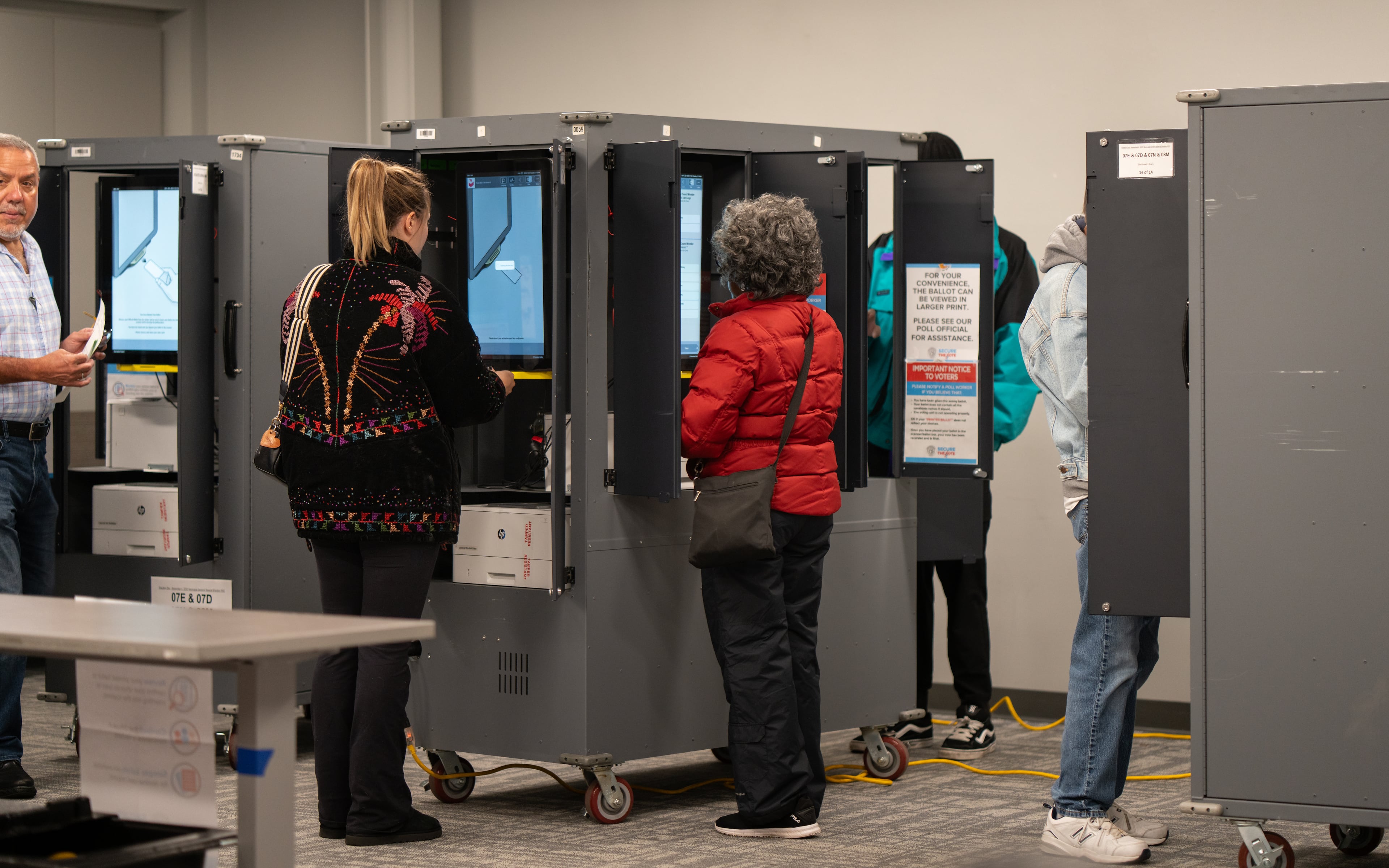
The Georgia Supreme Court has so far thwarted much of the State Election Board’s ambitious agenda. But today, the board will consider taking another big swing: creating a path to get rid of Georgia’s touchscreen voting system.
Supporters of President Donald Trump have distrusted the system ever since he lost the 2020 presidential election. But they’ve been stymied by Georgia’s 10-year contract with the company that makes the machines.
However, state law says counties can bypass the machines for hand-marked paper ballots if it is impossible or impracticable to use them. Today, the board is expected to clarify just want “impossible” and “impracticable” mean.
Under the new definitions, counties could switch to paper ballots because the voting machines use QR codes, which aren’t readable by humans and thus impossible for voters to verify their choices. Counties could also switch to paper ballots if election officials believe if it’s impossible for voters to use the touchscreens without others seeing their choices.
Supporters, including the state Republican Party and the chair of the Morgan County Democratic Party, say the board is simply carrying out its obligation to ensure Georgia’s voting machines comply with the law. But opponents say it’s another example of the board going beyond it’s legal authority.
Health care vote
We told you earlier this week how U.S. Sen. Jon Ossoff, D-Ga., is making health insurance subsidies a central issue of his reelection campaign. His Republican rivals are taking the opposite approach.
U.S. Reps. Buddy Carter and Mike Collins, and former football coach Derek Dooley say they oppose a plan in the U.S. Senate that would extend the subsidies for another three years. The Republican-controlled Senate is set to vote on the proposal this week, which is likely to fail.
Carter noted Democrats first subsidized health insurance after passing former President Barack Obama’s health care law in 2010. In 2021, Democrats increased those subsidies during the coronavirus pandemic.
“Whenever you have to subsidize a federal program, that means it’s not working,” Carter said. “Instead of giving handouts to big insurance companies, which is what Jon Ossoff wants to continue to do, we should be empowering patients with affordable health care options that work best for them, not the government.”
Dooley said Democrats “created this mess, including the looming expiration of these enhanced subsidies.”
“Instead of fixing what’s broken, D.C. politicians keep putting band-aids on bullet holes and sticking taxpayers with the bill to bail out insurers and benefit the middlemen,” he said.
Collins has said the country needs “meaningful reforms to health care that increase competition and drive down premiums, not endless subsidies to the largest insurance companies on the globe.”
Illegal vote
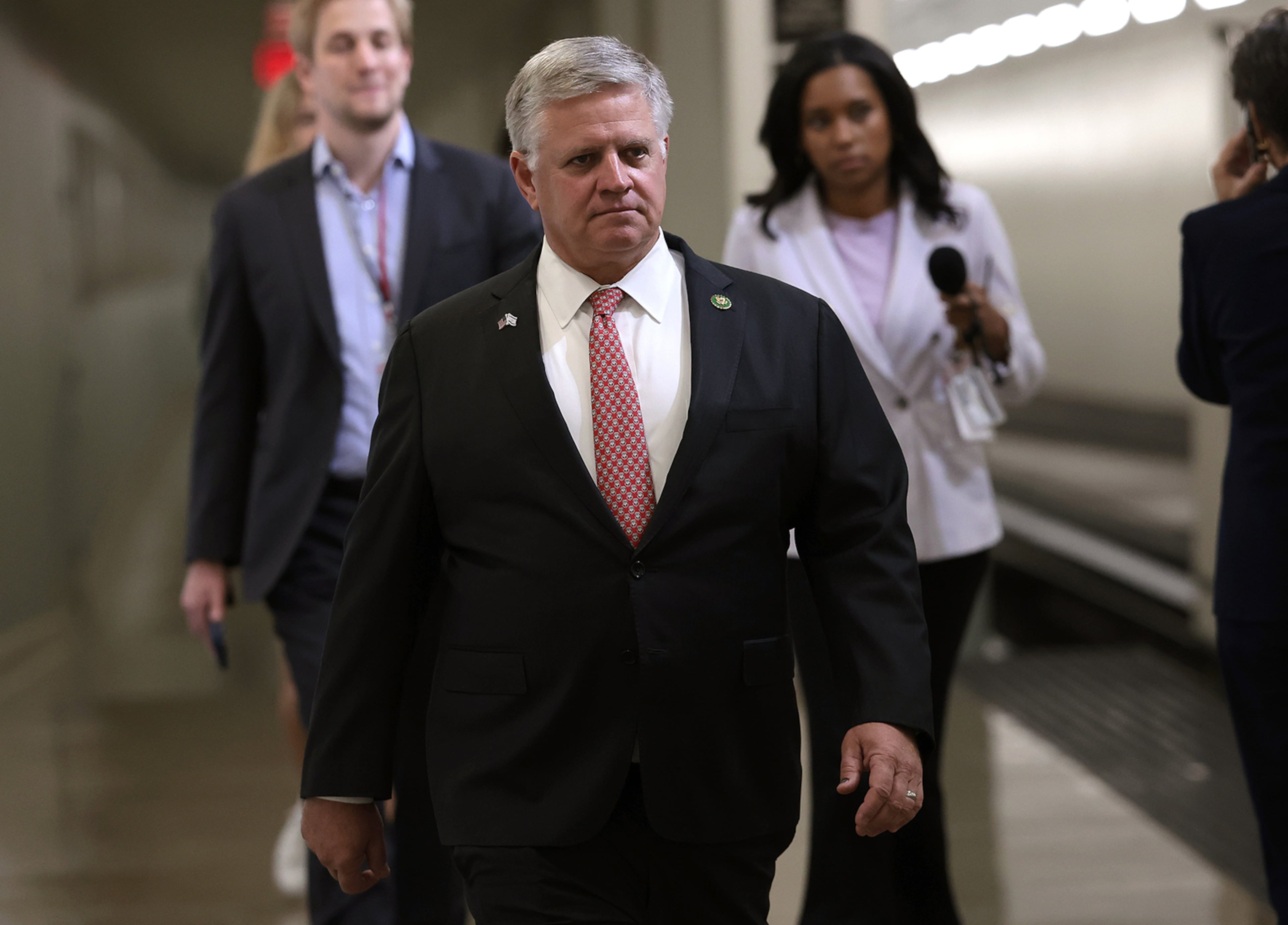
The State Election Board on Tuesday found that former U.S. Rep. Drew Ferguson, who raised concerns in the past about election fraud, voted multiple times in a county where he no longer lived.
The state board resolved the case in a 2-0 vote, issuing a letter of instruction to the former Republican congressman because it’s illegal for Georgia voters to cast a ballot in a county where they don’t have a residence.
“This is something that is concerning, not just with what happened with the congressman, but just people not knowing that if you don’t change your registration within 30 days of moving, that will constitute an election violation,” State Election Board member Janelle King said.
Vice Chair Janice Johnston called people voting in their former county a “systemic problem.”
Ferguson voted in Troup County three times in 2022, even though he sold his house in April of that year and moved to Pike County.
The former congressman’s voting record shows that he has since cast ballots in Pike County, most recently in March.
State Election Board Chair John Fervier and Sara Tindall Ghazal, the Democratic Party’s appointee, were absent on Tuesday. The board’s right-wing trio — once praised by President Donald Trump — ran the meeting.
Johnston recused herself from voting on the case, citing a personal relationship with Ferguson’s family.
Listen up
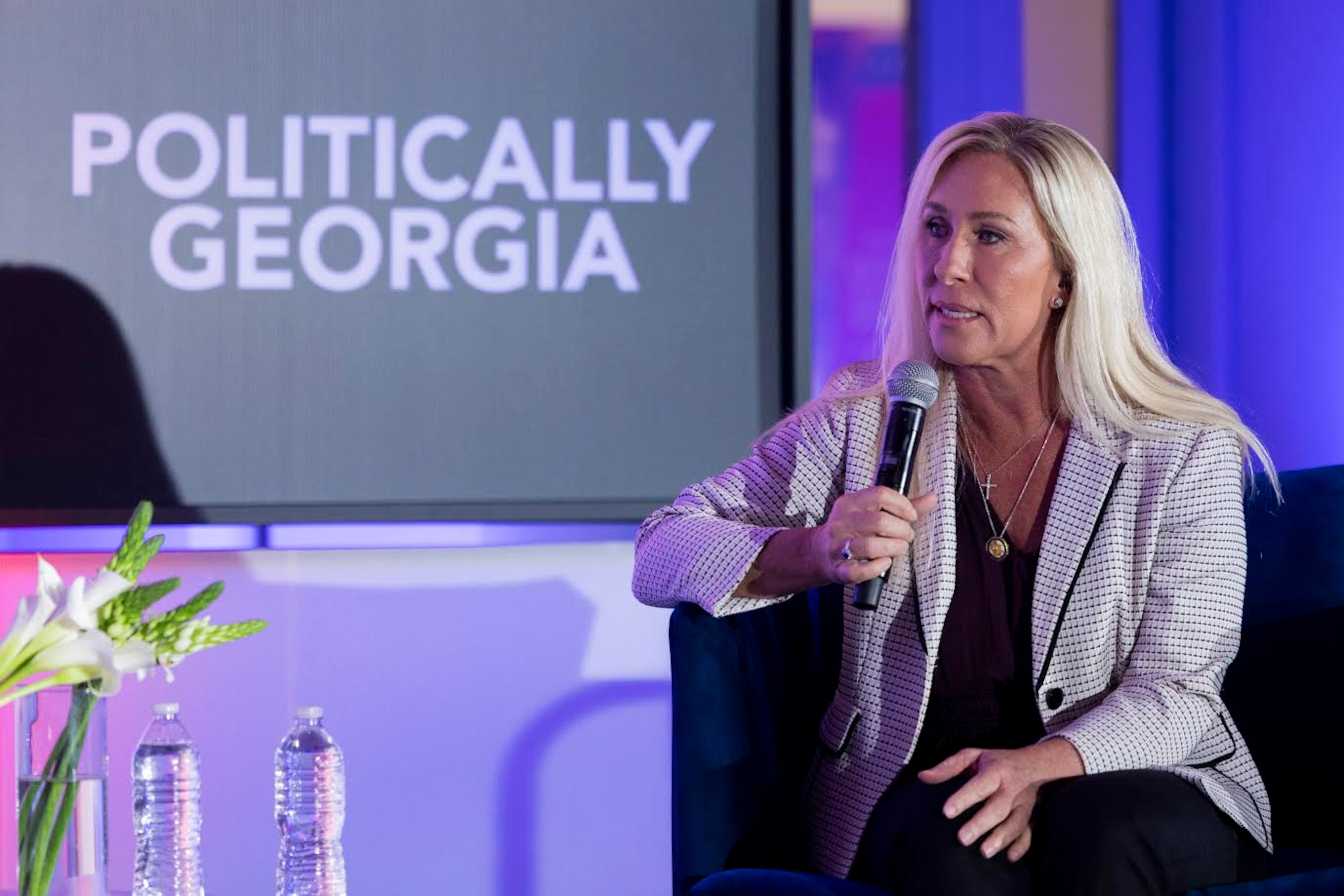
Today on the “Politically Georgia” podcast U.S. Rep. Marjorie Taylor Greene, R-Rome, talks about her decision to resign from Congress and her high-profile split with President Donald Trump.
You can listen and subscribe to Politically Georgia for free an Apple Podcasts, Spotify or wherever you get your podcasts.
Have a question or comment for the show? Email us at politicallygeorgia@ajc.com or give us a call at 770-810-5297 and you could be featured on a future episode.
Today in Washington
Happenings:
- President Donald Trump will meet with religious leaders at the White House.
- The House could take a procedural vote on a new compromise version of the National Defense Authorization Act.
- The Senate will begin the process of approving another bloc of Trump’s nominations. They include former Grovetown planning director Ronald Kurtz to be an assistant secretary at the Department of Housing and Urban Development, and Jonathan Burke to be assistant secretary for Terrorist Financing at the Department of the Treasury. Burke once worked at EY in Atlanta, the law firm formerly known as Ernst & Young.
- U.S. Sen. Jon Ossoff, D-Ga., will participate in a virtual news conference with Protect Our Care to highlight the expiring Affordable Care Act subsidies.
- U.S. Rep. Nikema Williams, D-Atlanta, will host a news conference to announce she is reintroducing legislation meant to protect access to abortions.
Rest in peace
T. Rogers Wade, a longtime political and civic leader in Georgia, died earlier this week, just days after he was honored at the University of Georgia, his alma mater.
Wade was recently named the 2025 recipient of the Dooley Friends of the UGA Libraries Award because of his support for the library system. He is also the former vice chair of the University System of Georgia Board of Regents, a founding member of Leadership Georgia and the former president and CEO of the Georgia Public Policy Foundation. He once was chief of staff to the late U.S. Sen. Herman Talmadge and a special adviser to former Gov. Nathan Deal.
Attorney General Chris Carr was among those sharing tributes.
“Georgia has lost a legend, and I have lost a very close friend and mentor,” Carr wrote on X. “Rogers Wade helped grow Georgia into the leading state it is today through the many decades of wisdom and guidance he provided to political and business leaders alike — and he never wanted attention or asked for any credit.”
Shoutouts

Today’s birthdays:
- State Rep. Ginny Ehrhart, R-Powder Springs
- U.S. Rep. Austin Scott, R-Tifton.
Want a birthday shoutout in the Politically Georgia newsletter? There’s a form for that. Click here to submit the shoutouts. It’s not just birthdays. We’re also interested in new jobs, engagements, birth announcements, etc.
Before you go

Atlanta Mayor Andre Dickens is asking donors to give up to $250,000 to help pay for his second inauguration. His first inauguration in 2022 was limited because of the coronavirus pandemic.
That’ll do it for us today. As always, you can send your best scoops, gossip and insider info to greg.bluestein@ajc.com, tia.mitchell@ajc.com, patricia.murphy@ajc.com and adam.beam@ajc.com.
About the Authors

Greg Bluestein is the Atlanta Journal Constitution's chief political reporter. He is also an author, TV analyst and co-host of the Politically Georgia podcast.

Tia Mitchell is the AJC’s Washington Bureau Chief and a co-host of the "Politically Georgia" podcast. She writes about Georgia’s congressional delegation, campaigns, elections and the impact that decisions made in D.C. have on residents of the Peach State.

Patricia Murphy is the AJC's senior political columnist. She was previously a nationally syndicated columnist for CQ Roll Call, national political reporter for the Daily Beast and Politics Daily, and wrote for The Washington Post and Garden & Gun. She graduated from Vanderbilt and holds a master’s degree in journalism from Columbia University.

More Stories
The Latest


