Investigation into Chattahoochee River fish kill focuses on Atlanta’s tunnels


As investigators piece together what caused huge numbers of fish to die in the Chattahoochee River last month, they are zeroing in on a network of tunnels that lie beneath the city of Atlanta as a likely a key contributor.
At the same time, Atlanta’s Department of Watershed Management said Thursday it’s enlisting an outside firm to investigate how those tunnels contributed to the fish kill discovered May 22, roughly two days after a storm flooded parts of the city.
Watershed Commissioner Greg Eyerly said in a statement that he launched the inquiry to find the root cause and prevent future incidents like this.
“We cannot rely on theory and speculation, we have to support our findings with data while identifying opportunities to strengthen system performance,” Eyerly said.
The fish kill was discovered the morning of May 22 by staff from the nonprofit Chattahoochee Riverkeeper, which found dead fish as far as 20 miles downstream from the city’s main sewage treatment facilities.
The group’s executive director, Jason Ulseth, estimates thousands of fish died, likely the result of a swift drop in the river’s oxygen levels. He called it the worst fish kill he’s seen in his 20 years with the organization.
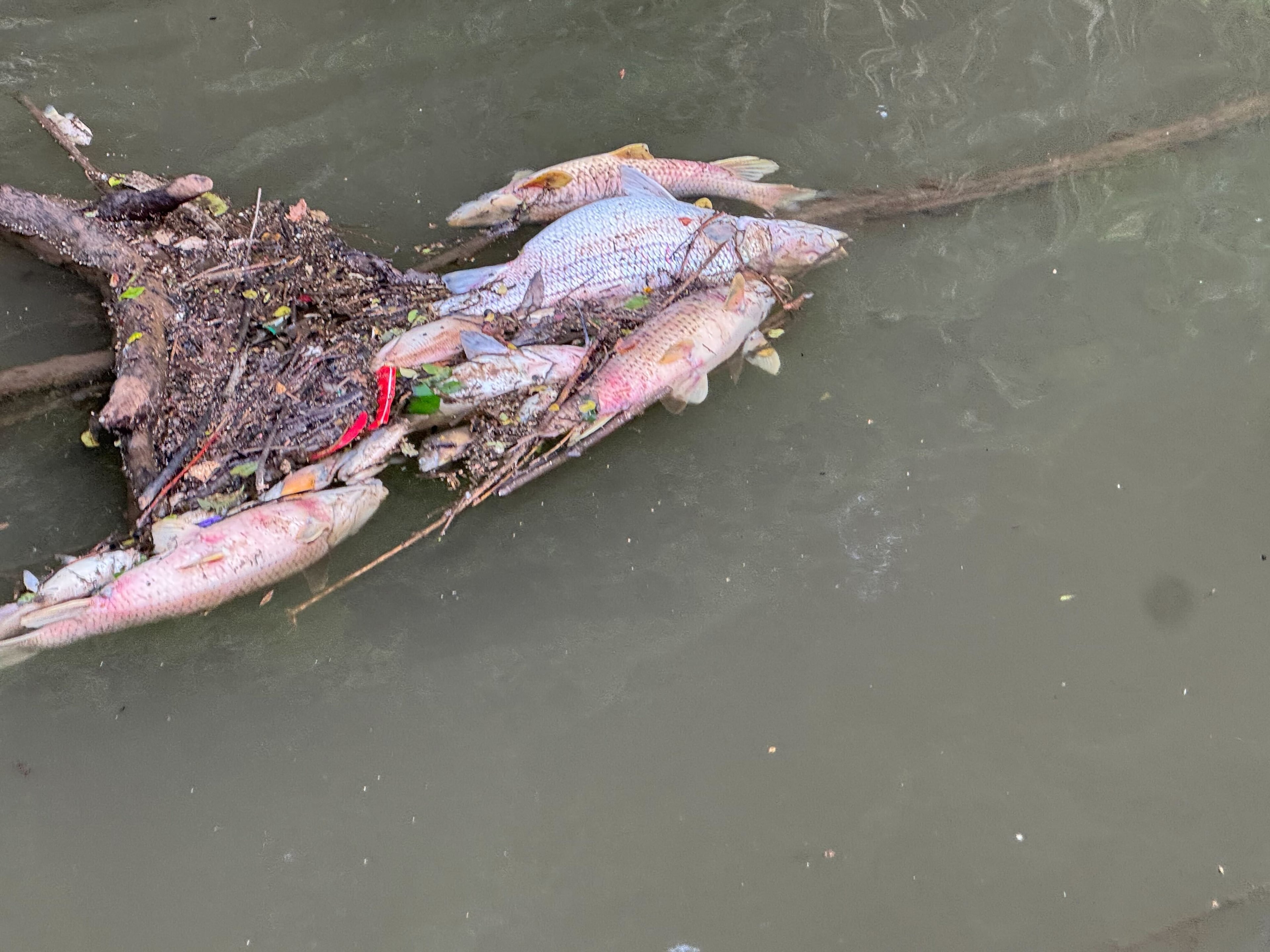
“I know there are going to be a lot of lessons learned here from our side and the city’s side about what happened, plus how to prepare and prevent the next one from happening,” Ulseth said.
Inside Atlanta’s combined sewer tunnels
For most of Atlanta’s history, untreated or poorly disinfected sewage regularly spilled into the Chattahoochee River, fouling the river and creating major health and environmental hazards. But after lawsuits and a pair of federal consent decrees, the city worked to clean up its act.
Hundreds of millions of dollars and decades of construction later, most of Atlanta is now served by two different sets of pipes: one to carry sewage and another to move stormwater to treatment facilities. The upgrades have dramatically reduced pollution in the river.
However, not all city infrastructure has been split in two. Parts of Atlanta, mostly in Midtown and Downtown, still use a combined sewer system.

Rather than try to unwind ancient pipes buried beneath highways and high-rises, the city elected to build a series of combined sewer tunnels in the mid- and late-2000s to manage stormwater and sewage in the city’s urban core. The largest tunnel lies hundreds of feet below ground and runs for miles from downtown to near the Chattahoochee River.
The tunnels give the city a place to store runoff from heavy rains, until treatment facilities connected to the network can disinfect the water before releasing it. But they can only store so much water, and Eyerly said it appears they reached their limit in an intense storm during afternoon rush hour of May 20.
According to the National Weather Service, parts of Atlanta received 1½ inches of rain in just 30 minutes. The torrential rains flooded parts of Midtown and the Downtown Connector, stranding some commuters in their cars.
At the same time roads were flooding, Eyerly said the city’s main tunnel was filling up fast with water — too fast for other pumps and treatment plants to take some of the slack.
The result, Eyerly and the riverkeeper believe, was that a mix of sewage and stormwater spilled out of the tunnel straight into Peachtree Creek, a major tributary of the Chattahoochee, right near where the creek intersects with the river.

The working hypothesis would also explain where the black, sludge-like material that was found coating the river’s banks downstream came from. Eyerly said more analysis is needed to determine the sludge’s precise contents, but signs point to it likely being sewage residue that was flushed out of the tunnel during the storm.
“I don’t know where else it could have come from,” Eyerly said Thursday.
A river ‘comes back to life’
The city’s independent investigation will be conducted by engineering and consulting firm Brown and Caldwell, but it is not immediately clear when their assessment will be complete.
Eyerly said he wants to use the findings to inform engineering, operations and staffing for future heavy rainfall events.
In the meantime, the incident is also under investigation by state regulators at the Georgia Environmental Protection Division. And the Chattahoochee Riverkeeper has continued its regular water quality monitoring and welfare checks on aquatic wildlife.
On Thursday, The Atlanta Journal-Constitution accompanied riverkeeper staff on a boat ride as they collected water samples and checked for signs of fish in distress along the affected stretch of river. They found a single dead fish, but also several signs that the river is rebounding — fish and turtles, as well as oxygen levels that are back within a healthy range.
“We expect to see that continue after this fish kill as the river repopulates and comes back to life,” said Jason Ulseth, the riverkeeper’s executive director.