Social Circle sues Trump administration to stop warehouse conversion
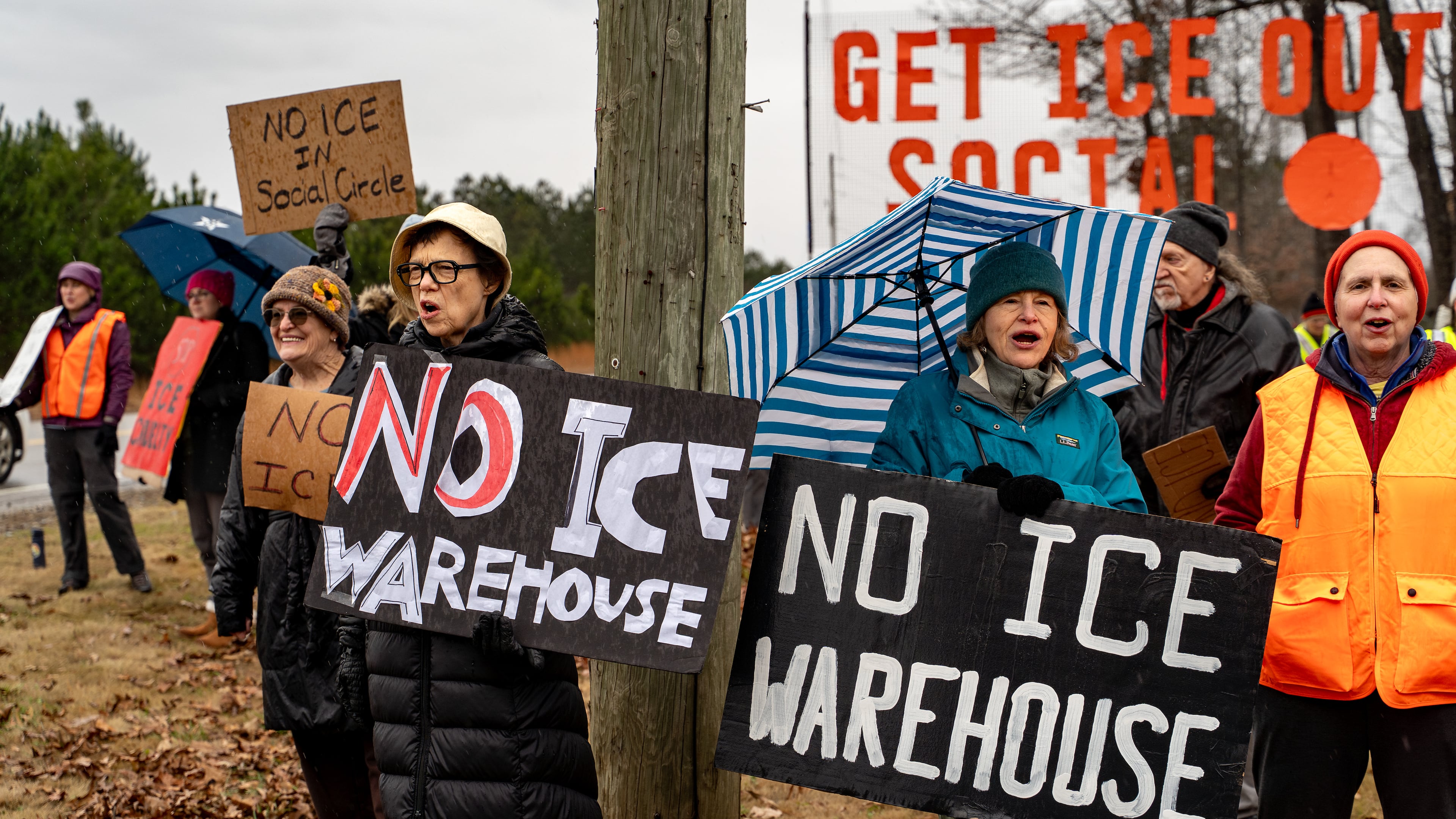
The city of Social Circle filed a federal lawsuit Wednesday attempting to block Trump administration officials from converting a warehouse there into a sprawling immigrant detention facility.
The Department of Homeland Security first purchased the vacant, 1 million-square-foot warehouse in early February, with the intention of turning the property into an 8,500-bed facility — part of a broadscale expansion of the country’s immigration detention system.
But in what it describes as a rushed acquisition process, Social Circle claims in its lawsuit that the federal government failed to perform required reviews of the project’s environmental impacts and its effects on the health and safety of town residents.
In failing to perform those studies, according to the lawsuit, DHS ran afoul of the National Environmental Policy Act, the Administrative Procedure Act and Georgia’s public nuisance law.
“If allowed to proceed with their plan to transform Social Circle into the site of one of the nation’s largest immigration detention facilities, (immigration authorities) will cause immense and irreparable harm to Social Circle and its residents,” the city’s complaint says.

DHS did not respond to a request for comment from The Atlanta Journal-Constitution about the lawsuit.
Instead, a spokesperson said DHS is “reviewing agency policies and proposals” and reiterated a statement shared by Homeland Security Secretary Markwayne Mullin during his recent confirmation hearing, where he vowed to “work with community leaders.”
“We want to be good partners,” Mullin said.
Social Circle’s suit, filed in the U.S. District Court for the Middle District of Georgia, echoes litigation in other jurisdictions where DHS purchased industrial real estate it intends to retrofit into detention complexes.
Those lawsuits, seeking to block DHS from converting warehouses in Arizona, Maryland, Michigan and New Jersey, also hinge on a purported failure to conduct environmental reviews required under federal law.
In Maryland, the Trump administration has argued that it is exempt from performing a review. In Michigan and New Jersey, it has indicated that it would move forward with reviews — a process that could take months.
Legal challenges to the warehouse project in other parts of the country have come from the offices of states’ attorneys general.
In Georgia, state officials have not taken those steps, despite staunch opposition from both officials and residents in Social Circle and Oakwood — a second metro Atlanta community in which DHS has purchased a warehouse.
Social Circle City Manager Eric Taylor previously told the AJC that state officials have repeatedly told him they are powerless to stop the warehouse conversion.
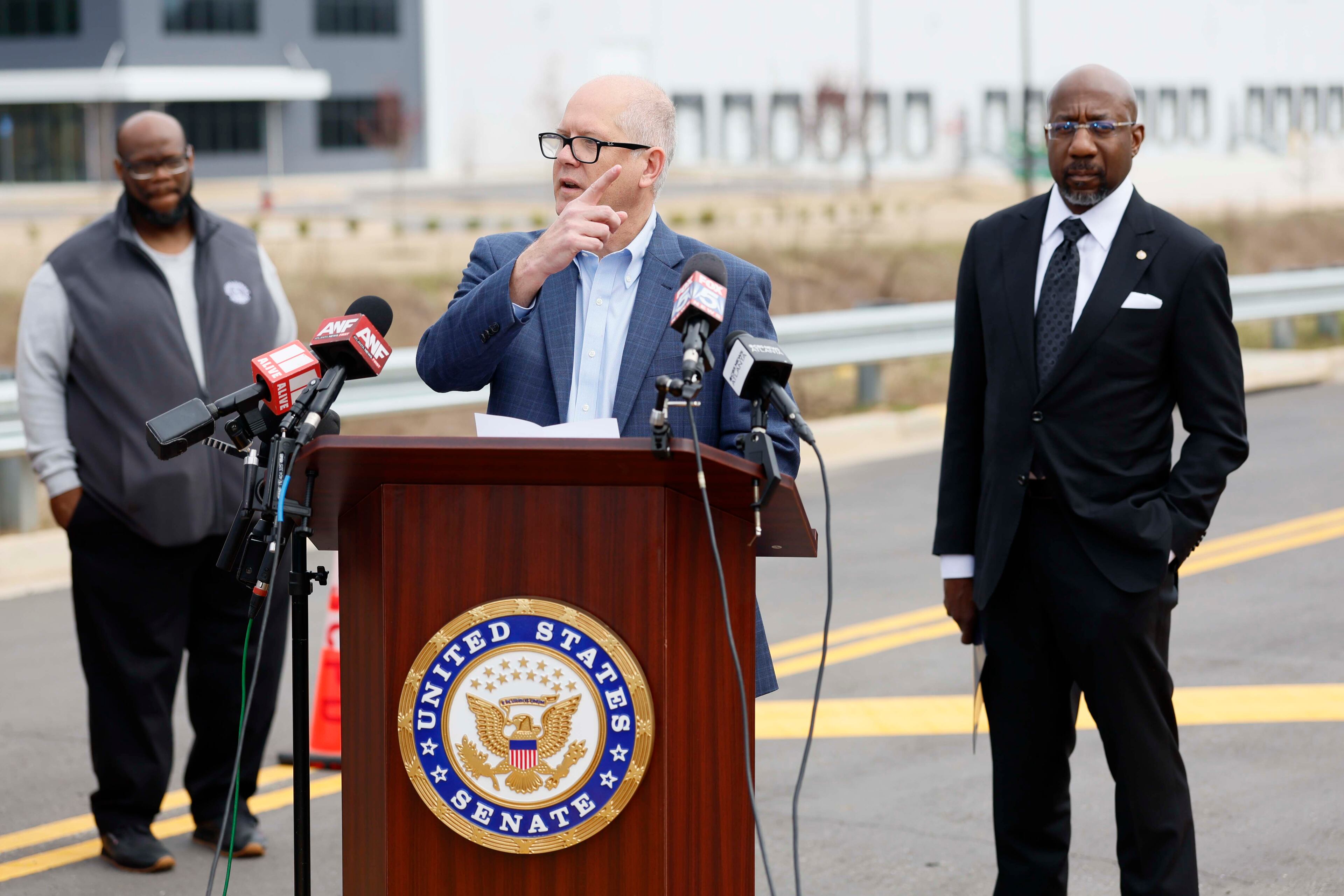
“I understand that it’s a federal issue, but the state also has a responsibility to make sure that the quality of life of the residents of the state are taken care of,” Taylor previously said.
He added: “By not supporting us or Oakwood, (state officials are) essentially saying that we’re on our own.”
The Social Circle lawsuit describes a mid-February meeting between city officials and DHS representatives shortly after the warehouse sale was finalized. It says federal officials “did not provide substantive information regarding DHS’ regulatory or legal obligations.”
The city alleges that DHS said it had completed the “necessary studies, including an economic analysis.” But, according to the complaint, the city requested a copy of that analysis and never received it.
During the February meeting, DHS officials said 2,500 workers would be employed at the facility, according to the complaint. The high number of employees and detainees could result in the tripling of Social Circle’s population, which now stands at roughly 5,000.
Social Circle officials have in recent months repeatedly made the argument that the town’s infrastructure is incapable of sustaining such a population surge. The city’s lawsuit in federal court again raised those concerns.
“If brought online, Defendants’ planned ‘mega center’ would threaten water availability for Social Circle’s residents and risk sewage overflows into nearby land and water, among other significant harms,” the complaint says.
The suit also references medical emergencies and the spread of illness in already established immigrant detention facilities.
“Given this potential for major disease outbreak, in combination with other public health risk factors, the planned facility is likely to generate a high volume of emergency incidents,” the suit says.
“Social Circle’s public resources are not prepared to respond to health emergencies arising within the intended facility without jeopardizing the town’s ability to meet its existing needs.”
Amid a recent change of leadership at the DHS, the administration signaled last month that it had paused its plans to move forward with its warehouse detention project and that no new warehouses would be purchased.