Bernard LaFayette Jr., civil rights strategist, dies at 85

Bernard LaFayette Jr., a civil rights organizer who helped lead the student sit-ins that desegregated lunch counters in Nashville, Tennessee, and later became a strategist in the Southern voting rights movement, died this week.
He was 85.
His son, Bernard LaFayette III, said he died Thursday morning after a heart attack.
“It seems unfitting to simply call him a civil rights icon,” DeMark Liggins Sr., president of the Southern Christian Leadership Conference, said. “He always stood tall in moments that required courage, he never lost sight of the people he was helping and he was committed to bringing Kingian nonviolence to our nation and internationally.”
LaFayette, who served as chair of the SCLC, was part of the generation of student activists that reshaped the Civil Rights Movement in 1960.

By 1968, he had joined the Rev. Martin Luther King Jr.’s inner circle, serving as the national coordinator of the Poor People’s Campaign. He was with King on April 4, 1968, at the Lorraine Motel in Memphis, Tennessee, on the day King was assassinated.
King’s final message to him stressed the need to institutionalize and expand nonviolence — a mission LaFayette carried forward for the rest of his life.
LaFayette remained less visible than many of the movement’s best-known figures, preferring to train organizers, build local leadership and teach — including at Emory University.
But the campaigns he helped shape — from Nashville’s lunch counters to the voting-rights movement in Selma, Alabama — became defining chapters in the modern civil rights struggle.
After arriving in Nashville from Florida in 1958 to study at American Baptist Theological Seminary, now American Baptist College, he joined a circle of young organizers that included John Lewis, Diane Nash, Marion Barry and C.T. Vivian.
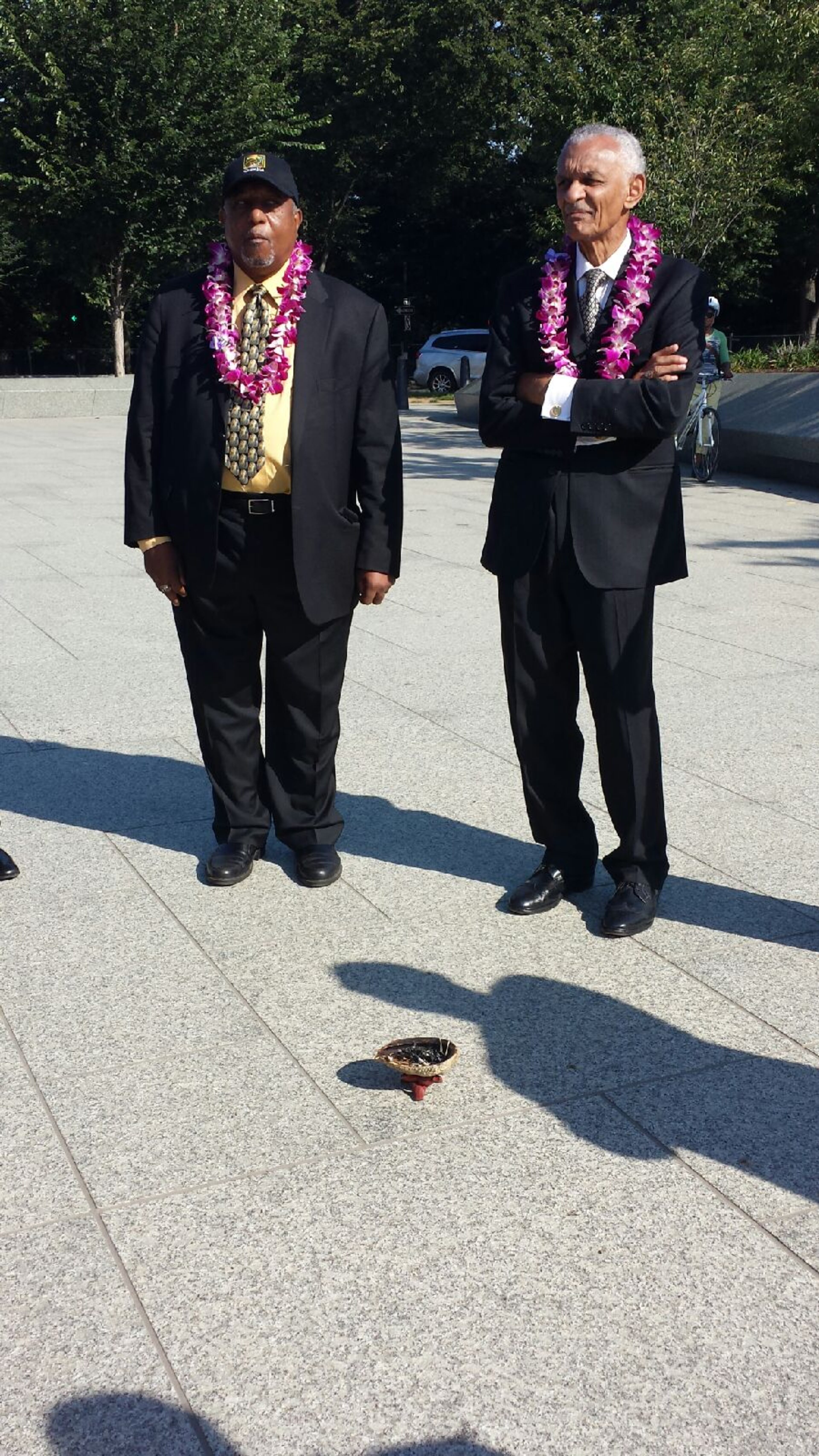
Together they launched a campaign of nonviolent sit-ins aimed at dismantling segregation in the city’s downtown department stores. The first protest took place at Harvey’s Department Store, but the effort quickly expanded.
On Feb. 13, 1960, hundreds of students fanned out across downtown Nashville, taking seats at lunch counters inside Woolworth’s, S.H. Kress and McLellan stores and refusing to leave.
The demonstrations continued for months and drew arrests as students refused to leave segregated counters. By the end of the campaign more than 150 students had been arrested. After negotiations between store owners and protest leaders, Nashville in May 1960 became the first major Southern city to begin desegregating public facilities.
That same year LaFayette helped found the Student Nonviolent Coordinating Committee, which soon led voter-registration drives and protests across the South.
He joined the Freedom Rides in 1961 to challenge segregation in interstate travel. He was beaten in Montgomery, Alabama, and later arrested in Jackson, Mississippi, becoming one of more than 300 riders sent to Parchman Prison.
In 1962 he directed the Alabama Voter Registration Project. A year later he moved to Selma to lead the Alabama Voter Registration Campaign, building local leadership and persuading residents that change was possible.
Two years later, when voting rights marchers attempting to cross the Edmund Pettus Bridge were attacked by state troopers on what became known as Bloody Sunday, the violence shocked the nation and accelerated passage of the Voting Rights Act of 1965.
The work carried serious risks. On the same night Medgar Evers was assassinated in Mississippi in 1963, LaFayette survived an attempt on his life. He was beaten outside his home before his attacker pointed a gun at him. A neighbor arrived with a rifle, and LaFayette stood between the two men urging restraint.
By the time the Selma campaign reached its most dramatic moment in 1965, LaFayette had already begun organizing in Chicago. From there he helped mobilize supporters and arrange transportation for the renewed Selma-to-Montgomery march after then-President Lyndon B. Johnson introduced voting rights legislation.

LaFayette’s sense of mission dated back to childhood.
He was born July 29, 1940, in Tampa, Florida, to Verdell and Bernard Lafayette Sr. and was the oldest of eight children.
Growing up in Tampa, LaFayette often recalled watching his grandmother fail while trying to board a segregated streetcar after paying her fare at the front and being forced to walk to the rear entrance.
The memory, he later wrote, stayed with him and shaped his commitment to challenge segregation.
In Nashville he shared a room with John Lewis at American Baptist Theological Seminary, where both immersed themselves in the philosophy of nonviolence and helped organize the disciplined protest movement that desegregated downtown lunch counters.
Years later President Barack Obama recalled the pair’s early activism in a eulogy for Lewis, describing their decision to sit at the front of a Greyhound bus shortly after the Supreme Court barred segregation in interstate travel.

“Imagine the courage of these two people … to challenge an entire infrastructure of oppression,” Obama said. “Nobody was there to protect them. There were no camera crews to record events.”
After completing his undergraduate degree at American Baptist, LaFayette earned a master’s and doctorate from Harvard University. Over the next decades he taught and organized worldwide, conducting nonviolence workshops in Latin America, South Africa and elsewhere.
He later directed the Center for Nonviolence and Peace Studies at the University of Rhode Island, served as a scholar-in-residence at Emory University’s Candler School of Theology in Atlanta and worked as a minister in Tuskegee, Alabama.
“Dr. LaFayette embodied the movement. He was bold, courageous and never tired of doing the work,” Liggins said. “He was selfless, and his legacy lives in hundreds of thousands of people he helped both in America and abroad. He was truly committed to the task Dr. King gave him to ‘institutionalize and internationalize’ nonviolence.”
— The Associated Press contributed to this story.
About the Author
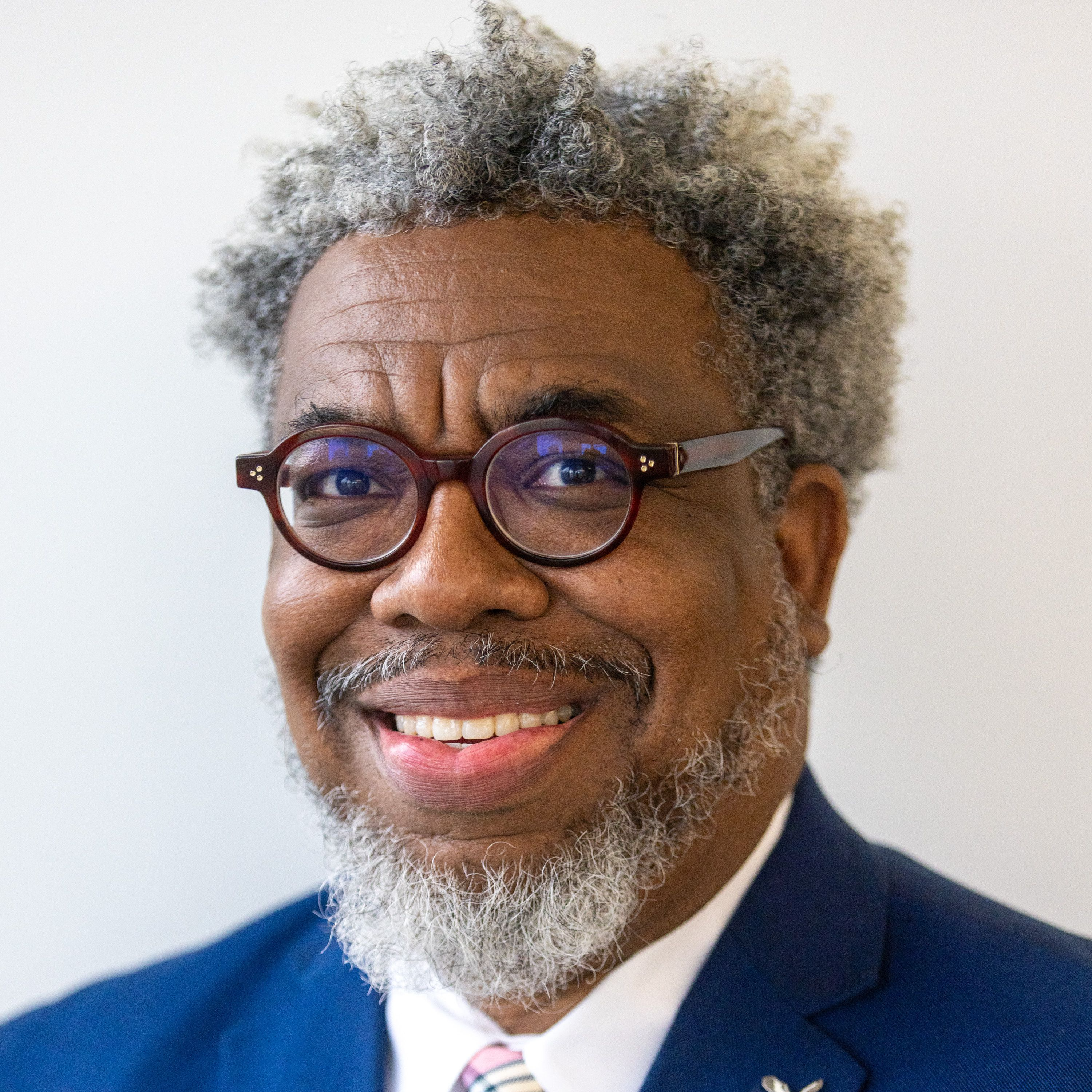
Ernie Suggs is an enterprise reporter covering race and culture for the AJC since 1997. A 1990 graduate of N.C. Central University and a 2009 Harvard University Nieman Fellow, he is also the former vice president of the National Association of Black Journalists. His obsession with Prince, Spike Lee movies, Hamilton and the New York Yankees is odd.


