Georgia’s chief justice suggests AI could help those without lawyers
Could artificial intelligence help people who lack access to legal representation in Georgia’s rural counties?
Perhaps one day, Georgia Supreme Court Chief Justice Nels Peterson suggested Wednesday. But for now, the state’s judges are pondering other ways to help fill those gaps.
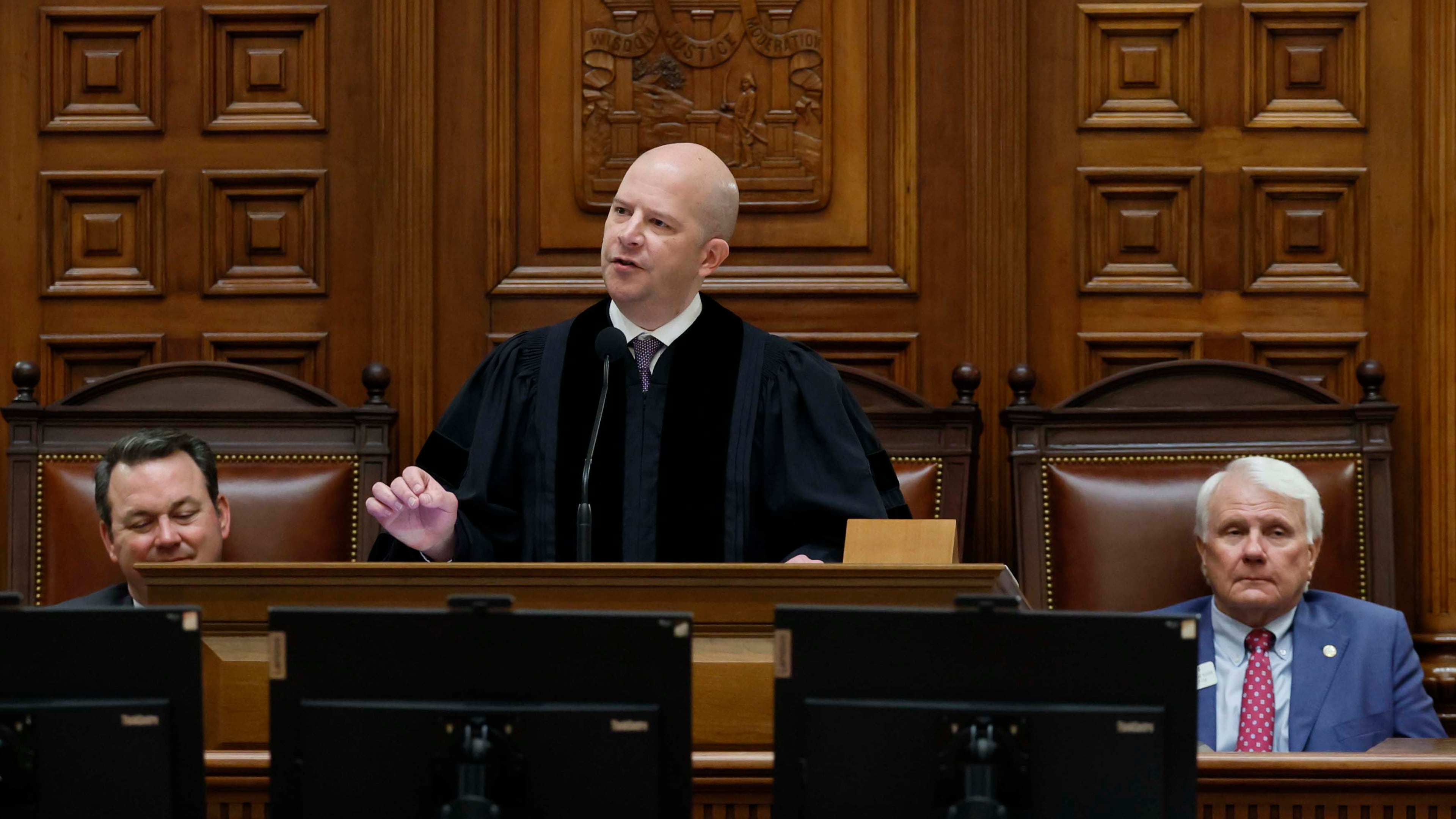
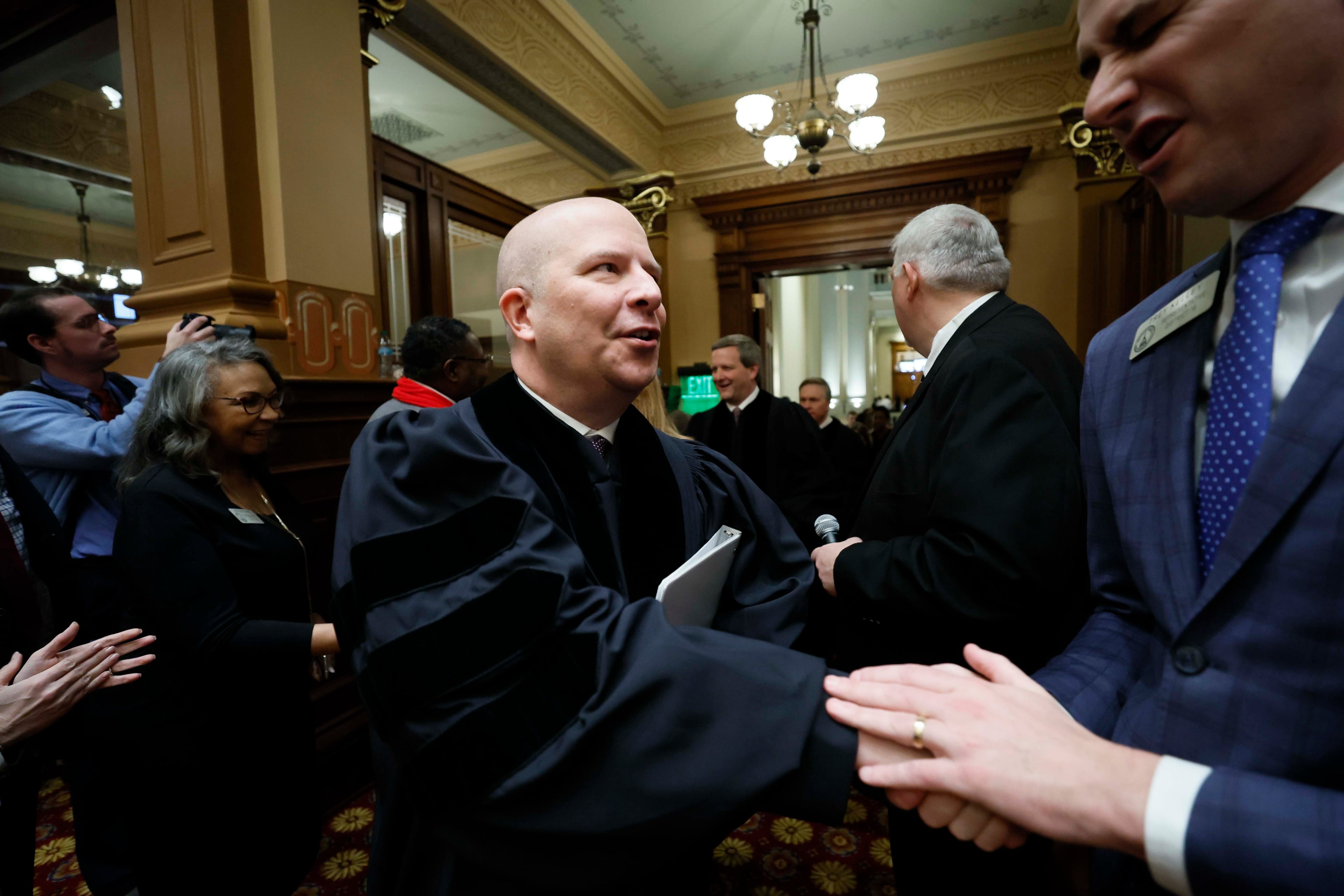
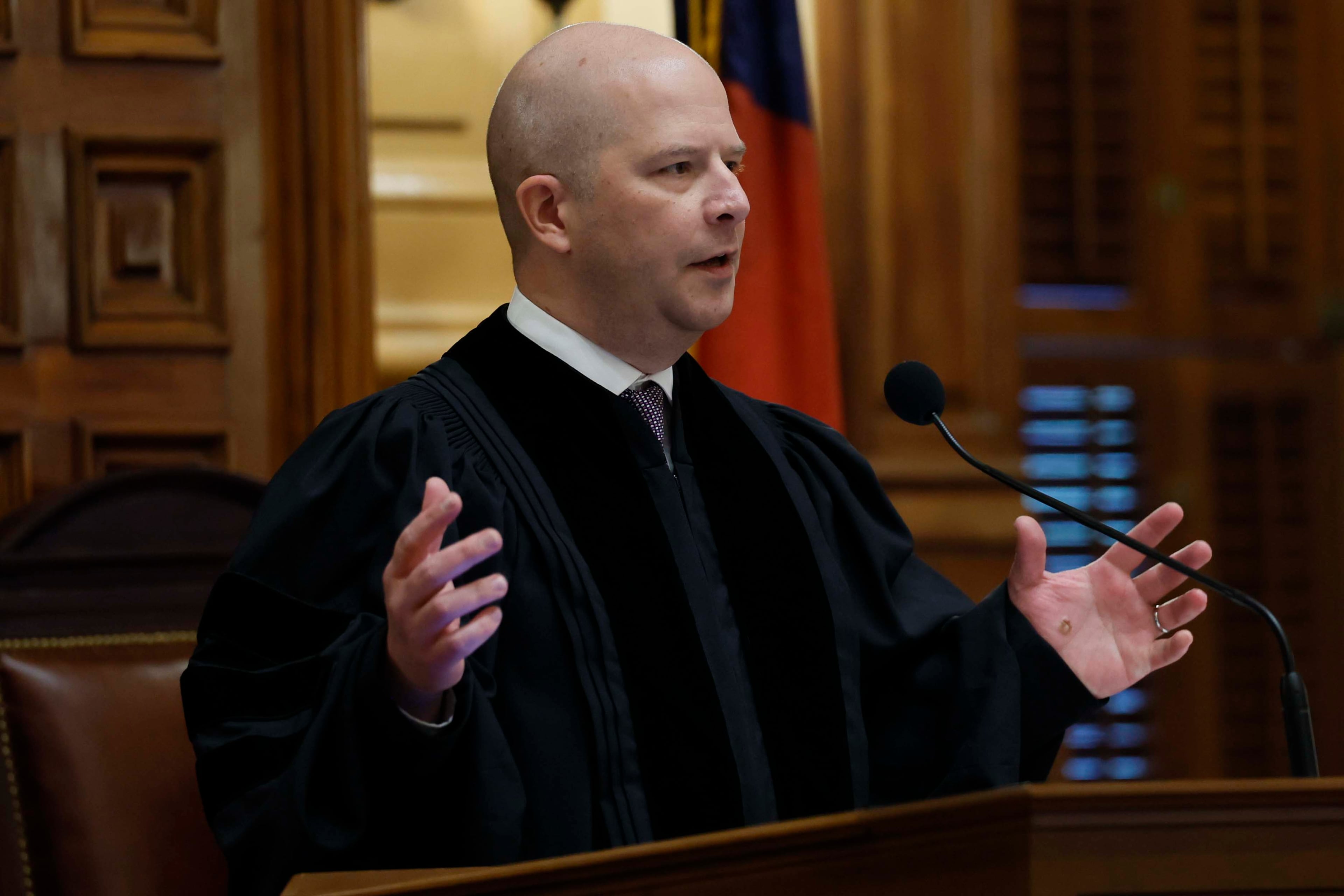
Speaking to a packed room of state lawmakers and Georgia’s top jurists in his first State of the Judiciary address, Peterson said AI “poses both risk and opportunity for the judicial system.”
The risks, he said, include lawyers filing AI-generated briefs that cite nonexistent cases. That shouldn’t happen, Peterson said in his 22-minute address, and the attorneys who use AI in court filings expose themselves to serious discipline.
“But the risk that kind of misconduct poses to the system is relatively minimal so long as judges read the cases that are cited to them,” Peterson said.
More concerning is the prospect of people using AI to fabricate evidence, such as generating false recordings or photos in court cases, Peterson said.
But “AI may also offer opportunities,” Peterson said, especially when it comes to the thousands of Georgians who either can’t afford an attorney or don’t live near one.
In 2023, more than a third of civil cases filed in Georgia’s superior, state, probate and magistrate courts involved at least one party without a lawyer, Peterson said. He called it a “safe bet” that many of those 420,000 unrepresented parties could not afford one.
“And in some counties, even if you can afford a lawyer, there may not be one to hire,” he said, noting that 54 Georgia counties have 10 or fewer attorneys, and eight have no lawyers at all.
“As AI tools improve, it may be that AI has a role to play in closing this gap,” Peterson said.
For now, a study committee tasked with addressing the issue of unrepresented civil litigants has recommended lifting some restrictions so nonlawyers can help with certain legal tasks.
Other states have experimented with similar models, and Peterson said he’s hopeful reducing some limitations “may be a useful tool in closing the justice gap.”
As he did last year when sworn-in as chief justice, Peterson stressed the need for an independent judiciary that refuses to shy away from defending the rule of law.
The rule of law, he said, has always been fragile because it “requires the strong and the rich to accept results in favor of the weak and the poor.
“It requires popular majorities of all kinds to accept outcomes in favor of small, unpopular minority groups,” Peterson said. “And it requires the most powerful of all — the government — to accept and obey limits on government power.”
He also cautioned against automatically questioning a court’s legitimacy amid disagreements over a specific ruling.
Although it’s OK to disagree or even protest, Peterson said the rule of law will not survive “when the legitimacy of judicial decisions and those who make them is routinely questioned every time there’s an unpopular outcome.”
He also voiced support for a House resolution proposing a constitutional amendment to do away with partisan elections for county probate judges. Last year, lawmakers moved to end the partisan elections for Georgia’s magistrate judges.
“Judges must be impartial, and we must also conduct ourselves in such a way as to be perceived as impartial,” Peterson said, adding that judges should not be required to align themselves with a political party.
About the Author


