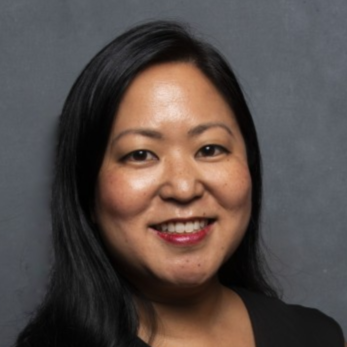
Former Turner executive finds inspiration at Atlanta Braves front office

Every time the Atlanta Braves take the field for a home game, there are thousands of workers who help keep Truist Park running.
Hundreds more work full time for the Braves to run the team, The Battery Atlanta and their spring training facility in North Port, Florida.
Leading the Braves’ workforce strategy is Chief People & Culture Officer DeRetta Rhodes, who called the Braves’ 2,600-strong game day staff “the heart of what we do.”
The average tenure of game day staff — including everyone from ticket takers to security — is 15 to 20 years, she said. Some have worked at all three Atlanta area ballparks, from Atlanta-Fulton County Stadium to Turner Field to Truist Park.
The reason for that, she believes: “We’ve created a culture where people feel like this is considered home,” she said.
And, “Our game day staff have a relationship with the fans,” particularly season ticket-holders, she said. “They really are connected with them.”
Rhodes joined the Braves in 2019 and advanced to her current role with a focus on engagement and “what it means for people to work for a sports organization.”

“I know baseball,” she said. “I used to listen to baseball with my grandfather and grandmother when I was growing up” in Kansas City, home of the Negro Leagues Baseball Museum.
But before taking the job, “Did I know the business of baseball? Absolutely not.”
She came with years of experience as a human resources executive at the YMCA of Metro Atlanta, First Data and Turner Broadcasting.
Rhodes got a call about the Braves job thanks to Lisa Chang, a woman she worked for at Turner who is now the global chief people officer at Coca-Cola.
There are long historical ties between Turner and the Braves, with Ted Turner buying an Atlanta TV station in 1970, acquiring the rights to Braves games in 1973 and acquiring the Braves in 1976. He later lost control of the Braves through Turner Broadcasting’s 1996 merger with Time Warner and Time Warner’s subsequent merger with AOL.
Today, Turner Broadcasting’s DNA still has a big impact on the Braves. Rhodes is among several Turner alumni who are now in the executive suite there — including Braves Development Company CEO Mike Plant, a former Turner Sports executive, and Chief Legal Officer Greg Heller, who worked for TBS and Turner Sports.
Not long after Rhodes joined the Braves, the COVID-19 pandemic hit, and having strong HR leadership became critically important in navigating office closures and return to office.
Rhodes has since broadened her role with a focus on culture, including community affairs and communications.
All of those elements affect “how people view and feel about organizations,” she said.
The biggest challenge in the job, Rhodes said, is that “everybody brings their own set of perspectives and motivations and desires,” but the focus is to motivate people in the same direction.
However, “I never want somebody to show up differently than who they are,” she said.
Rhodes — who has a doctoral degree in adult education from the University of Georgia and an MBA from Clark Atlanta University — is also author of the book “Courage of Voice: Empowering Women to Open Professional Doors” published in 2024.
She gave a 2018 TEDx Talk on women of color in corporate leadership and wrote her dissertation on how Black women have learned to survive in corporate America.
But, Rhodes said, she has always wanted to do more than just a diversity role.
“I never wanted to be pigeonholed,” she said. And, “I’ve always viewed inclusiveness, diversity … as more of a change process than anything. It’s a change strategy.”
Amid a backlash against diversity, equity and inclusion initiatives, Rhodes said: “I think people get caught in the nomenclature.”
“When you start talking about it being a strategy and creating an environment where people feel welcomed, regardless of who or what they are,” she said, that “speaks to truly what you’re trying to do from an inclusiveness standpoint.”
Rhodes sat down with The Atlanta Journal-Constitution and shared how one assignment early in her career transformed how she leads, where she goes for her business lunches in the Cumberland area and more.
Edited for length and clarity.

Q: What is one mistake you’ve made that transformed how you approached your career?
A: One of the biggest mistakes that I made (was) early in my career. My sons were an infant and 2 years old.
I was having the opportunity to go on an assignment (in Omaha). So they brought us all in the room, and one of the leaders turned around and said to me, “Oh, DeRetta, you can do this assignment because you don’t have kids.’
And I never answered the question. I never told them I had kids.
I did get the assignment, and I feel like that really helped me. My biggest fear was that if I told them that I had kids, they wouldn’t let me do the assignment.
Hindsight, thinking back on that, I probably could have been right. But I think it would have opened up a different type of conversation for other individuals in the room.
And for me, it ate at me. Like, it really bothered me that I wasn’t willing to share the fact that I had kids. And I had young kids at the time.
And that was one of the things that drives me now.
So I’m not quiet in a room. Now, it may be easier now for me to say things. But I also hope I give voice to others, and I want people to be able to express those type of things because we are not one-dimensional. We are multidimensional. We have everything that’s facing us in different ways, and to have to hide that I had children was very detrimental for me.
So I make sure that I don’t do that any longer, and I try to ask the right questions for others, to make sure they’re able to answer.
Q: What would be the right question?
A: First of all, don’t ask somebody if they have children. That’s the wrong question. I think more of the conversation is, do you have the availability to do this?
If you don’t have the availability to do this, what is hindering you from doing that? How can we help to support you?
That is a better lead-in than, “Oh, you don’t have children.”
Because in my mind, if this is an amazing assignment that’s getting you exposure and development, you should be able to do it, and we should be able to support you in how that happens.
Q: If it were able to spark a conversation, what kind of conversation would that be?
A: At the time … I then came to them and tried to resign for a different reason.
We talked through the assignment that I was on, and I explained to (the division president), “You know, I do have children.”
And he said, “Why didn’t you say anything in the room at the time?” And I said, “Because I was worried that I wouldn’t get the assignment.”
And he said, “I hate that that was how you felt. I wish you had said something because there were other people that were in the room that, if you had said that, they would have been able to also say the same thing.”
There were only two of us that were in the room that were women, and there was about 15 of us in the room.
But then there was another gentleman that had a newborn and very similar to mine, and he was having challenges with child care, and he went to (the division president) and talked to him about it.
I wasn’t going to have that conversation because I wasn’t comfortable enough to do it. I wasn’t brave enough to do it. So that’s what he meant by “I wish you had said something.”
Q: How do you approach mentorship?
A: Anytime I start a mentorship relationship, my first conversation is around the fact that it is reciprocal. We’re mentoring each other. The other thing that I always demand and expect is that you need to tell me what your expectation is. What are you trying to get to? What are you wanting for me?
I always explain the difference between mentorship and sponsorship. Mentorship is that I am in the bubble with you, like I am there to help and support you. Sponsorship looks very different, and a lot of times, you don’t know if someone’s sponsoring you, and a lot of times, sponsorship has more to do with someone making sure you get access, making sure that you are getting opportunities. That doesn’t necessarily mean that that’s your mentor.
Q: What is your favorite restaurant for a business lunch?
A: For a business lunch, C&S (Seafood & Oyster Bar at) Galleria. Parking is easy — you get in, you get out.
Houston’s (on Northside Parkway) is another one. You know exactly what you’re going to get every single time. It is consistent.
For breakfast, I do Goldbergs (at the Battery). I consider everything in the Battery is our cafeteria.
Q: What do you love about Atlanta?
A: That’s a tough question for me because I truly thought I was going to move out of Atlanta.
I moved right before high school to Douglas County. And so there was nothing to me at the time that was great about Atlanta.
What has worked out very well is I’ve been able to raise my sons, and it has served them well. It created a level of stability, and that, I think, has been amazing for them.
So that would be my love for Atlanta.
Q: What breaks your heart about Atlanta?
A: I still feel that in some instances, it can be very cliquish.
Sometimes people (find it) hard to find their community here, and that breaks my heart.
AJC Her+Story is a series in The Atlanta Journal-Constitution highlighting women founders, creators, executives and professionals. It is about building a community. Know someone the AJC should feature in AJC Her+Story? Email us at herstory@ajc.com with your suggestions. Check out more of our AJC Her+Story coverage at ajc.com/herstory.
About the Author