Resilience, reclamation and recipes


The first time I understood that food could save a person, I was 7 years old, hiding in a school bathroom in Houston with a plastic knife in my hand.
But I need to rewind a little.
A few weeks earlier, my mother had woken my twin brother and me before dawn and quietly ushered us onto a plane leaving Puerto Rico. I didn’t understand that we were leaving our island for good. I chewed the gum she handed me and stared out the window like it was some grand adventure, unaware that childhood can split cleanly into a before and an after without warning.
Before was Puerto Rico.
It was the smell of sofrito cooking, the mix of chopped aromatics and herbs fundamental to Puerto Rican cuisine.
It was the sound of the coquí, Puerto Rico’s tiny tree frogs, lulling me to sleep as baby blue skies turned navy.
It was my grandfather, hastily pulling over to buy sticky coconut candy from roadside vendors that would sweeten the long drive back from the Mayagüez mall to our farm in Boquerón.
Before was belonging.
After was Houston, Texas, and all that came with it: Gray skies and cold air that burned my lungs. The wail of police sirens filling the night instead of tree frogs. School rooms full of words I could not understand.
Which brings me back to the plastic knife.
We had a spelling test that day. I did not speak English, but it didn’t matter to my teacher. This was before English as a Second Language classes were common.
I stared at the alphabet above the chalkboard, wondering where the ñ, ll, rr and ch had gone. The boy behind me poked me and pointed to his paper. I understood the universal gesture for “feel free to copy me.”
When my teacher saw I had spelled (in my neatest handwriting) a four-letter word that starts with f, she screamed and broke my favorite Donkey Kong Jr. pencil in half. Something inside me also snapped. I flipped my desk as rage strangled my throat.
I ran out of the room crying and scurried through the halls until I reached the cafeteria. I was drawn there by the smell of beef simmering in tomato sauce. The lunch lady had brown skin like my mother and spoke to me in Spanish.
“¿Qué quieres?” What do you want?
Relief washed over me as I heard words I could understand.
“Necesito un cuchillo.” I need a knife.
She eyed me up and down and pursed her lips. “¿Para qué?” What for?
I took a gulping breath and squared my shoulders, “Voy a matar a mi maestra.” I’m going to kill my teacher.
Her head cocked to the side as she raised her eyebrows. She squinted at me for all of three seconds before she handed me a flimsy white plastic knife like she was passing me ketchup packets.
I hid in a bathroom stall for nearly an hour, crying as I tried to string the words I needed in English to properly communicate to the pencil-destroyer what the consequences of her actions would be. When I finally burst back into the classroom screaming, “I keel you!” I found my mother waiting.
The only person getting killed that day was me.
That night, after the inevitable correazos (the belt lashes many Latino kids of my generation knew all too well), my mother placed a bowl of sancocho, a Puerto Rican beef and root vegetable stew, in front of me.
As soon as I tasted the cilantro-scented broth, something in me settled. It reminded me that Puerto Rico still existed somewhere beyond that classroom.
For the first time since we moved, I relaxed.
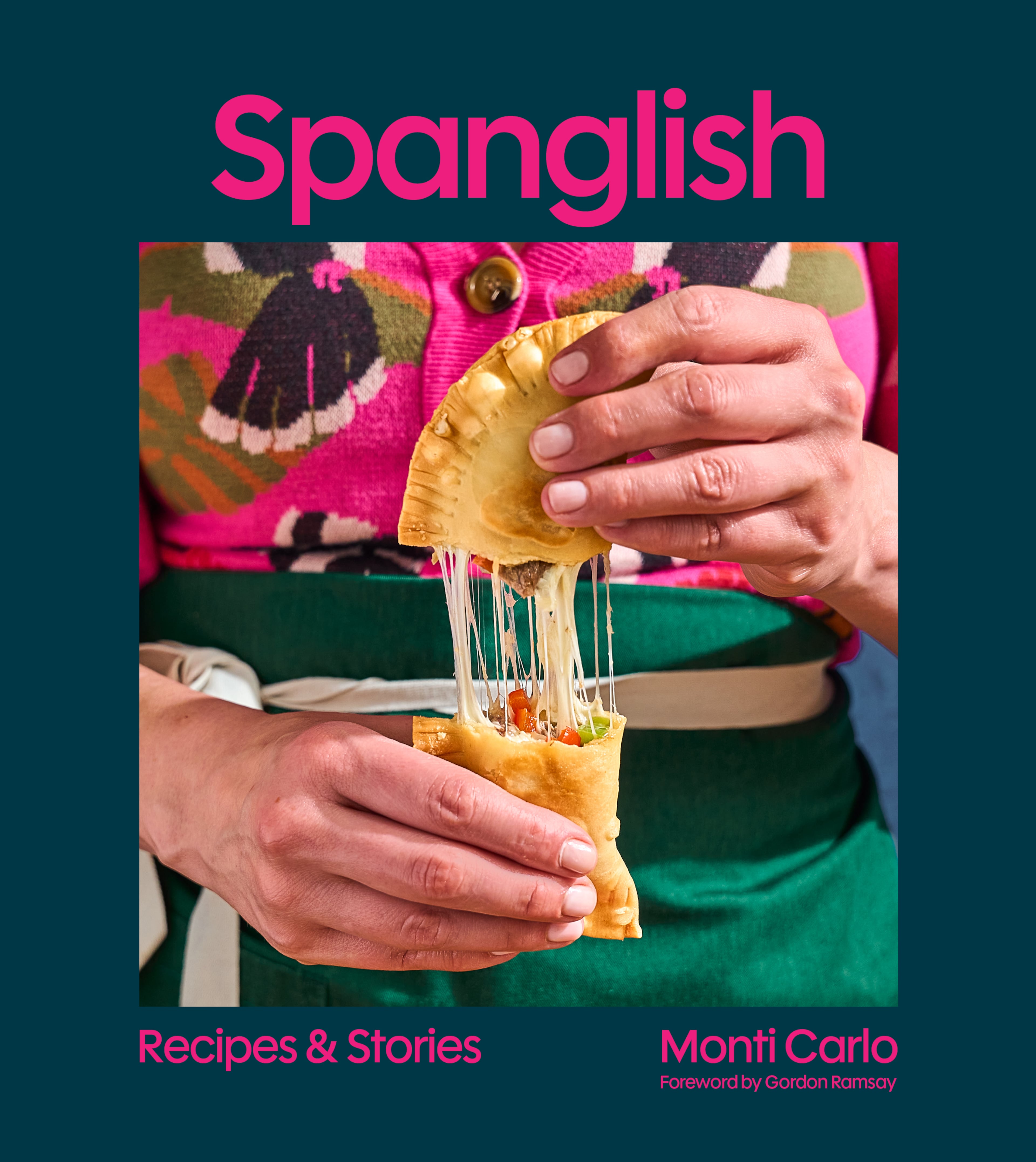
Moments like that became the emotional foundation for “Spanglish: Recipes and Stories” (Simon Element, $32.50). Because long before food became my career, it was what helped me feel whole again.
The title is an act of reclamation. While Spanglish is often treated like a broken language, I see it differently. For me, it’s evidence of adaptation and resilience, what it sounds like to build a life between two places.
The food in this book works the same way.
Puerto Rican flavors shaped me. So did classic Continental American dishes. Spanglish has recipes like blood sausage sloppy Joes, passion fruit Twinkies, and candied papaya granola.
Years later, when I found myself a broke single mother in Los Angeles, freshly divorced and facing homelessness with a 2-year-old, food became my lifeline again. I taught myself to cook on a shoestring budget and somehow landed on “MasterChef.”
That opportunity changed everything, leading me from food stamps to food TV and eventually to food journalism.
Everything in my career traces back to that little girl finding solace in a bowl of sancocho after the world stopped making sense.
Most of us know what it feels like to lose something: a home, a relationship or a version of ourselves we thought would last.
I hope people recognize something familiar in these pages, even if their story looks nothing like mine.
For Atlanta readers who want to step into the world behind these recipes, I’ll be celebrating the launch of “Spanglish” at Williams Sonoma at Ponce City Market on May 30 and at El Super Pan on May 31.
I hope you’ll come by.
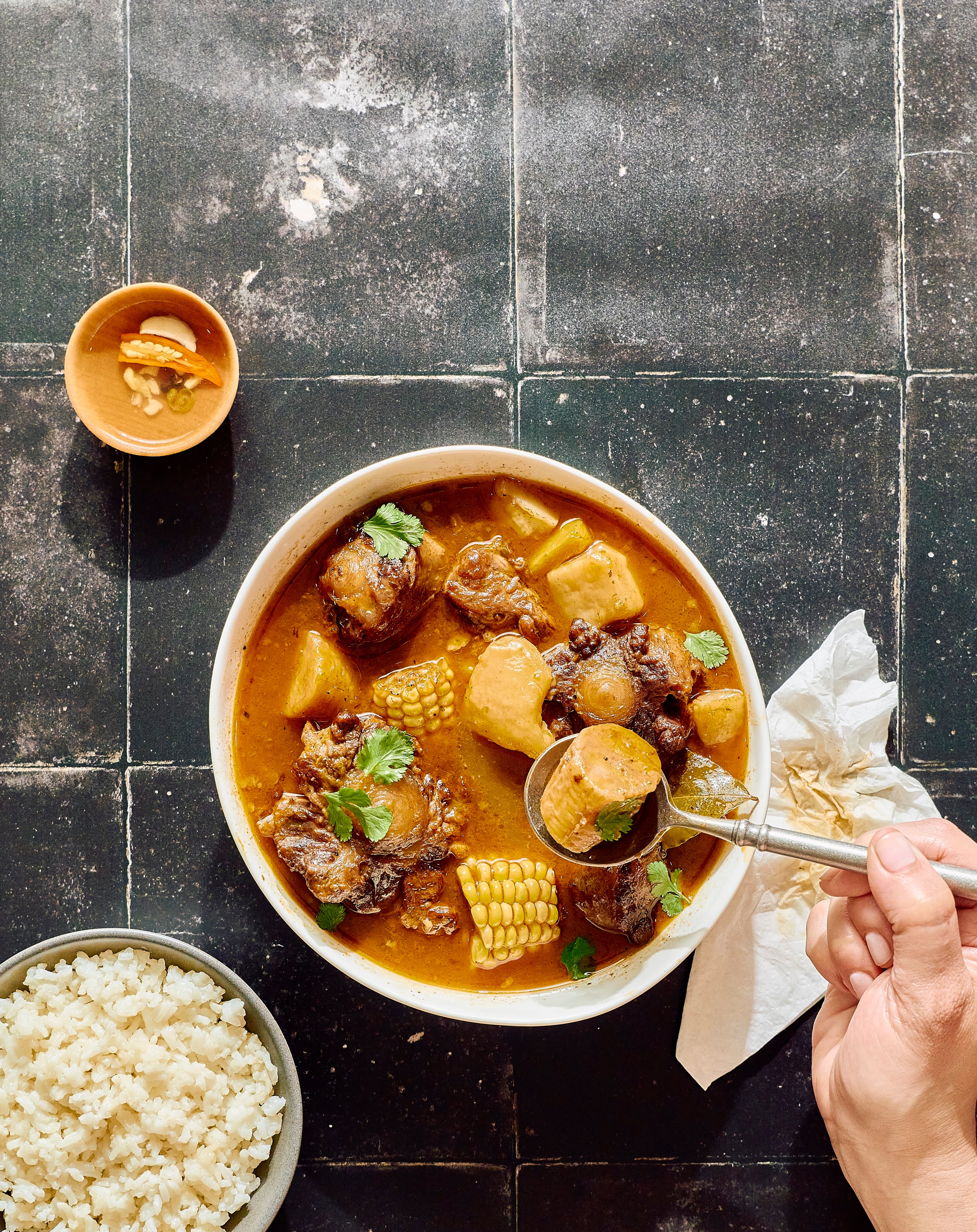
Oxtail Sancocho
Sancocho is pure comfort in a bowl. The beef in this Latin-American meat stew is fall-off-the-bone tender. The root vegetables thicken the hearty broth, making it almost velvety. Though this stew takes about three and a half hours of simmering, and has quite a few ingredients, it’s well worth the time. In this case, the sum is much greater than its parts. To save time, you can use store-bought recaíto, adobo and sazón. If you can’t source any yuca or calabaza, just sub them with potatoes and sweet potatoes. You can substitute the oxtail with short ribs or chicken thighs. If you want to make this recipe vegan, swap the oxtails for more root vegetables and substitute the chicken broth with vegetable broth.
Refrigerate your leftover sancocho in an airtight container for a few days. If you want to freeze it, divide it into individual portions; it can keep for up to two months. To prevent freezer burn, fill the containers to the top and cover the surface of the stew with plastic wrap or wax paper.
You can reheat sancocho on the stove or in the microwave. You might want to add a bit of water to thin the broth. Make sure to heat the stew until the meat and vegetables are steaming.
- 1 tablespoon olive oil
- 4 pounds oxtails, patted dry
- Kosher salt and freshly ground black pepper
- 1/2 cup recaíto
- 1 tablespoon adobo
- 1 1/2 teaspoons sazón
- 1/2 teaspoon dried oregano
- 2 bay leaves
- 6 ounces tomato paste
- 14 cups chicken stock or broth, plus more as needed
- 2 cups dry red wine, such as merlot, tempranillo or cabernet
- 4 Yukon Gold potatoes, peeled and cut into a large dice
- 1 medium yuca, peeled and woody center removed, then cut into a large dice (may substitute with frozen yuca or taro)
- 1 calabaza pumpkin, peeled, seeded and cut into a large dice (may substitute with acorn squash or sweet potato)
- 2 green plantains, peeled, seeded and cut into 2-inch thick rounds
- 2 ears fresh corn, husked and cut crosswise into 1-inch rounds
- Cooked white rice, for serving (optional)
- Cilantro leaves, for garnish
- In a large heavy pot, heat the olive oil over medium-high heat until it shimmers. Season the oxtails generously with salt and pepper. Add the oxtails in batches and sear for a few minutes on all sides until nicely browned. Transfer them to a plate as you work.
- Reduce the heat to medium. Drain/discard all but 2 tablespoons of rendered fat in the pot, then add the recaíto and cook for about 2 minutes, or until fragrant.
- Add the adobo, sazón, oregano and bay leaves. Cook for 1 minute to bloom the spices. Add the tomato paste, using a wooden spoon to dislodge any browned bits in the pot.
- Add the stock and the wine; once the liquids boil, reduce the heat to medium-low. Return all the oxtails to the pot, along with any of their resting juices. Partially cover and cook for about 3 hours. During that time, taste the stew once or twice and add salt and/or pepper as needed. Use a light touch, the more the stock cooks down, the saltier it becomes.
- Uncover; skim off/discard any fat that accumulates on the surface, then add the potatoes, yuca, pumpkin, plantains and corn, stirring to distribute evenly. Add stock as needed to make sure the vegetables are covered. Partially cover and cook for about 30 minutes, or until the root vegetables are fork-tender. Taste again, and season as needed. Discard the bay leaves.
- Serve the stew in large bowls with a side of rice, if using, and garnish with the cilantro. Serves 8.