From the Olympics to World Cup, here’s how Atlanta changed over 30 years
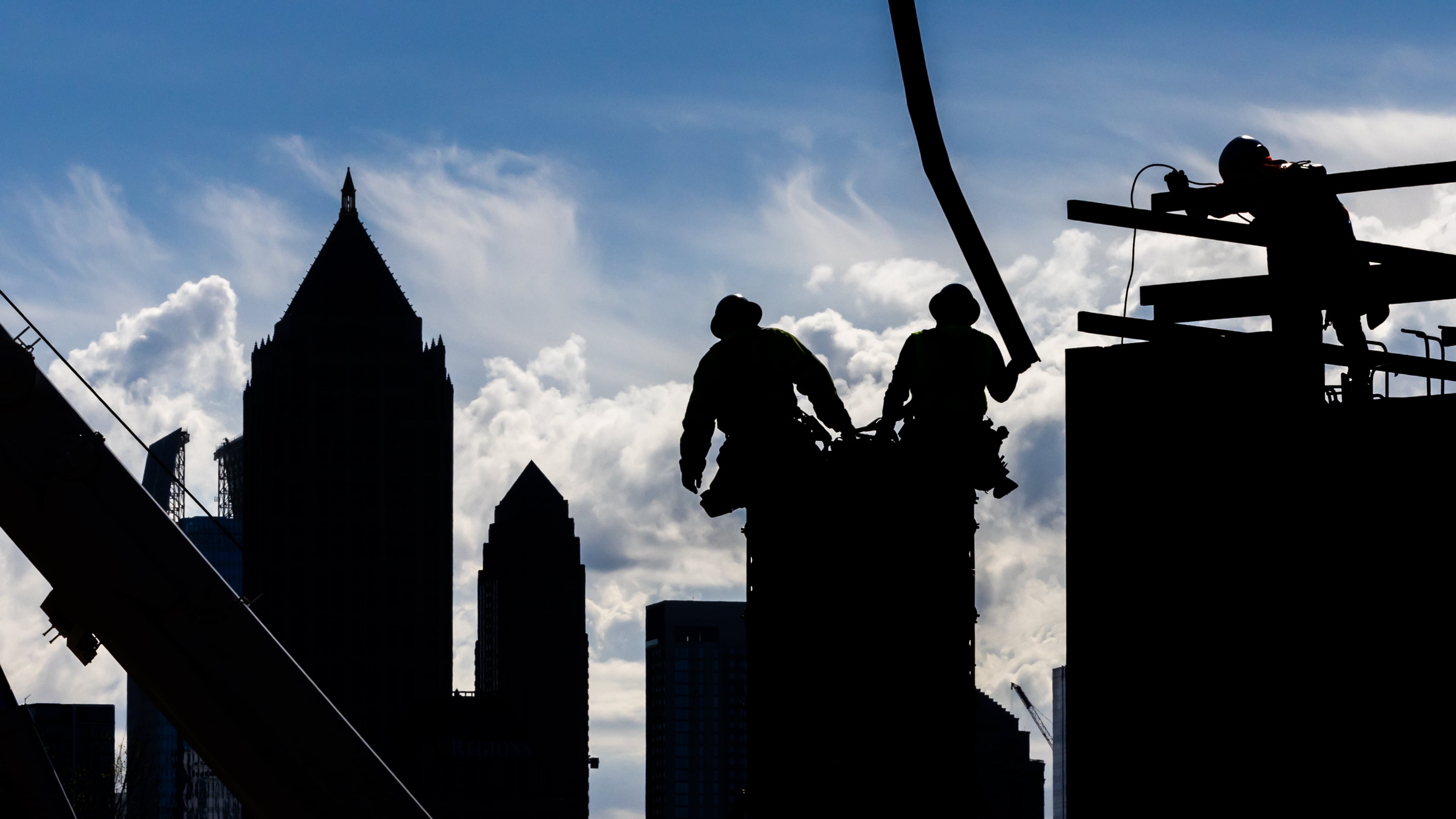
One year stands out among the rest when discussing watershed moments for Atlanta: 1996.
Playing host to the Centennial Olympic Games thrust Atlanta into the international spotlight, dividing the city’s history into pre-Olympics and post-Olympics eras.
“It’s 30 years since we hosted the 1996 Centennial Olympic Games,” Mayor Andre Dickens said at a Fortune Workplace Innovation Summit last month. “And Atlanta is on the world stage again.”
As Atlanta prepares to play host to the world again with eight World Cup matches, much has changed if you haven’t been here in three decades. Atlanta, both the city and region, is bigger, more diverse, with a wealthier and a better-educated population, according to U.S. Census data.
The Atlanta area had 10 Fortune 500 companies before the Olympics. That figure has grown to 16 today.
Much of the physical landscape has also changed. The hulking pit in downtown long called the Gulch is now rising as Centennial Yards, a $5 billion minicity of glass high-rise hotels and apartments and an entertainment district. Atlanta Stadium — or Mercedes-Benz Stadium as it’s known when the World Cup isn’t in town — is a $1.6 billion sports cathedral internationally renowned for its camera aperture-like opening roof.

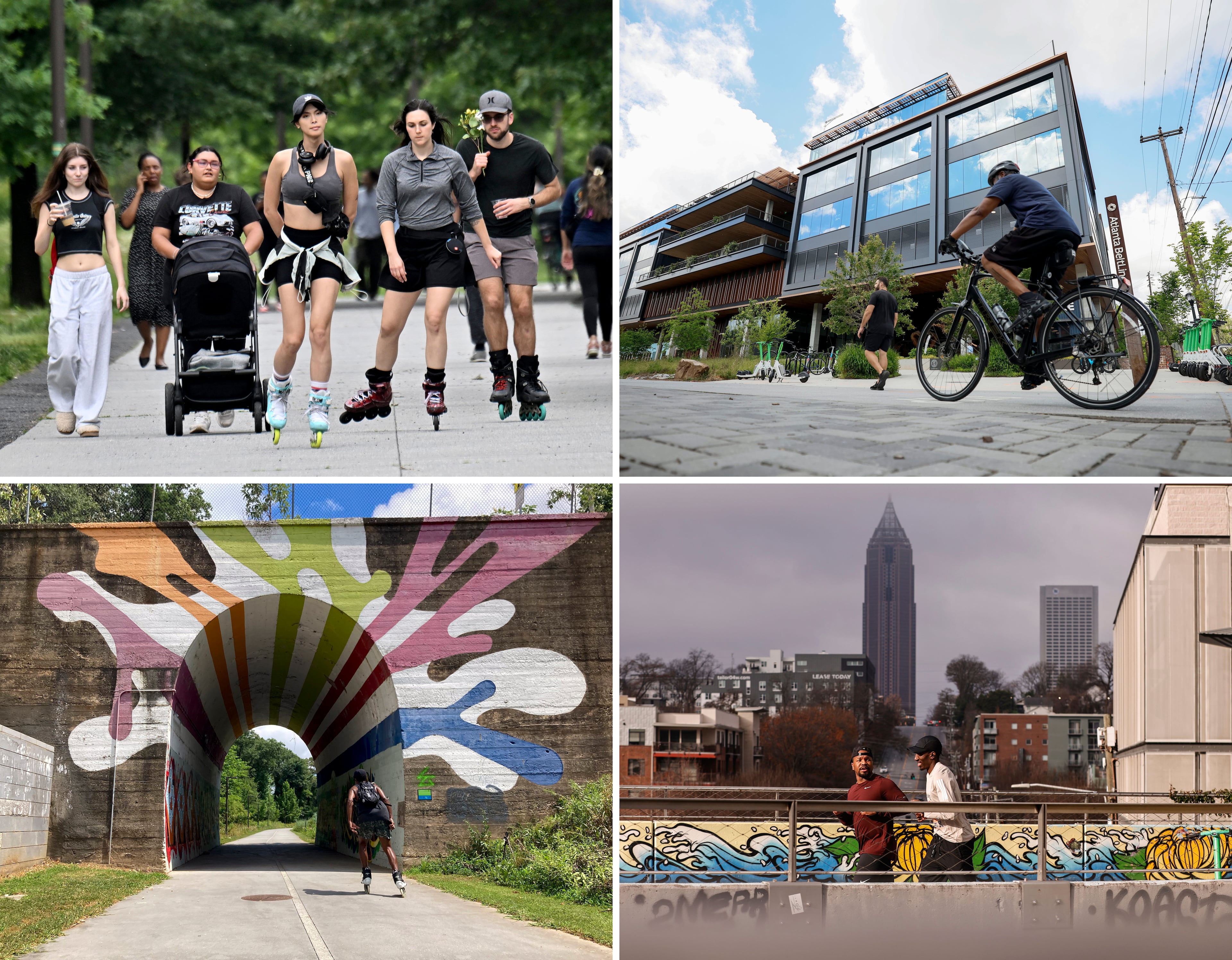
The Beltline has transformed empty rail lines into a verdant loop of trails and new development around the city core.
“The Olympics put us on the global stage,” Katie Kirkpatrick, president and CEO of the Metro Atlanta Chamber, said at a World Affairs Council of Atlanta event in January. “The World Cup will actually raise us to the top and remind everyone what a wonderful place this has transformed into.”
While the story of the World Cup’s influence has yet to be written, here are some ways in which the Atlanta of today looks different from its pre-Olympics period.
What was built?
Many features synonymous with urban Atlanta did not exist before the Olympics.
Centennial Olympic Park, built for the Games, was largely an industrial site. The Olympic Stadium that became Turner Field — and later Center Parc Stadium for Georgia State University — started as a track and field facility. Nearly all of Georgia Tech’s apartment-style residence halls were built specifically to house Olympic athletes.

That extends to many of the city’s most famous attractions built across downtown in the wake of the 1996 games, including America’s largest aquarium.
“Frankly, the Georgia Aquarium may not have been built right here … without the Atlanta Olympics,” A.J. Robinson, president and CEO of downtown civic organization Central Atlanta Progress, said in March.
He could have said the same thing for nearly all of its neighboring museums and venues, ranging from the World of Coca-Cola to the National Center for Civic and Human Rights.
Since 1996, billions have been invested into attractions downtown. But downtown is again becoming a place for residents.
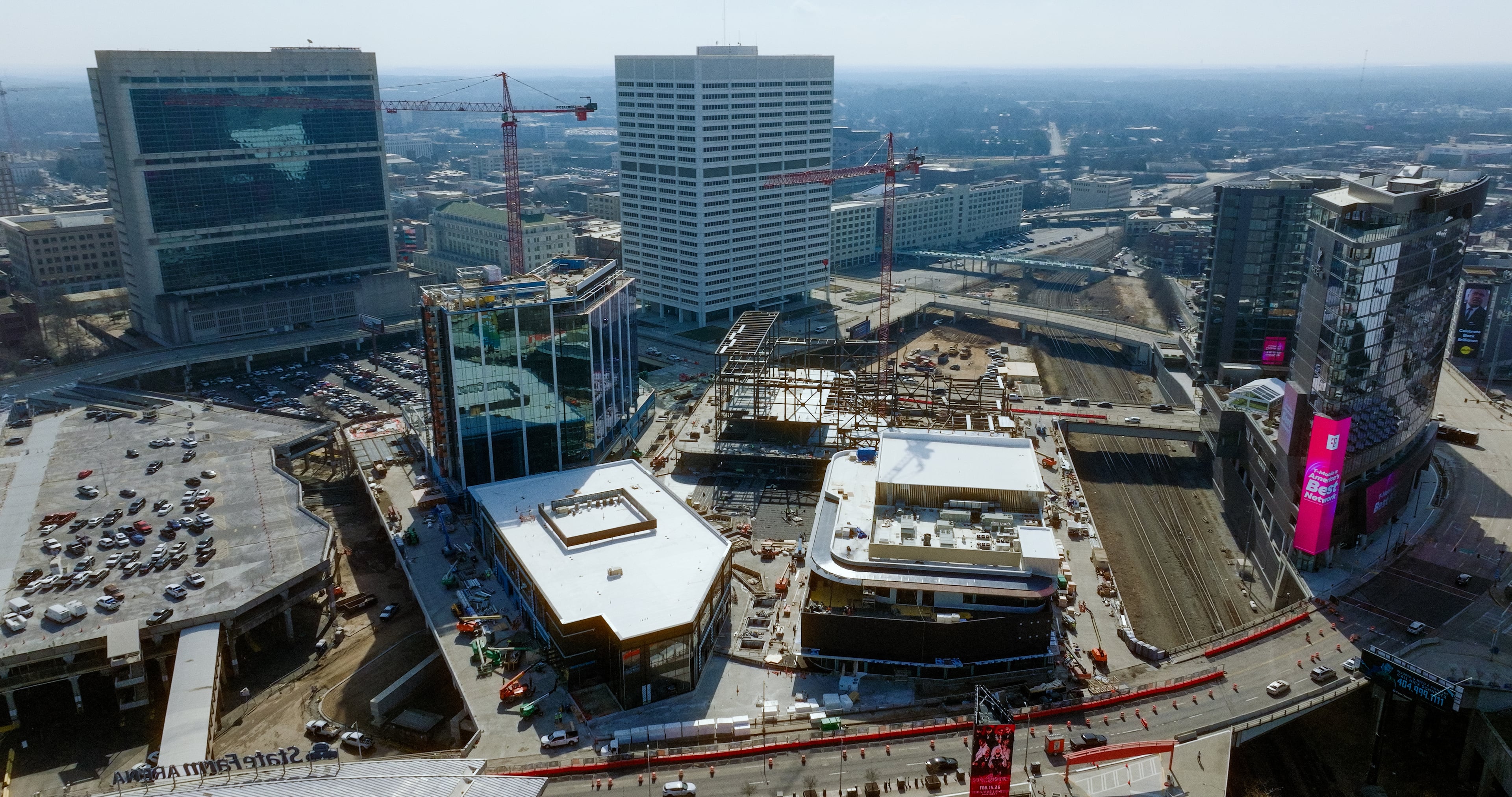
Centennial Yards, on the doorstep of Mercedes-Benz Stadium, and which is still under development, is poised to include thousands of apartments alongside multiple hotels and entertainment venues. A 10-block cluster of century-old buildings is also being revamped as restaurants, offices and residential lofts.
If you remember CNN Center, well, it’s being reinvented as something else, as is Underground Atlanta.
Renamed and stylized as “The CTR,” CNN’s former media headquarters recently opened a revamped food hall and atrium and is pursuing plans to convert some of its unused office towers into apartments and a hotel. Underground Atlanta, which has reinvited itself multiple times over the decades, is about 70% leased with a focus on nightlife.
Olympics visitors might not remember what Midtown used to be, but it’s now a thriving center for commerce, culture and living. Since 2018, 53 projects mostly consisting of high-rises have been completed in the core of Midtown, according to numbers from business and civic group Midtown Alliance. The neighborhood has also surpassed downtown and Buckhead as Atlanta’s premier office district.
Lasting infrastructure
Hartsfield-Jackson Atlanta International Airport made hosting worldwide events possible. Kirkpatrick said that’s thanks to the foresights of city leaders decades prior.
“(Former Atlanta Mayor) Maynard Jackson had the vision of taking our airport from a domestic hub to an international hub (in the 1970s),” she said. “That was a critical decision elevating this region on a global stage.”
The airport has only expanded and grown its stature since, entrenching itself as the world’s busiest. It now has its second door to the world in the new international terminal named in honor of Jackson.

Many of the buildings erected for the Olympics remain standing, which Kirkpatrick said has allowed the city and its developers to focus on other forms of urban renewal.
“The lovely thing about World Cup is we don’t have to build a stadium. We don’t have to build housing for athletes,” she said.
The demands of broadcasting the Olympics around the globe also led to hundreds of miles of fiber-optic cables being installed across the city. Mark Vitner, chief economist at Piedmont Crescent Capital, said that “helped Atlanta as the internet was built out.”
The Atlanta area is now known as “Transaction Alley,” processing the bulk of American digital payments. It’s also a reason why the region became so attractive to the data center industry after the artificial intelligence boom.
Urban and suburban growth
Atlanta was already a fast-growing part of the U.S. before 1996.
“The Olympics really catapulted the awareness of Atlanta well above many of its competitors,” Vitner said. “It was Atlanta’s coming out party.”
Populations across the city, Fulton County and the greater metro region all ballooned from 1996 to 2024, according to Census data.
Suburban and exurban growth was especially unmatched. By 2024, the 29-county metro region was approaching 6.3 million residents, a 65% increase from 1996. Population growth in Atlanta proper and Fulton County are both more muted by comparison — increasing 24% and 44%, respectively.
Peering beneath the numbers, the demographic shift is also stark. The city’s Black population decreased, while some surrounding counties — such as Clayton County — shifted from majority white to overwhelmingly African American.
In the lead-up to the Olympics, the city razed many of its huge public housing projects to make way for mixed-income developments, an affordable housing approach now adopted by much of the country. Other urban renewal efforts, ranging from the Beltline to luxury high-rises, also contributed to gentrification.
By 2024, the city’s demographic makeup featured a higher proportion of Latino and Asian groups, and the number of immigrants is also significantly higher throughout the region. The number of people with college degrees has also grown.
Vitner said the Olympics turned Atlanta into a true “gateway city” for immigrants and migrants, a reputation the World Cup will likely further solidify. The only U.S. cities to host both a Summer Olympics and the World Cup are Atlanta and Los Angeles, and all population growth trends point to the Sunbelt.
“Atlanta is the hub of the fastest-growing part of the country, which is the Southeast U.S.,” Vitner said. “The blessing of geography and the first-mover advantage in terms of creating a hub airport, those are the things that made Atlanta what it is today.”