How is affordable housing changing in Atlanta? Just look at Bowen Homes.
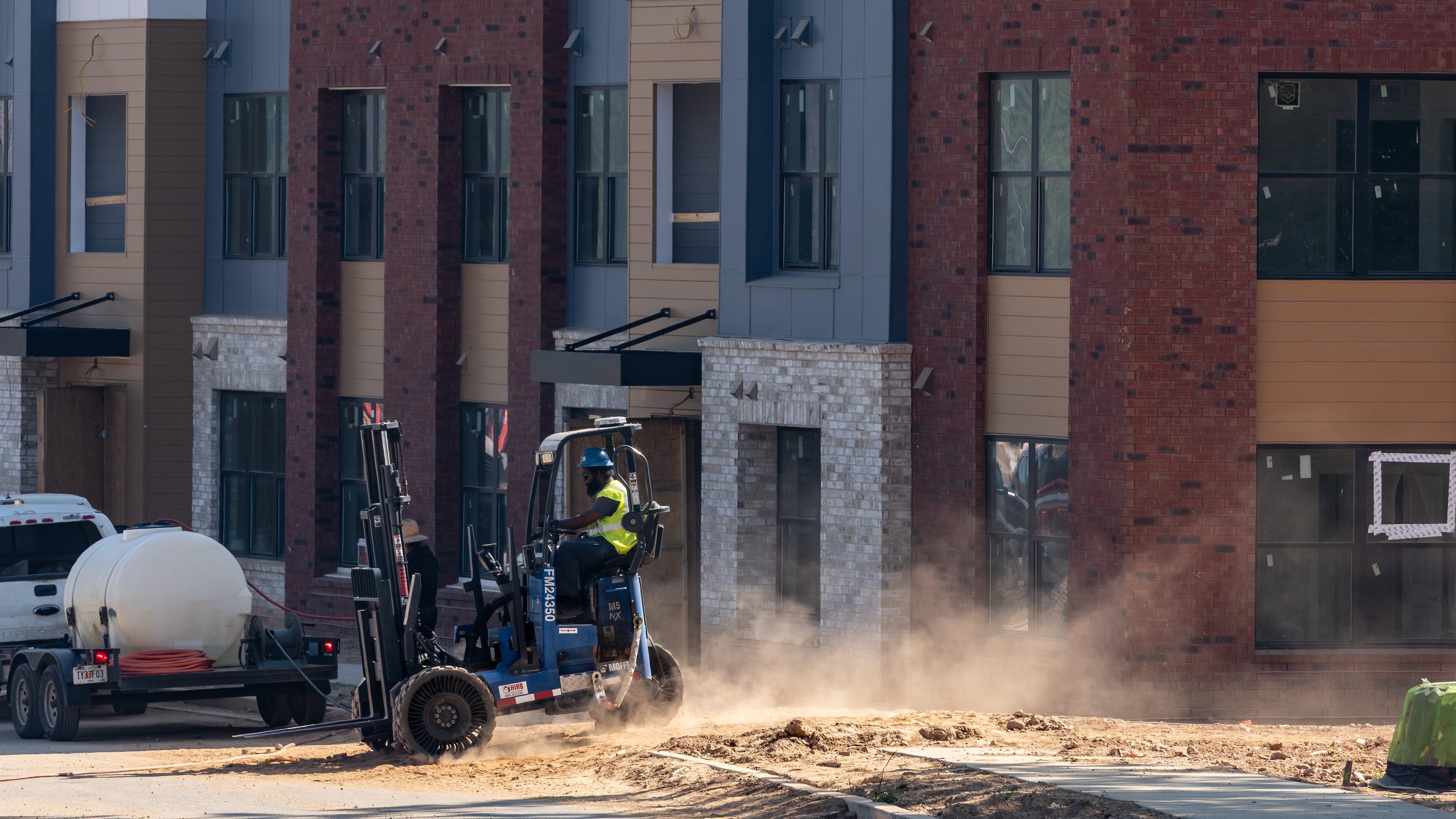

“It was a beautiful place to live,” Gregory Williamson said while walking a flat, dusty plat he used to call home decades ago.
The array of 650 orange-brick apartments that once stood here remains etched into his memory. He raised his family in one of the apartments from the late 1980s to early 2000s. He still reminisces on the good times, coaching youth sports and recruiting the talents of neighborhood kids for his car wash across the street.
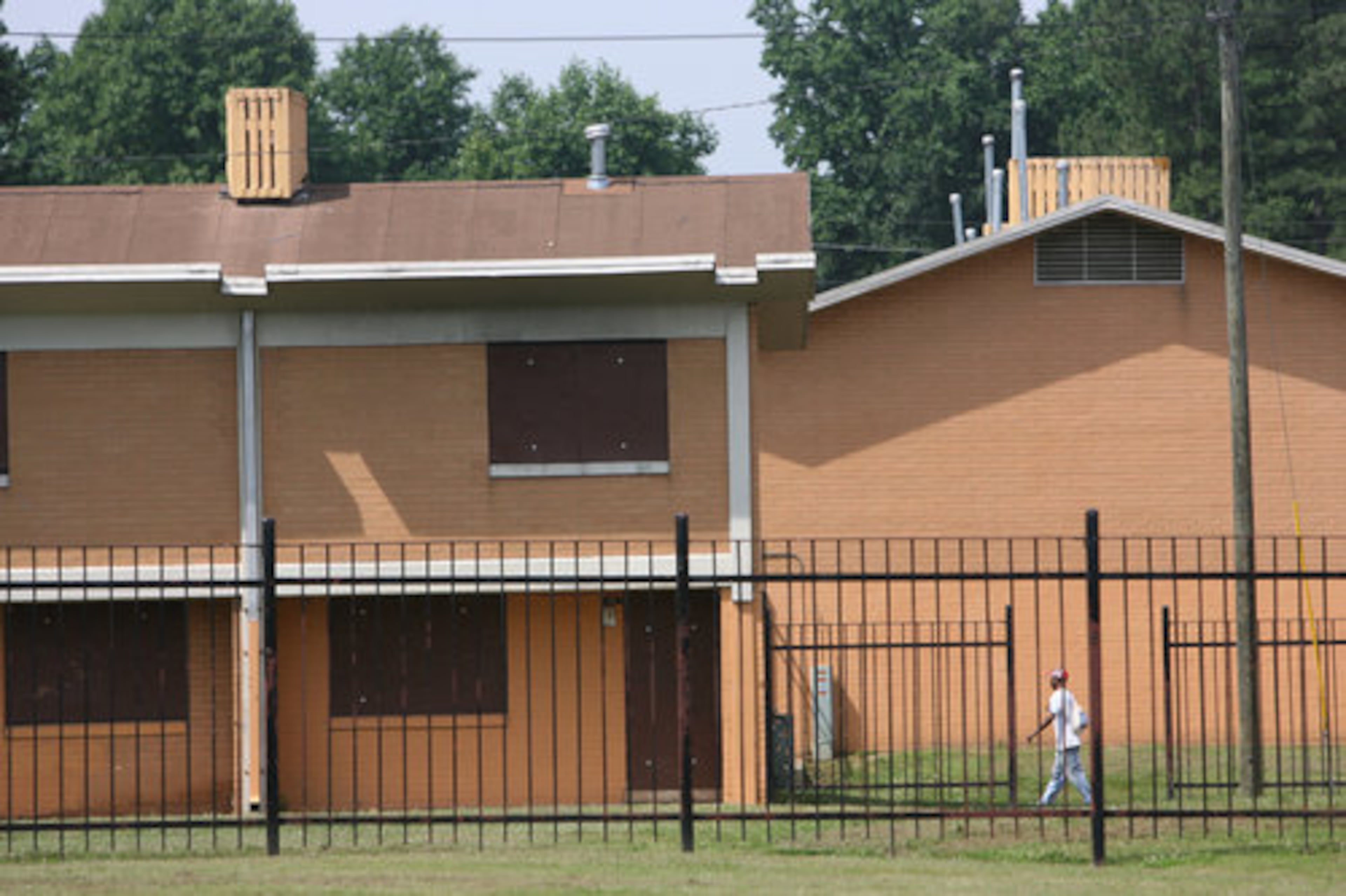
The community was called Bowen Homes, the last major public housing project built in Atlanta. Designed to replace a different housing community that fell into squalor, Bowen Homes would go on to face the same fate, epitomizing the pitfalls of how cities used to approach government-assisted housing.
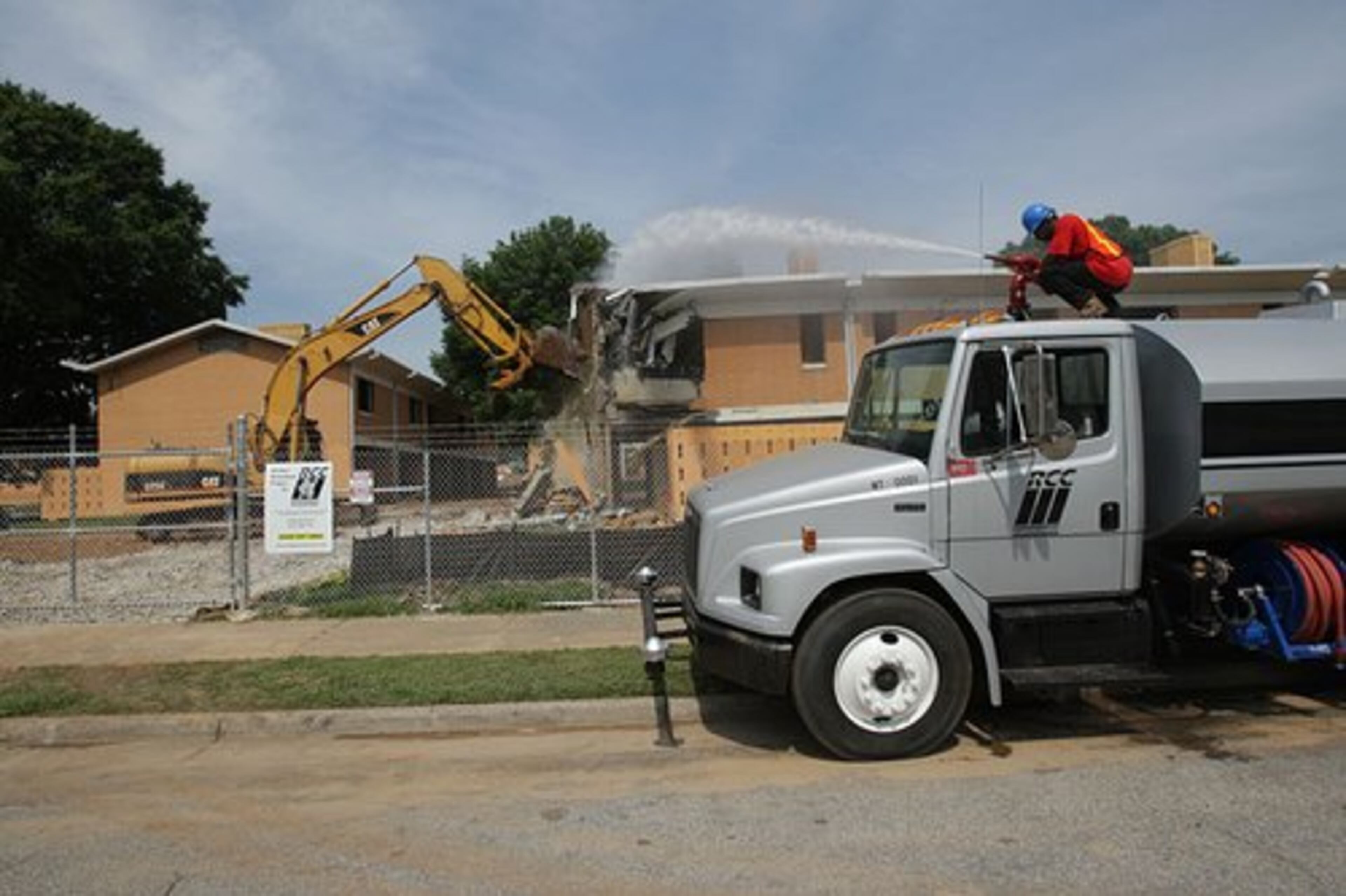
Bowen Homes went through a decline Williamson saw in slow motion, where a project intended to safely house the city’s downtrodden deteriorated into a crime-ridden complex that was demolished in 2009.
“As the problems got worse, there wasn’t any help,” Williamson said. “It’s like they just gave up on the project. It was abandoned.”
Now, Williamson is playing a part in a large-scale effort to remake the site where his home once stood.

He is among the hundreds of construction workers and contractors redeveloping the former public housing site in northwest Atlanta. Helmed by the city and a pair of developers, the $700 million-plus effort is slated to finish its first of a dozen construction phases by the end of this year, and subsequent phases are on the cusp of breaking ground.
The project is designed to eventually include 2,000 apartments, townhomes and single-family houses, offering a mix of subsidized and market-rate options. The affordable housing concept called mixed-income housing, which aims to avoid clustering poverty, is a model often credited to Atlanta.
“Atlanta has been known nationally for coming up with innovative mixed-income housing models that have proven themselves over time,” said Vincent Bennett, president and CEO of McCormack Baron Salazar, a St. Louis-based firm that is one of the project’s two developers.
The other developer is The Benoit Group, which is based in Sandy Springs. Eddy Benoit, the group’s president and CEO, called the project “a diamond in the rough.”
He said it’s important to have local stakeholders invested in a project of this scope, especially because the city owns the land and is overseeing the redevelopment. But with a project this big, having multiple developers and government backing is also critical, he said.
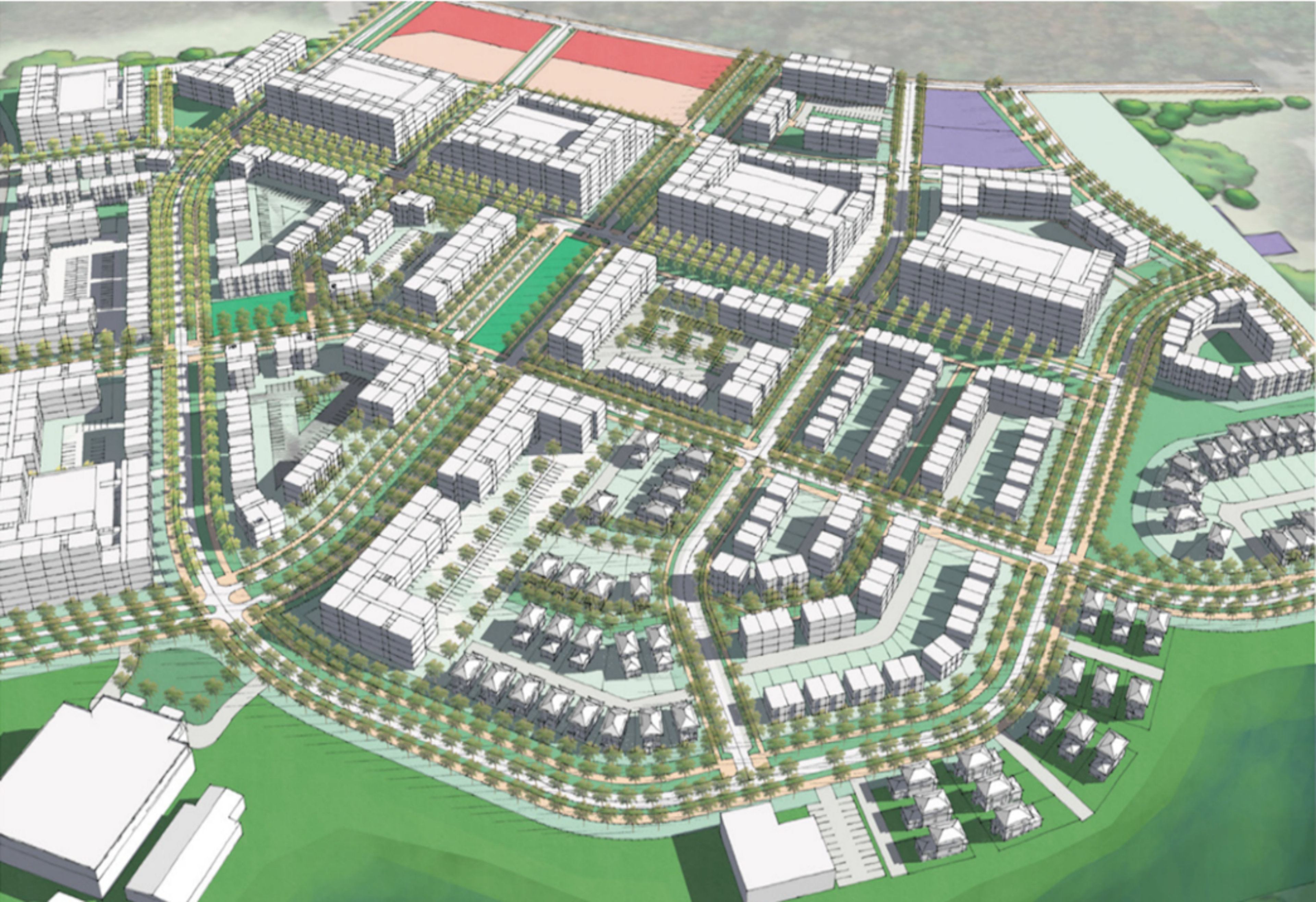
The Bowen Homes redevelopment, which has yet to receive a permanent name, is on an unmatched scale in Atlanta. It aims to avoid repeating history by creating a self-sustaining neighborhood rather than an island of poverty. But it’s just one cog in the city’s greater affordable housing machine.
Terri Lee, president and CEO of Atlanta Housing, said the mixed-income model that will redefine Bowen Homes is being replicated and iterated upon across the city.
“Bowen is an anchor for that particular neighborhood,” she said. “But we’re trying to lift up housing in every corridor that we possibly can.”
Steady decline
Atlanta built Bowen Homes in 1964 to address a mass migration from another part of the city.
The Buttermilk Bottom housing project in Old Fourth Ward, a predominantly Black community, had endured the Great Atlanta Fire of 1917. But it slowly devolved into a cluster of dilapidated shacks and crumbling infrastructure.
It was torn down in the early 1960s to make way for the Atlanta Civic Center and other urban renewal efforts, displacing roughly 4,000 residents. They were relocated about 7 miles west to Bowen Homes, which was nestled between Donald Lee Hollowell Parkway and James Jackson Parkway just inside I-285.
“What Bowen was supposed to be in 1964, where it was supposed to be transformational, it really missed the mark,” Benoit said. “Because all they did was move the people from Buttermilk Bottom over here, and then it was just them.”
Bowen Homes was representative of how cities like Atlanta used to design public housing projects. It included rows of identical residential buildings, a library, daycare and elementary school, but it was isolated from other commerce hubs in the city.
Williamson, who now helps run We Haul Junk Removal, said many of his neighbors when he lived at Bowen Homes knew nothing but the housing project. It was a community that primarily looked inward.
“They were there all their life,” he said. “If they go blind, they can walk this street because they’ve been here for life.”
Tragedy struck in 1980 when a gas-fired boiler exploded at the community’s daycare nursery, killing four preschool children and a teacher.
The community’s reputation further declined over the decades. By 2008, the year before it was razed, Atlanta Housing said the 650 apartments became one of the city’s most concentrated crime zones. In just a six-month period, it tallied 168 violent crimes, including five murders.
The neighborhood was a common backdrop in rap music videos, including T.I.’s “What Up, What’s Haapnin’” and Outkast’s “B.O.B. (Bombs Over Baghdad).“
Several rappers grew up in Bowen Homes, including the members of the Shop Boyz and the late Shawty Lo, an early pioneer of a Southern hip-hop style that morphed into trap music. Boxer Evander Holyfield also grew up in Bowen Homes.
Williamson said the community he valued when he first moved to Bowen Homes steadily fell apart as disinvestment mounted. Drugs, crime and gang activity filled the void and became the neighborhood’s defining feature. He and his family moved away in 2003.
“Bowen Homes started good,” Williamson said. “It just finished bad.”
Struggle and opportunity
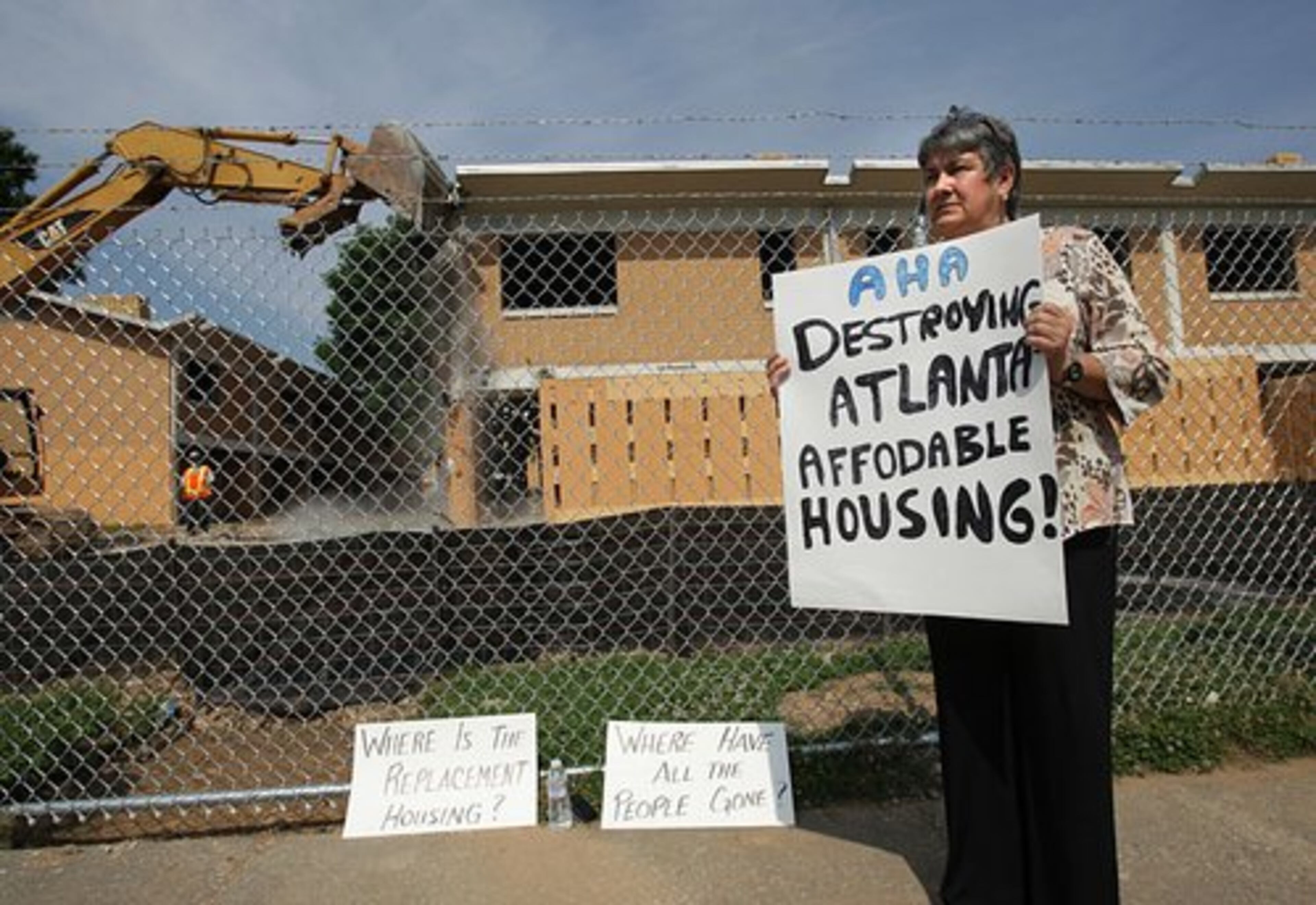
Public housing demolition isn’t without its controversies.
Each time hundreds of homes are torn down, legacy residents are displaced and thrust into housing uncertainty, often sparking criticism from housing advocates. It happened in the wake of the demise of another housing project, Techwood Homes, shortly before the 1996 Centennial Olympic Games. And it happened when Bowen Homes was razed in 2009.
The projects that replaced them have also sometimes struggled to persevere. The Atlanta Civic Center — which replaced Buttermilk Bottom — found itself on the chopping block after it closed in 2014 because of dwindling attendance among convention spaces.
It is undergoing a housing redo with city officials in December, breaking ground on the first phase of a $1 billion redevelopment. It is slated to eventually include 1,500 mixed-income apartments with retail, offices, a hotel and a grocery store.
Lee described Atlanta as “an innovation lab” when it comes to affordable housing, which she said is underpinned by an “understanding that everyone has a right to decent, safe and sanitary housing.”
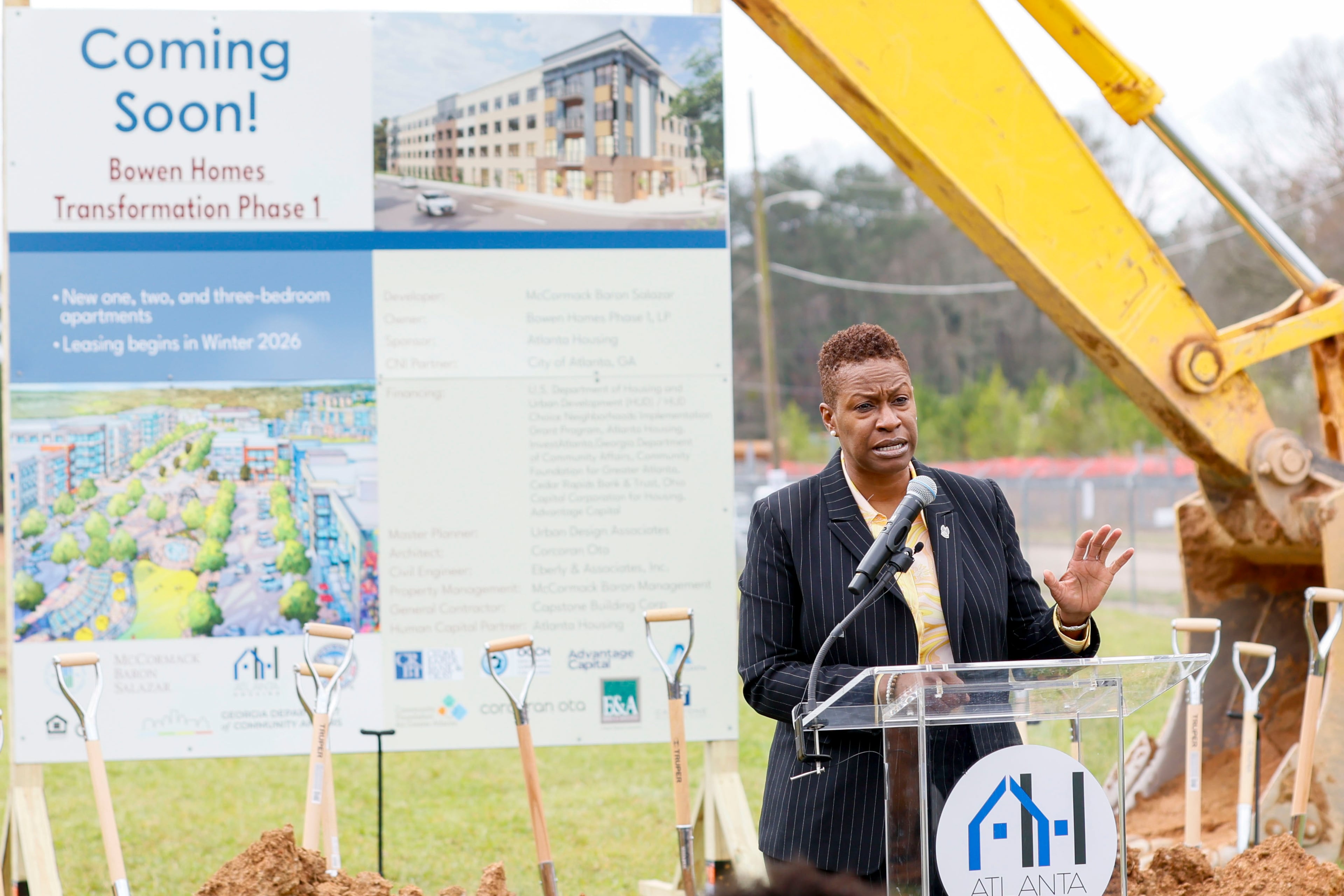
The projects are made financially feasible through a combination of federal grants, city financing and private dollars.
Bowen Homes’ redevelopment is supported by a $40 million U.S. Department of Housing and Urban Development Choice Neighborhoods grant. It was matched by another $88 million between Atlanta Housing and Invest Atlanta, the city’s economic development arm.
The project’s first phase, which includes 151 units split among townhomes and apartments, includes a range of income requirements for residents to qualify.
It features 48 units for people earning no more than 30% of the area median income, or $34,250 for a family of four. There will be 49 units for people earning no more than 60% of the area median income, or $68,520 for a family of four; and 44 market-rate units with another 10 workforce units.
Later phases will include single-family homes made available to purchase, which Benoit described as an effort to expand homeownership opportunities while increasing housing options.

“You’ll have no idea which one is rental and which one is homeowner,” Benoit said. “You’ll have no idea whether this is for low to moderate income or whether you and I live in one of those (at market price).”
Just the beginning
Construction on the first phase of Bowen Homes’ next life was in full swing in late April when The Atlanta Journal-Constitution toured the site.
Officials broke ground in March 2025, and roughly a year later, the six buildings that comprise the first phase were taking shape. Roofs were being installed, interior appliances added to units and underground infrastructure was being put in place elsewhere on the site, priming the pump for subsequent construction phases.
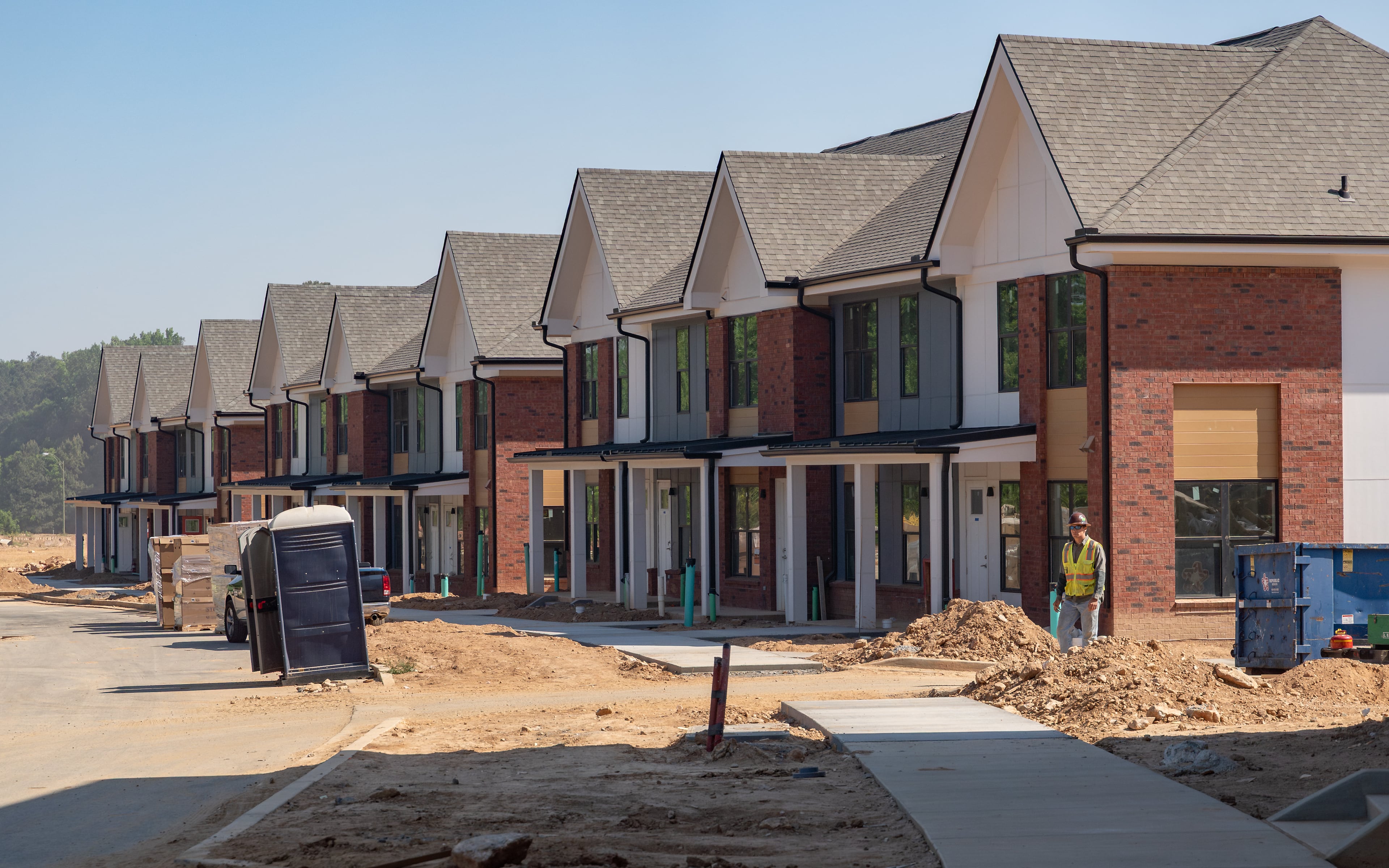
Bennett, the head of McCormack Baron, said it’s a dance of coordination between delivering the current phase while teeing up the next ground-breaking. McCormack Baron and the Benoit Group are handling alternating phases.
“One of the advantages of being able to break up into these phases is to close the financing gap,” Bennett said.
Benoit said he expects to begin work on the second phase, which includes 112 units, over the summer. It’s feasible for phases three and four to break ground by the end of the year “if nothing changes with this economy,” he added.
The first six phases, which will include 756 units spread across roughly a third of the 74-acre site, are supported by the federal Choice Neighborhoods grant, so they feature a higher proportion of subsidized units.
The rest of the site plan brings the housing total to 2,000 units. In total, about 38% will be reserved for residents at rents below market rate, according to Atlanta Housing. The plan also includes green spaces, a grocery store, retail shops and 200 single-family houses available for purchase.
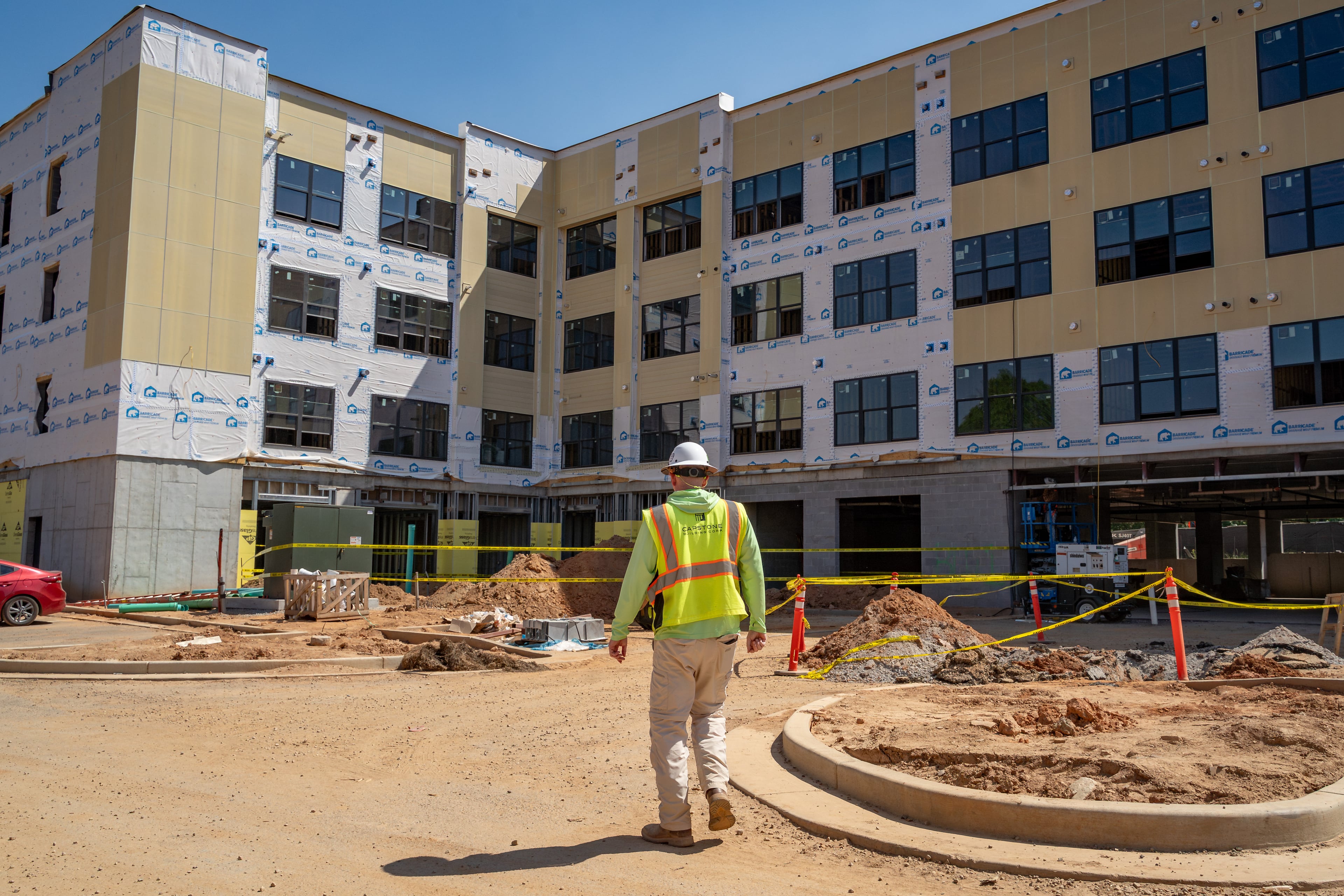
Lee said Atlanta Housing has committed more than $163 million to 21 developments under construction across the city, including Bowen Homes. She said those public investments aim to spur additional private development projects in their wake.
One example near Bowen Homes is The Remington, a senior apartment complex across James Jackson Parkway that The Benoit Group finished in 2018. Many of its residents used to live in Bowen Homes and are waiting to move into the new apartments once complete, Benoit said.
The rush of activity is an effort that reclaims Bowen Homes, Lee said, fulfilling the mission it set out to accomplish decades ago.
“Our goal is to use that housing — once we have people in decent, safe and sound housing — to be able to lift them to a different level of economic prosperity,” Lee said. “It’s so that we can give people a hand up and not a hand out.”