Sphere, parking and security upgrades ready at Atlanta airport for World Cup


There’s nothing like a deadline.
The upcoming FIFA World Cup has served as one for infrastructure upgrades across Atlanta, and Hartsfield-Jackson Atlanta International Airport is no exception.
The Metro Atlanta Chamber projects some 300,000 visitors could descend upon the city across its eight matches — many through the world’s busiest airport, which was key to the city’s bid to host soccer matches in the first place.
“When we go sell an event, we start with the airport. The first picture we put up is the airport, because it is a differentiator between us and everybody else,” 2026 Chamber Board Chair Rich McKay said at an Atlanta Journal-Constitution editorial board meeting in October.
Airport General Manager Ricky Smith said Hartsfield-Jackson has “been working very closely with FIFA to make sure that we’re meeting their needs.”
Travelers at the Atlanta airport will notice an interactive soccer field installation on Concourse F as part of the airport’s “Gates to Goals” marketing campaign, and much more branding elsewhere.
Security-wise, Smith noted they are working with law enforcement to “make sure that we have an enhanced presence.”
The airport’s thousands of cameras are now layered with AI technology to respond to incidents faster, he said. It has installed additional physical barriers in front of the terminals to protect from cars veering off the roadway, he said. That has happened at other airports including twice in Detroit this year.
And then there are other bigger projects being pushed through just in time for the matches.

“The World Cup is not just a month and a half long worth of events and projects. It is an opportunity,” said Atlanta Mayor Andre Dickens at an event Tuesday unveiling one of those — a new 14-foot digital sphere in the airport’s atrium.
“It gives us a deadline, and those benefits after that deadline stays right here.”
Unlike when the then-Hartsfield Atlanta International Airport scrambled to get itself ready to host the 1996 Olympics, Hartsfield-Jackson is now the world’s busiest airport with far more experience handling high volumes.
But that doesn’t mean it hasn’t been rushing to finish some things in time for the first match June 15.
Here’s what’s new:
A ‘sphere’ in the atrium
The airport unveiled a new, $3.26 million, 14-foot-tall “digital sphere” in its domestic terminal atrium Tuesday, just in time for the World Cup.
It’s a permanent installation funded through the airport’s budget that replaces the familiar atrium clock tower, which was taken down in February after more than three decades on the spot.
This sphere — dubbed Atlas — will serve as a way to engage passengers, communicate emergency information and make money. Officials expect it will eventually pay for itself through digital advertising.

Andrew Yi, a digital experiences project manager with Capital Signs, which designed the structure, said the team experimented with different configurations, including a sphere emerging from the ground like the Las Vegas event venue.
But they opted to elevate it with pillars to experiment with using the “space of the atrium, so thinking about how it reflects on the (glass) ceiling at night time.”
Dickens said at the unveiling that one of the first ideas he brought to Hartsfield-Jackson after the World Cup announcement was “finding a new way for this airport to welcome the world.”
What they ended up with is now the “first digital sphere in a United States airport,” he said. “We got this one first.”
New security screening tech
Changes have come to Atlanta’s Transportation Security Administration screening lanes in time for the tournament.
Agilent Technologies won a TSA bid to develop and produce brand new technology that can screen liquids, solids, gels, powders and creams. Its “Insight BRT” has been deployed to most of the country’s World Cup host cities, including Atlanta.
It “truly is a world first,” Geoff Winkett, Agilent’s vice president and general manager of the Spectroscopy and Vacuum Division, told the AJC.
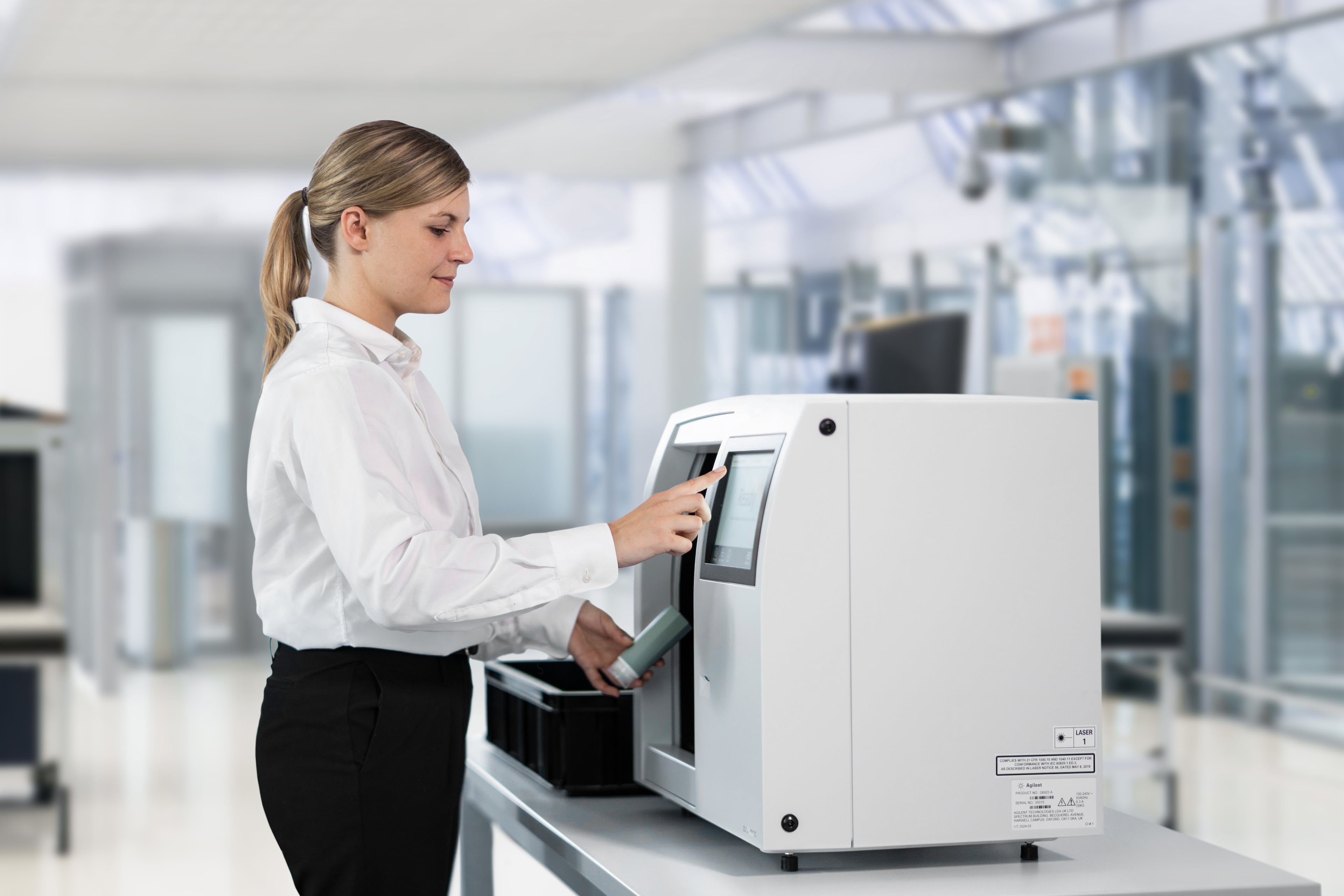
“The capability of this equipment is that it scans through the container, so the operator doesn’t need to open the container.”
Results come “in a matter of seconds,” he said.
It relies on “raman spectroscopy” traditionally used in chemical analysis and streamlines what is now being done by many different tests at airport screening lanes, he said, including liquid-only scanners, trace detection or swabbing technology and powder test kits.
Insight BRT could potentially “provide an opportunity” to lift some of the TSA’s liquid and gel size restrictions someday, he said.
The upgrade comes after the airport also already saw new passenger screening machines installed this spring — another TSA upgrade focused first on World Cup host cities.
New Concourse D gates
The $1.4 billion project to completely remake the airport’s narrowest concourse wasn’t triggered by the World Cup. The nearly seven-year project is about halfway done.
Led by the city and Delta Air Lines with federal funding support, the project will leave Concourse D about 40 feet wider with higher ceilings and new restrooms.
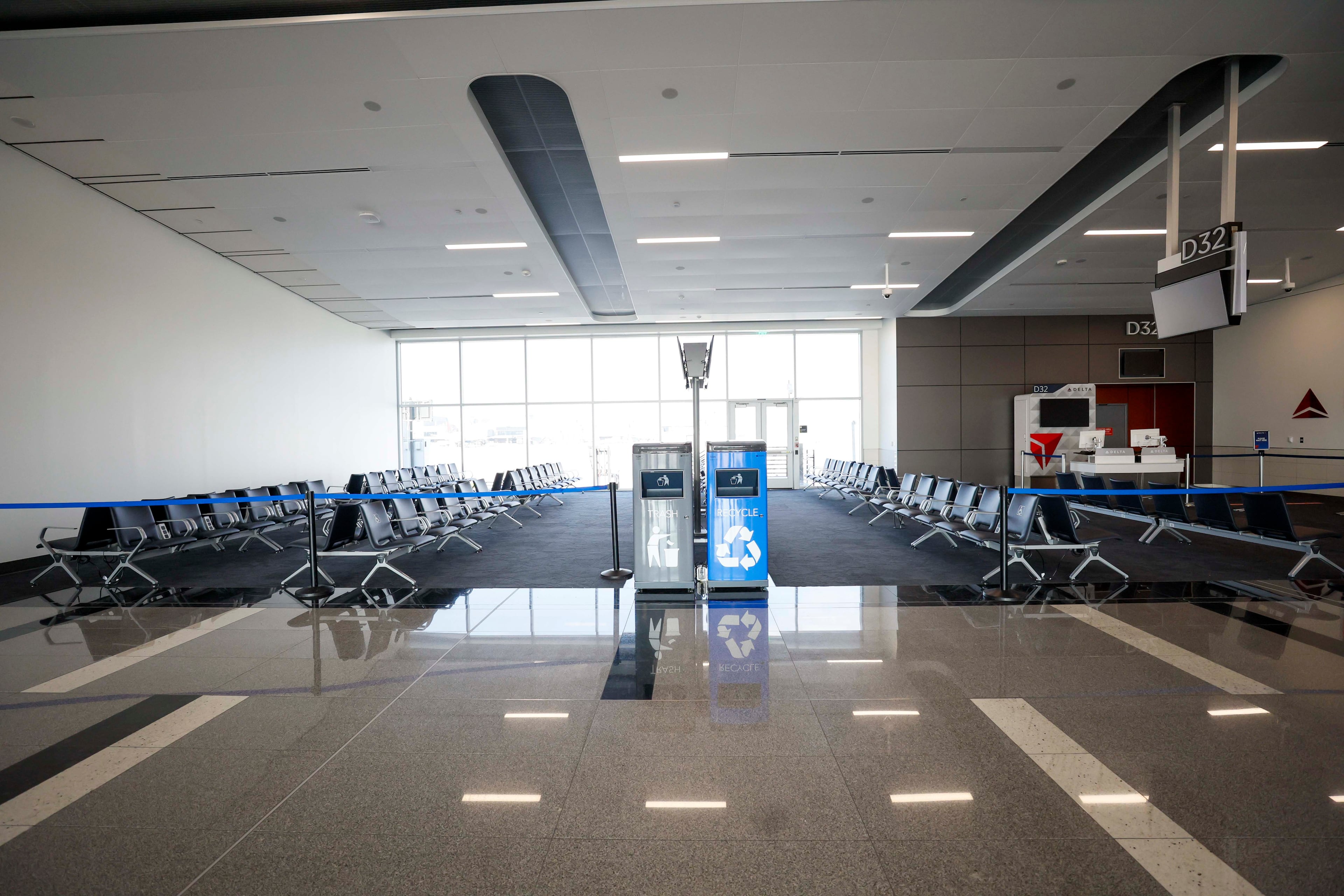
The first new gates, which were expanded using modular construction, were unveiled last year.
On Wednesday three more gates will open just in time for the tournament, but years of work lie ahead.
The next new round of gates will go public next spring, and the overall project is scheduled to finish in the summer of 2029.
New MARTA fare gates
The airport’s MARTA station’s fare gate and payment system has been upgraded as part of a system-wide overhaul that’s been underway for months.

While not all stations have finished installation, the airport has.
The system uses new Breeze cards with a chip, but also allows for tap-to-pay with chip credit cards and virtual wallets directly at the fare gate.
The new parking deck
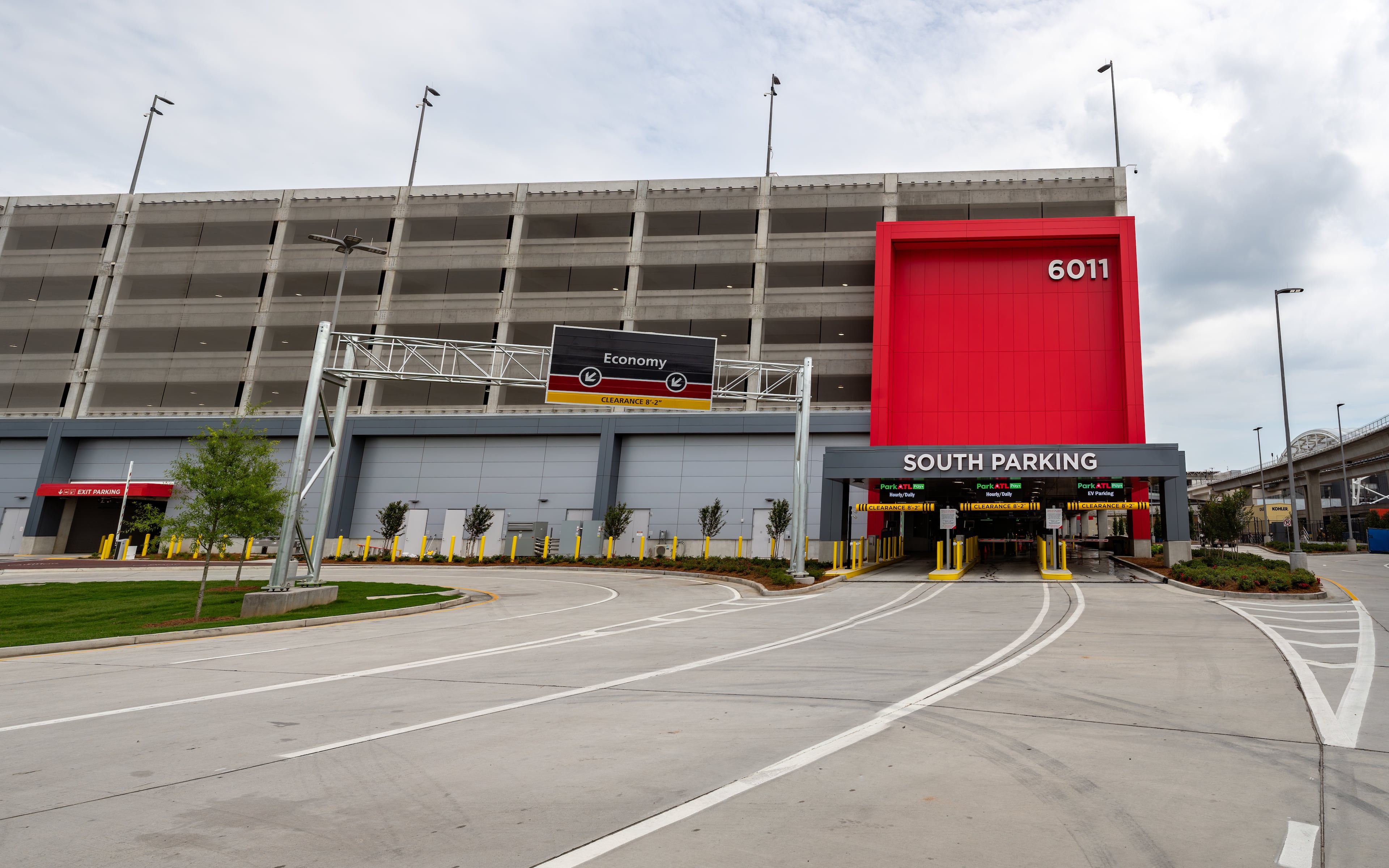
The new seven-level $441 million Domestic Terminal South Parking Deck pushed its construction timeline up to open in time for the World Cup.
It opened Monday with more than 6,400 covered spaces and nearly 1,200 surface spaces, electric vehicle charging and real-time parking spot availability calculations.
What’s not changing? The international shuttle.
Even though Atlanta’s World Cup bid highlighted the airport’s MARTA connection — with trains leaving from domestic baggage claim straight into downtown — that connectivity does not actually extend to the airport’s international terminal.
The airport’s terminal-to-terminal shuttle service is the only way for passengers who land at the international terminal with checked luggage to get to MARTA, but it sometimes requires long waits on the curb for a long ride around the airport’s perimeter.

The system has been the subject of passenger complaints and city official frustration for years.
Smith, the airport’s general manager, said it’s a complaint he hears often. “Every time I speak to a group that question comes up,” he said.
During World Cup the airport will “look at the need” to boost shuttle capacity during matches, he said, “and we will do that when it’s necessary.”
But, “What’s not in the cards is an infrastructure solution.”
Some sort of rail or larger project to replace the shuttle is “a $100-plus-million solution,” he said.
And it would certainly take longer than two weeks.