High Museum shines a light on an artist who protested, ‘I am not a designer’

Curator Monica Obniski has been thinking about an exhibition centered on Japanese-American artist Isamu Noguchi for a decade.
It made sense, said Obniski, the High Museum’s curator of decorative arts and design, to finally realize that dream with the opening Friday of “Isamu Noguchi: ‘I am not a designer,’” which celebrates a man with a complicated backstory and an equally complex relationship to the art and design worlds. After its Atlanta run, the exhibition will travel to the Peabody Essex Museum in Salem, Massachusetts, and then the Memorial Art Gallery of the University of Rochester in New York.
The comprehensive retrospective features more than 200 objects in the artist-designer’s remarkable career that spanned architecture, industrial design, sculpture, gardens and stage sets for performers including Martha Graham, Merce Cunningham, George Balanchine and composer John Cage.
But more importantly, for Atlanta audiences, this year is also the 50th anniversary of one of Noguchi’s most significant works, Playscapes, located near the intersection of 12th Street and Piedmont Avenue in Piedmont Park.
Playground for imaginations
A graphic, colorful playground designed to encourage discovery and engagement, Playscapes was a bicentennial gift made to the city under Mayor Maynard Jackson by the High Museum in 1976. Obniski describes it as an almost utopian time in Atlanta’s history. “There was, it seemed to me, a real kind of spirit of experimentation,” Obniski said. “There was a real appetite for trying new things.”
That semicentennial seemed the perfect time for Obniski’s Noguchi exhibition to finally happen. “I thought that more people needed to know that this artist-designed playground — the only one that’s built in the United States — is actually here in Atlanta. And so that was the kernel of the idea to do this design retrospective,” she said.
Massive undertaking of scholarship
Obniski traveled to Japan three times in preparation for the exhibit as well as across the country with exhibition co-curator Marin R. Sullivan. The exhibition includes a massive, nearly 400 page Rizzoli catalog with 22 essays on Noguchi’s work.

Lisa Cannon Taylor, who serves on both the High Museum and the Piedmont Park Conservancy board of directors, traveled with Obniski and a contingent of Atlanta art patrons to Japan as a prelude to the Noguchi retrospective. The group also visited Playscapes with Obniski. “And most of them, despite being deeply art savvy, had never visited it before,” Taylor said. “That says everything about how underappreciated and overdue for attention this treasure is.”
Atlanta may be feverishly spackling its potholes and spit-and-polishing the city in anticipation of the World Cup, but we already have treasures aplenty. “Having this real gem in a public park that’s accessible to everyone … is a wonderful asset for our city,” Piedmont Park Conservancy president and CEO Doug Widener said.
Who was Isamu Noguchi?
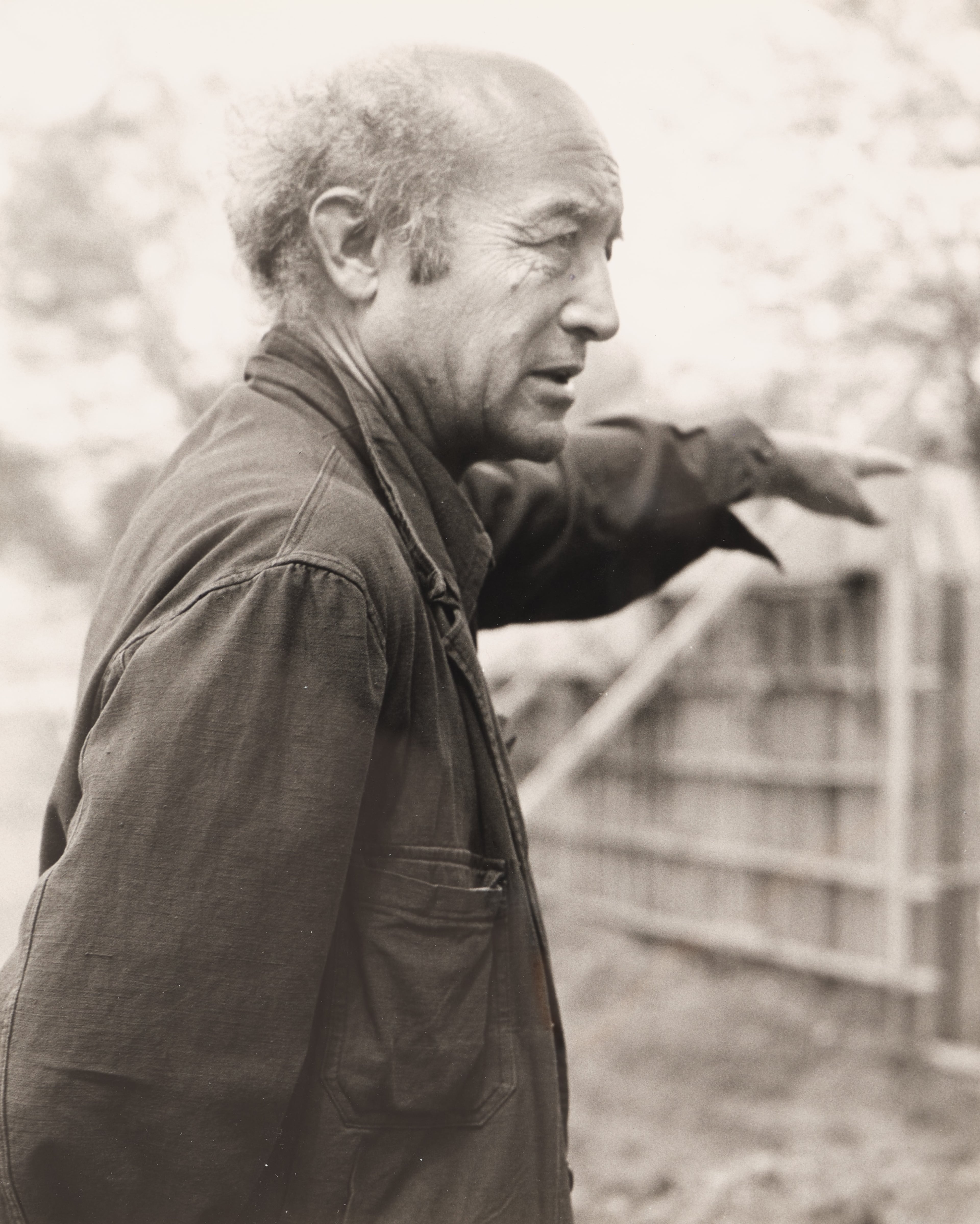
Born in America to a Japanese poet father and an American teacher mother, Noguchi (1904-1988) contended with feelings of being an outsider whether living with his mother as a child in Japan, or as a Japanese American back home.
“A lot has been written about his kind of tortured childhood,” said Obniski, “this idea that he was born in the U.S., but then grows up in Japan and has a really hard go because he’s with a single mom, who’s a white woman in a society that is not very inviting. So he moves around a lot. He doesn’t see his dad a lot.”
The isolation he experienced as a child, Obniski thinks, might have inspired Noguchi to embrace playgrounds, of which he designed many over the course of his career, as a kind of corrective to that unhappiness.
After high school in La Porte, Indiana, Noguchi attended Columbia University, where he experienced a creative epiphany after seeing Romanian sculptor Constantin Brancusi’s work in a New York exhibition. He moved to Paris in 1927 to work as Brancusi’s studio assistant, finding inspiration for his own artistic vision in Brancusi’s modernist, abstract work.

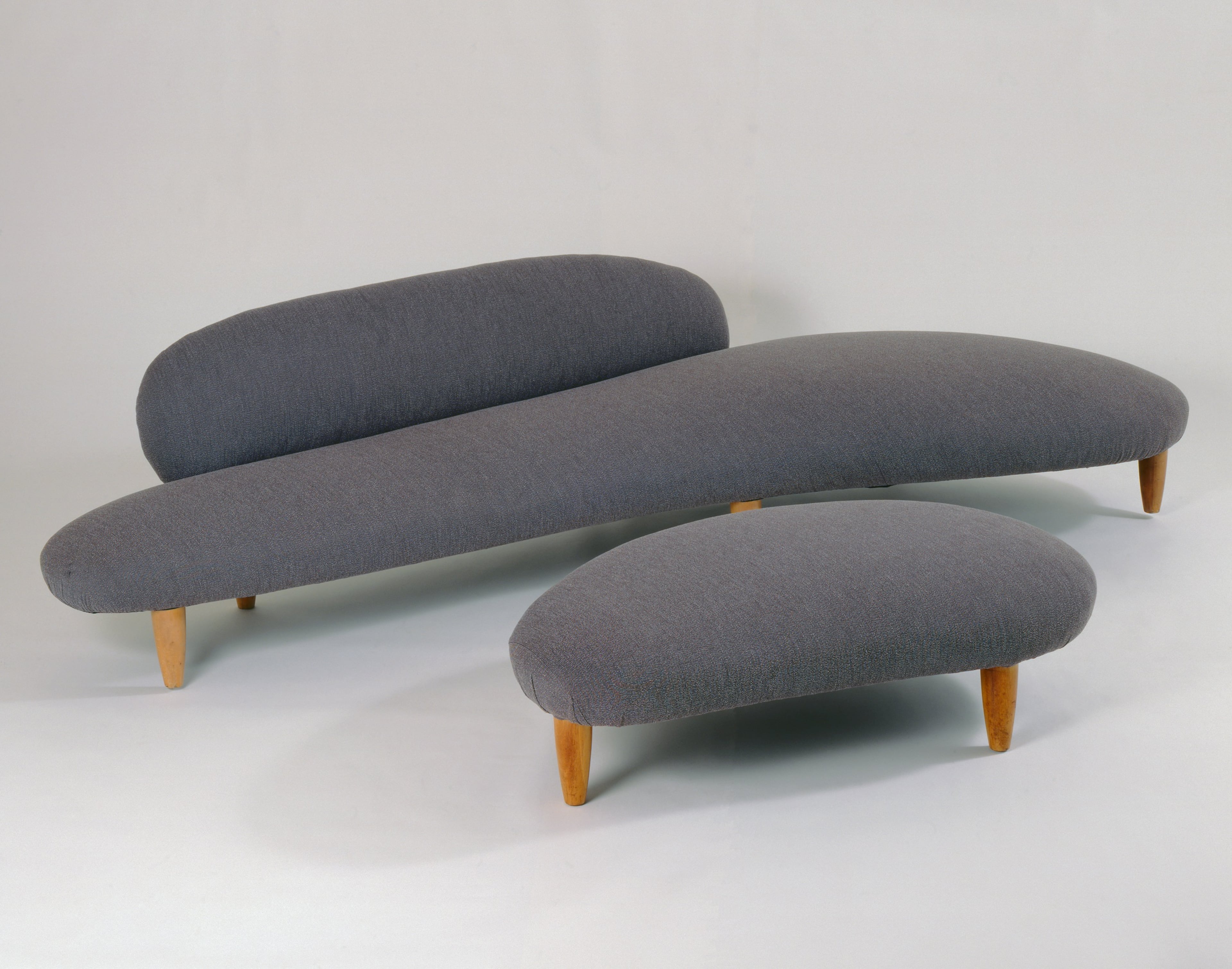
Noguchi may be best known by design fans for the iconic, biomorphic glass and wood table model IN-50 he created in 1947 for Herman Miller that has become one of the 20th century’s most recognizable objects. But his design oeuvre was wide and deep. He designed ashtrays, a kitchen timer, a weather vane, vases, a deliciously slinky couch and bench, silverware, a baby monitor and a glass plate decorated with an image of a cat for Corning glassmakers. Visitors to the exhibition can purchase one of Noguchi’s Akari light sculptures, made of handmade Washi paper, bamboo, and metal as they exit through the gift shop. The Akari is also on Obniski’s shopping list.
The exhibition takes shape
In creating the show, the curators were adamantly against using typology or chronology to dictate its organization. “The reason why we didn’t want both of those things is because when you take a step back and look at the vast terrain of Noguchi’s work over six-plus decades, themes recur and shapes and forms recur,” Obniski said.
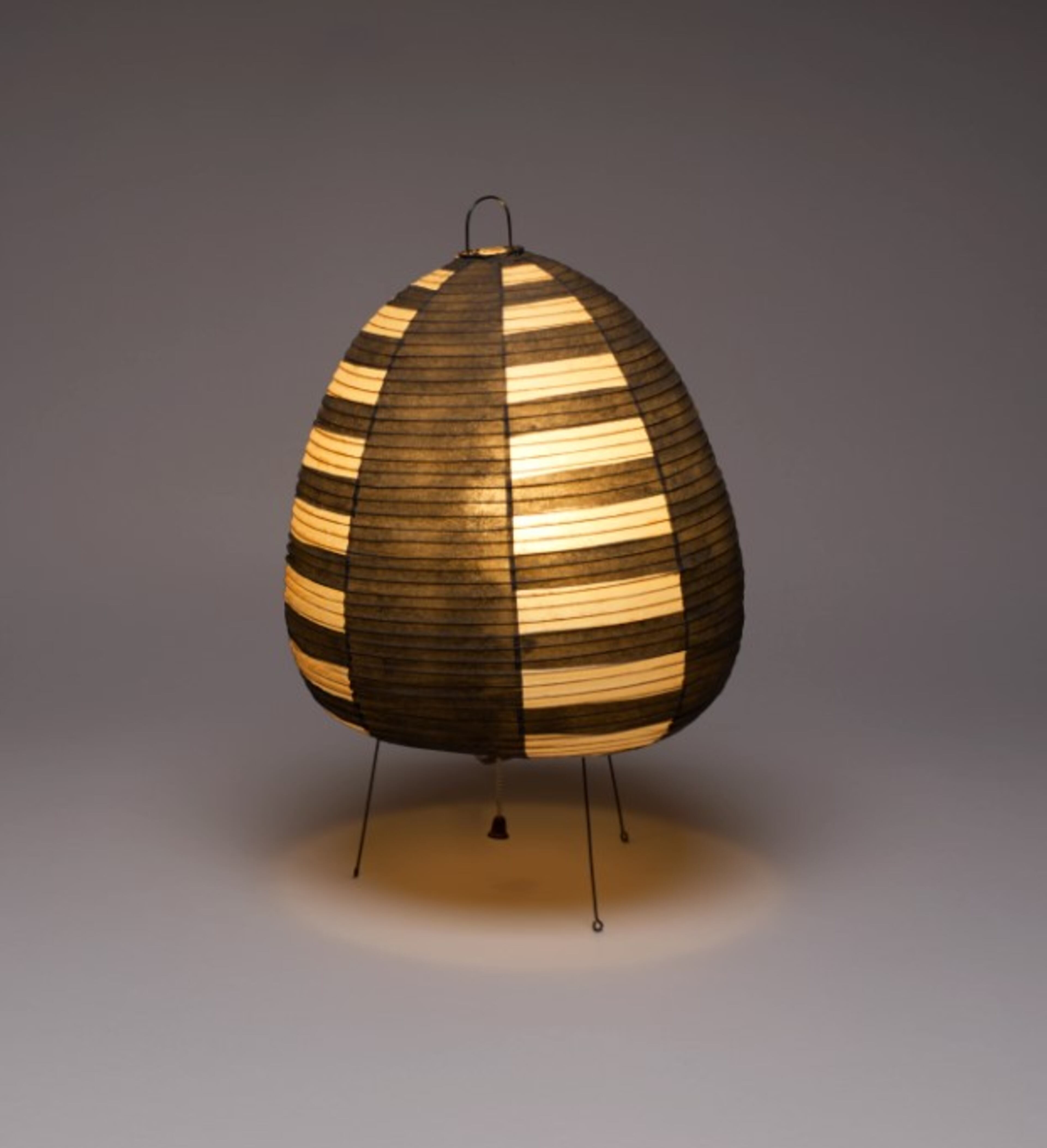
Instead, the exhibition is divided into three themes. “Making Multiples” is, in Obniski’s words, “a love story to industrial design … and understanding that design is essentially multiples, right?” That portion of the exhibition includes furniture, lighting and also Noguchi’s fashion sketches for Harper’s Bazaar in the 1920s.
The second section, “Elements of Architecture,” dives into the domestic spaces Noguchi, who was not a trained architect, created — some of them realized, some not.
“Shaping Spaces,” the retrospective’s third section, focuses on civic spaces, playgrounds, fountains and other public-facing works. Part of that section includes a film commissioned by the High from architecture studio Spirit of Space featuring three important Noguchi public spaces: Detroit’s Hart Plaza, California Scenario in Costa Mesa and the UNESCO Garden in Paris.

The premise of “I am not a designer” is Noguchi’s stated resistance to being called a designer. Obniski points out that while the Japanese matter-of-factly identify Noguchi as a designer, in America where dichotomies are beloved, creatives are often classed as devotees of either the museum or the market.
“Frankly, like all artists in mid-20th century America, if you wanted to be taken seriously, you did not want to be considered aligned with commercial interests,” Obniski said. Despite being the High’s design curator, she said she has no skin in the game and invites audiences to leave the exhibition with their own estimation of Noguchi.

“I’m interested in offering people new ways of engaging with this material, new ways of thinking about it. If they believe in the end that maybe he was also a designer, that’s cool. But, if in the end, they just come out of the exhibition and realize, ‘Oh yeah, Noguchi made playgrounds and lamps and stage sets and he was an omnivorous individual who wanted to touch almost all aspects of our lives’ — which is a pretty powerful thing for someone to be able to do,” then that, Obniski said, will be enough.
Exhibit preview
“Isamu Noguchi: ‘I am not a designer’”
Friday through Aug. 2. $23.50. High Museum of Art, 1280 Peachtree St. NE, Atlanta. 770-733-4400, high.org.