Georgia Tech professor headed to the Grammys for Black poetry-inspired works
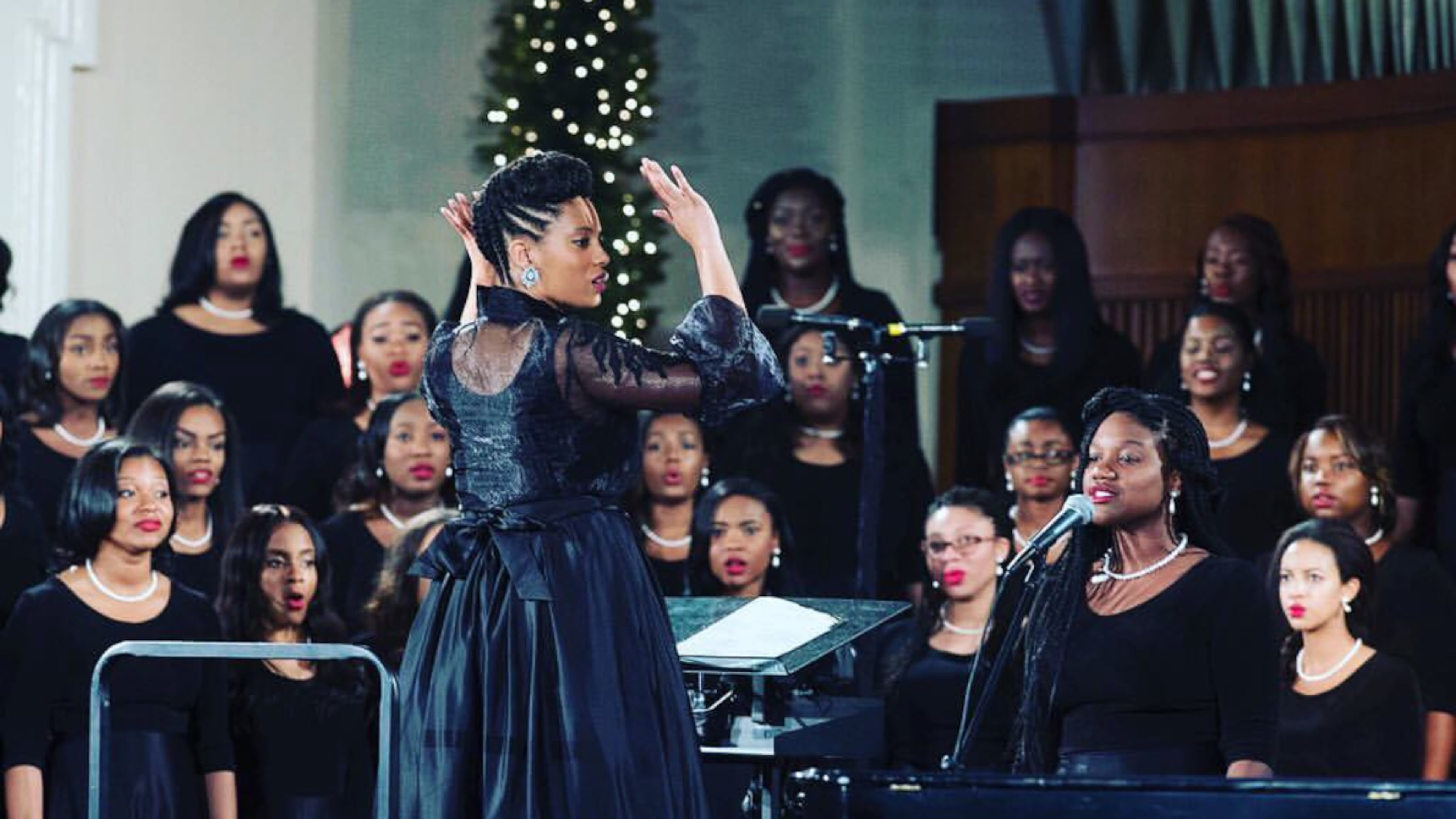
As a child, Brittney Boykin had a flair for songwriting, penning melodies in a binder as a hobby. While a music major at Spelman College in Atlanta, she was required to take an intro to composition class, which she describes as a “turning point” for her then-nascent career.
The class was taught by Kevin Johnson, who’s also the longtime director of the school’s legendary glee club.
“I remember a homework assignment where we had to arrange a Negro spiritual,” Boykin, a native of Alexandria, Virginia, recalled. “I chose ‘Go Down Moses.’ When, I turned it in, (Johnson) was like, ‘Boykin, we’re gonna do this in rehearsal today. This is pretty good.’ And I was like, ‘What? It was a homework assignment!’ That was the first kind of experience that I had with a choir singing my music. It just evolved from there.”
Now 36, the conductor, classically trained pianist, Georgia Tech professor and director of choral activities has written roughly 50 compositions. Several of them are featured on two records nominated for 2026 Grammy Awards for best classical solo vocal album: “Black Pierrot” and “In This Short Life.” The ceremony airs on Sunday.
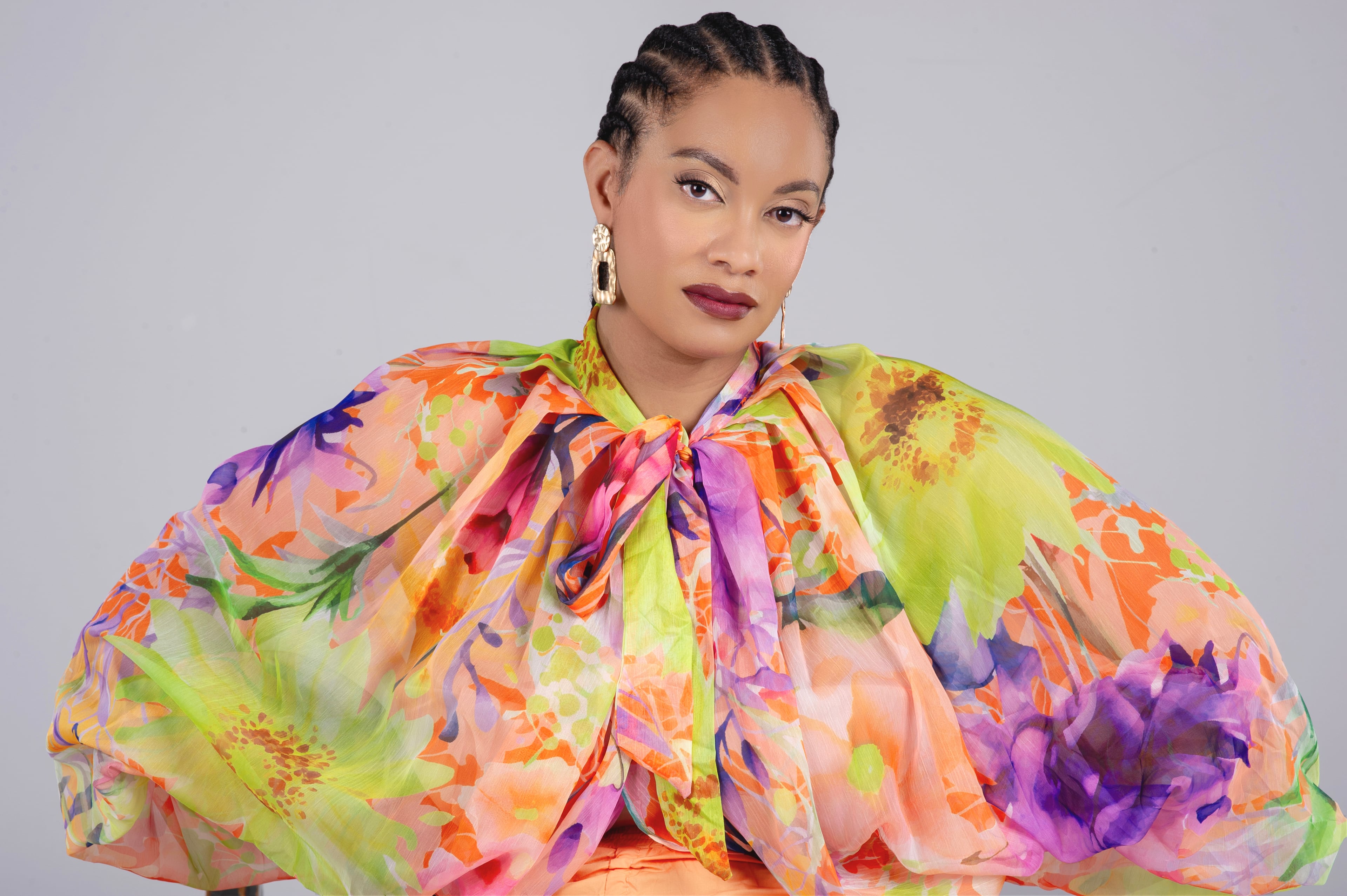
“Black Pierrot,” an album by New York-based vocalist Sidney Outlaw and pianist Warren Jones, includes Boykin’s seven-song cycle (a collection of songs linked by a central theme, performed by one singer) titled “26 Ways of Looking at a Black Man.” They’re inspired by Raymond Patterson’s 1969 poem of the same name.
“In This Short Life,” by Devony Smith, Danny Zelibor and Michael Nicolas, features three compositions written by Boykin, titled “Moments in Sonder.” Boykin’s original work, completed in 2014, is based on 14 Maya Angelou poems.
“When I’m reading (poetry), it’s lyrical to me,” said Boykin, who uses B.E. Boykin as her stage name (Elizabeth is her middle name). “It’s very hard if I feel like the language is just kind of sharp and pointed, and I feel like it doesn’t sing as well, but if there’s a flow, if there’s a nuance, if there’s imagery, I’m definitely always drawn to that.”
The Atlanta Journal-Constitution talked to Boykin about her recent honors, her journey in classical music and her upcoming projects.
This interview has been edited and condensed for clarity
Q: Congrats on receiving Grammy recognition. Where were you when you heard the news?
A: I was coming back from a conference in Fullerton, California, when Sidney Outlaw called me. I was in the airport, and he was just screaming. Sidney and I have been talking about this project for a while, and I know he had some reservations about whether it would be nominated, so I told him, “Let this be confirmation to you that people are listening and people love your voice, and they’re listening to your album. They love your work, so they’re really excited.”
I found out about the other album at the same time, yeah. The soprano Devony reached out, and I was like, that’s really crazy.
Q: How did you conceive the works for “Black Pierrot,” the album that features most of your compositions?
A: I really love setting texts by Black poets. That song cycle was just very unique because Raymond Patterson also uses 26 very short, kind of Haiku-like phrases as a way to describe the Black man’s experience. I took all 26 of them and cut them up in little pieces of paper, and tried to organize them by themes for the project. I came up with seven larger categories that told the Black man experience, (centering) vulnerability, spirituality, love, a passion for social justice. I made songs from those.
Q: What’s your relationship with poetry?
A: I just think poetry can be so musical and lyrical, and I’ve just fallen in love with so many different writers and their styles. I’ve just enjoyed setting text that I feel brings community and love and speaks life into people. As far as solo pieces, the same thing applies. I’ve been drawn to pieces that may have a little bit more introspection and thoughtfulness and can encourage the singer or encourage the audiences to think a little bit more deeply on their individual journeys.
Q: When did you become drawn to poetry?
A: Pretty early in my career, maybe like 2015. I started composition as a hobby at that time. I would just kind of get online and read poetry and see what would be in the public domain, or see if there was a writer that I really loved and write off that. Now, it has grown into a full-blown career, so it’s been a very interesting journey.
Q: How did your passion for music form?
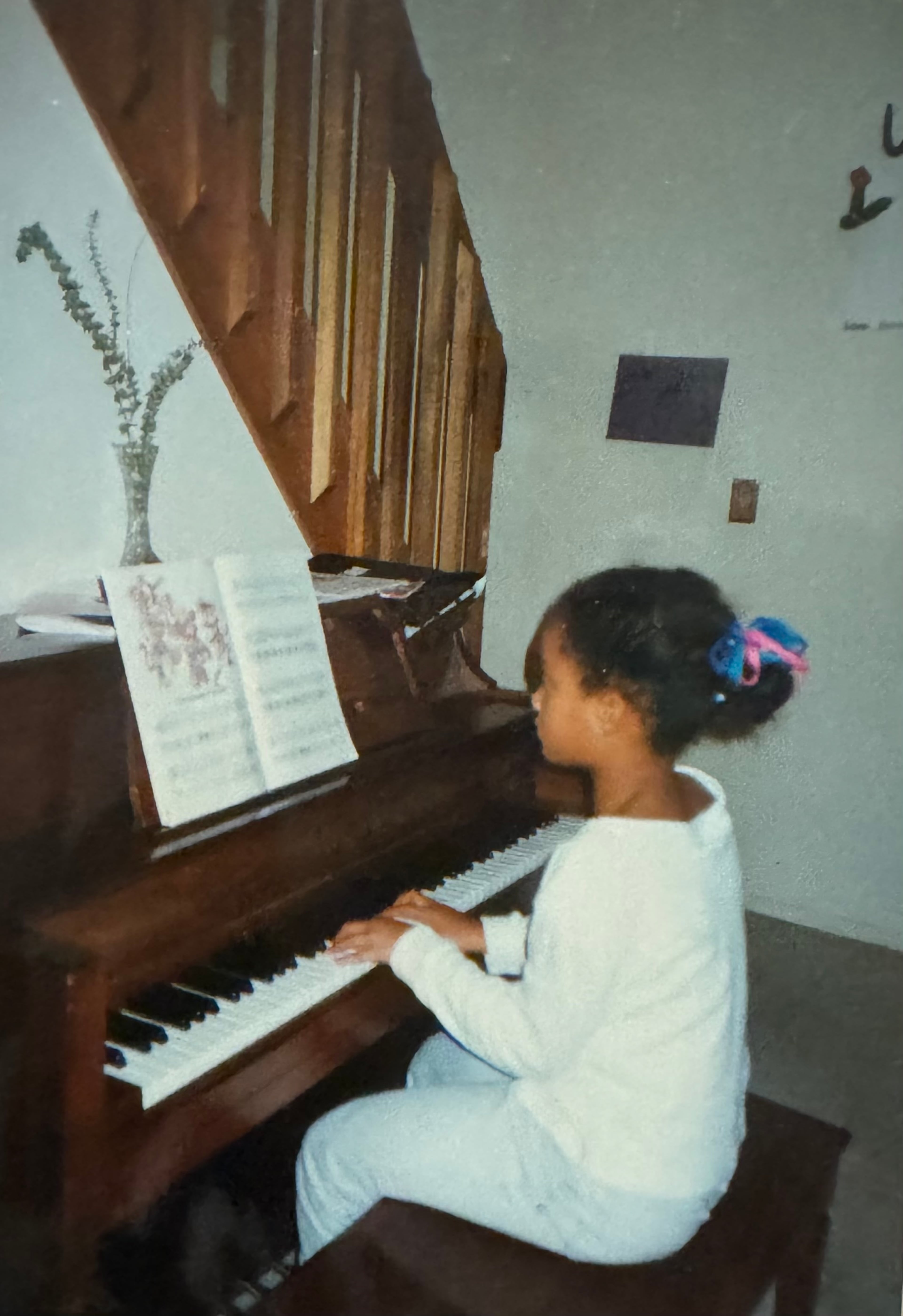
A: My parents said that maybe about age 3, I was very interested in piano. They didn’t want to start me on lessons too early, so I started around 7. My dad ended up getting stationed at the Pentagon. He was in the Air Force, so we moved to the DC area. There, I had a classically trained Black pianist who was my teacher, Alma Sanford. From 10 through high school, she was my teacher. A lot of my musicianship and where I am right now is because of her. She pulled something out of me at such a young age — giving me the encouragement and support to be musically expressive.
Q: You’ve worked at Georgia Tech for almost a decade now.
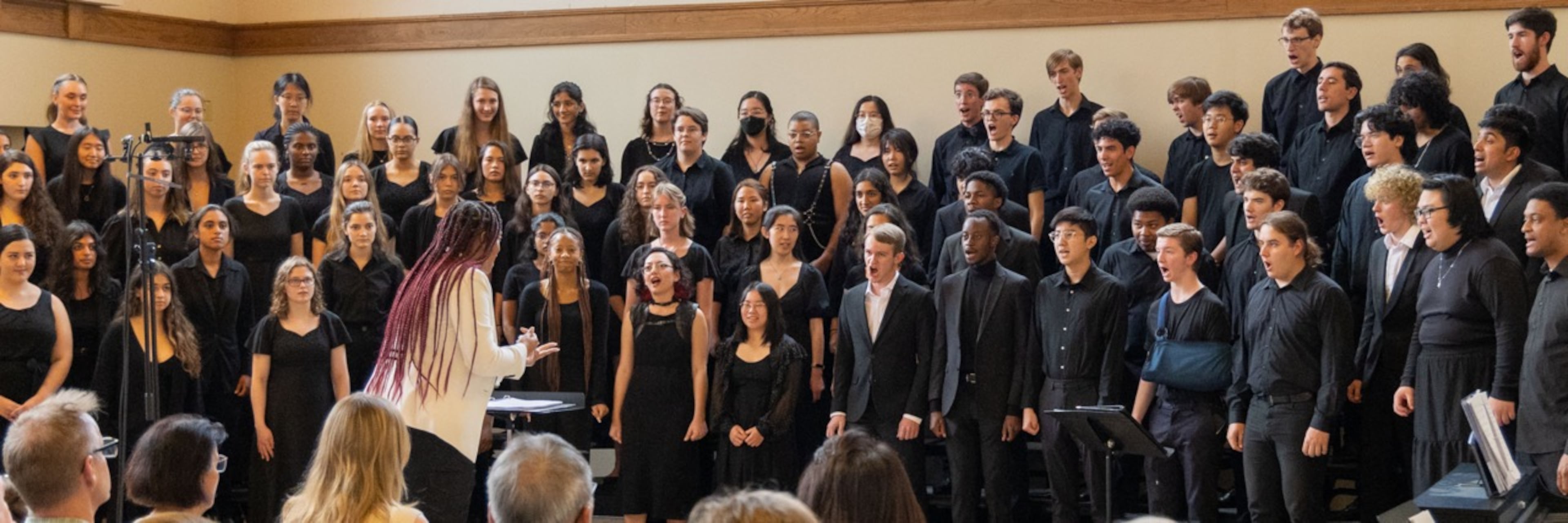
A: I know. People are always like, Georgia Tech has music? They’re always surprised. As a composer and musician, they’re like, how do you work at Tech? Georgia Tech has a school of music and is one of the best institutions in the world. They get the best and the brightest from all over and what people don’t know is that they love music, and they’re extremely musical and extremely talented — from choir, band, orchestra, you name it.
Q: What’s your experience been like as a Black woman in classical music?
A: I was (composing) as a hobby because a lot of people were telling me that I would never be a composer, I don’t have degrees in composition and I don’t have the experience, so I won’t make it. That’s why I kind of treated it like a side thing. It was hard to hear that, because I felt like I was looking for mentorship. I was looking for professional spaces to connect with, and it felt like being young and being a woman and being Black were things that were holding me back. (Note: Female composers are historically underrepresented, accounting for roughly 10% of individual performances of works planned for last season, according to the Women’s Philharmonic Advocacy.)
I felt like my name was holding me back professionally with publishers. They weren’t really giving me an opportunity to publish my music. I started going by my initials because I wanted people to focus on the music first, and not the fact that I was a woman.
Q: Clearly, they were wrong.
A: Yea, I just started my own publishing company (Klavia Press, a spin on the German word for piano, “klavier”). I started a website. Then, when COVID-19 happened, that turned things around so quickly for me because everyone was at home. Because I had an online presence, Black Lives Matter (protests) were happening, so people were curious again about Black music or Black composers or Black women composers. Because I had a website, people could see me.
Q: What other projects are you working on?
A: I have a residency with Phoenix Chamber Choir. They’re based in Vancouver. At the end of February, they’re premiering a piece that I wrote for them. I have a residency with the Celebrity Series in Boston, and they’ll premiere a piece that I wrote for them in April … it’s a very busy time in my career.
Q: Will you attend the Grammys?
A: I am going with Sidney. He was like, “If I win, I need you on stage with me.” He was like, “The world needs to know that a Black woman wrote this song cycle.”
IF YOU WATCH
2026 Grammy Awards
8 p.m. on CBS and Paramount+. A pre-show will air at 3:30 p.m., streaming at live.GRAMMY.com the Recording Academy’s YouTube channel
About the Author

DeAsia is a music and culture reporter for The Atlanta Journal-Constitution. She focuses on the intersection of arts, culture and diverse communities, as well as how emerging social trends are being expressed through the lens of the Atlanta aesthetic. DeAsia's work can be seen in Pitchfork, Essence, Teen Vogue, Elle and more.


