Aging with ink: What older adults should know before getting a tattoo
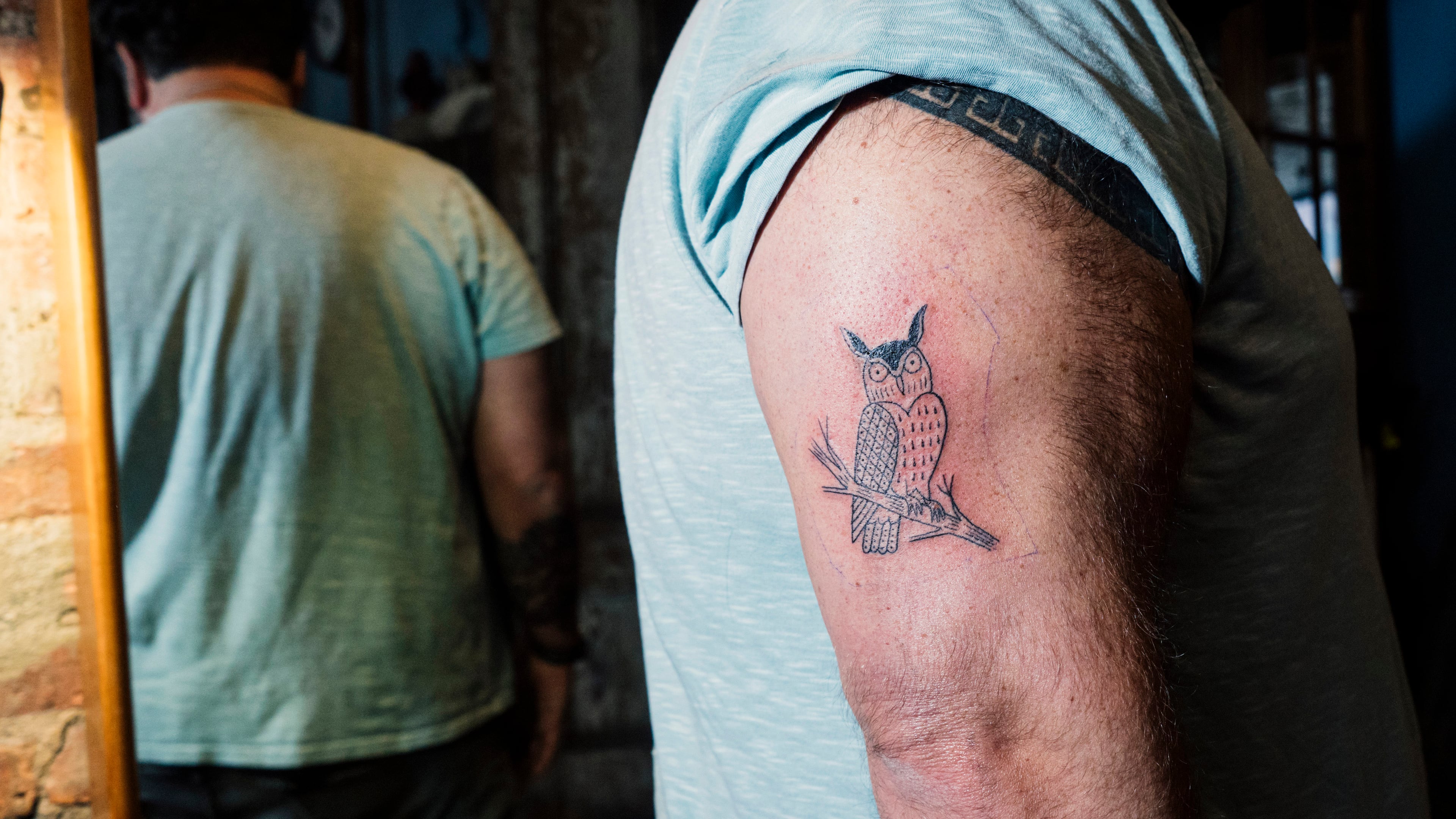
At 69 years old, Wayne Pettett has tattoos on his arms, legs, chest and back — and most of them are fairly recent.
A retired elementary school teacher, the Marietta resident said he had previously refrained from getting body art that would be visible in professional settings. But once he retired in 2018, he added design after design.
“It’s something I always wanted to do,” he said. “Things are very different now, but back then I thought it was a big deal. I (also) didn’t get my ear pierced for the longest time.”

Pettett is among a growing number of older adults embracing tattoos later in life. Once considered unprofessional or unconventional in some settings, tattoos have become far more accepted across generations. For many people, body art is a meaningful way to commemorate a milestone, honor a loved one of simply express their individuality.
Experts say communication with your tattoo artist is especially important. Certain medications, including blood thinners, might make tattooing unsafe. Additionally, thin or fragile skin can tear or simply not hold designs as well as younger, more elastic skin.
Board certified dermatologist Dr. Jack Arbiser of MetroDerm said people of all ages should “think carefully” before getting a tattoo. Research on the long-term health effects of body art is “still evolving” and “not fully understood,” he said.
“Older skin often loses elasticity and can be more sun-damaged,” Arbiser added. “Because of this, the pigments in tattoos may diffuse in unexpected ways. Older skin is also more prone to inflammation, and some people may experience an allergic reaction to their tattoo, such as inflamed or itchy skin.”
A growing industry
DB Wyte, an experienced tattoo artist at Iron Palm Tattoos & Body Piercing in Atlanta, said he works with a range of clients, including those in their 50s and beyond. Although younger adults typically heal within two to three weeks, he said older clients may need to take additional factors into account before getting inked.
“They definitely can still get a tattoo, but the healing process may be a little bit longer due to the lack of collagen and lack of elasticity,” Wyte said.
Wyte said tattoos have become increasingly mainstream over the years. As studios have adopted stricter health and sanitation practices, more people have embraced body art, and visible tattoos are now common in professions ranging from medicine and law to sports and corporate workplaces.
“I’ve been tattooing for 17 years, so I’ve definitely had a chance to see a change in the industry, seeing it getting more popular,” Wyte shared.
Although Wyte said his client base skews younger, many of his older clients come in with younger family members. Sometimes, entire families get tattooed together. One family visited his shop to honor a loved one who had died.
To ink or not to ink?
Cumming resident Stephanie Grooms is among those who regretted her first tattoo, which she got in the 1980s. But when her daughter, Nova, started an apprenticeship as a tattoo artist, Grooms, now in her early 60s, was happy to let her practice on her skin. Since then, she’s added a moth, a crow and a spaceship at Timeless Tattoo.
“The spaceship has a lot of little weird meanings, but it has a banner across the bottom that says ‘mothership’ and that’s one of the nicknames my son calls me,” she said.
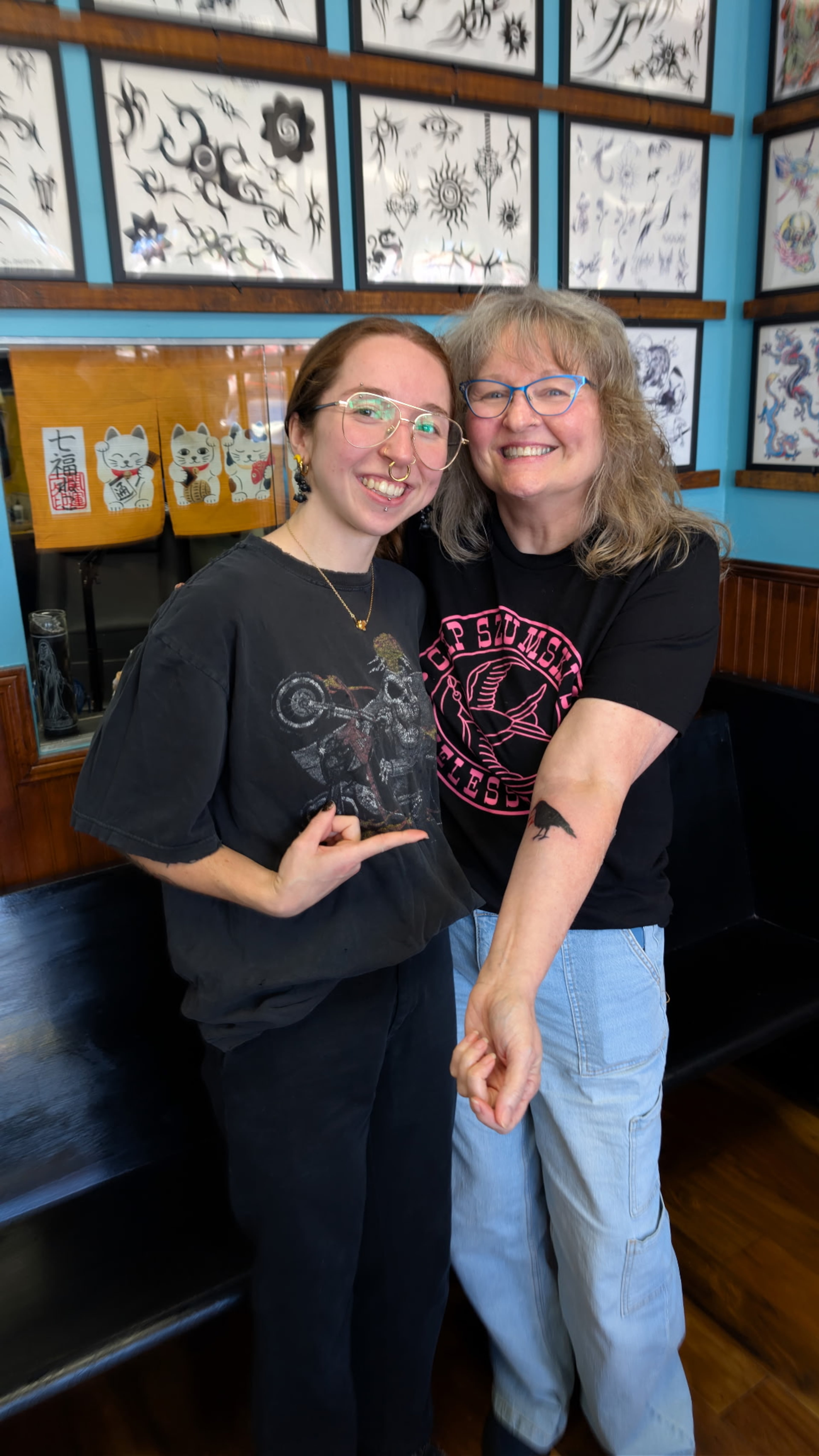
Grooms said her tattoos healed in about two weeks. Before each appointment, she focused on keeping her skin moisturized and well cared for to help prepare it for the process.
She also recommends avoiding tattoos over moles or other areas of skin that may need to be monitored by a dermatologist, because covering those spots could make changes more difficult to notice.
Arbiser echoed the importance of planning ahead, noting that tattoo removal can be difficult, costly and may not erase the ink.
“For those considering a tattoo, I recommend choosing a smaller design and placing it in a less conspicuous location,” Arbiser said. “Over time, a person’s tastes, careers or life circumstances can change, and tattoo regret is not uncommon.”