A return to school puts health screenings, vaccines in the spotlight

A child who can’t see the whiteboard may be labeled inattentive. A student with undiagnosed hearing loss may appear to ignore the teacher’s instructions. Even an aching tooth can make it difficult to concentrate.
That’s why Georgia law requires students enrolling in a state public school for the first time to undergo four health screenings. These screenings aren’t simply bureaucratic hurdles. They’re designed to catch problems that can quietly interfere with learning.
“In children, problems with vision, hearing, oral health or nutrition can interfere with speech, reading, school readiness, growth, and long-term development,” Nancy Nydam Shirek, communications director for the Georgia Department of Public Health, said.
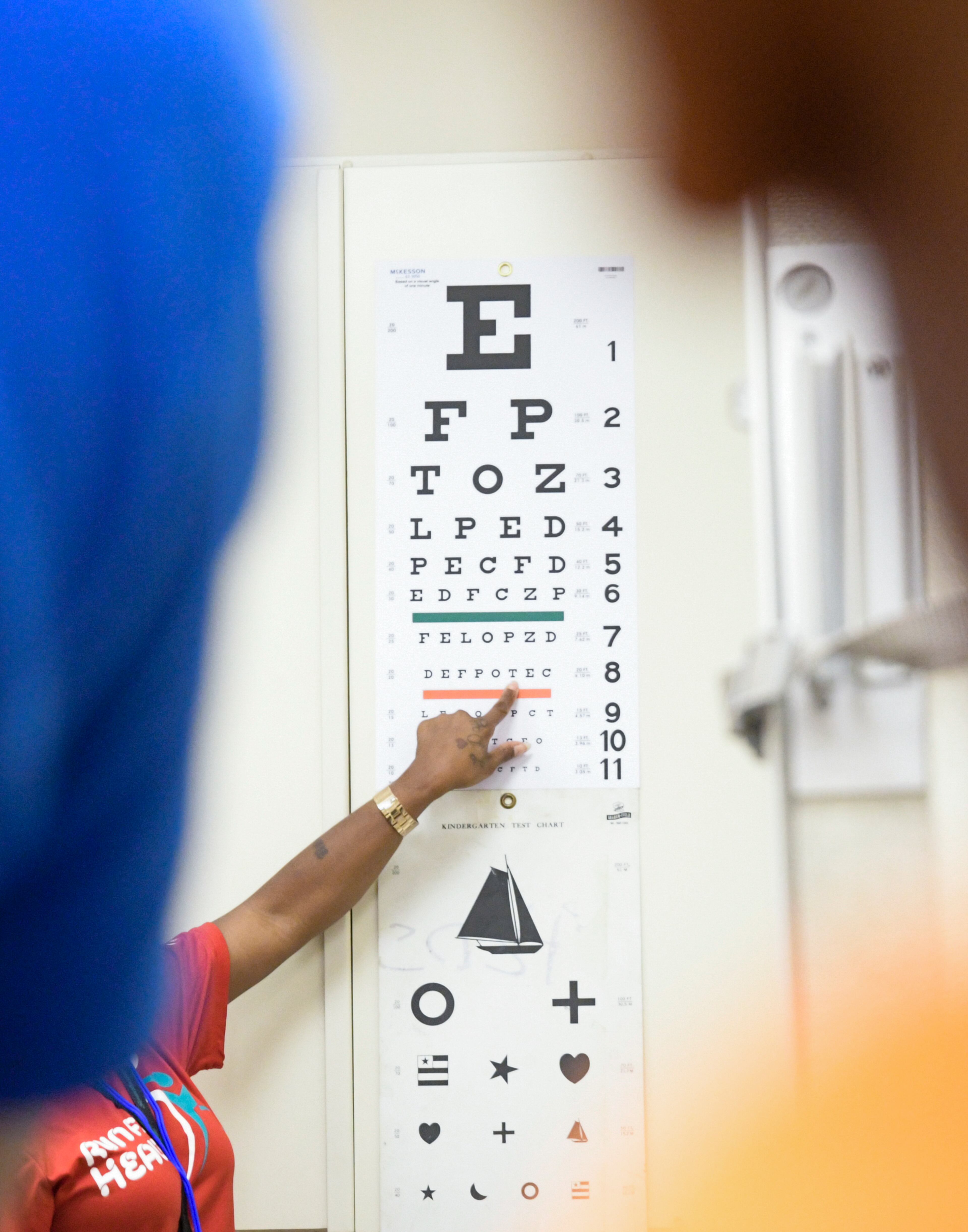
Early screenings can lead to earlier treatment and more effective interventions, she said. For many children, these routine checks are the first step toward improvement.
Along with backpacks, school supplies and lunch boxes, parents should also make sure their children are up to date on required vaccines.
With many Georgia schools opening their doors in late July or early August, families have only a short window to schedule appointments and complete required health forms before the first bell rings.
Health screenings
If you’re enrolling a child in a Georgia public school for the first time, parents or guardians must submit DPH Form 3300 — the Georgia Department of Public Health’s Certificate of Vision, Hearing, Dental and Nutrition Screening. These screenings can be performed by a doctor, the local public health department, a qualifying medical specialist or a school registered nurse.
Screening for scoliosis, an abnormal curvature of the spine, is also required — typically when students are in sixth and eighth grades.
Shirek said a common misconception is that a child must “pass” every screening to be allowed to enroll. But the reality is the state’s goal — identifying a student’s problems so parents can find appropriate help for their child — is met, she said.
How often should children be screened?
Health experts recommend that children receive annual well-child checkups, where their pediatrician can monitor growth, development and overall health. During these visits, doctors typically assess:
- Vision: Screened at routine well-child visits, with more comprehensive eye exams if concerns are identified or recommended by an eye care professional.
- Hearing: Screened during infancy and at recommended ages throughout childhood, or sooner if concerns arise.
- Dental: The American Academy of Pediatric Dentistry recommends dental visits every six months, beginning by age 1 or within six months of the first tooth erupting.
- Growth and nutrition: Checked at every annual well-child visit.
- Scoliosis: Georgia schools typically screen students in sixth and eighth grades. Pediatricians may also evaluate for scoliosis during adolescent checkups if appropriate.
School requirements: Georgia requires vision, hearing, dental, and nutrition screenings for children entering school for the first time. Additional screenings, such as scoliosis, occur at certain grade levels.
Source: Georgia Department of Public Health, Centers for Disease Control and Prevention
Lynne Meadows, director of Fulton County Schools’ district health services, said the screenings play an important role in helping students succeed.
“We want all students to be in the best possible health so that any health-related barriers to learning can be identified and addressed as early as possible.”
Mandated vaccinations
Parents with children entering Georgia public schools, private schools or childcare for the first time are required to provide a Certificate of Immunization (Form 3231) documenting that their children have been immunized against 13 diseases — including diphtheria, measles, meningitis, mumps, chickenpox and rubella, also known as German measles.
Georgia also requires additional vaccines as students enter their preteen and teen years.
All seventh graders and students newly enrolling in eighth through 12th grades must receive one dose of the Tdap vaccine — which protects against tetanus, diphtheria and pertussis, commonly known as whooping cough. This same group must also receive one dose of the meningococcal conjugate vaccine, which helps protect against meningococcal disease, a serious bacterial infection that can affect the brain and spinal cord.
Students entering 11th grade also must provide proof of a meningococcal booster (MCV4), unless they received their first dose on or after their 16th birthday.
Georgia allows parents to request exemptions from school vaccine requirements for medical or religious reasons. In Fulton County, “some parents choose not to have their child vaccinated” Meadows said.
While the federal Department of Health and Human Services revised its recommended childhood immunization schedule late last year and earlier this year — reducing targeted diseases from 17 to 11 and the number of routine vaccines from 13 to seven — those recommendations do not change state school vaccination requirements.
According to the Kaiser Family Foundation, states are not required to adopt the federal schedule, and Georgia is among the states that have kept their existing school immunization requirements.
Don’t wait until the last minute to tackle your back-to-school health checklist. By completing health screenings, updating immunizations and submitting required medical forms, families can help ensure children start the year healthy, safe and ready to learn.