RECIPES: New cookbooks spread ‘Black, Vegan, and Cool’ message
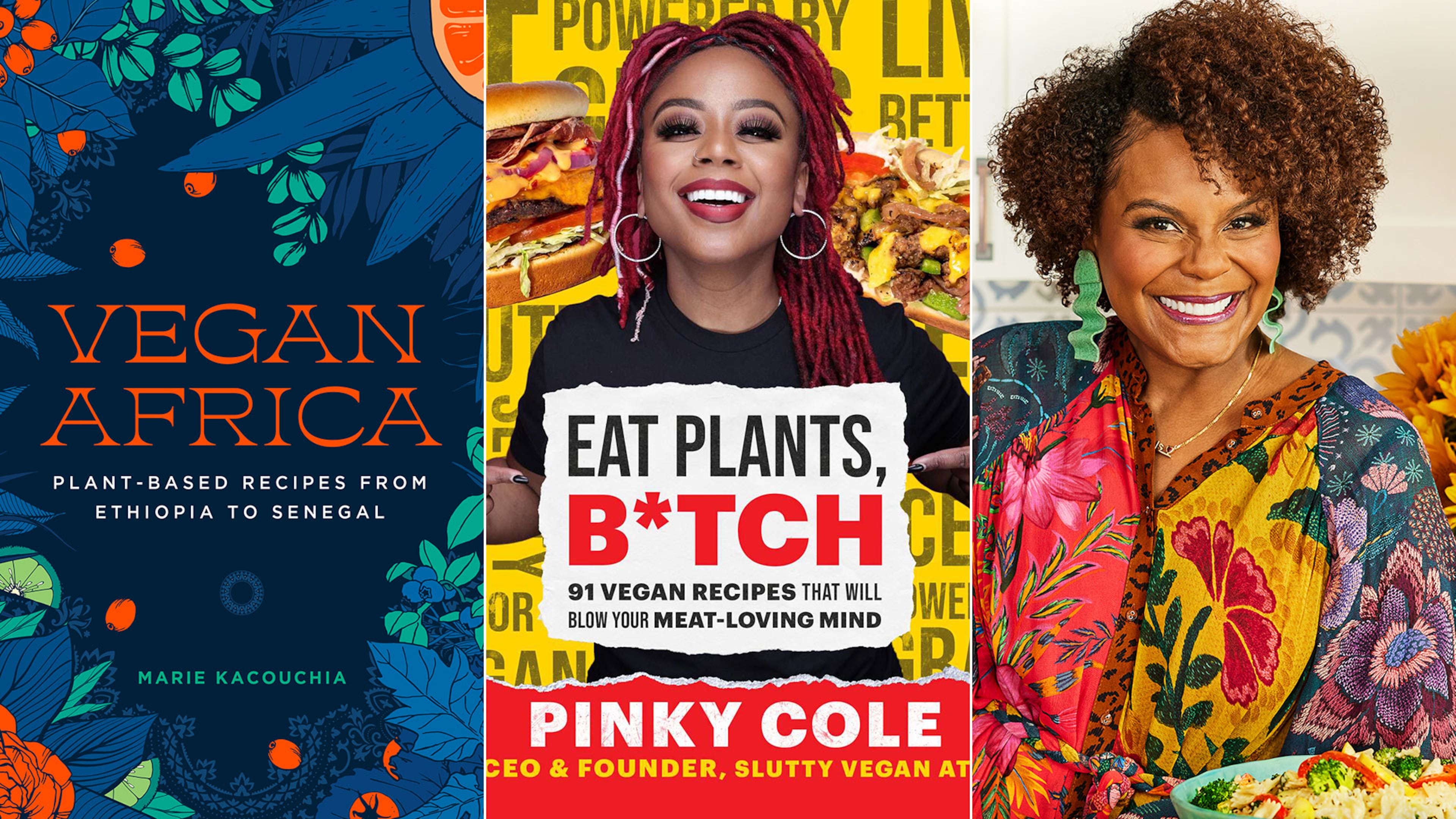
Giving up animal products wasn’t hard for Pinky Cole, the CEO and visionary behind the burgeoning Slutty Vegan plant-based burger chain that’s made her a national celebrity.
Growing up in Baltimore, she ate mostly fresh vegetables, soy products, and occasionally fish prepared by her mother, a Jamaican immigrant, in accordance with her Rastafarian beliefs. Later on, driven by a desire to improve her health and raise awareness of the impact of diet on chronic diseases prevalent within the Black population, she decided to forgo meat products altogether.
But as she was trying to figure out a hook for the herbivore restaurant concept she planned to open in Atlanta, she was well aware that tofu and salads wasn’t it.
“People would say, ‘That’s too healthy. That’s too green,’” the Clark Atlanta University alum explained in a phone interview. So instead, she created a menu with veganized versions of fast-food favorites with naughty names like Fussy Hussy and One Night Stand — hardly health food but, to her way of thinking, “still a better choice than animal flesh.”

Today, Cole’s enterprise includes seven Slutty Vegan brick-and-mortar locations; two food trucks; Bar Vegan, a sit-down restaurant with fancy cocktails in Ponce City Market; branded merchandise for pets and people; vegan food products underway; and a charitable foundation aimed at fostering education and generational wealth in the Black community.
She sees these efforts as giving people who may not be ready to give up their carnivore ways “a starting point to help them get to a place of healthier eating.”
Now she has a cookbook, “Eat Plants, B*tch: 91 Vegan Recipes That Will Blow Your Meat-Loving Mind” (Simon & Schuster, $28.99), that’s designed to take them to the next step: into home kitchens. She’ll kick off its launch next week with “The Pinky Cole Experience Tour,” live ticketed events with food trucks and guest entertainers in theaters across the country including a show Nov. 19 at the Buckhead Theatre in Atlanta.
The only burger recipe you’ll find in the book is made of black-eyed peas and bears no resemblance to the ones on her menu. Rather, these offerings represent the way she likes to eat and entertain at home with family and friends: Black-Eyed Pea Stew, Barbecued “Beef” Loaf (made with chickpeas), Backyard Quesadillas, her “legendary” Beet-Tini cocktail. Some come from other chefs and influencers “who are doing really dope things around the city,” such as the Spicy Sausage and Biscuits from Chef Nikki in the Mix and Vegan Fried Fish made with seaweed-seasoned eggplant from Erin Wells aka “That Chocolate Vegan.” Along with their recipe contributions, they share “what it means to be Black, vegan, and cool.”
Recent studies have shown that Black Americans are the fastest-growing vegan demographic in the country. According to a Pew Research Center survey, 8% of Black Americans identify as strict vegetarians or vegans as compared to 3% of the general population. “Eat Plants, B*tch” is part of a growing sub-genre of vegan cookbooks by influential Black culinary entrepreneurs who are moving veganism into the mainstream with relatable dishes that reflect their cultural heritage and individual styles.
Tabitha Brown, a bestselling author who shares family-friendly vegan recipes and motivational messages on Food Network and TikTok, just launched her first cookbook, “Cooking From the Spirit: Easy, Delicious, and Joyful Plant-Based Inspirations” (Morrow, $30). Born in North Carolina and now living in Los Angeles, she credits her switch to veganism with stopping the pain of an undiagnosed illness, and intersperses simple recipes for things like Jackfruit Pot Roast and Sweet Potato Tacos with inspirational “Tabisms” (“Today, treat yourself to a lollipop — but don’t bite it — be patient and enjoy it for a while”).
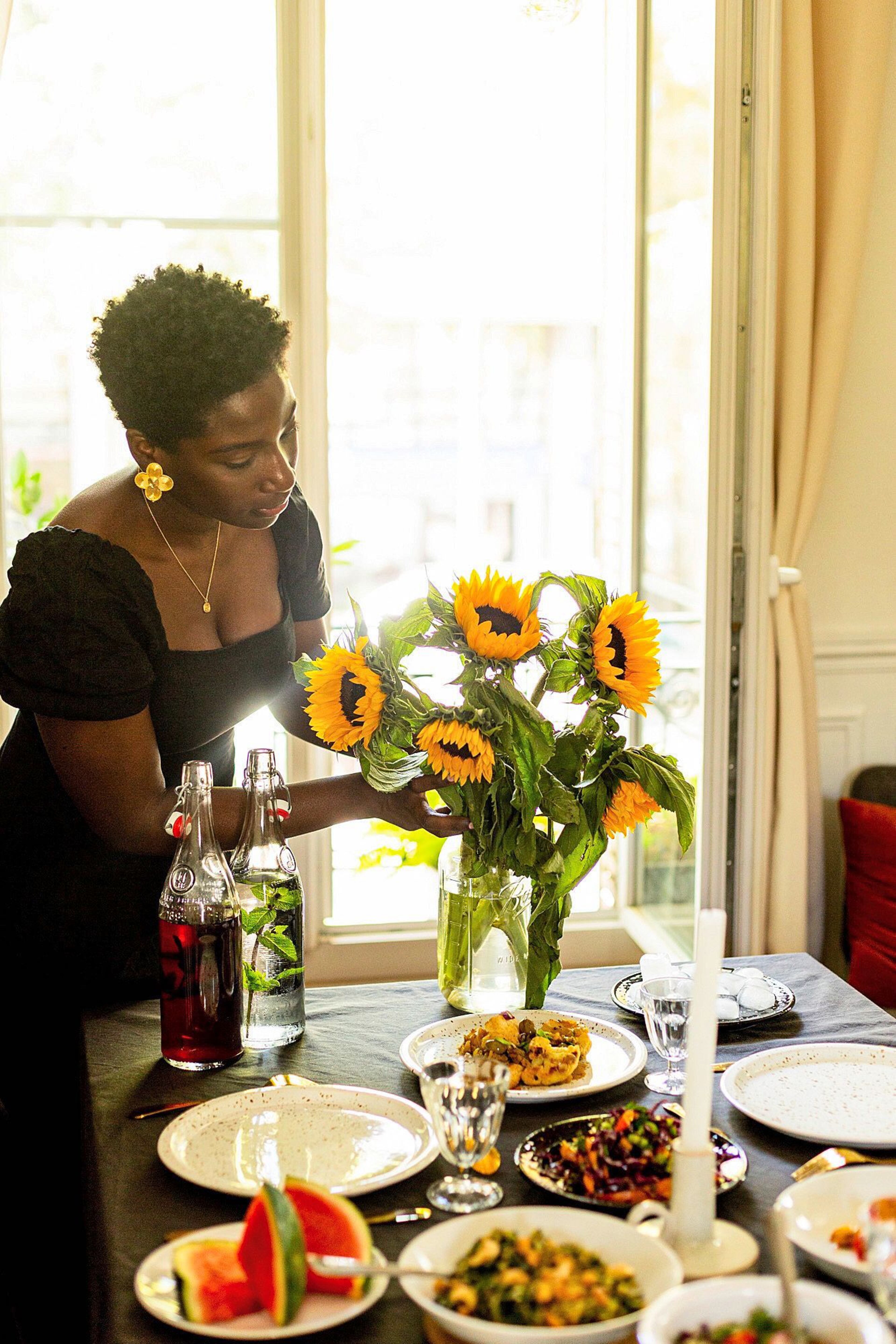
The trend is also catching on globally. Marie Kacouchia, a Parisian self-taught chef who claims France and the Ivory Coast as homelands, began exploring the plant-based cuisines of 15 African countries and sharing her modernized and simplified interpretations on Instagram. Last year, they were published in France in “Cuisines d’Afrique.” Next week, its English translation, “Vegan Africa: Plant-Based Recipes From Ethiopia to Senegal” (The Experiment, $24.95), will arrive in U.S. bookstores.
Through gorgeously photographed and easy-to-execute recipes including Roasted Eggplant with Tamarind based on the national dish of Senegal, Kenyan Corn and Bean Stew, and a Chocolate Mousse paying tribute to her native Ivory Coast’s cacao-producing history, Kacouchia connects the Black vegan movement today to its humblest beginnings.
It’s one more way of spreading the message, as Cole likes to say, of what it means to be “Black, Vegan, and Cool.”
RECIPES
These plant-based recipes from new cookbooks by Pinky Cole, Tabitha Brown, and Marie Kacouchia reflect the authors’ Black heritages, with low-hassle methods and familiar flavors even a carnivore will love.
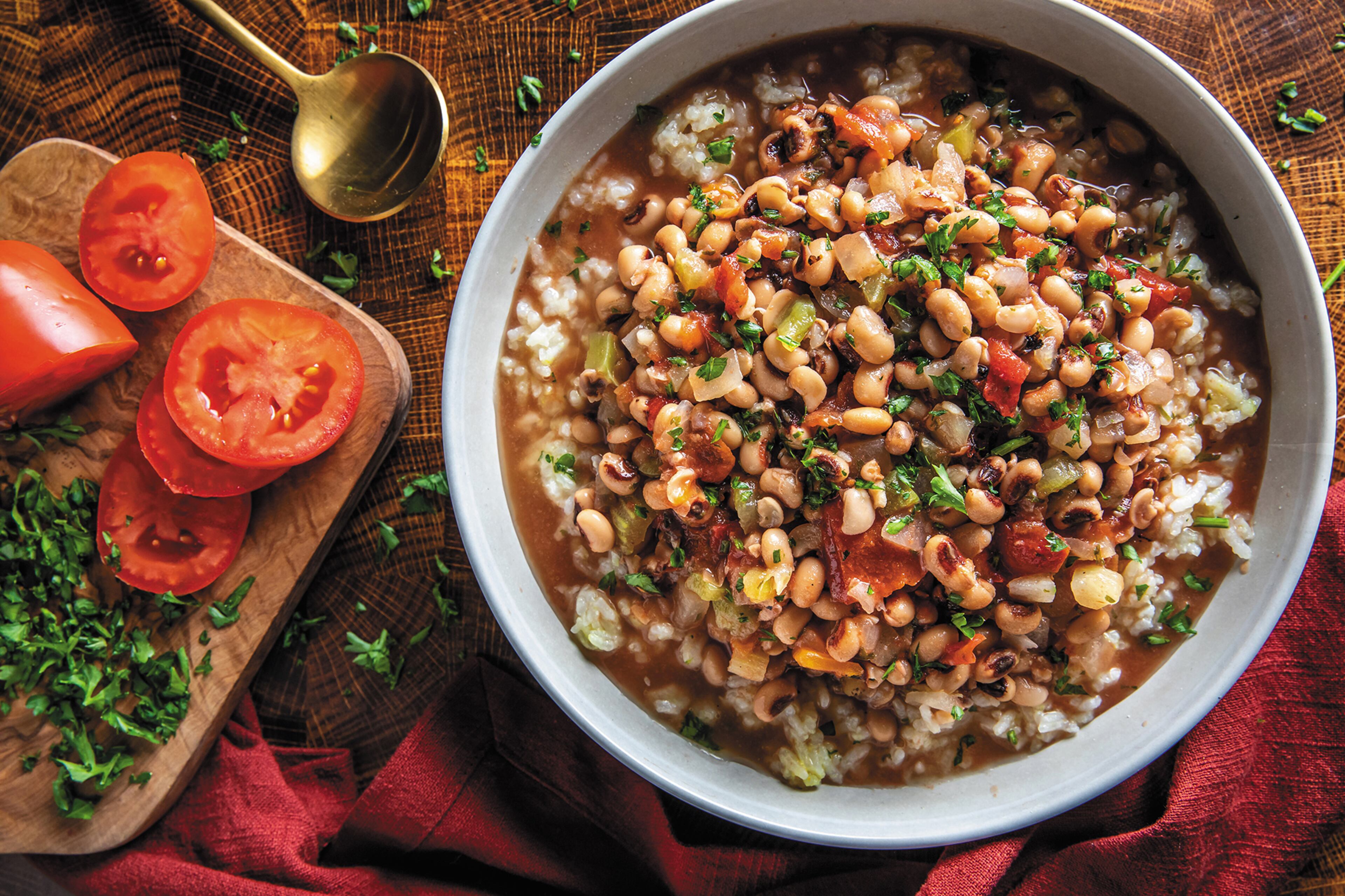
Black-Eyed Pea Stew
Slutty Vegan founder Pinky Cole’s new book, “Eat Plants, B*tch,” is heavy on familiar comfort foods such as this hearty, full-flavored stew of legumes, hearty vegetables, and bold spices. She recommends pairing it with collard greens and jalapeno cornbread.
- 1 (16-ounce) bag dried black-eyed peas, soaked in water to cover for 8 hours or overnight
- 6 cups vegetable broth, plus more broth or water as needed
- 3 cups 1/2-inch chunks peeled sweet potatoes
- 2 cups chopped yellow and/or red bell peppers
- 1 1/2 cups finely diced onions
- 2 tablespoons minced garlic
- 1 cup medium salsa
- 1 tablespoon ground cumin
- 2 teaspoons smoked paprika
- 1 teaspoon salt, plus more as needed
- 1 teaspoon freshly ground black pepper
- Cooked rice and cornbread for serving (optional)
- Drain the black-eyed peas and rinse them well. Place them in a large pot and add 6 cups of vegetable broth. Bring to a rolling boil, reduce the heat to a low simmer, cover, and cook for 1 hour.
- Add the sweet potatoes, bell peppers, onions, garlic, salsa, cumin, smoked paprika, salt, and black pepper. Stir well and return to a boil. Once boiling, reduce the heat to medium-low, partially cover to let steam escape, and cook just until the sweet potatoes are tender, 15 to 20 minutes, adding a little more broth or liquid if it seems too thick. Taste and add more salt if needed.
- If desired, serve over rice, with cornbread on the side.
Nutritional information
Per serving: Per serving (without rice), based on 4: 564 calories (percent of calories from fat, 4), 32 grams protein, 109 grams carbohydrates, 20 grams fiber, 3 grams total fat (1 gram saturated), no cholesterol, 1,281 milligrams sodium.Adapted with permission from “Eat Plants, B*tch: 91 Vegan Recipes That Will Blow Your Meat-Loving Mind” by Pinky Cole (Simon & Schuster, $28.99).
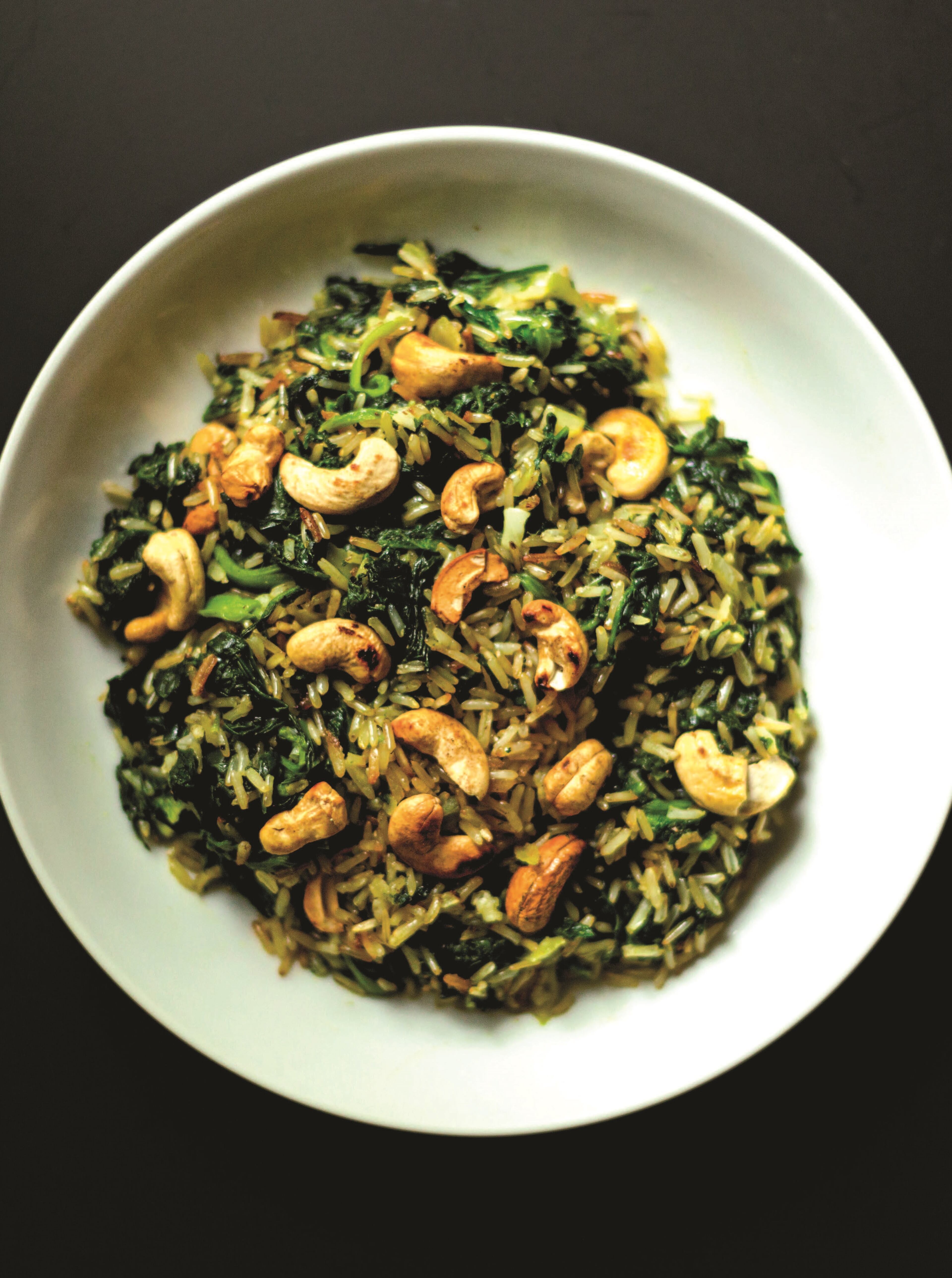
Vermicelli Rice with Spinach and Cashews
In “Vegan Africa,” Marie Kacouchia, a Parisian recipe developer who claims France and the Ivory Coast as her homelands, explains that vermicelli rice is a dish of Lebanese origin that has been integrated into West African cuisines. She freshens and fortifies this recipe she learned from her mother with spinach and toasted cashews for extra protein and crunch. The recipe calls for a large amount of spinach, so feel free to adjust the quantity. Coconut sugar, which is widely available in supermarkets, has more nutrients than regular sugar and is less refined. If you need a substitute, light brown sugar is a good option.
- 1/2 cup raw cashews
- 1/4 cup olive oil
- 3 scallions, chopped
- 2 garlic cloves, chopped
- 1 1/4 cups white basmati rice, rinsed and drained
- 4 ounces vermicelli
- 2 teaspoons curry powder
- 1 teaspoon grated ginger
- 1 teaspoon coconut sugar
- 1 vegetable stock cube, crumbled
- 14 ounces fresh spinach leaves
- 2 teaspoons chopped parsley
- Heat a large, deep, dry skillet with a lid over medium-high heat, add the cashews and lightly toast for about 2 minutes. Remove from the skillet and set aside.
- Heat the oil in the skillet over medium-low heat, add the scallions and garlic, and cook until softened, 2 or 3 minutes. Add the rice, vermicelli, curry powder, ginger, coconut sugar, and stock cube, and stir. Add 2 1/2 cups water, and bring to a boil.
- Cover and let cook for 3 minutes on high heat, then reduce the heat to low and cook for 5 minutes longer.
- Remove the lid and stir in the spinach, a few handfuls at a time, allowing it to wilt in between batches, until incorporated, then stir in the parsley.
- Cover and cook a few minutes longer until the rice is tender and the liquid is completely absorbed.
- Add the roasted cashews just before serving.
Nutritional information
Serving size: 4Per serving: Per serving: 635 calories (percent of calories from fat, 38), 13 grams protein, 88 grams carbohydrates, 6 grams fiber, 28 grams total fat (4 grams saturated), trace cholesterol, 96 milligrams sodium.
Adapted with permission from “Vegan Africa: Plant-Based Recipes From Ethiopia to Senegal” by Marie Kacouchia (The Experiment, $24.95).

Lazy Peach Cobbler
In “Cooking From the Spirit,” Tabitha Brown recounts a Thanksgiving dinner where a friend, a renowned Los Angeles baker, brought a traditional peach cobbler. Though it looked and smelled irresistibly good, it contained eggs and dairy and she had to abstain. But her friend vowed to help her figure out how to make it fit into her plant-based diet. Brown’s recipe is not only simple and delicious, but also conveys her conversational personality, with sprinkles of “honey” and “good Lord” in the instructions.
- Coconut or avocado oil spray, for the pan
- 1 cup self-rising flour
- 1/2 cup granulated sugar
- Pinch of ground cinnamon (add a little more if you want more, honey)
- 1 (7.4-ounce) can (3/4 cup) sweetened condensed coconut milk
- 1 stick (8 tablespoons) vegan butter, melted
- 1 (29-ounce) can sliced peaches in heavy syrup
- 1 teaspoon pure vanilla extract
- Heat the oven to 350 degrees. Spray the bottom and sides of a 9- or 10-inch deep-dish pie plate or square baking pan with oil.
- In a medium bowl, whisk together the flour, sugar, and cinnamon. Add the condensed milk and use a spoon to stir until no more bits of flour are visible and the ingredients come together to form a dough (this is a workout for your arm, honey).
- Pour the melted butter into the prepared pie plate. Make sure the butter covers the bottom.
- Transfer the dough to the pie plate. You can spread it out a little, but don’t worry about it if you don’t feel like it. The oven is going to do most of the hard work for us.
- Pour the peaches with their syrup on top of the dough. Pour the vanilla on top and add a little more cinnamon there if you want to.
- Bake until the peaches are browned on top and the crust is golden brown, 50 minutes to 1 hour. (Slide a sheet pan onto the rack below the cobbler while it bakes to catch any juices.)
Nutritional information
Per serving: Per serving: 486 calories (percent of calories from fat, 34), 6 grams protein, 77 grams carbohydrates, 2 grams fiber, 19 grams total fat (5 grams saturated), 12 milligrams cholesterol, 443 milligrams sodium.Honey. Do you see and smell what the good Lord has done here?! Let it cool for a few minutes before scooping out servings so you don’t burn your tongue off!
From “Cooking From the Spirit: Easy, Delicious, and Joyful Plant-Based Inspirations” by Tabitha Brown (Morrow, $30). Reprinted by permission of William Morrow, an imprint of HarperCollins Publishers.
Sign up for the AJC Food and Dining Newsletter
Read more stories like this by liking Atlanta Restaurant Scene on Facebook, following @ATLDiningNews on Twitter and @ajcdining on Instagram.