RECIPES: Keeping it fresh and simple, with less food waste

In the last several years, many of us have reengaged with our kitchens as a space to play and explore.
I love simple, time-honored approaches to cooking; fermentation is a favorite, but so are other creative ways that reduce food waste. Today, we throw away roughly 40% of the produce we buy, but for much of history, humans had to stretch ingredients as far as possible. Simple cooking or preservation methods like making pesto from carrot and beet greens or soup stock with scraps can go a long way toward reducing food waste.
Traditional cooking connects us to community, too. Using ingredients from local farmers or growing your own makes this connection local and personal.
Working with local ingredients, prepared simply, helps you see yourself in community with the natural world. I love connecting to my home by cooking with wild greens and have let them take over my yard (which is now all violets and chickweed), so I have plenty to play with. Gardening at even the smallest scale helps connect us to the earth and provides us with local ingredients: Even a container of scallions or herbs means something fresh and healthy is at hand.
Good food doesn’t have to be complicated when the ingredients are fresh and locally grown. A simple dressed greens salad, for example, is a welcome addition to any meal or served on its own. Stocking up on a few flavorful kitchen staples helps any ingredient shine. A well-stocked spice cabinet, along with fresh herbs, helps me take my ingredients in a range of flavor directions.
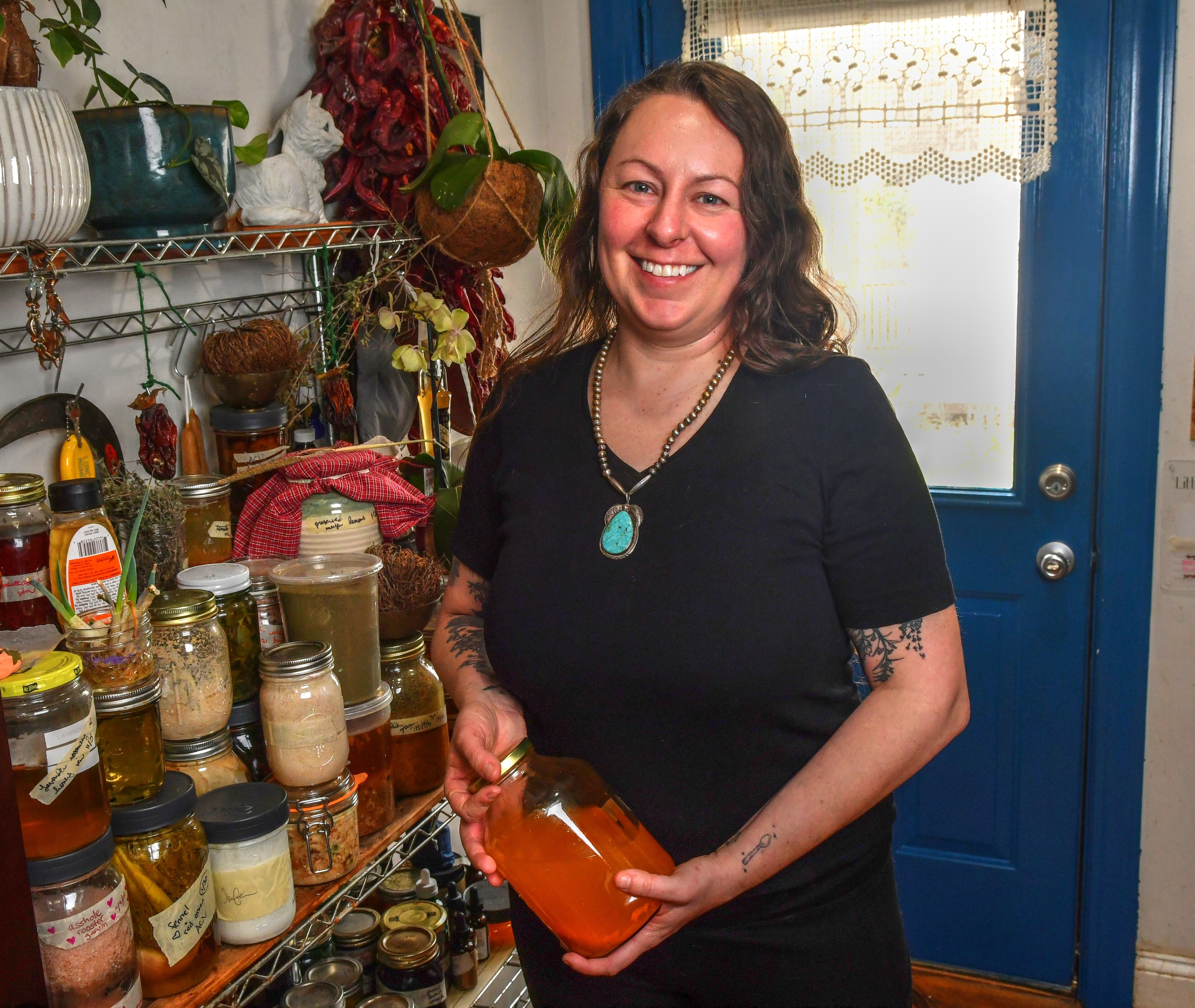
Plain yogurt, either homemade (starter cultures available at Cultures for Health) or store-bought, is versatile for dressings, sauces, marinades and desserts.
I add vinegar to most everything I make, and I usually have 10 to 20 kinds around at once! Some staples I love are apple cider vinegar and rice wine vinegar. Whenever you can, try to get unpasteurized vinegar, which has probiotics but also is higher quality than generic store brands.
Connecting to simple, traditional cooking methods using locally grown food is not just a nod to the past: It’s also a recognition of living traditions our ancestors have participated in for millennia. We can be a part of those traditions just by stepping into our kitchens.
Julia Skinner is a food writer and founder of Root, an Atlanta-based fermentation and food history company that offers classes and creative consulting. Find her on social media at @rootkitchens or @bookishjulia and at rootkitchens.substack.com.
RECIPES
Our kitchen explorations don’t have to be complicated to be rewarding. Here are a few of my springtime favorites using in-season local produce plus those food scraps that otherwise might get thrown away.
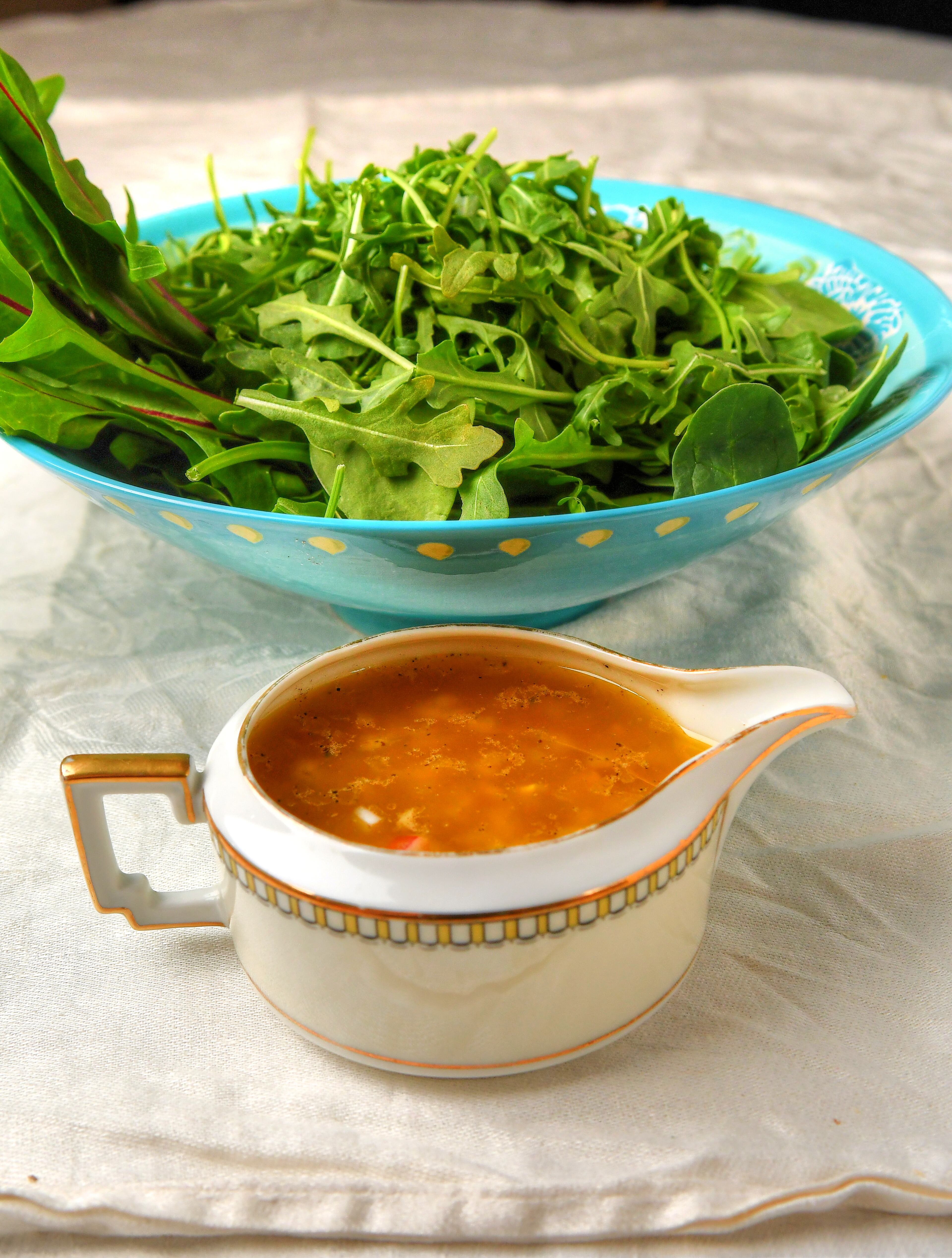
Spring Greens Salad with Shallot Vinaigrette
Greens and vinaigrette are the epitome of fresh, simple cooking, and they lend themselves to endless versatile combinations. Swap the cider vinegar for red wine vinegar or a squeeze of lemon juice, or substitute scallion for the shallot. Add fresh herbs or whatever berries or chopped veggies you have on hand. Wild greens, like violet greens, work beautifully here, too.
- 1 cup extra-virgin olive oil
- 1/2 cup apple cider vinegar
- 1/2 small shallot, finely diced (about 1 tablespoon)
- 1 teaspoon chopped fresh rosemary
- Salt and pepper to taste
- 8 cups salad greens, any variety or blend
- Optional toppings: 2-3 tablespoons herbs such as tarragon, basil or oregano, or 1 cup thinly sliced radish or carrot, or 1 cup strawberries or other spring berries
- In a glass jar with a lid, combine oil, vinegar, shallot, rosemary, salt and pepper. Seal and shake until combined.
- Place greens in a large mixing bowl, add dressing and toss to combine. Add toppings of your choice, if desired. Serve immediately. Makes 4 servings.
Nutritional information
Per serving: Per serving (including dressing), without optional toppings: 526 calories (percent of calories from fat, 91), 3 grams protein, 9 grams carbohydrates, 5 grams fiber, 55 grams total fat (8 grams saturated), no cholesterol, 22 milligrams sodium. Per tablespoon vinaigrette: 81 calories (percent of calories from fat, 99), trace protein, trace carbohydrates, no fiber, 9 grams total fat (1 gram saturated), no cholesterol, trace sodium.
Pickled Carrot Sticks
Carrots are one of my favorite spring and autumn vegetables, and simple fermented carrot sticks make a regular appearance at my table. You can eat them as is, but pickled carrots add depth and zing to salads, sandwiches, soups or platters of roasted vegetables. I usually ferment mine 2 to 3 days; for a stronger flavor, ferment them a day or 2 longer.
- 6 medium carrots, ends trimmed, cut into 1/2-inch sticks, 3-4 inches long
- 1-2 tablespoons pickling spices, such as dill seed or caraway (optional)
- 1 quart room-temperature water
- 2 tablespoons sea salt
- Divide carrots between 2 clean pint jars with fitted lids. Add spices, if using.
- In a pitcher or large jar, combine the water and salt. Stir until salt is dissolved. Pour brine over carrot sticks until completely submerged. Seal and set jars on a plate in case of spillovers.
- Let sit at room temperature 2 to 3 days, gently opening and checking carrots daily until they develop your desired flavor.
- Store refrigerated in the brine. Consume within 1 month. Once carrot sticks have been eaten, save the brine to add to soup stock or pasta water, if desired. Makes 1 quart (6 servings).
Nutritional information
Per serving: Per serving: 28 calories (percent of calories from fat, 9), 1 gram protein, 6 grams carbohydrates, 2 grams fiber, trace total fat (no saturated fat), no cholesterol, 428 milligrams sodium.
Scrappy Stock
Keeping stock on hand makes it easy to pull together a flavorful meal without much fuss. I love the bone broths (including a vegan version!) from Woodland Wellness at Grant Park Farmers Market. When I make my own, I use kitchen scraps as a base. Simply store vegetable scraps (potato peels, carrot ends, etc.) in a reusable freezer bag or freezer-safe container, plus keep a separate bag for bones from roasted chicken or other meat. Once you have accumulated enough, toss them in a slow cooker or stockpot, add water and seasonings, and let time do the rest.
- 2 quarts vegetable scraps and meat and/or poultry bones
- 1 gallon water
- 1/4 cup apple cider vinegar
- Sea salt to taste
- 1-2 tablespoons herbs such as thyme, rosemary or herbes de Provence (optional)
- 1-2 teaspoons spices such as peppercorns or hot peppers (optional)
- Add all ingredients to a slow cooker or stockpot. Cover and cook on low or over low heat 6 to 8 hours. Place a mesh strainer over a large bowl or pot and carefully pour the stock to strain, discarding solids. Allow the strained stock to cool for 30-60 minutes, then ladle into clean freezer-safe containers, leaving 1 inch of headspace if freezing. Store refrigerated for up to 5 days or in the freezer for up to 2 months. Makes 1 gallon (4 servings).
Nutritional information
Per serving: Per serving (using vegetable scraps): 48 calories (percent of calories from fat, 7), 2 grams protein, 9 grams carbohydrates, 3 grams fiber, trace total fat (no saturated fat), no cholesterol, 65 milligrams sodium.
Carrot-Top Pesto
Carrot greens are flavorful and nutrient-rich, but their texture isn’t always the best for fresh eating. Making this pesto helps you cut down on kitchen waste while bringing a bright, green flavor to your dishes.
- 1 bunch carrots with greens, thoroughly rinsed
- 1/2 cup pine nuts (optional)
- 1/2 teaspoon salt
- 1/2-2/3 cup extra-virgin olive oil
- Separate carrots from the greens. Reserve carrots for another use (like Pickled Carrot Sticks). Rough chop the greens.
- To the bowl of a food processor fitted with the S-blade or the jar of a heavy-duty blender, add the greens, pine nuts, if using, and salt. Blend or process greens for about 30 seconds, then slowly drizzle in the olive oil until pesto reaches a smooth consistency. For a thinner sauce, add more oil.
- Use as you would use traditional pesto: tossed with pasta, as a garnish or a spread, or an ingredient in dressings. Makes 1 cup (2 servings).
Nutritional information
Per serving: Per serving: 552 calories (percent of calories from fat, 86), 2 grams protein, 18 grams carbohydrates, 1 gram fiber, 54 grams total fat (8 grams saturated), no cholesterol, 601 milligrams sodium.
Homemade Yogurt
Homemade yogurt is easy to make and tastes leaps and bounds better than most store-bought yogurts. It’s considerably cheaper as well, especially if you prefer organic dairy. To make a thicker Greek-style yogurt, strain the finished yogurt through cheesecloth. Simply layer 3 pieces of cheesecloth in a strainer over a bowl, pour in the yogurt, and allow the whey to drain. The whey is great in smoothies.
- 2 quarts whole milk
- 1 tablespoon yogurt starter (either from an existing batch of yogurt or purchased online)
- In a medium saucepan over medium-high heat, stirring occasionally, warm milk to 162 degrees and maintain that temperature at least 15 seconds, then let cool to room temperature.
- Pour milk into a large glass, stainless steel, or ceramic bowl or pot and whisk in starter culture. Cover with a tea towel.
- Leave in a warm place, ideally between 110 and 115 degrees. You can experiment with a range of incubators: an oven turned off and with the light on, a large thermos or cooler packed with a heating pad or hot water bottles or the yogurt setting on an Instant Pot and some slow cookers. Let sit in the incubator overnight. In the morning, the yogurt will be ready to eat. Store any leftovers in the refrigerator and consume within 2 weeks.
- Before you eat all the yogurt, save a few tablespoons to make future batches. Makes 2 quarts (8 servings).
Nutritional information
Per serving: Per serving: 152 calories (percent of calories from fat, 47), 9 grams protein, 11 grams carbohydrates, no fiber, 8 grams total fat (5 grams saturated), 32 milligrams cholesterol, 113 milligrams sodium.Sign up for the AJC Food and Dining Newsletter
Read more stories like this by liking Atlanta Restaurant Scene on Facebook, following @ATLDiningNews on Twitter and @ajcdining on Instagram.