After relenting to his ace, Collins opens door to more scrutiny
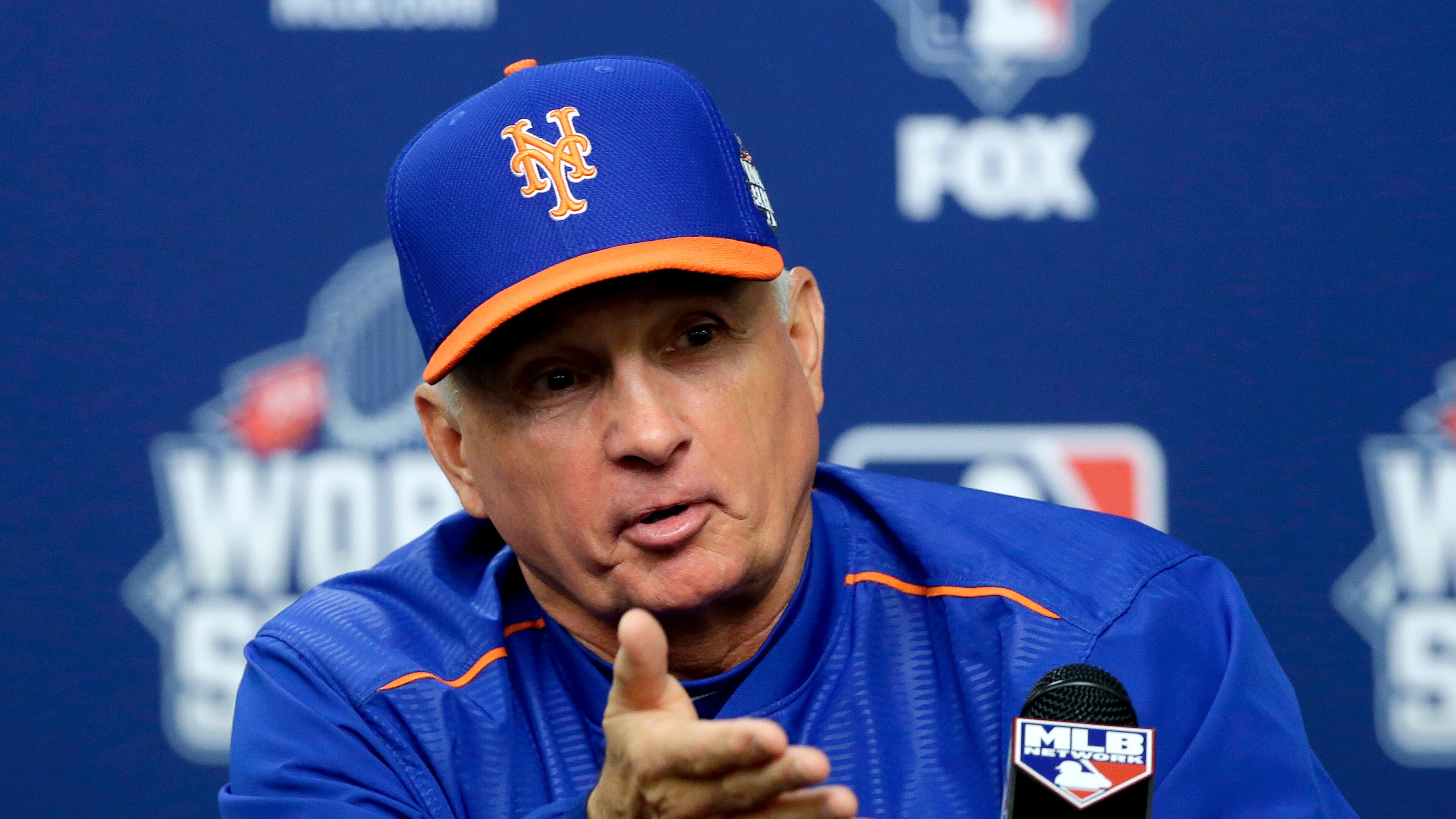
In the eighth inning of Game 5 of the World Series, with the New York Mets facing elimination, Matt Harvey rushed over to manager Terry Collins in the dugout, looking angry and shaking his head. Collins had tried removing Harvey from the game, in which he had held the Kansas City Royals scoreless. The crowd was chanting Harvey’s name, urging Collins to keep him in.
“No way,” Harvey told Collins. “No way.”
Collins ultimately relented to the pressure from his ace and the crowd and let Harvey stay in, and Harvey sprinted out of the dugout for the ninth inning to loud cheers. But Harvey’s pitches lacked the same life, the first two batters reached base, the Royals pulled within a run, and Collins had to head out to retrieve Harvey anyway. Harvey punched his glove, and Collins called on Jeurys Familia, the Mets’ closer, with the tying run on second base.
For the second consecutive game, Collins had waited to use Familia, only to put him in an awkward position with runners on base. For the second time, the result was the same: Familia blew the save. Eric Hosmer, the Royals’ runner, advanced on a groundout and scored on another groundout, taking off for home just as David Wright turned his head and threw to first.
Collins, and Harvey and Familia, could only watch in the 12th inning, then, as the Royals scored five runs to clinch the win. In the Mets’ four losses, Familia had blown all three of his save opportunities, but he was not entirely to blame. Collins watched the final outs with his arms folded, expressionless, left to ponder what might have been had he stood up to Harvey.
“Obviously, I let my heart get in the way of my gut,” Collins said afterward, with the benefit of hindsight. “I love my players. And I trust them. And so I said, ‘Go — get ’em out.’”
In Collins’ defense, Harvey had looked dominant for the first eight innings, as dominant perhaps as he had been all year. His fastball touched 98 mph. His breaking pitches had the Royals fooled. At one point, he recorded six strikeouts in the span of two innings and, in a nod to his nickname, the “Dark Knight” theme song played over the sound system.
But as his pitch count climbed, so did the possibility that Harvey would become fatigued. He was pitching in his first postseason, in his first year back after Tommy John surgery, and he had never thrown so many innings in a season before. In the eighth inning, when Harvey approached Collins and demanded to stay in the game, he had pitched 216 innings this year.
“I wanted the ball because I felt great,” Harvey said. “I felt like I could go out there and get the last three outs. If I was tired in that moment, I obviously would’ve said something different. But I felt good.”
Hours earlier, too, Collins had been grilled by members of the news media over a decision he had made that cost the Mets Game 4: He sent in Tyler Clippard to start the eighth inning, and Clippard walked two batters, putting the go-ahead run on base. Collins reasoned that he had used Clippard in the eighth down the stretch this season, and he wanted to save Familia for later in the Series, if he could.
“It’s easy to second-guess every move when it doesn’t work,” Collins said.
But Collins’ thinking seemed to have changed from a few weeks earlier. During the division series, against the Los Angeles Dodgers, Collins used Familia in four of the five games, sending him in for a six-out save in the clinching game. Collins had been criticized for overusing Familia.
The way Collins used Familia in the World Series seemed curious, then. After Familia blew the save in Game 1, allowing a home run to Alex Gordon, Collins brought him back pitch in Game 3, in a six-run game, in part so he could regain his confidence. In Game 4, in a one-run game, Collins was perhaps too hesitant. After Clippard issued those two walks, Collins had to use Familia anyway to attempt a five-out save. Then Daniel Murphy made a crushing error, and the Royals scored three runs off Familia, giving him his second blown save.
Collins spoke of those decisions on Sunday afternoon.
“Well, I used Familia in Los Angeles and got crucified because I used him for a six-out save,” he said. “And last night I got crucified because I didn’t use him for six outs. That’s the nature of the game. I’m not offended by that. That’s opinions.”
Collins had been consumed by strategizing and thinking about in-game decisions, like the one he faced with Harvey on Sunday. Even after Collins let Harvey start the ninth inning, he let him continue after walking the leadoff batter, a clear sign of fatigue. He did so because, Collins said, “if you’re going to let him just face one guy, you shouldn’t have sent him out there.”
At his postgame news conference, Collins took complete blame for the decision and absolved Harvey, saying that it was in his competitive nature to want to pitch. He described it as his responsibility to protect Harvey from himself, as a parent would with a teenager.
“It’s my fault,” Collins said. “It’s not his.”
Later, when the Mets went back onto the field to salute those of their fans who had stuck around, Collins walked down the first-base line shaking hands and greeting people with a tired smile.
People cheered him, thanked him and shouted out to him, “Go get ’em next year.”
Collins had been in baseball for more than four decades until he made this World Series, though. This might have been his only shot. As he walked off, the crowd started chanting his name. He tipped his cap, waved once more and disappeared into the dugout, with the game still undoubtedly on his mind. “I won’t be sleeping much the next couple of days,” he had said. “I’ll tell you that.”