
Nick Saban says rampant, frequent transfers in college football are ‘an issue’
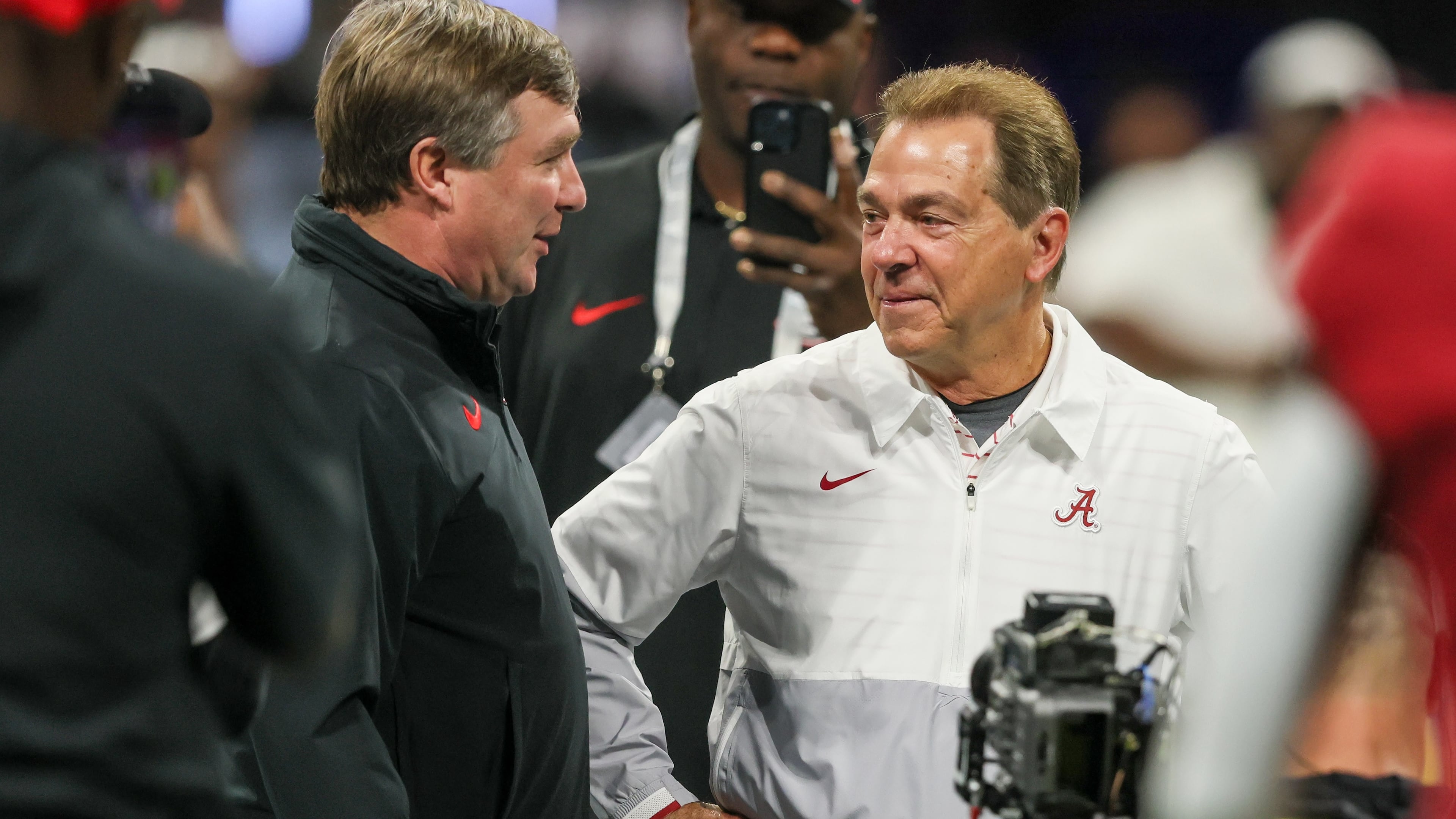
Nick Saban warned college football long ago about the Pandora’s box that an open transfer policy could have, and nine years later, his concerns have come to fruition.
“I think, probably, transferring is an issue,” Saban declared on the SEC Network’s “Paul Finebaum Show” last week.
“Too many transfers is an issue. I mean, during the (NFL) draft this year, talking to general managers, it used to be if a guy transferred once, that was a blinking light.
“Now, if they transfer twice, it’s a blinking light, (and) we’ve got guys transferring three and four times.”
Saban, of course, was noted for putting together some of the most talented teams in history during his 17-year tenure at Alabama, including four national championship squads with Kirby Smart as his lead recruiter and defensive coordinator.
Smart, entering his 11th season leading Georgia, said on “The Next Round” podcast last week while appearing in Birmingham that Alabama’s best teams from 2012-2015 “would beat the dog out of all these teams right now.”
The combination of NIL legislation (2021) and, more recently, an open, unlimited transfer policy (2024), has prevented programs like Alabama and Georgia from stockpiling talent and opened the door for billionaire donors like Indiana alum Mark Cuban to influence player procurement.
Saban, himself, won a national championship with a transfer quarterback under center when Florida State transfer Jacob Coker directed the Tide to a 45-40 College Football Playoff championship game win over Clemson on Jan. 11, 2016.
Back then, however, transfer quarterbacks were more the exception than the rule, as transfer rules had stipulated players transferring had to out a season unless granted a waiver.
Saban said NFL teams were once concerned about quarterbacks who had played in multiple systems, but that’s no longer the case.
“We used to talk about, if they had three or four offensive coordinators, that affected their development,” Saban said. “Now, you play for three or four schools and we don’t even talk about it.”
Indeed, five of the most recent seven national championship teams were led by quarterbacks who transferred at some point in their careers, including last year’s champion Indiana (Fernando Mendoza).
Saban has been retired for more than two years, but he has continued to comment on college football and influence the game through his work on ESPN’s “College GameDay.”
Saban was among the notable voices to speak at a collegiate sports roundtable at the White House in April, where he encouraged Congress to provide “some kind of antitrust legislation” that would enable the NCAA to manage athletics without litigation at each turn.
Saban, during his appearance on the SEC Network, also voiced his support for limiting players’ eligibility clocks.
“I think there should be a time limit on how long guys can play — five years?” Saban said, seemingly in support of the five-for-five proposal that would allow players to play five seasons over a five-year window that would start upon their graduation from high school or 19th birthday, outside of religious and military service exemptions.
“There were 50 players 25 or older in the draft this year, and there were 50 less juniors going out for the draft,” Saban said. “When you change the dynamics of why you would go to the draft, which is financial, now you can do it (make money) in college, (so) now you have less people going.
“But that’s a good thing, really, because they can develop probably better in college. But all these things are sort of issues that we need to come up with solutions in terms of how do we manage this in the future.”