
Decrying football’s spending, Kirby Smart should volunteer for a pay cut
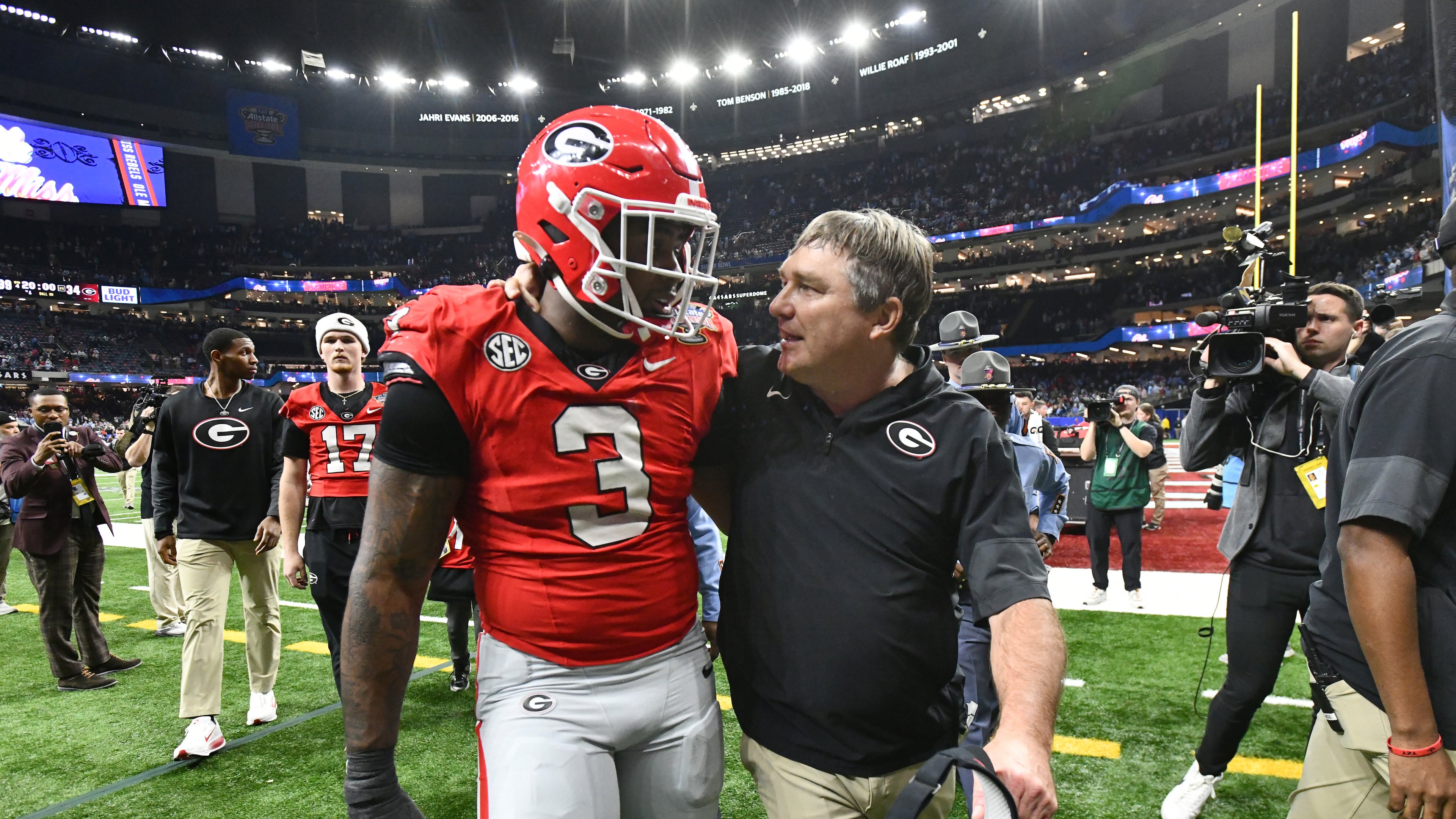

In a way that no championship trophy ever could, Kirby Smart has an opportunity to take action that would bring him undying respect and adulation.
Just not from his agent — and probably his peers.
In the midst of college athletics’ crisis, the influential Georgia football coach can be a problem-solving example by accepting a smaller salary and advocating for a cap on the size of football support staffs.
At the SEC spring meetings being held this week in Destin, Florida, Smart lamented the impact of the growing costs of his sport.
Speaking Tuesday, he said that college athletics is different from professional sports “but we’re becoming them. Our spending is rapidly becoming them. Again, my biggest concern for our sport is we’re going to ruin all the other sports.”
If only there were a way that Smart could directly address that concern …
At slightly more than $13 million per year, Smart’s salary is more than every college football coach except Indiana’s Curt Cignetti ($13.2 million). In 2021, Smart was getting by on an annual salary of $7.1 million.
It’s not to say he doesn’t deserve it. He is at the top of his field and is getting paid what the market will bear. It’s not his fault that Georgia keeps raising his salary.
The revenue and attention that he brings to Georgia by developing championship teams is worth multiples of his salary.
But Smart made the counterargument himself. Football’s ballooning costs are threatening to crowd out nonrevenue sports.
“And people say, ‘Well, that’s just the way it is,’” Smart said. “I don’t agree with that. Because we fund Olympic sports at our program. We develop Olympians.”
Just think how much better UGA could fund those sports if Smart and his football program acted selflessly and took less of the pie.

And it isn’t just Smart. Brent Key, skating by at $6.5 million per year, could do the same at Georgia Tech, as could any power conference coach.
Their example of meaningful sacrifice could help reshape an industry run amok with greed and power. Another way of approaching it would be to advocate for a cap on coaching salaries, an idea circulated earlier in May by a White House committee focused on college sports reform. Or Smart could at least freeze his salary for the rest of his time at Georgia at $13 million.
Granted, on the spectrum of things that could actually happen, volunteering for a salary reduction might fit somewhere between “pigs flying” and “pigs recording and producing a classical guitar album.” For one thing, football coaches and their agents would probably be furious with Smart for giving athletic directors everywhere an opening to suggest similar pay reductions to their coaches.
But if I had to pick someone who could do it, I’d go with Smart, someone who believes in the mission of college athletics, loves his school and has the status to withstand criticism of his peers.
On this matter, no one has a voice like Smart.
To that end, Smart could also push for a limit on staff sizes. Beyond his coaching staff, the Bulldogs’ support staff (including trainers, strength coaches and quality-control assistants) has 76 members. According to the rosters on the school’s athletics website, that’s more than all the other UGA varsity teams have combined.
In the 2021 season, UGA won the College Football Playoff championship with a mere 36 support staffers, less than half its current total.
Tuesday, Smart professed his belief in the ideals of the student-athlete: college athletes getting an education while also training to be a professional athlete.
“We’re going to lose that if we keep spending,” he said. “Because not everybody can spend at the rate we’re spending at.”
Smart can lead reform. Whether through the American Football Coaches Association, the NCAA or the SEC, he can push for measures or recommendations to cap the sizes of support staffs.
A reduction in employment opportunities would also not be well-received by his colleagues. But Smart sees the bigger picture. He said as much Tuesday when he quoted his mentor, Nick Saban, in answering a question about the landscape of college athletics.
“It can’t always be what’s best for self-preservation,” Smart said. “It has to be what’s best for the game.”
Being willing to accept a smaller salary and staff wouldn’t solve all of college athletics’ problems. But, as money-strapped athletic departments try to stay afloat by cutting nonrevenue teams, it could solve a lot of them.
Giving materially of himself for the sake of an institution he cherishes would be true leadership.
You can now get my column sent straight to your inbox. Sign up for my newsletter here.