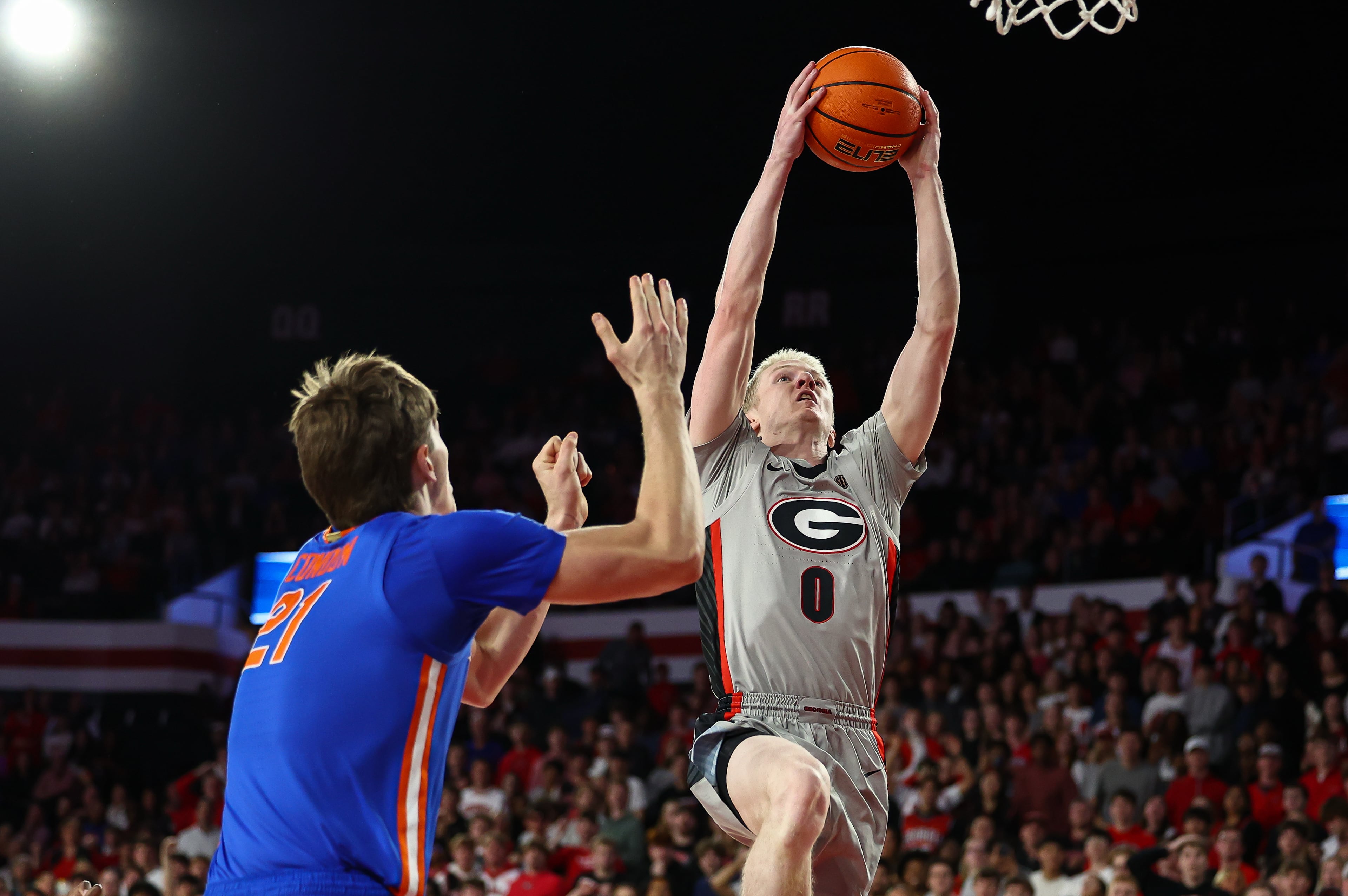
Georgia men look like strong NCAA tourney team in every way except one
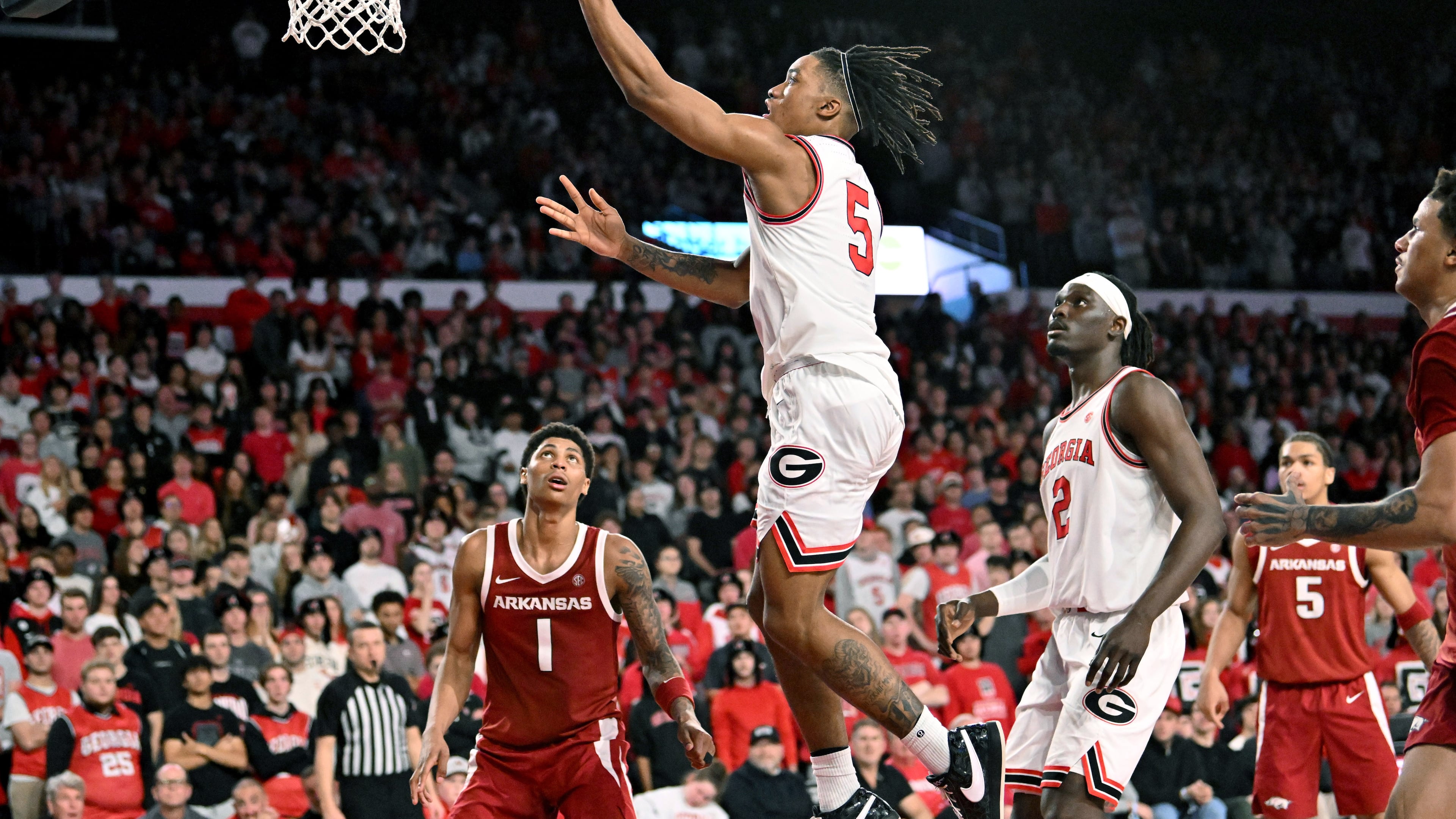
ATHENS — Just making the NCAA tournament was the bar for Georgia men’s basketball for a long time. Mike White cleared it in his third season as Bulldogs coach.
Now White has a team that, in many ways, looks good enough to earn the program’s first win in the Big Dance since 2002 (later vacated by the NCAA). But the Bulldogs are lacking in one important area, and Tennessee is the latest SEC foe to exploit it.
The Volunteers punished Georgia on the boards to earn an 86-85 overtime victory at Stegman Coliseum on Wednesday night. It was a much better effort for the Bulldogs, after they got routed at Texas over the weekend, but they couldn’t overcome Tennessee’s 52-27 rebounding advantage.
The Bulldogs want their guards to push the pace. The Vols prefer a slower tempo so their big men can bully opponents in the paint and on the boards.
The visitors got their way while collecting 26 offensive rebounds for 24 second-chance points.
“That’s ridiculous,” Georgia guard Jordan Ross said. “The fact we went to overtime with that being the rebounding number is crazy. That says something about our team, both bad and good. We’ve got to fix it. We will fix it.”
The loss dropped Georgia to 3-4 in Quad 1 games, which the NCAA tournament selection committee values most. Winning them while avoiding bad losses leads to higher seeding. The Bulldogs need that boost after they earned a nine seed in last season’s tournament and got blown out by No. 8 Gonzaga in the first round.
The good news for the Bulldogs is that the SEC provides plenty of chances for quality victories.
They have six games left on their schedule that qualify as Quad 1 as of Thursday. They include home games against Florida and Alabama and away games versus Vanderbilt, LSU, Kentucky and Oklahoma. There likely will be more chances for Quad 1 victories in the SEC tournament.
But the Bulldogs will have a hard time winning most of those games if they can’t shore up their major weakness.
Board disadvantage
Entering Wednesday’s game, Georgia’s SEC opponents had rebounded 40% of their missed shots. That’s the worst mark in the league by far. The Vols collected 26 of their 50 misses while scoring 24 second-chance points.
“If they get 18 instead of 26, it would still be too many, but we would have walked out of here with a big win,” White said. “(Rebounding) has been a big point of emphasis, really, since the season tip for us. We talk about it a lot. We will continue to stress on it to work on it.
“At the end of the day, we are not a great defensive rebounding team. That’s obvious. But we certainly all can give a little bit more and figure out how to finish some stops because our first-shot defense was pretty good.”
The Bulldogs nearly won despite the huge rebounding deficit.
They trailed from the four-minute mark of the second half until Marcus Millender made a spinning layup to forge a 74-74 tie with three seconds left. Tennessee’s Ja’Kobi Gillespie got a clean look on a floater at the buzzer, but the ball fell off the rim.
Georgia never had the lead during overtime. Tennessee pushed its advantage to 85-80 with 24 seconds to go. After Millender made a 3-pointer to cut Georgia’s deficit to 85-83 with 17 seconds left, Felix Okpara made one of two free throws for an 86-83 Vols lead.
White said a switch by Vols defenders stymied Georgia’s initial action on the final possession. The ball went to Millender, who drove to the basket to score with 0.6 seconds left.
Millender’s mishap came after he’d scored Georgia’s final four points in regulation and seven points in OT before the final basket.
“He’s really mad at himself right now because he cares so much about winning,” Ross said. “I tried to tell him, ‘Look, you are the only reason we were even in the game.’ We all trust ‘Smurf.’ We all trust the ball in his hands.”
It wouldn’t have come down to that if Georgia could have figured out how to limit Tennessee’s second-chance points. That’s hard to do because the Vols start two big men who are strong on the boards, Okpara and J.P. Estrella. They each had seven offensive rebounds, while Georgia totaled seven as a team.
White said Georgia’s small lineup, not his team’s effort, was the main issue.
“I don’t mean to be negative about our rebounding potential,” he said. “They’re the No. 1 offensive-rebounding team in the country. ... The physicality, especially with Estrella and Okpara, and we are playing four-guard lineups, (so) I anticipated getting outrebounded.”
The challenge for Georgia is that Tennessee isn’t the only strong rebounding team in the SEC.
Florida, Auburn and Texas also rank among the top 20 nationally in offensive-rebounding percentage, according to kenpom.com. The Bulldogs beat Auburn in overtime last month. They lost to Florida, Texas and now Tennessee.
The Bulldogs look like a strong postseason team in every way except the one area that’s holding them back.
About the Author