
Even with no teams in CFP title game, SEC playoff earnings near $40 million
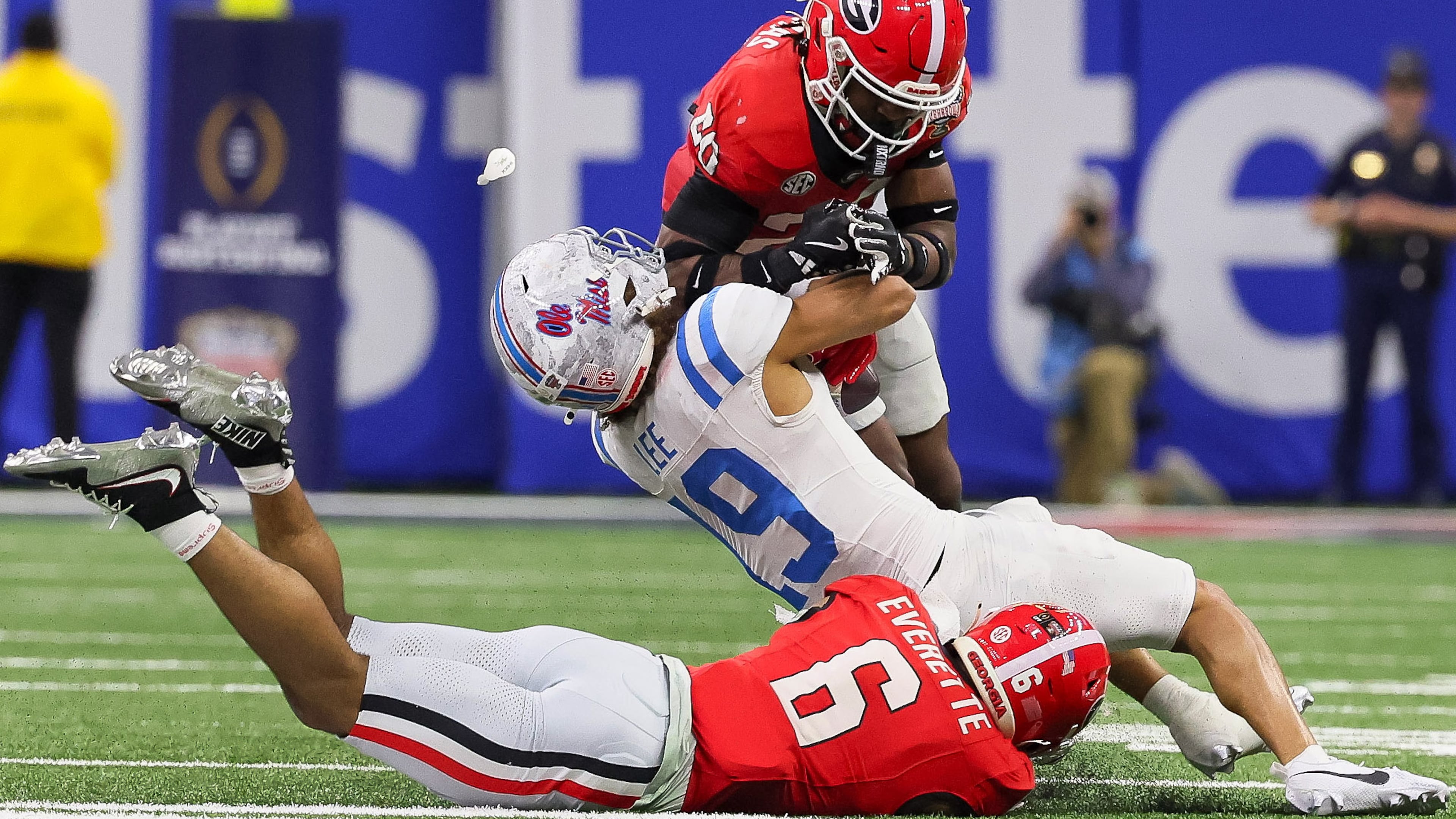
The SEC produced five of the 12 College Football Playoff teams, garnering nearly $40 million of revenue for the league.
The CFP revenue model awards $4 million to a conference for each team that makes the 12-team field, and each team that advances to the quarterfinals, per the organization’s website.
A conference will receive an additional $6 million for each team that makes the CFP semifinal and each team that advances to the CFP championship game.
That led to a rich take for the SEC, even with none of its five playoff teams making it to the title game, which this year pits Big Ten champ Indiana against ACC at-large selection Miami at 7:30 p.m. Monday in Miami Gardens, Florida.
This is how much each team’s appearance was worth to the SEC in terms of the respective CFP payout:
- Texas A&M: $4 million
- Oklahoma: $4 million
- Alabama: $8 million
- Georgia: $8 million
- Ole Miss: $14 million
Each playoff team also received a $3 million stipend to cover travel for each game it played.
Different conferences have different distribution methods, however, with the SEC’s among the more complex, and the ACC’s the most direct.
Miami, because of the ACC’s recently changed payout model, gets to keep all of the CFP money it has earned by reaching the title game — $20 million, in addition to the allotted travel stipends — rather than split it among its respective league’s members.
The Big Ten and Big 12 are at the other end of the spectrum; their rules stipulate the teams share the CFP payout money equally among conference members.
The SEC model is more of a hybrid model, per Front Office Sports, with each playoff team earning a significant cut of the money allotted for its CFP appearance and the remainder going into a pool that’s distributed among remaining conference members.
Per SEC bylaws, schools participating in the CFP will receive $3 million for first-round appearances, $3.5 million for quarterfinal appearances, $3.75 million for semifinal appearances and $4 million for quarterfinal appearances.
This, in addition to a travel stipend as determined and designated by the SEC executive office.
Next year’s playoff figures to be even richer with the field potentially expanding to 16 teams, pending Big Ten commissioner Tony Petitti and SEC commissioner Greg Sankey reaching a compromise on the model.
The deadline for the league commissioners to come to an agreement is Jan. 23.
The two models on the table for a 16-team playoff are the so-called “5-11,” and a newer 24-team model proposed by the Big Ten.
Georgia coach Kirby Smart said he would support a widely expanded playoff “if done the right way,” when asked in August about the 24-team proposal.
“People are not excited about midtier bowl games,” Smart said. “I think those bowl games are great experiences, I played in them, (and) I’ve coached in them. … That’s an opportunity.
“But the more teams you give an opportunity to decide things on the field, like you do, whether it’s college basketball, high school football, old (Division) I-AA football … you’re going to get things decided on the grass. So yeah, I’d be for that.”
The 5-11 model involves five conference champions and then the next 11 teams selected in at-large fashion based on the CFP selection committee’s rankings.
ESPN is citing sources as saying the Big Ten will agree to a 16-team playoff model provided the SEC commits to a 24-team playoff format after three years.
The 24-team model may or may not include automatic qualifiers, and could open the opportunity for play-in games.
Big Ten media partner Fox has publicly endorsed the 24-team format, which one might expect, because it would provide the network with more college football game inventory and, thus, revenue-producing opportunities.
If the SEC and Big Ten can’t reach an agreement on an expanded playoff model moving forward, the CFP will remain at 12 teams.
There are two notable tweaks to the 12-team playoff, should it remain in place next year — the four power conference champions will receive an automatic bid along with the highest-ranked Group of 6 champion.
Also, Notre Dame, if ranked in the top 12 of the CFP selection committee rankings, will receive an automatic bid in the 2026 field.
The 10 FBS commissioners, Notre Dame athletic director Pete Bevacqua and 11 chancellors and presidents on the CFP board of managers are scheduled to meet Sunday in Miami — the day before the CFP championship game — for their annual review of the season, per ESPN.
About the Author

Mike is in his 10th season covering SEC and Georgia athletics for AJC-DawgNation and has 25 years of CFB experience. Mike is a Heisman Trophy voter and former Football Writers President who was named the National FWAA Beat Writer of the Year in January, 2018.


