Georgia’s Senate GOP leader leaves room for Medicaid talks after rout


Georgia Senate Majority Leader Jason Anavitarte calls the 29 Republicans who narrowly control the chamber the “designated survivors.” One of their first tests will be whether they can strike a deal with Democrats on Medicaid.
In an interview on the “Politically Georgia” podcast, the GOP leader said his caucus would consider Gov.-elect Keisha Lance Bottoms’ push to make more people eligible for the government-funded health insurance program. Anavitarte made no commitment to bring it to a vote.
“We’re going to go through the process. We’re going to do our homework,” he said. When pressed on whether a compromise could pass next year, he was noncommittal: “I guess we’re going to see what happens.”
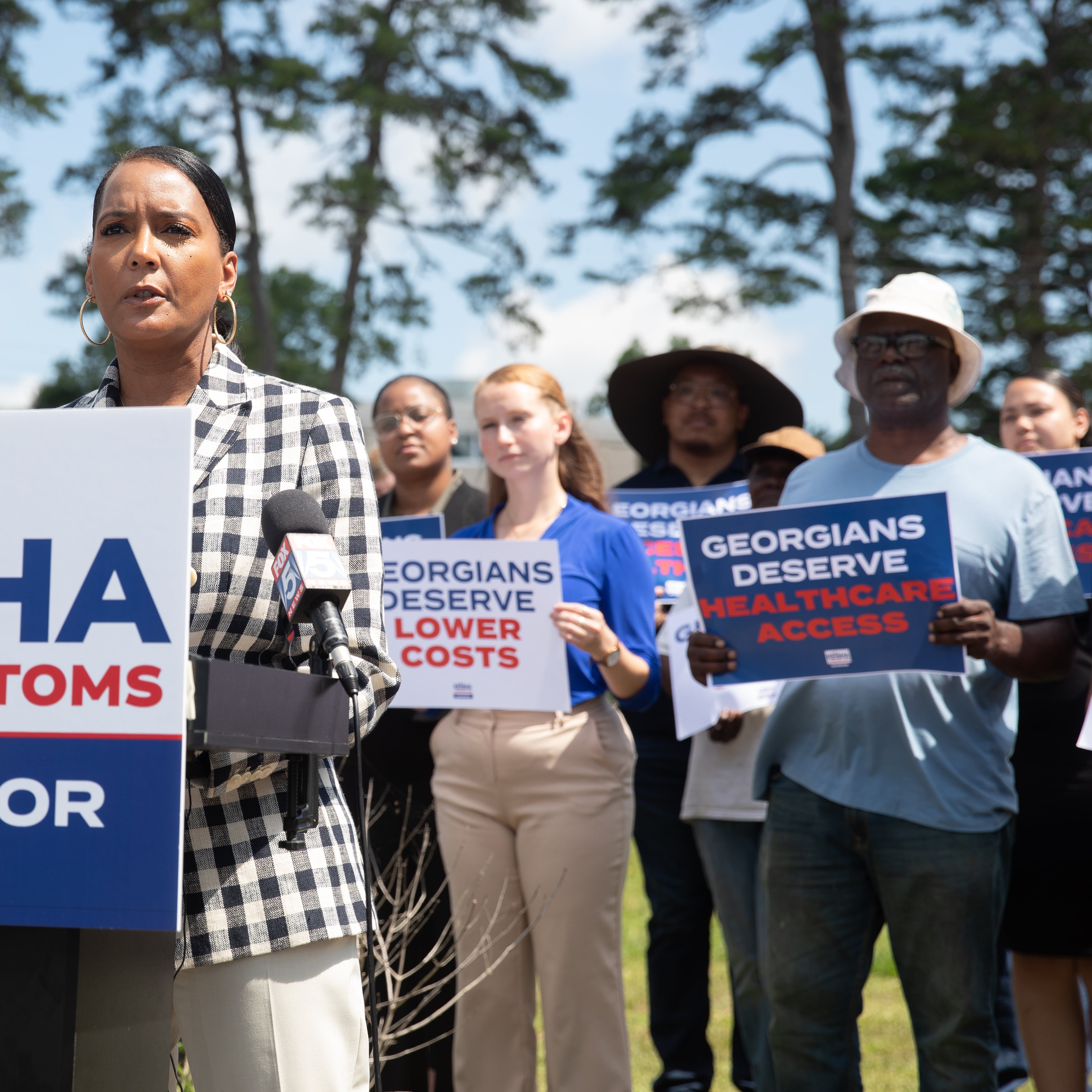
The Democratic rout this month flipped every statewide seat and the Georgia House. But it left Republicans in the Senate with the exact number of votes — 29 — they need to pass a bill on their own. That means both parties will need some bipartisan agreement to get their bills passed and signed into law.
“We each represent 200,000 people in a Senate district and we’re going to do what they elected us to do,” Anavitarte said. “But we’re going to be mindful of what this means for the rest of the state, because we in the Senate, as I tell the caucus, we’re practically now the Republican Party in Georgia.”
Other Georgia Republicans are weighing in on how they should wield that power. After Bottoms said she was building Medicaid expansion into her first budget proposal, Republican U.S. Rep. Rich McCormick urged the Georgia Senate to “hold the line” on social media.
“Politicians can have their opinions,” Anavitarte said. “Rich McCormick — I like the guy, he can have an opinion — but he may want to just focus on Washington, D.C., and the dysfunction in D.C. I think Georgia does it better than D.C.”
Anavitarte was also asked about Gov. Brian Kemp’s decision not to call lawmakers back for a special session to redraw political maps or curb Bottoms’ powers.

“I probably would have taken a little bit different tack than the governor,” said Anavitarte, who added that Kemp hadn’t discussed the decision with him. Asked specifically about redistricting, Anavitarte said GOP lawmakers are focused on the future.
Senate power

Before the Senate takes up any measures, the chamber’s GOP leaders have to decide how much power to give the Democrat who will preside over it.
Lt. Gov.-elect Josh McLaurin won the chamber’s gavel resoundingly over Republican state Sen. Greg Dolezal. But it’s not clear how much influence he’ll have over committee assignments and the chamber’s agenda as Republicans prepare to strip him of his authority.
“We’ve always viewed the Senate as an independent, deliberative body,” Anavitarte said. “We’re all independently elected senators. And as you know, the constitutional and power structure of the Senate lies within the 56 senators at the end of the day.”
McLaurin has pledged to work with Republicans and told The Atlanta Journal-Constitution last week that shutting Democrats out of power would make for a more divisive legislative session.
Common ground

Anavitarte sees room to work together on protecting more of Georgia’s land and water, saying he’d like the state to set a goal of conserving 1 million additional acres by 2040.
And he said there’s a chance for consensus on data centers, an issue that dogged Republicans during the campaign.
Anavitarte said he wants to eliminate the state sales tax exemption for data center equipment, as he criticized local officials who negotiate projects behind closed doors. The exemption cost Georgia more than $2.5 billion in forgone revenue this year, according to a state estimate.
“I’m all for getting rid of the data center tax credit,” he said, adding that the revenue from ending the exemption could be used for education or conservation. “They don’t need the money to survive.”
He was more skeptical when asked about Bottoms’ proposal to let voters decide whether to legalize casinos to help pay for expanding Georgia’s pre-K program, saying it would be a “challenge” to pass.
And he made clear the limits of bipartisan bonhomie when it came to the Democratic push to nix Georgia’s anti-abortion law, one of Bottoms’ campaign pledges. Asked about repeal, he pointed to the Republican majority and said, “Our values are our values.”
“We have our principles we stand on. There are going to be things that we’re going to agree and there’s going to be other things we disagree on, but our principles aren’t going to change,” he said.
“Just because they send us a bill doesn’t mean it’s going to get a stamp of approval.”