Police body cam footage shows confusion at FBI raid of Fulton elections office
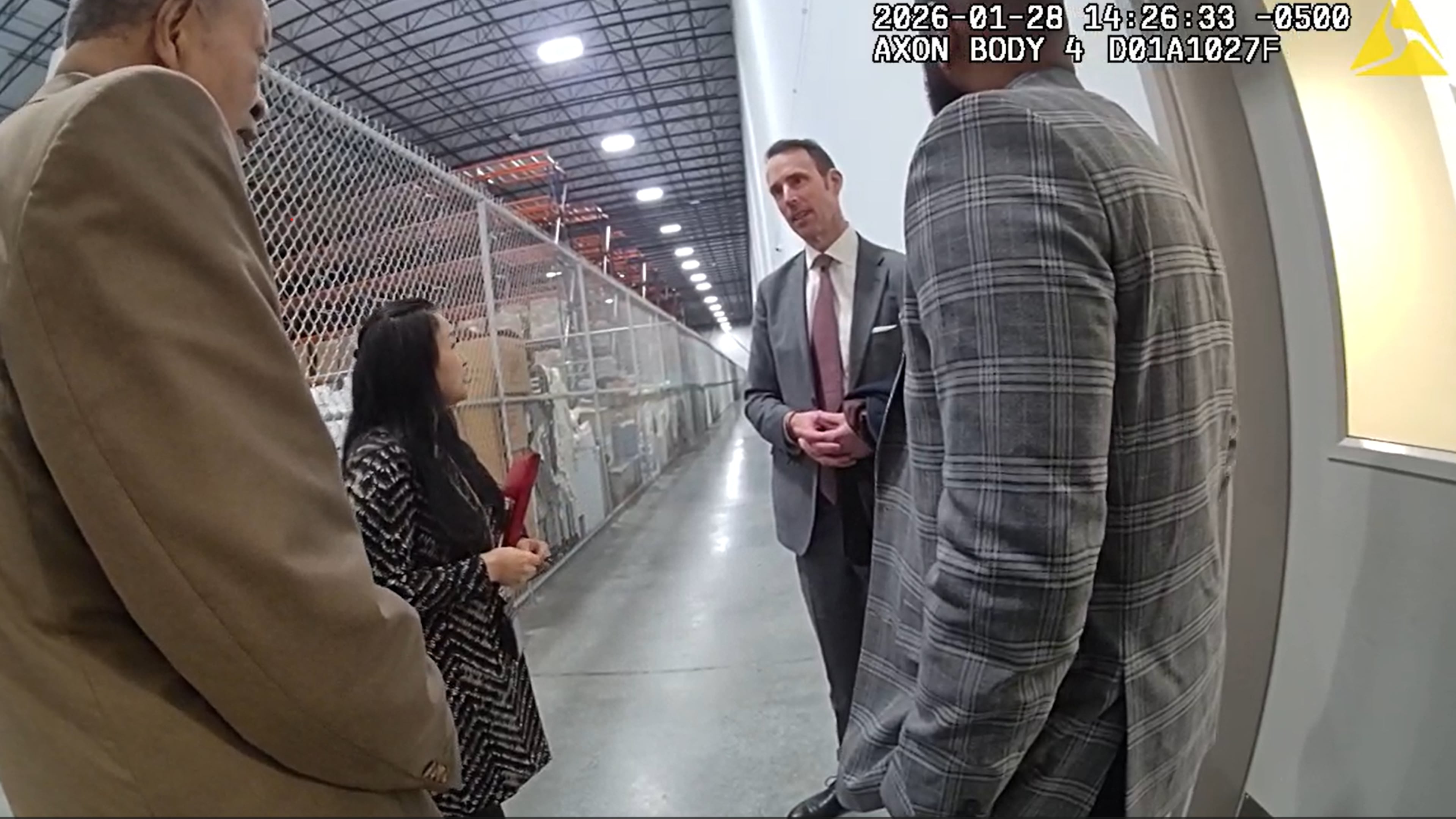
In the chaotic early moments of the FBI’s raid of Fulton County offices, it seemed no one in county government knew who to trust — or what exactly was going on.
The confusion was captured on body cameras worn by Fulton County police officers as they escorted top county officials and milled about the cavernous Union City elections hub after dozens of federal agents had arrived unannounced last week, demanding every ballot cast in President Donald Trump’s 2020 defeat.
The videos, obtained by The Atlanta Journal-Constitution late Monday in response to an open records request, show that in the first hours after agents arrived, county officials were largely compliant, even as they expressed concerns about the search warrant the FBI had come to execute.
“We’ll fight all that later,” county attorney Soo Jo told an officer who raised questions about the FBI’s search warrant and repeatedly told others that the situation was “screwed up.”
“Right now, we are complying. Let them do their thing,” Jo said.
Officers’ cameras were recording as Fulton’s clerk of courts, Che Alexander, told the council chairman and county attorney that the warrant she initially received from the government had not been clear about what records agents had come to take.
FBI raids Fulton election office
Search warrants showed agents were seeking ballots from the 2020 election that Donald Trump has claimed was filled with fraud. Past recounts and court challenges have not backed up those assertions. Read more
2026 Midterms: Georgia activists working with Trump administration to influence elections
Political battle: Former Georgia chief justice appointed to mediate Fulton FBI raid dispute
Court filing: Bipartisan group of former prosecutors denounce FBI seizure
The case: Election skeptics eagerly await criminal charges in Fulton election case
Interview: State Election Board chair dismisses calls for Fulton County takeover
Allegations: Skeptics of 2020 election look for answers
Reaction: FBI affidavit for Fulton’s 2020 records fuels GOP calls for state takeover
Affidavit explained: The AJC breaks down key details in the document used to seize the ballots
The affidavit: Unsealed documents in Fulton County raid show FBI relied on election skeptics
Watch: Police body cam footage shows confusion at FBI raid
Trump: Fulton FBI raid will show 2020 election was stolen
Timeline: How we got here
Opinion: The FBI raid isn’t about the 2020 elections. It’s about 2026 and 2028.
Listen to the AJC’s Breakdown podcast: Fulton County vs. Donald Trump
Special report: Inside the campaign to undermine Georgia’s election
The cameras were recording as elections staffers and police officers alike scrutinized the warrant on their smartphones and asked repeatedly where the hard copy was.
And they captured FBI officials as they explained they were talking with a federal judge about issuing an updated warrant, a process one said was slowed by computer problems. They explained that when the first warrant was written, they hadn’t realized that the clerk of court, not the county elections board, held the records.
The FBI did not immediately respond to a request for comment.
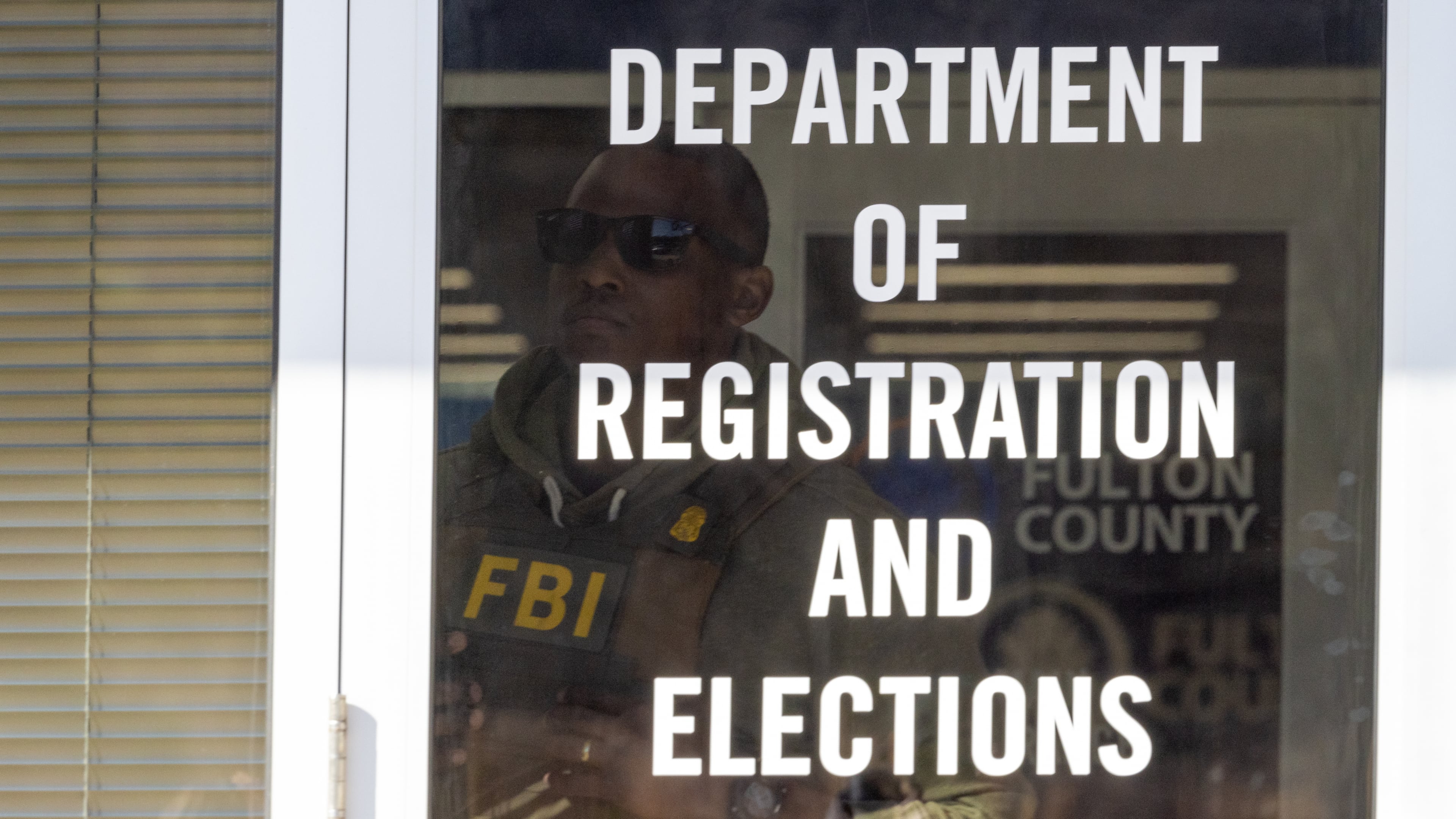
But as Alexander, Jo and Fulton County Commission Chairman Robb Pitts talked with Peter Ellis, the acting head of the FBI’s Atlanta field office, it was clear that the sense of cooperation could sour at a moment’s notice.
Ellis said he was letting county officials stay in the building as a courtesy. When Jo said they were simply there to observe, an agent said he didn’t want agents to be observed. They were adamant that the media and anyone taking video was not welcome inside. And when someone walked up with a camera, the whole group was told to clear out of the hallway they were standing in.
“I want to remind you that this is a criminal search warrant and this location is kind of restricted at this point, respectfully,” an agent said.
Ellis added a moment later: “We have the right to be here. We’ve been very nice.”
What’s more, the recordings show that the feds were willing to take the records by force if they had to.
In another video, an unidentified county staffer made clear that it was not an idle threat. He told an officer he returned to the warehouse from a task offsite and he came upon agents with “cutting tools and all that,” including a big saw.
Walking through the building, Alexander told Jo and Pitts that the FBI’s tone had initially struck her as rude. She said she was willing to unlock the storage cages holding the 2020 ballots but didn’t want to hand over records in her custody without knowing “what it is you’re looking for so you’re not taking other stuff.”
“They said they’ll break the lock and take ‘em,” Alexander said.
In a separate video, the cameras were recording as a federal agent seemed to confirm her account. He remarked that Alexander had said she was scared to come to the facility because she hadn’t believed agents when they said they were calling from the FBI.
The agent said the bureau only wanted Alexander to unlock the storage cages so agents could avoid breaching them by force.
“One way or another, the records are coming with us today,” the agent said.
They did: More than 650 boxes of ballots were packed into rented box trucks and taken to an undisclosed location. It’s unclear if the county will challenge the warrant, even as one councilman said Monday officials were planning a court motion. Pitts, the council chairman, responded that “we’re taking our time to develop whatever legal strategy may be needed.
State and federal investigators have found no evidence of significant fraud that would have affected the outcome of the 2020 presidential election, and Georgia’s results were confirmed by three counts, including a hand count of every ballot cast.
But election skeptics have made Fulton’s ballots the subject of litigation for more than five years. The U.S. Department of Justice filed a civil lawsuit seeking the ballots in December. A Fulton County judge ruled the State Election Board had the right to obtain ballot images and other documents from the election — but would have to pay the county back for the cost of producing them.
Speaking with an officer during the raid, Fulton elections director Nadine Williams speculated that those groups were using the FBI to get them for free.
“I think they think we destroyed the ballots, but we didn’t,” Williams said, according to the officer’s body camera.
“If you want to take 700 boxes of ballots, have at it. So they can go make paper airplanes for all I care.”
The FBI raid significantly escalated the fight, just days after Trump told the World Economic Forum in Davos, Switzerland that people would “soon be prosecuted for what they did” in 2020.
And it revealed a broader strategy by the administration to renew election integrity fights ahead of the 2026 midterm elections. Records show that while the Fulton search warrant was signed by a federal magistrate judge in Atlanta and executed by local FBI agents, it was approved by a U.S. attorney in St. Louis, Thomas Albus, and partly overseen by the director of national intelligence, Tulsi Gabbard.
The Justice Department has given Albus nationwide authority to investigate election integrity cases, according to Bloomberg Law. And according to The Wall Street Journal, Gabbard has been tasked with reexamining the 2020 election.
AJC staff writers Shaddi Abusaid, Alia Pharr and David Wickert, and data editor Charles Minshew contributed to this report
About the Author