Autism alert license plate clears Georgia Senate
Georgia is one step closer to becoming the second state in the country to create a license plate that notifies first responders someone inside the car has autism spectrum disorder.
The Georgia Senate on Wednesday unanimously approved Senate Bill 433, which would allow Georgia residents with autism or a developmental disability, or the spouse, parent or legal guardian of someone with autism to get the specialty plate.
State Sen. Brian Strickland, a McDonough Republican who sponsored the bill, said the license plate keeps both first responders and those with autism safe.
“People with autism have a gift that those that we call ‘typical’ don’t have,” Strickland said. “But autism doesn’t have a look and someone not trained to understand how an individual with autism thinks and expresses himself or herself may, even with the best of intentions, cause great stress for these individuals and cause negative interactions that can be prevented.”
SB 433 would also require first responders to learn the safest ways to interact with a person with autism during basic training. For example, some people with autism can be overwhelmed by things like sirens or lights and get agitated.
Georgia already has a specialty plate for autism awareness, but this plate would communicate to law enforcement and emergency responders that a person in the vehicle may need special care.
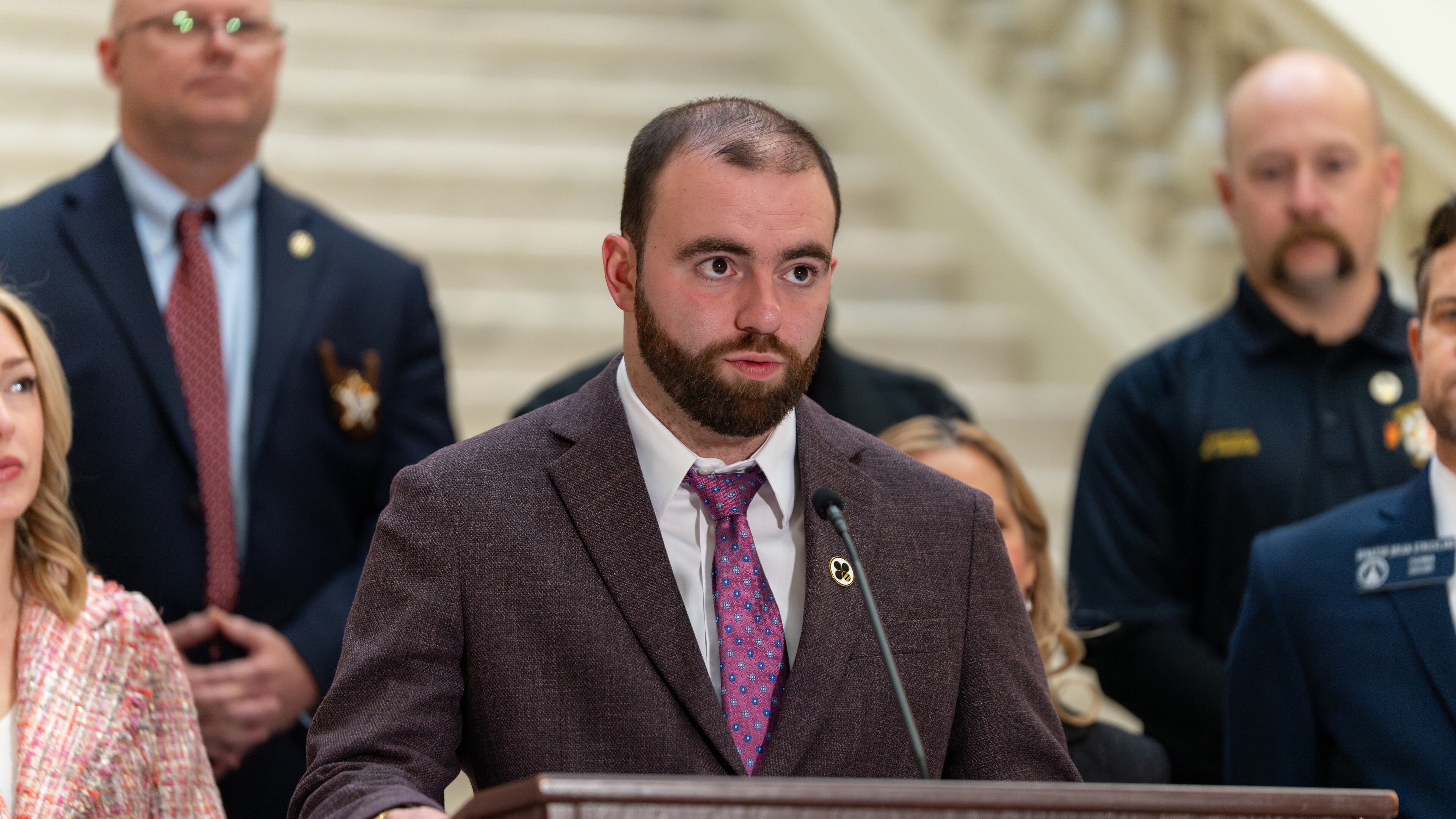
Connor Tomlinson, a Forsyth County resident and cast member on Netflix’s “Love on the Spectrum,” told a Senate panel last week that some people with autism may respond to a routine traffic stop by avoiding eye contact, making sudden movements, or struggle to communicate effectively.
“It’s important to understand that these responses are not signs of defiance or threat, they are neurological responses to overwhelming sensory input,” Tomlinson said. “This legislation … will give neurodiverse Georgians a chance to cooperate with our law enforcement and first responders without judgment or fear of being misunderstood.”
Law enforcement groups have said they support anything that can make traffic stops safer.
“It’s kind of like having a crystal ball, y’all” said Paulding County Sheriff Ashley Henson, who also spoke on behalf of the Georgia Sheriff’s Association. “If you ever pull up to a car at night, you don’t know what you’re getting into, but at least with this, you can look at that tag and see, this is an autism tag. That’s one thing that we don’t need to worry about.”
South Carolina passed a similar law in 2024. South Carolina resident Layla Luna said she was inspired to push for the legislation after a 2019 incident when she was pulled over while driving with her son Rio, now 17, who has profound autism. The lights and sirens caused Rio to become aggressive.
A 2019 York University study found that 53% of adults with autism will have four or more incidents with police and 75% reported having at least one in their lifetime.
The bill now goes to the House for its consideration.
About the Author

Maya T. Prabhu covers the Georgia Senate and statewide issues as a government reporter for The AJC. Born in Queens, New York, and raised in northern Virginia, Maya attended Spelman College and then the University of Maryland for a master's degree. She writes about social issues, the criminal justice system and legislative politics.


