Federal appeals court tosses challenge to Georgia’s election law
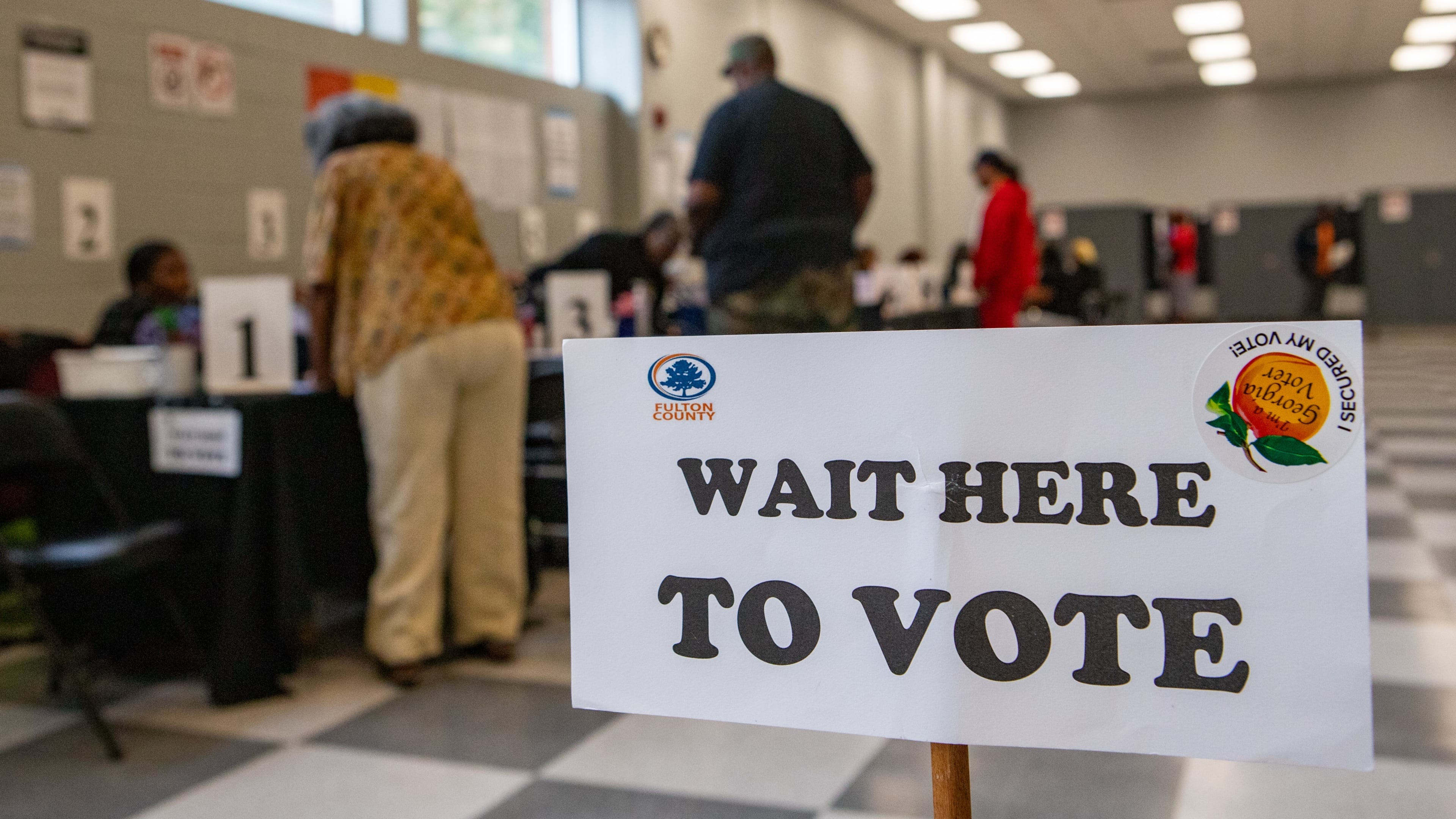
A federal appellate court tossed a challenge to the state’s authority to take over county election boards.
A three-judge panel at the U.S. Court of Appeals for the 11th Circuit unanimously decided late last week to uphold U.S. District Judge J.P. Boulee’s ruling that found the lawsuit filed by the Coalition for Good Governance, an election security group, and others failed to prove they were harmed by the 2021 state law.
Secretary of State Brad Raffensperger praised the 11th Circuit ruling and credited the voting law for making Georgia elections more secure.
“This ruling is another win in our battle to protect the integrity of our elections,” Raffensperger said in a statement Monday. “Rest assured, we will stand firm no matter what group tries to interfere.”
In 2023, the State Election Board decided not to take over Fulton County’s election board after it found the county made significant improvements. But the state board has continued to scrutinize Fulton’s elections ahead of the 2026 midterms.
Marilyn Marks, the executive director of the Coalition for Good Governance, called the ruling “deeply concerning” during a time of increasing partisan pressure on election officials.
She said the law could allow for a partisan state board to remove a whole county board and replace it with a partisan appointee.
“That kind of unchecked power should never exist, and the Legislature should urgently reconsider this dangerous law,” she said.
Marks said the coalition would likely consider refiling a suit if the state board attempted to take over a county.
Fulton is also facing scrutiny from the Trump administration. The U.S. Department of Justice has sued for copies of the county’s 2020 ballots and other election records.
The General Assembly passed the 2021 election law in the wake of Republican Donald Trump’s narrow loss to Democrat Joe Biden in the 2020 election, which Trump has continued to claim, without evidence, was “rigged.”
The coalition’s lawsuit also opposed other parts of Senate Bill 202, including provisions that outlaw intentionally observing a voter casting a ballot and prohibit ballot photography.
Most parts of the voting law have withstood court scrutiny so far, including a ban on handing out food and beverages to voters waiting in line, limitations on ballot drop boxes and additional forms of ID required to vote absentee.
Separate lawsuits challenging provisions of the 2021 voting law are still pending.
About the Author

Caleb Groves is a general assignment reporter for The Atlanta Journal-Constitution's politics team and a Kennesaw State University graduate.


